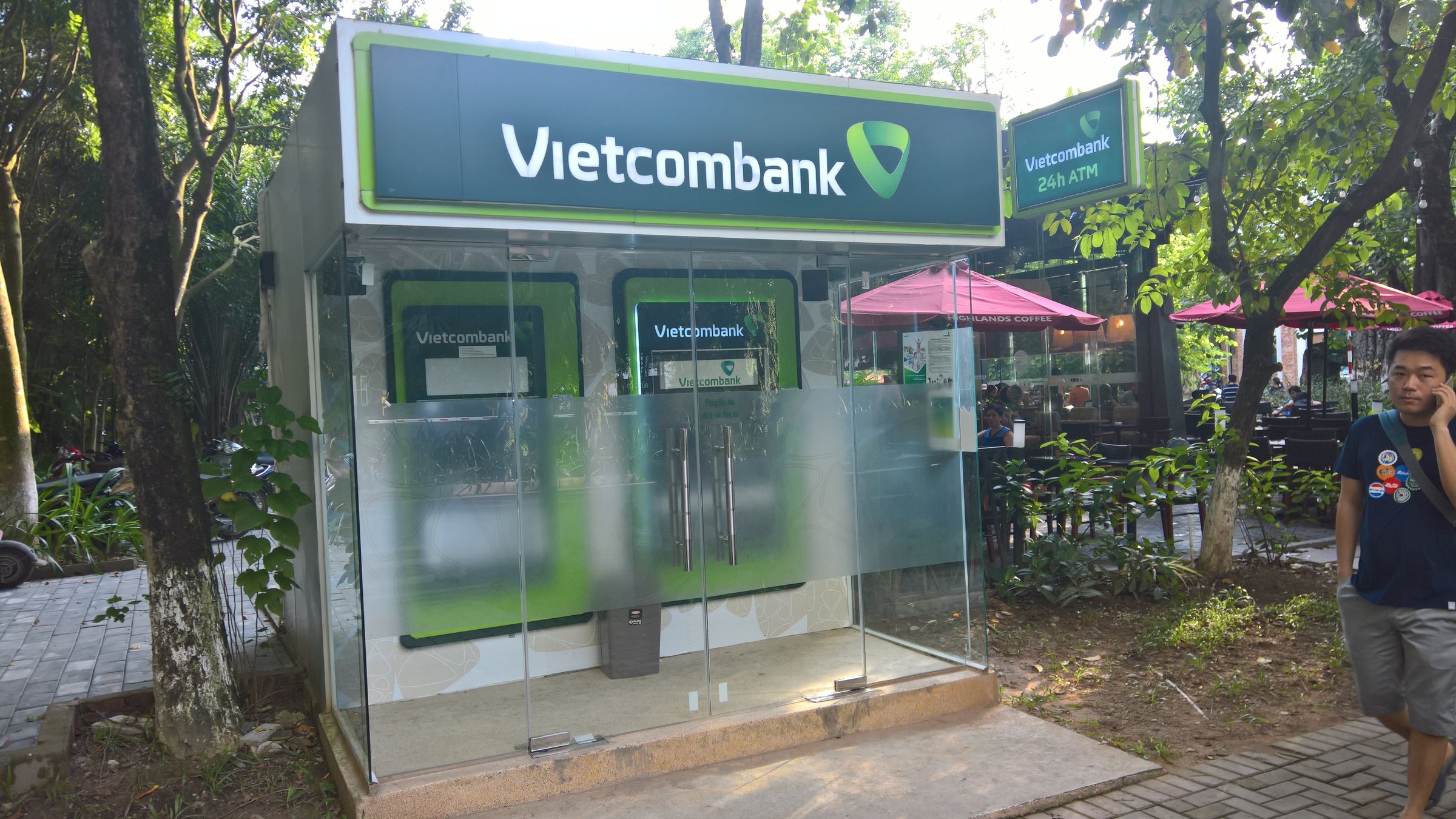
Money, ATMs and cardsTiền tệ và ATM
The Vietnamese dong (VND) is the sole legal tender for everyday transactions. Banknotes run from small cotton notes through a polymer series up to 500,000 dong. The country has modernised quickly: QR-code payments are common in cities, international cards are accepted at larger hotels and restaurants, but much of daily commerce — markets, street food, rural transport — still expects cash.
The dong and the note-confusion problem
Vietnam's polymer banknotes share a colour family that catches many first-time visitors off guard. The 20,000-dong note and the 500,000-dong note are both blue-green in tone. The difference is significant: 500,000 dong is twenty-five times the value of 20,000 dong. Paying with the wrong note — or receiving the wrong change — is one of the most common and avoidable financial mistakes in Vietnam.
The note series in common circulation runs: 1,000 — 2,000 — 5,000 — 10,000 — 20,000 — 50,000 — 100,000 — 200,000 — 500,000 dong. The higher denominations are polymer; the lower ones are cotton. A note of 500,000 dong is the largest in circulation.
The practical habit is to sort notes by denomination before spending and to check what you hand over and what comes back. In busy or dim settings — night markets, motorbike taxi payment — this is where errors concentrate. When receiving change, count it before moving on.
ATMs: withdrawal limits, fees and which banks to use
ATMs are widely available in cities, provincial towns and tourist centres, and less common in rural communes. Most machines accept Visa, Mastercard and UnionPay; American Express acceptance is spottier.
Withdrawal limits vary by machine and by bank. Vietnamese bank ATMs typically impose a per-transaction ceiling; some allow multiple transactions in sequence, others restrict daily totals. Limits set by the cardholder's home bank also apply independently.
Fees come from two directions: the Vietnamese ATM operator may charge a transaction fee, and the cardholder's home bank may charge a foreign-transaction or currency-conversion fee. The combination varies. Banks with reputations for lower operator fees among travellers include BIDV, Vietcombank and Agribank, though policies change and no guarantee applies. ATMs inside bank branches tend to be more reliable than standalone kiosks.
A practical approach is to withdraw larger amounts less frequently to reduce per-transaction fees, while keeping in mind that carrying large amounts of cash carries its own risk.
Card acceptance and dollar pricing in tourist areas
Credit and debit cards are accepted at international hotels, mid-range and upmarket restaurants in cities, large supermarkets and most formal tour operators. Smaller guesthouses, local restaurants, market stalls and rural accommodation typically do not accept cards. Having cash is not optional in Vietnam; it is essential outside the main urban centres.
In heavily visited tourist areas — parts of Hoi An, the tourist strip in Hanoi's Old Quarter, beach resorts — prices are sometimes quoted in US dollars. This is informal and the dong is always legally acceptable. Whether the implied exchange rate used by the vendor is favourable is a separate question; paying in dong after checking the rate is usually straightforward. The legal question of whether businesses may officially quote in foreign currency is unsettled in practice, and the situation varies by context.
Dynamic currency conversion (DCC) — where a card terminal offers to charge in the cardholder's home currency rather than dong — almost always means an unfavourable rate. Choosing to be charged in dong and letting the home bank convert is generally preferable, though travellers should verify their own bank's terms.
Exchanging cash
US dollars are the most widely exchangeable foreign currency in Vietnam. Euros and some other major currencies can be exchanged at banks and licensed exchange offices in cities, but the network thins quickly outside urban areas. Pounds sterling, Australian dollars and other currencies are exchangeable at main-city bank branches and airports, though rates and availability vary.
Licensed exchange points include bank branches, some hotels and authorised gold-and-foreign-exchange shops (thu đổi ngoại tệ). Street exchange is illegal and carries risks of counterfeit notes and short-changing. Airport exchange counters are convenient but often offer less favourable rates than bank branches in the city.
Dollar notes in poor condition — torn, heavily marked, very old series — may be refused or exchanged at a discount. Carrying clean, recent-series notes matters more in Vietnam than in many other countries.
No exchange rate is given here; rates move daily and any figure published becomes outdated quickly. The State Bank of Vietnam publishes a daily reference rate, and commercial rates cluster around it.
QR payments and mobile money
QR-code payment has spread rapidly in Vietnam, particularly since 2022. Apps including MoMo, ZaloPay and the banking apps of major Vietnamese banks allow users to scan a merchant's QR code and pay directly from a Vietnamese bank account or e-wallet. This system is ubiquitous among local residents — street vendors, coffee shops, markets and pharmacies routinely display QR codes alongside or instead of card terminals.
For foreign visitors, access to this system is limited. Opening a Vietnamese bank account requires a local phone number and, usually, a temporary or permanent residence document. Some fintech products have begun offering limited QR functionality to foreigners, but the landscape is changing. As of mid-2025, most foreign visitors cannot easily use the domestic QR ecosystem and should not rely on it.
International contactless payment (Apple Pay, Google Pay linked to Visa or Mastercard) works at terminals that accept those cards, which is a smaller set than the QR network.
How much cash to carry
The appropriate amount of cash depends heavily on itinerary. In Ho Chi Minh City or Hanoi, a visitor staying in mid-range accommodation, eating at mixed venues and using ride-hailing apps can manage with modest cash reserves topped up by ATM. On a rural motorbike loop, a trek to Sapa's villages, or a boat journey in remote parts of Ha Long Bay, ATM access may be unavailable for days.
General considerations: identify ATM locations before leaving a city; carry enough cash to cover accommodation, food and transport for the duration of any off-grid stretch; keep different denominations available because vendors often cannot break a 500,000-dong note for a small purchase; and store a reserve separately from everyday spending cash.
There is no universal answer to how much to carry. The main risk of carrying too little is being stranded without options; the main risk of carrying too much is loss or theft. A belt pouch or divided wallet is common practice among long-term visitors.
Also known as / see also
Verwezen door
Bronnen
- State Bank of Vietnam — Ngân hàng Nhà nước geraadpleegd 29 August 2026
Supports: carried over from the first build - Vietnam National Authority of Tourism — VNAT geraadpleegd 29 August 2026
Supports: carried over from the first build
Ageing Laatst geverifieerd: 29 August 2026. Rules, fares and prices change — check the official source before acting on anything here. Report a mistake.
Picture credits (1)
Vietcombank ATM's near Pho Truc (2017), Donald Trung, CC BY-SA 4.0, Wikimedia Commons