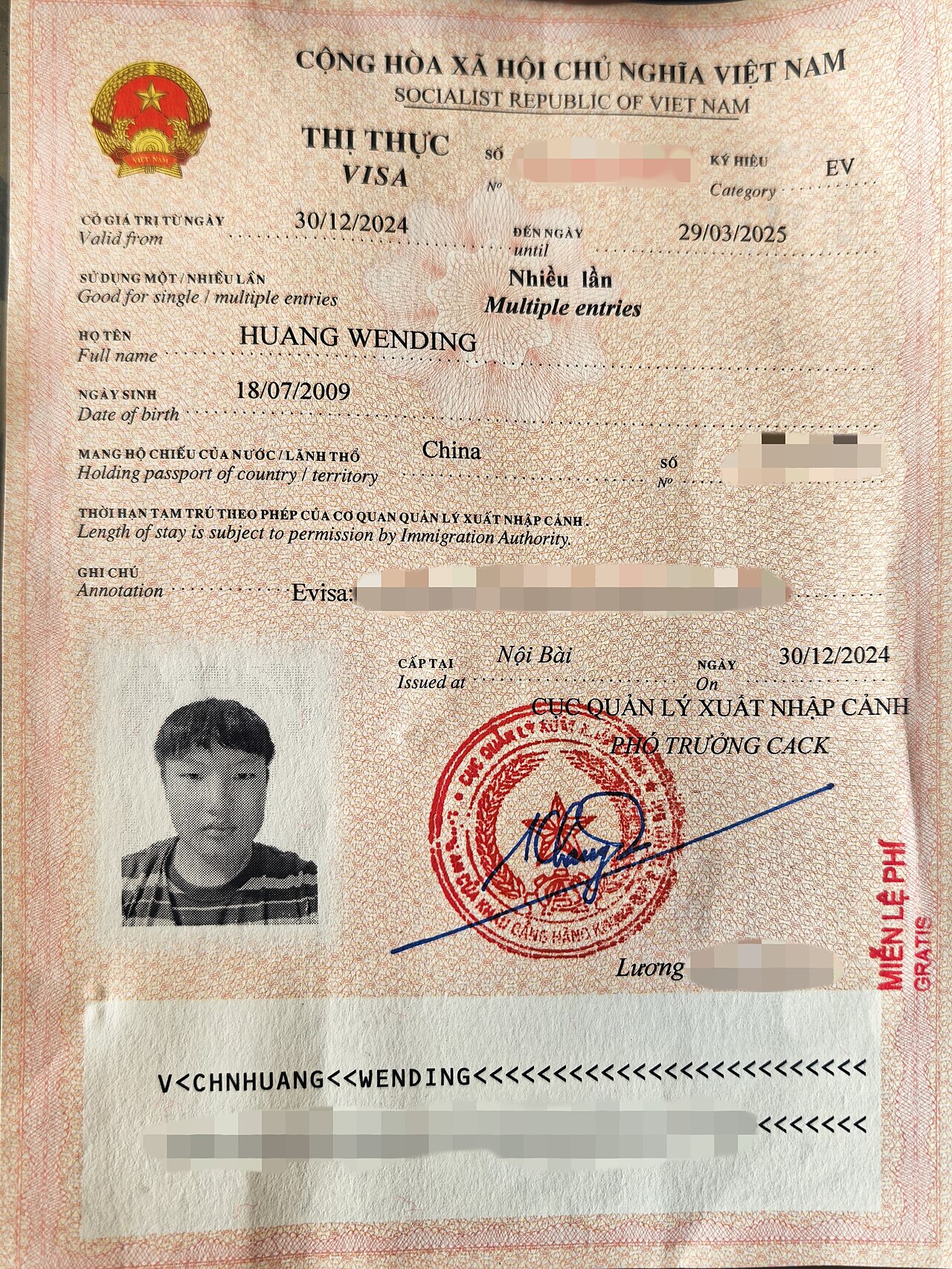
Vietnam e-visaThị thực điện tử
The Vietnam e-visa (Thị thực điện tử) is an electronic travel authorisation available to citizens of most countries. It replaced the earlier 30-day single-entry scheme in 2023 with a more generous 90-day, single-or-multiple-entry format. Because eligibility, fees and port rules are set by government decree and can change with little notice, this page describes the process as it is generally understood — it is not immigration advice, and the official portal at evisa.gov.vn is the authoritative source.
Eligibility
Vietnam has extended e-visa eligibility to citizens of almost every country and territory, though a small number of nationalities remain ineligible or face different requirements. The official eligible-country list is published on the government portal and is the only reliable reference, as the list has expanded in stages and older third-party lists are frequently out of date.
Holders of certain passport types — diplomatic, official or service passports — may be subject to different rules and should check separately. Eligibility for a tourist e-visa does not automatically cover all purposes of travel: those intending to work, study or carry out journalism should consider whether a different visa category is required.
Whether a Vietnam e-visa can be extended inside the country, or whether the holder must leave and re-apply, is a question that remains unsettled in practice. Do not assume extension is possible; verify current policy at the official source before making plans that depend on it.
The official portal and copycat sites
The sole official application portal is evisa.gov.vn, operated by the Vietnamese Ministry of Public Security. The fee paid there goes directly to the government. No third-party site is officially endorsed, and many commercial sites charge a significant markup for what is, at most, a form-filling service.
Copycat sites are common in search results and sometimes closely mimic the government portal's appearance, including using similar domain names and layout. Before entering payment details, check that the domain is exactly evisa.gov.vn and that the connection is secure. If a site asks for a service or agency fee on top of the stated government fee, it is a third-party intermediary, not the official portal.
Using an intermediary is not illegal, but it offers no advantage in processing speed or approval odds, and the markup can be substantial. The only reason to consider one is if navigating the official portal presents a genuine difficulty — the portal supports English and the process is straightforward for most applicants.
Application steps, documents and photo requirements
The application is completed entirely online. The broad steps are:
- Create an account or proceed as a guest on evisa.gov.vn.
- Select entry type (single or multiple), intended entry port, and dates.
- Upload a passport biographical page scan and a recent portrait photograph.
- Pay the fee by card (Visa, Mastercard and certain other cards are accepted; payment acceptance can vary, so have an alternative card available).
- Receive a confirmation and, after processing, the e-visa as a PDF by email.
Photograph: The portal specifies a plain white background, face centred and clearly visible, no glasses. The image must be in JPEG format and within the stated file-size limits shown on the portal at the time of application.
Passport scan: The biographical page must be clear and unobstructed. The passport must remain valid for the entire intended stay; a general rule of thumb is at least six months validity beyond the intended departure date, though the portal states its own minimum — check it at the time.
Errors in the application — particularly in the passport number, name spelling or dates — can result in rejection or problems at the border. Review every field before submitting.
Fee, processing time and delays
There is a government fee for the e-visa. The fee has changed previously and may change again; the current amount is displayed on evisa.gov.vn during the application process. This page does not state a fee figure, as any amount written here could be out of date by the time it is read.
Official processing time is approximately three working days. In practice, many applicants receive their visa within this window, but delays of five to seven days or longer do occur, particularly around Vietnamese public holidays (Tết being the most significant) or at times of high application volume.
If processing runs over the stated period:
- Check the spam or junk folder for the confirmation or visa email.
- Log in to the portal to check application status.
- The portal provides a contact mechanism for enquiries; allow additional time for a response.
Apply well ahead of travel — the three-day estimate is not a guarantee, and last-minute applications carry real risk. There is no official expedited processing tier for tourist applications.
Printing and using the e-visa
Once approved, the e-visa is issued as a PDF. It should be downloaded and stored securely. Most airlines will ask to see it at check-in, and immigration officers at the Vietnamese border will check it on arrival. Carrying a printed copy is strongly advisable; relying solely on a phone screen risks problems if the device runs out of battery or cannot be unlocked quickly at a busy border crossing.
The e-visa shows the authorised entry type (single or multiple), the validity dates, the holder's name and passport number, and — critically — the permitted ports of entry. Entry through a port not listed on the visa is not permitted, regardless of the visa's validity dates. If travel plans change and a different port becomes necessary, a new application is required; the visa cannot be amended after issue.
On arrival, present the e-visa alongside the passport used to apply. The names and passport number must match exactly.
Ports of entry
Vietnam's e-visa is accepted at a substantial number of international airports, land border crossings and seaports, but not all crossing points accept it. The official list of approved ports is published on evisa.gov.vn and should be checked when selecting an entry port during the application.
Commonly used international airports — including those serving Hanoi, Ho Chi Minh City and Da Nang — are on the approved list. Land crossings with China, Laos and Cambodia vary: some are approved, others are not. Cruise passengers and those arriving by private boat should verify whether their intended sea entry point is listed.
The approved-port list has changed over time as new crossings have been added. If a specific land or sea crossing is important to an itinerary, confirm its current status on the portal rather than relying on older travel guides.
If the application is rejected
The portal notifies applicants of rejection by email and within the account dashboard. A reason is sometimes given, but not always. Common causes include mismatched data between the application and the passport, an unclear photograph or document scan, passport validity issues, or — in some cases — a nationality or circumstance that does not qualify.
Rejection of an e-visa application does not carry an automatic ban on reapplying, but it also does not guarantee that a corrected application will succeed. If the cause of rejection is clear and correctable (a typo, a blurry scan), reapplication through the portal is straightforward. If the reason is unclear, options include contacting the portal's support channel, approaching a Vietnamese embassy or consulate in the applicant's home country, or consulting a qualified immigration lawyer.
Attempting to enter Vietnam without a valid visa or with a rejected application will result in denial of boarding by airlines or refusal of entry at the border. Airlines are responsible for checking documents and can face penalties for carrying inadequately documented passengers, so check-in staff will not overlook a missing or rejected visa.
This page is a general reference only and is not immigration or legal advice. Rules, fees and eligibility are set by Vietnamese government decree and can change. Always verify current requirements at evisa.gov.vn and, where necessary, with the Vietnamese embassy or consulate responsible for your country of residence.
Maliyetler
| Öğe | Fiyat | Birim | İtibarıyla | Kaynak |
|---|---|---|---|---|
| E-visa, single entry Set in dollars by the fee schedule, not in dong. Non-refundable once the application reaches the Immigration Department, whatever the outcome. |
$25.00 | per application | 2026-08-28 | Ministry of Finance Circular 28/2026/TT-BTC, published on the national e-visa portal evisa.gov.vn |
| E-visa, multiple entry Agents charge a service fee on top of this; the government fee is the same whoever applies. |
$50.00 | per application | 2026-08-28 | Ministry of Finance Circular 28/2026/TT-BTC, published on the national e-visa portal evisa.gov.vn |
Every price carries the date it was observed and where it came from. Prices move; treat them as a guide, not a quote.
Also known as / see also
Referans veren sayfalar
Kaynaklar
- Vietnam National Authority of Tourism — VNAT erişildi 29 August 2026
Supports: carried over from the first build - Vietnam National Electronic Visa Portal — Vietnam Immigration Department erişildi 29 August 2026
Supports: carried over from the first build
Ageing Son doğrulama: 29 August 2026. Rules, fares and prices change — check the official source before acting on anything here. Report a mistake.
Picture credits (2)
Loose-leaf Visa for Chinese Citizens Entering Vietnam, HuangWending18072009, CC0, Wikimedia Commons · Vietnamese visa approval letter, 越南移民局 / Vietnam Immigration Department, Public domain, Wikimedia Commons