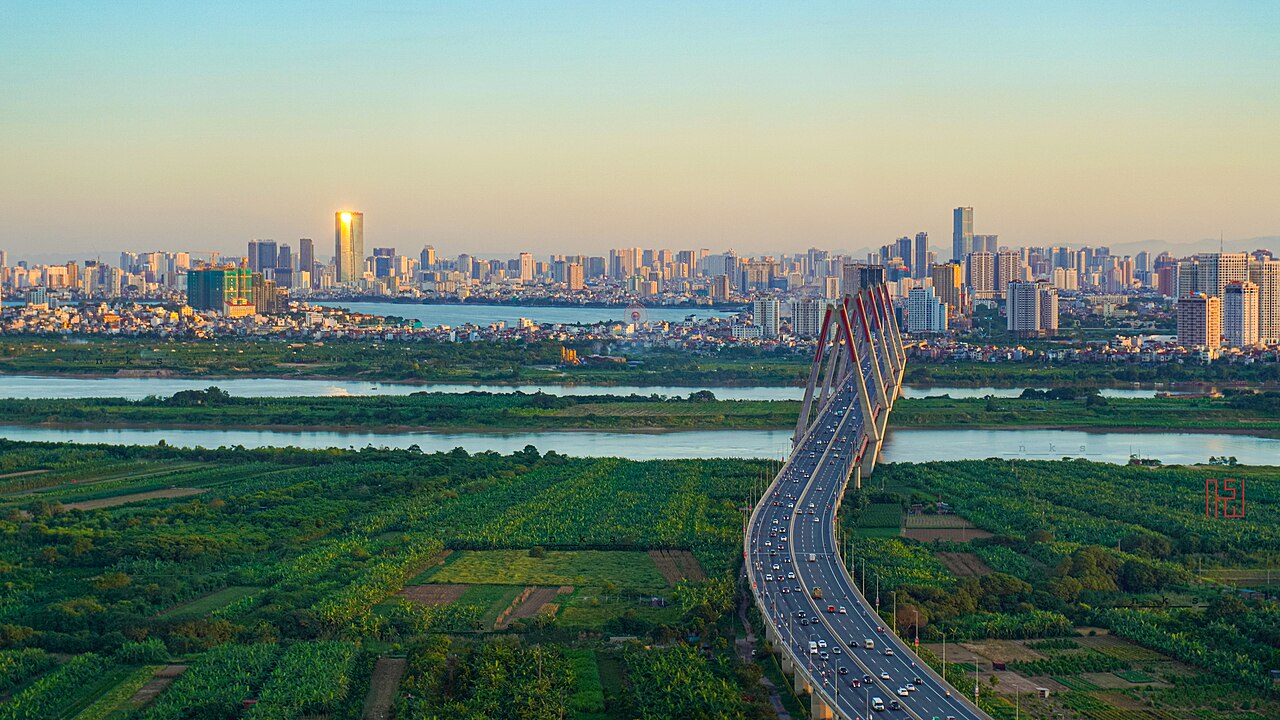
Hanoi has been a political centre for over a thousand years and serves today as the capital of Vietnam. It combines imperial-era monuments, a compact colonial district, and one of the most distinctive street-food cultures in Southeast Asia. As a municipality it administers both the dense urban core and a wide surrounding area that includes rural districts and satellite towns.
What Hanoi is known for
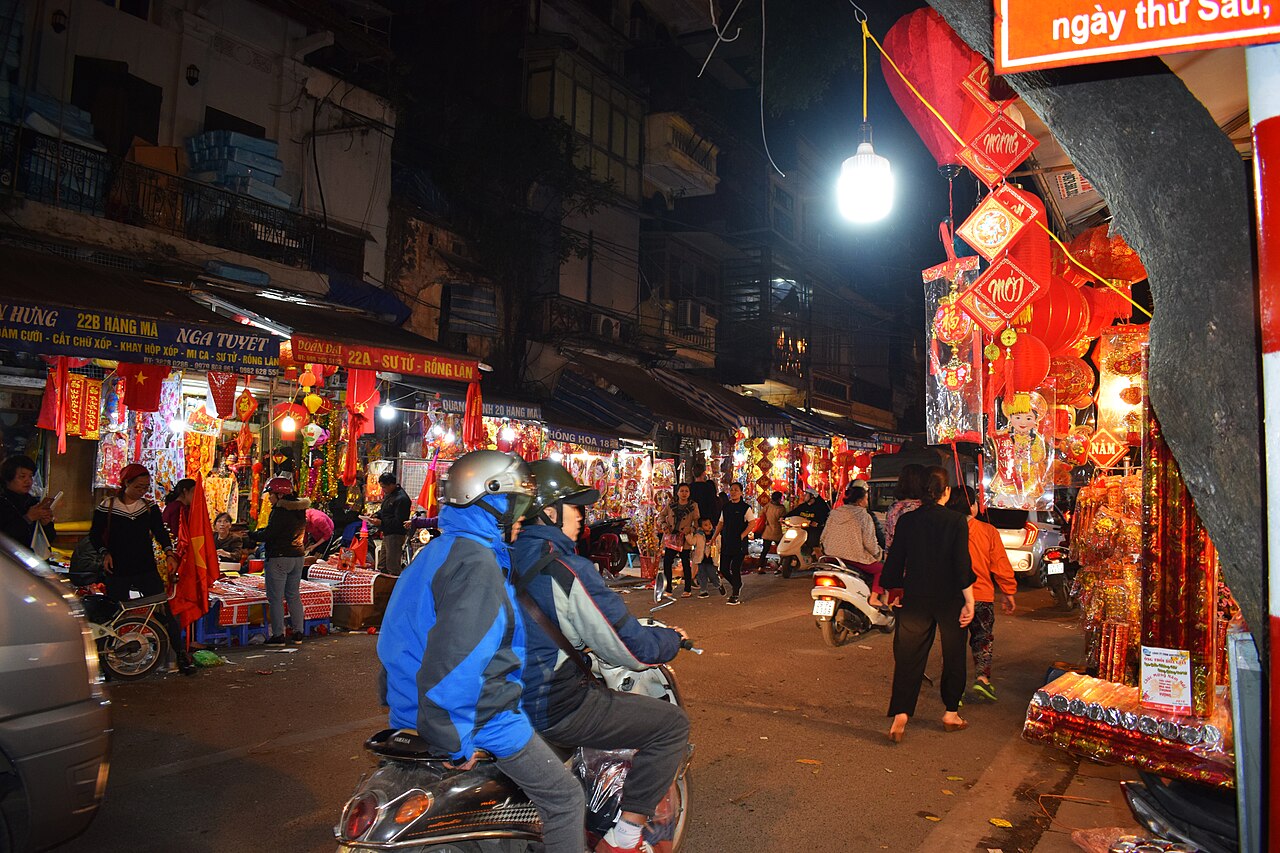
Hanoi's reputation rests on several things at once: its age and layered history, its food, its lakes, and the texture of everyday life in the streets. The Old Quarter is the commercial heart that has traded continuously for centuries, its narrow lanes historically organised by craft and product. The city's French colonial period left wide boulevards, yellow-stucco administrative buildings and a cathedral that still anchors a neighbourhood.
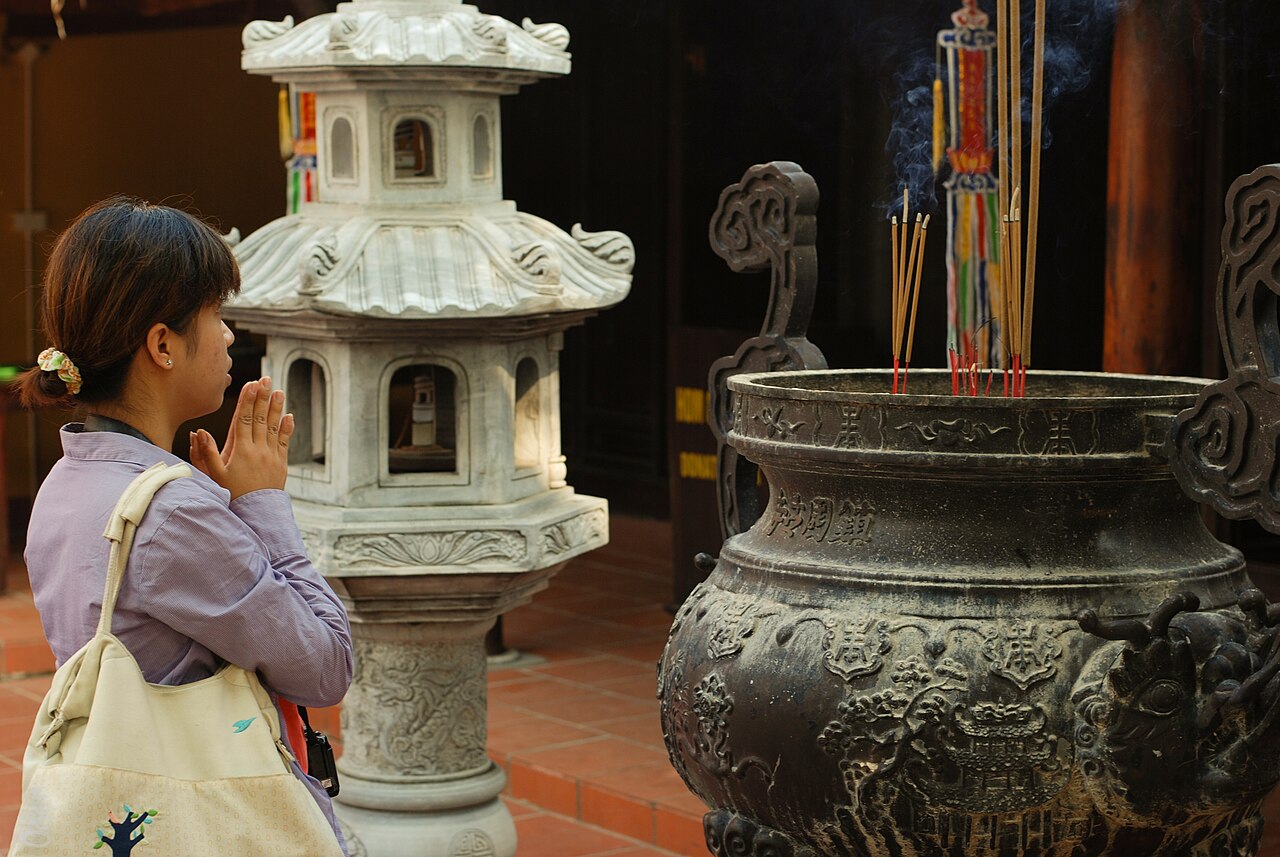
Hoan Kiem Lake sits at the centre of the older city and is the reference point most residents use when giving directions. The Temple of the Jade Mountain occupies a small island on the lake. West Lake, considerably larger, is lined with pagodas, restaurants and residential compounds.
The food is as important as the architecture. Hanoi is considered the origin of pho, and the northern version differs from its southern counterpart in broth clarity and restrained garnish. Bun cha, cha ca, banh cuon and bun rieu all have strong local traditions here.

When to go
Hanoi's climate is genuinely four-seasonal, which distinguishes it sharply from most of Vietnam. Full regional weather detail is on the when-to-go page, but the broad pattern is as follows.
- October to December is widely considered the most comfortable period: warm days, lower humidity, less rain.
- January and February are cool and often grey, with temperatures occasionally dropping enough to require a jacket or coat. The Tet lunar new year falls in late January or February; the city empties as residents return to home provinces, and many businesses close for days.
- March to April brings a fine drizzle known locally as mua phun (mist rain), keeping humidity high without producing heavy downpours. Temperatures rise through April.
- May to September is hot, humid and punctuated by heavy afternoon downpours. Flooding is possible in low-lying streets. This is not the city at its most comfortable, though it is entirely manageable.
Typhoons rarely strike Hanoi directly, but storms tracking inland can still bring prolonged rain and disruption.

Getting there and away
Noi Bai International Airport (HAN) is the main entry point for international travellers. It lies north of the city centre; the journey to the Old Quarter takes roughly 40–50 minutes by road, depending on traffic. Airport taxis, ride-hailing apps and a dedicated bus service all connect the airport to the city. Ride apps and taxis are the most straightforward option for first arrivals.
Domestic flights link Hanoi to Ho Chi Minh City, Da Nang, Phu Quoc and other destinations several times daily.
Hanoi railway station (Ga Hà Nội) is the northern terminus of the Reunification Express, which runs south through Hue, Da Nang and on to Ho Chi Minh City. Sleeper berths are available for longer journeys. Sleeper buses and open-tour buses serve destinations across the north and centre, often at lower cost than the train.
Land border crossings connect to China (notably at Lao Cai and Dong Dang) and to Laos, though journey times are long. Travellers should confirm current visa arrangements before planning an overland entry; requirements can change.
Getting around the city
The Hanoi metro is operational and expanding, though current lines do not yet cover the Old Quarter or Hoan Kiem Lake directly. It is useful for longer cross-city journeys and for reaching some outer areas.
Ride-hailing apps (Grab being the dominant platform) work reliably throughout the urban area and are the default for most short trips. Metered taxis from established companies are an alternative; unlicensed operators at tourist sites do exist. Common scams often involve taxis or motorbike taxis quoting inflated fares to new arrivals.
Hiring a motorbike is an option for those comfortable with urban traffic; Hanoi's streets are dense and the riding style requires adjustment. Bicycles are available for shorter distances and suit the Old Quarter's pace. Walking is viable within the Hoan Kiem area.
What there is to see
The Old Quarter is the most visited area, a dense grid of streets where commerce, residential life and tourism overlap. Hoan Kiem Lake is a short walk from its southern edge. Ho Tay (West Lake) is the largest lake in the city and anchors a wealthier residential and dining district to the northwest.
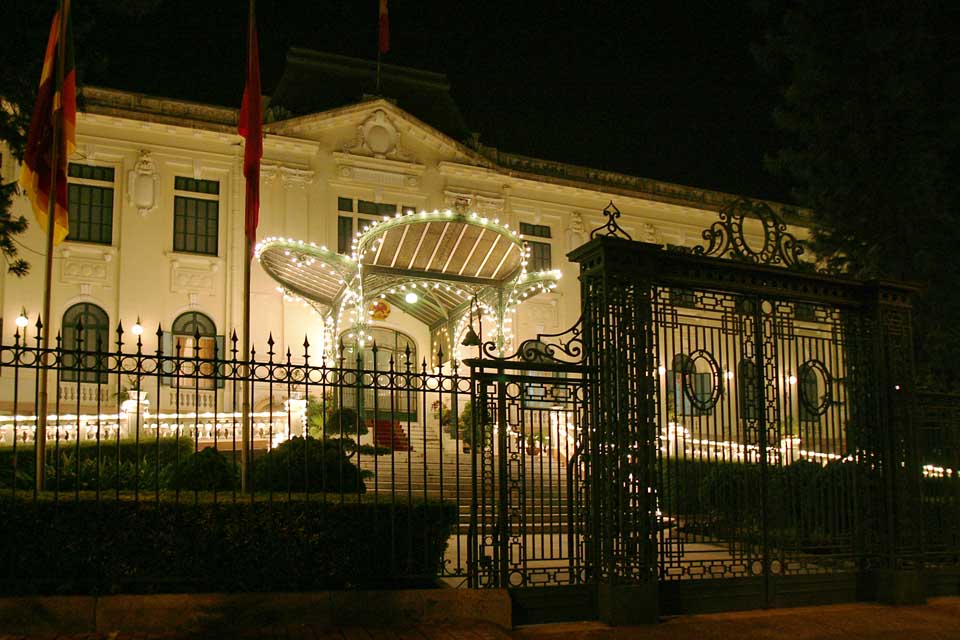
The Ho Chi Minh Mausoleum complex in Ba Dinh Square is where Ho Chi Minh's preserved body lies; the mausoleum is closed on Mondays, Fridays and during annual maintenance periods. Adjacent to it are the Presidential Palace, Ho Chi Minh's stilt house and the One Pillar Pagoda. The Vietnam Museum of Ethnology, in the Cau Giay area, presents material culture from Vietnam's 54 officially recognised ethnic groups and is considered one of the better museums in the country.
The Temple of Literature, a well-preserved Confucian temple complex dating to 1070, functions as a working historical site rather than an active place of worship.
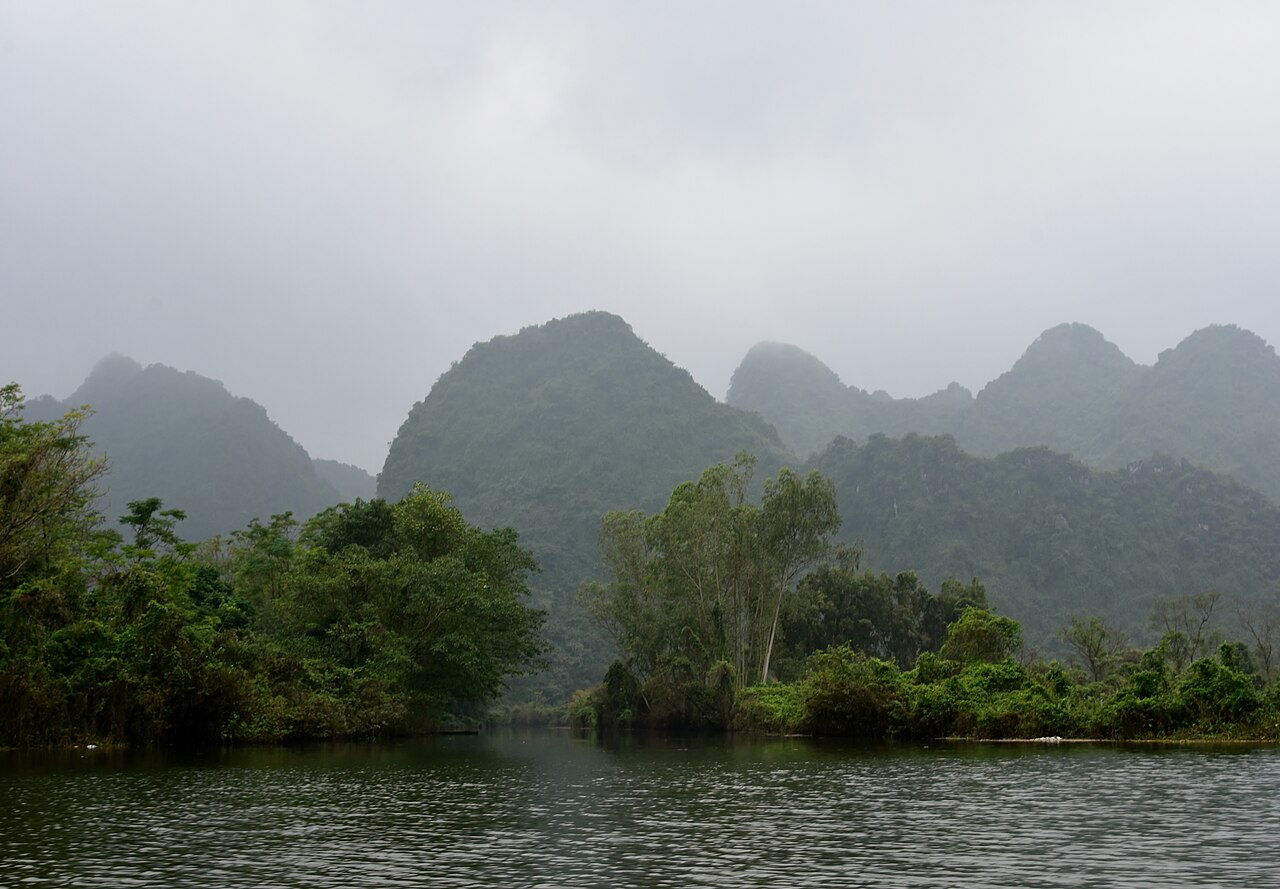
Day trips are practical from Hanoi: the Perfume Pagoda to the southwest, Tam Dao hill station to the north, and the pilgrimage site of Con Son and Kiep Bac to the east are all within reach. The ceramic villages of Bac Ninh province and Hung Yen province lie nearby.
Where to stay and how the areas differ
Accommodation clusters in several distinct zones. The Old Quarter and the Hoan Kiem lakeside area hold the densest concentration of budget guesthouses, mid-range hotels and some boutique properties. Streets are narrow and can be noisy, particularly near the commercial lanes, but the location is central for sightseeing on foot.
The Ba Dinh district, west of Hoan Kiem, is quieter and closer to the mausoleum complex and the diplomatic quarter. It suits travellers who prefer a calmer environment and do not mind a short taxi or app ride to reach the Old Quarter.
The West Lake (Ho Tay) area has attracted international hotels and serviced apartments and is popular with expatriates. It is further from the main historical sites but offers quieter streets and lakeside walks.
Tay Ho and Dong Da districts have expanded in recent years with mid-range and long-stay options as the city has grown outward. New urban zones further from the centre tend to be less convenient for first-time visitors unless travelling for business to specific districts.
What first-time visitors often get wrong
Assuming the climate is tropical throughout. Hanoi winters are genuinely cool and can be damp. Visitors arriving from other parts of Southeast Asia in January or February are sometimes unprepared.
Underestimating distances within the city. The urban area is large. The Old Quarter is compact, but sites such as the Museum of Ethnology or Ho Tay are a meaningful distance away and are not walkable from the lake.
Tet timing. If a visit overlaps with the Tet new year holiday, many restaurants, shops and services close. Transport books out weeks in advance. It is a significant period to plan around rather than ignore.
Visa assumptions. Vietnam's visa rules — including the e-visa — have changed several times in recent years and can change again. The e-visa page outlines the current framework, but the official Vietnamese immigration authority is always the authoritative source.
Currency and payments. Card acceptance is uneven, particularly at street-food stalls and smaller guesthouses. Carrying cash remains practical. A local SIM or eSIM is useful for ride-hailing apps, which require an active data connection.
Климат по месяцам
Многолетние средние значения, не прогноз. Референсный период: 2015–2024. Источник: ERA5 reanalysis (Copernicus) via the Open-Meteo archive API.
Show the numbers
| Месяц | Макс. °C | Мин. °C | Осадки, мм | Дождливых дней | Humidity % |
|---|---|---|---|---|---|
| January | 20.9 | 14.4 | 65 | 11 | 77 |
| February | 22.4 | 15.5 | 47 | 9 | 77 |
| March | 25.8 | 19.1 | 76 | 13 | 82 |
| April | 29.1 | 21.7 | 97 | 12 | 82 |
| May | 31.8 | 24.9 | 212 | 18 | 81 |
| June | 33.5 | 26.7 | 242 | 17 | 79 |
| July | 32.8 | 26.4 | 302 | 20 | 81 |
| August | 31.9 | 25.9 | 404 | 24 | 85 |
| September | 30.8 | 24.9 | 348 | 22 | 85 |
| October | 28.3 | 21.9 | 190 | 13 | 78 |
| November | 26.1 | 19.3 | 59 | 9 | 77 |
| December | 21.3 | 14.6 | 35 | 7 | 72 |
Places within Hanoi
Where it is
Also known as / see also
Рядом
Упоминается на страницах
Источники
- ERA5 climate normals — Copernicus / Open-Meteo (CC BY 4.0) просмотрено 30 August 2026
Supports: monthly temperature and rainfall normals, and elevation - Map data from OpenStreetMap contributors, ODbL 1.0 — OpenStreetMap (ODbL 1.0) просмотрено 29 August 2026
Supports: carried over from the first build - Hanoi (Q1858) — Wikidata (CC0 1.0) просмотрено 30 August 2026
Supports: coordinates, area, population - Hanoi — Wikipedia (CC BY-SA 4.0) просмотрено 30 August 2026
Supports: background
Current Последняя проверка: 29 August 2026. Rules, fares and prices change — check the official source before acting on anything here. Report a mistake.
Picture credits (8)
Hanoi Skyline - NKS, NKSTTSSHNVN, CC BY-SA 4.0, Wikimedia Commons · Buddhist-girl-pray-in-vietnam-westlake-Hanoi, pxhere, CC0, Wikimedia Commons · Ahsan Sikder in Hanoi, Vietnam in 2024, Ahsansikder, CC0, Wikimedia Commons · Ahsan Ullah Sikder in Hanoi, Vietnam in 2024, Ahsansikder, CC0, Wikimedia Commons · Bacbophu, Xcanbiet ( talk ) ( Uploads ). Xcanbiet at English Wikipedia, CC BY-SA 3.0, Wikimedia Commons · Drying incense 08, Azimronnie, CC BY-SA 4.0, Wikimedia Commons · Hanoi Old Quarter (40267872341), Mig Gilbert from Brighton, CC BY-SA 2.0, Wikimedia Commons · River journey to the Perfume Pagoda, Vietnam (14) (38487711962), Richard Mortel from Riyadh, Saudi Arabia, CC BY 2.0, Wikimedia Commons