Cost of living in HanoiChi phí sống ở Hà Nội
How to read Hanoi costs
Hanoi has at least three distinct cost worlds that rarely overlap. The first is the local frugal tier: someone eating almost entirely at street stalls and cơm bình dân canteens, renting a room in a residential alley (ngõ) outside the central districts, and commuting by motorbike or bus. The second is the mid-range expatriate tier: a furnished apartment in Tây Hồ or Cầu Giấy, a mix of Vietnamese and international food, private health insurance, and occasional taxis or ride-hailing. The third is the comfortable or family tier: a large serviced apartment or villa, international schooling for children, comprehensive insurance and regular travel home.
These three tiers are not points on a single scale — the jump between the first and second is large, and the jump between the second and third is larger still, driven almost entirely by schooling fees and housing size. Prices vary by season, by landlord and, since the administrative restructuring of July 2025, by how quickly local service costs have adjusted to the new provincial framework.
- Frugal local: dominated by food and transport costs; housing is the variable most people compress first.
- Mid-range expat: rent and insurance together typically represent the majority of monthly outgoings.
- Comfortable / family: international school fees can exceed all other combined costs.
Rent by district
District character shapes rent more than any other single factor. Following Vietnam's July 2025 administrative merger, Hanoi's former district tier no longer exists as a formal unit, but the neighbourhoods themselves are unchanged and landlords and letting agents still use the old district names as shorthand.
- Tây Hồ (West Lake area): the most established expatriate zone. Lake-view apartments, villas on the peninsulas and serviced blocks aimed at diplomats and senior corporate staff sit at the top of the Hanoi rental market. Studios are rare here; two- and three-bedroom units are the norm.
- Ba Đình: close to government ministries and several embassies. A mix of older state-era apartment blocks, French-era townhouses and some newer builds. Quieter than Hoàn Kiếm; popular with diplomatic households.
- Hoàn Kiếm (Old Quarter and surrounds): highest foot traffic, most tourist infrastructure, narrow shophouse layouts. Short-term furnished rentals dominate; finding a long-term unfurnished flat is harder. Noise and traffic are factors.
- Cầu Giấy and the western corridor: newer high-rise stock, good broadband infrastructure, proximity to universities and tech campuses. Popular with younger expats and remote workers. Generally lower per-square-metre cost than Tây Hồ for equivalent build quality.
Prices vary by season, lease length, furnishing level and floor. Landlords in all areas typically require two to three months' deposit.
Utilities and the summer electricity bill
Electricity in Vietnam is sold on a tiered tariff: the more kilowatt-hours consumed in a billing period, the higher the rate applied to the upper bands. For most of the year this has limited impact on a household that uses appliances moderately. From roughly May to September, however, Hanoi experiences sustained heat and humidity that makes air conditioning a practical necessity rather than a luxury, and consumption can rise sharply into the higher tariff bands.
A large apartment running two or three inverter air-conditioning units continuously through July and August will see an electricity bill that is noticeably higher than the monthly average for the rest of the year. Landlords sometimes include electricity in a flat rate; more commonly it is metered and billed separately, in which case summer months require budgeting attention.
- Water: metered at low municipal rates in most residential buildings; rarely a significant budget line.
- Internet: fibre connections are widely available across all four districts noted above. Speeds are generally high by regional standards; prices vary by provider and package.
- Gas: bottled LPG is standard in most kitchens. Cylinder exchanges are available from local suppliers on a per-cylinder basis.
- Building management fees: newer high-rise blocks charge monthly service fees covering lift maintenance, security and common areas. These are separate from rent and utility bills.
Food costs
Food in Hanoi spans an enormous price range within a short physical distance. A bowl of phở or bún chả from a street vendor or neighbourhood stall represents one of the most cost-efficient meals available in any major Asian city. Eating this way for most meals, supplemented by cơm bình dân set-plate lunches, keeps food costs low.
The cost rises with the shift to air-conditioned Vietnamese restaurants, and rises again at international restaurants catering to expatriates — particularly those serving European, Japanese or Korean cuisine and importing ingredients. Western-format supermarkets such as Lotte Mart, Aeon and a handful of specialist importers stock foreign cheeses, cured meats, wine and packaged goods at prices that reflect import duties and cold-chain logistics.
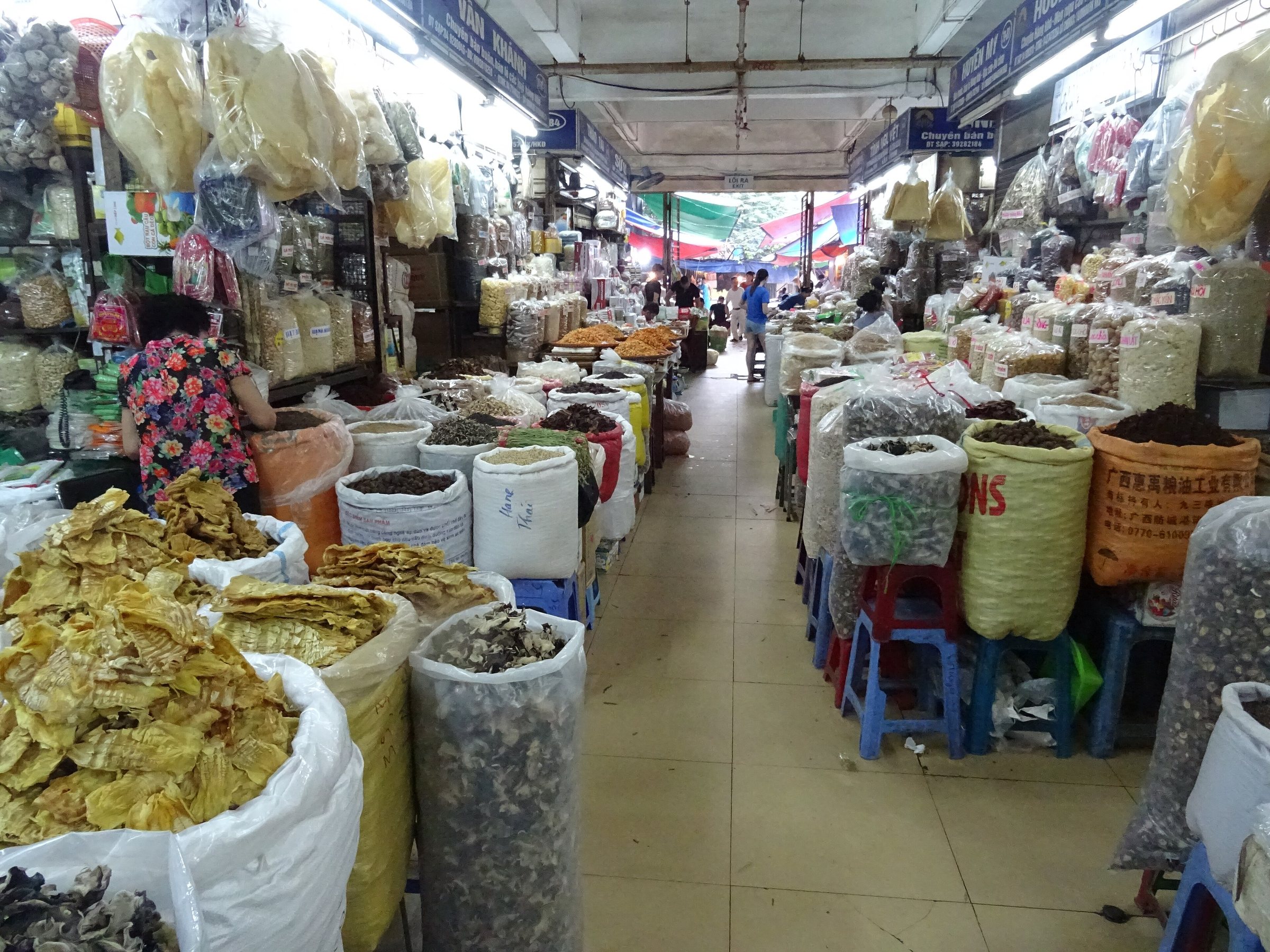
- Markets: Chợ Đồng Xuân (Old Quarter), Chợ Hôm and neighbourhood wet markets offer fresh produce, meat and fish at local prices. Vietnamese is helpful but not essential for basic transactions.
- Cooking at home: reduces costs substantially if using local ingredients; imported goods from specialist shops are a significant premium line.
- Alcohol: locally brewed beers (bia hơi on draught, or canned/bottled brands) are inexpensive. Imported wine and spirits carry high import duties and are materially more expensive.
Prices vary by season, particularly for tropical fruits and some vegetables.
Transport
Hanoi's transport options range from very cheap to moderate, with no single mode suiting all situations.
- Motorbike: owning a second-hand motorbike is the cheapest per-journey option for most daily movement within the city, once purchase and insurance costs are amortised. Fuel costs are low. Licensing requirements apply to foreigners and are sometimes overlooked, though enforcement has increased.
- Ride-hailing (Grab, Be and others): metered, cashless and convenient. More expensive than owning a bike for frequent use but cheaper than taxis for occasional journeys.
- Bus: Hanoi's public bus network covers most of the city. Fares are low. The network map and route information are available through the Transerco app; stops are signed in Vietnamese.
- Metro (Cát Linh – Hà Đông line and the Nhổn – Ga Hà Nội line, partially open): a limited but expanding rail network. Fares are regulated and low. Useful for specific corridors; coverage remains partial as of mid-2025.
- Taxi: metered taxis from established companies (Mai Linh, G7) are reliable. Ensure the meter is running.
- Car ownership: high vehicle registration taxes make car purchase expensive relative to the vehicle's value; most mid-range expatriates use ride-hailing rather than owning a car.
International schooling
For families with school-age children, international schooling is the single largest potential cost in Hanoi. Several well-established international schools operate in the city, concentrated in the Tây Hồ and Cầu Giấy areas.
Curricula on offer include the International Baccalaureate (IB), British (IGCSE and A-Level), American and a small number of other national curricula. Fees are structured annually and vary significantly between schools, year groups and whether the fee schedule includes meals, transport and extracurricular activities. Enrolment fees and capital levies are common on top of tuition.
Waiting lists at the most established schools can be long; families relocating to Hanoi are advised to make enquiries well before arrival. Vietnamese public schools are not generally accessible to foreign-passport children without specific residency arrangements, and the language of instruction is Vietnamese throughout.
- Key school clusters: Tây Hồ peninsula and the road corridor towards Nội Bài airport; the western districts near Cầu Giấy and Mỹ Đình.
- Fee transparency: most international schools publish annual fee schedules on their own websites. These change year on year and are not reproduced here.
Health insurance and medical costs
Vietnam's public health insurance scheme (Bảo hiểm y tế) is available to registered foreign residents under certain employment and residency conditions, but coverage at public hospitals is limited and the facilities vary widely in quality. Most expatriates working in Hanoi carry private international health insurance.
International-standard private hospitals and clinics operate in Hanoi, including Vinmec Times City, the Hanoi French Hospital and several specialist expatriate clinics in Tây Hồ. Consultation fees, diagnostic costs and inpatient rates at these facilities are substantially higher than at public hospitals but remain lower than equivalent care in Western countries. Without insurance, a hospitalisation at an international-standard facility can be a significant out-of-pocket expense.
- Insurance structure: most international policies sold to expatriates in Vietnam combine inpatient cover as standard, with outpatient cover as an add-on. Dental and optical are usually separate riders.
- Pre-existing conditions: disclosure requirements and exclusions vary by insurer; policies taken out before arrival are generally advisable.
- Pharmacies: Hanoi has a dense network of licensed pharmacies. Many common medications are available without prescription; standards and authenticity of generic drugs vary, and reputable chains are generally preferable to single-operator outlets.
Prices vary by insurer, age, coverage level and claims history. No specific premium figures are quoted here.
Where it is
Also known as / see also
Verwezen door
Bronnen
- General Statistics Office of Vietnam — GSO geraadpleegd 3 September 2026
Supports: the rules and definitions on this page
This server cannot reach the domain; the link was not confirmed from here. - Vietnam country data — World Bank geraadpleegd 31 August 2026
Supports: the rules and definitions on this page
This server cannot reach the domain; the link was not confirmed from here.
Ageing Laatst geverifieerd: 31 August 2026. Rules, fares and prices change — check the official source before acting on anything here. Report a mistake.
Picture credits (1)
Đồng Xuân Market 2, Christophe95, CC BY-SA 4.0, Wikimedia Commons