Getting to Con DaoĐi Côn Đảo
Getting to Con Dao requires either a domestic flight or an open-sea ferry crossing, both of which are subject to operational constraints that distinguish this journey from travel to more accessible Vietnamese destinations. The island has no road connection to the mainland, and service frequency is considerably lower than at major tourist centres.
Typical journey times
| Journey | Typical time | How often | Notes |
|---|---|---|---|
| Flight Ho Chi Minh City → Con Dao | 1h in the air | Several daily | Small aircraft with tight baggage limits. |
| Flight Can Tho → Con Dao | 50 min in the air | Limited | |
| Ferry Vung Tau → Con Dao | 3h 30m – 4h | Daily, weather permitting | Open sea; cancelled in rough weather. |
| Ferry Tran De (Soc Trang) → Con Dao | 2h 30m – 3h | Daily, weather permitting | The shortest sea crossing to the islands. |
Typical door-to-door ranges, not a timetable. Road times move with traffic and weather, and sea crossings are cancelled outright in rough conditions — confirm with the operator on the day. Last reviewed: 2026-09-10.
Flights
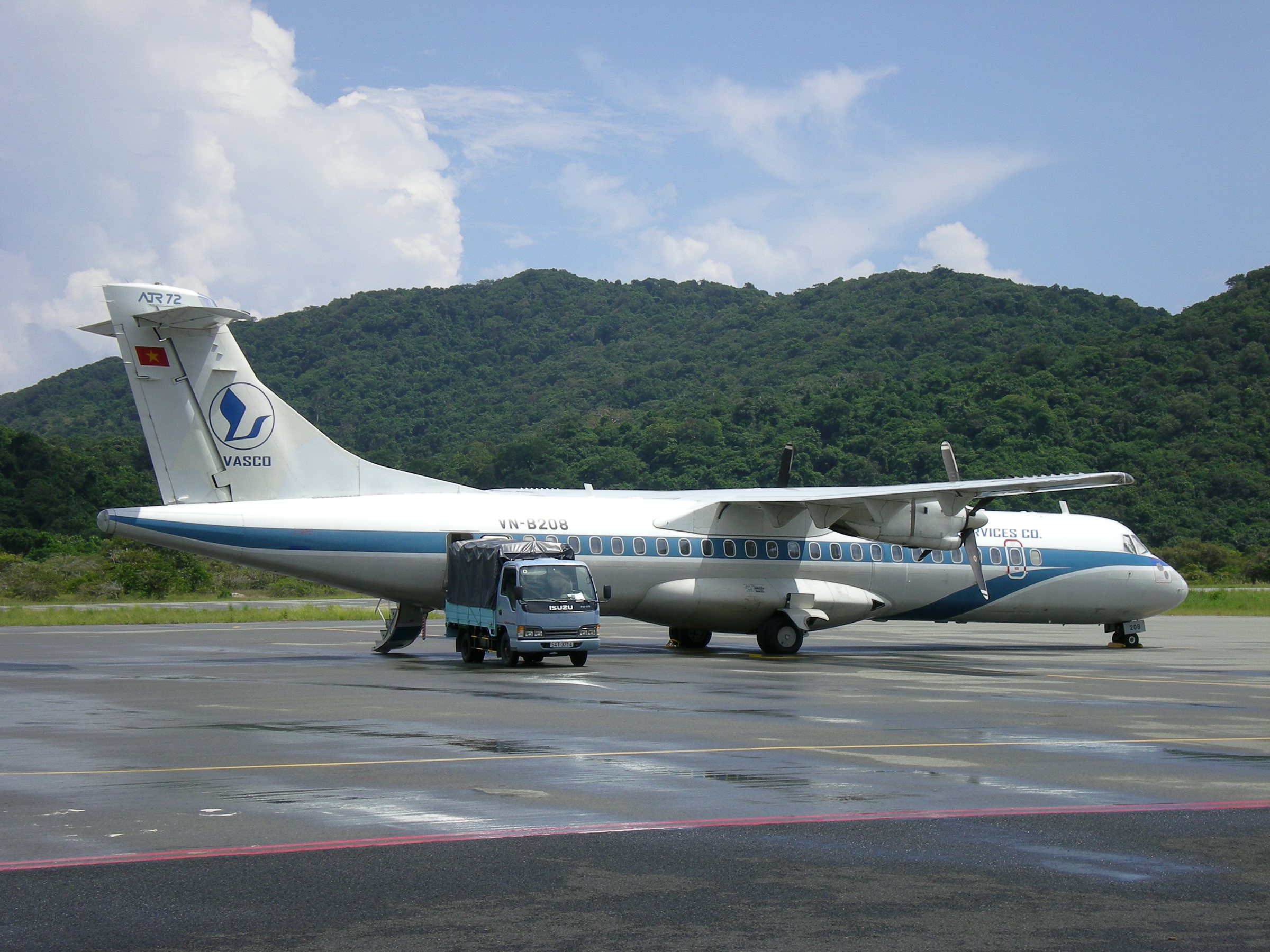
Domestic flights to Con Dao Airport (VCS) operate from Ho Chi Minh City (Tan Son Nhat) and from Can Tho. The Ho Chi Minh City route is the most frequent and takes under an hour in the air. The Can Tho service is less frequent and may not operate year-round.
Con Dao Airport handles only small turboprop or small regional jet aircraft. This has a direct practical consequence: baggage allowances are stricter than on standard domestic routes, and both checked and carry-on limits tend to be lower than passengers accustomed to larger aircraft might expect. Checking the specific allowance at booking is important, particularly for travellers carrying dive equipment or large luggage.
The number of daily flights is small. Seats sell out well ahead of peak periods, and flight-only capacity is a genuine constraint rather than a theoretical one.
Ferries
High-speed ferries serve Con Dao from two mainland ports: Vung Tau and Soc Trang. Both crossings involve open sea and are weather-dependent — services are suspended or cancelled when conditions exceed safe operating thresholds, which occurs with some regularity during the South-West monsoon (roughly May to October).
The crossing from Vung Tau is the longer of the two routes in nautical distance, while Soc Trang in the Mekong Delta offers an alternative departure point for travellers coming from the south or west. Journey times depend on vessel type and sea state.
Ferry passengers should verify the current operational status of their chosen route before finalising travel plans, particularly outside the dry season. Whether a written reservation constitutes a guaranteed sailing or is subject to weather cancellation is a question worth clarifying directly with the operator; the position of ferry companies on compensation and rebooking in weather cancellations is currently unsettled.
Booking and Lead Times
Con Dao's turtle-nesting season, concentrated between June and September, draws significant visitor numbers to a destination with inherently limited transport capacity. Both flights and ferries can reach full occupancy several weeks in advance during this window.
Outside the turtle season, lead times are less pressing, though the island remains popular with Vietnamese domestic travellers at weekends and public holidays throughout the year. The combination of small aircraft, infrequent ferry schedules, and a single small airport means that flexibility on travel dates is a practical advantage rather than merely a convenience.
It is worth noting that high demand for outbound transport — leaving the island — can be equally constrained. Travellers who need to reach Ho Chi Minh City or onward connections by a fixed time should book return or onward transport before departure, not on arrival.
Weather and Reliability
The South-West monsoon brings rougher seas to the waters around Con Dao from approximately May through October. During this period, ferry cancellations are a realistic possibility on any given day, and travellers who must leave by a specific date carry meaningful risk if they are relying on the ferry. Flights are considerably less affected by sea conditions but are not immune to disruption from wind and low visibility.
The North-East monsoon (roughly November to April) brings calmer seas and is generally considered the more reliable period for ferry travel. Conditions within both seasons vary, and the island's exposed position means that localised weather can change quickly.
Travellers with fixed onward international connections should treat Con Dao transport with extra caution and consider building buffer time into their itinerary.
Getting Around the Islands
Once on Con Dao, the main island is small enough that distances between the town, beaches and forest areas are manageable. Motorbike hire is the most common means of independent movement. Bicycles are available for shorter trips within the town and along flatter coastal roads.
The road network is limited to the main island; the smaller uninhabited islands that make up the archipelago are reached by boat, typically arranged through accommodation providers or local operators.
There is no public bus network in the conventional sense. Taxis and vehicles arranged through guesthouses or resorts serve those who do not wish to ride a motorbike. Walking is practical within the town centre of Con Dao town itself.
Also known as / see also
Phục vụ
Được tham chiếu bởi
Các nguồn
- Ministry of Transport — Ministry of Transport of Vietnam đã truy cập 29 August 2026
Supports: carried over from the first build - Vietnam National Authority of Tourism — VNAT đã truy cập 29 August 2026
Supports: carried over from the first build
Ageing Đã xác minh lần cuối: 29 August 2026. Rules, fares and prices change — check the official source before acting on anything here. Report a mistake.
Picture credits (1)
VASCO ATR 72-200 (VN-B208) at Con Dao Airport, Patrick Farrelly, CC BY 3.0, Wikimedia Commons