National Assembly Resolution 202/2025/QH15 on the rearrangement of provincial-level administrative units
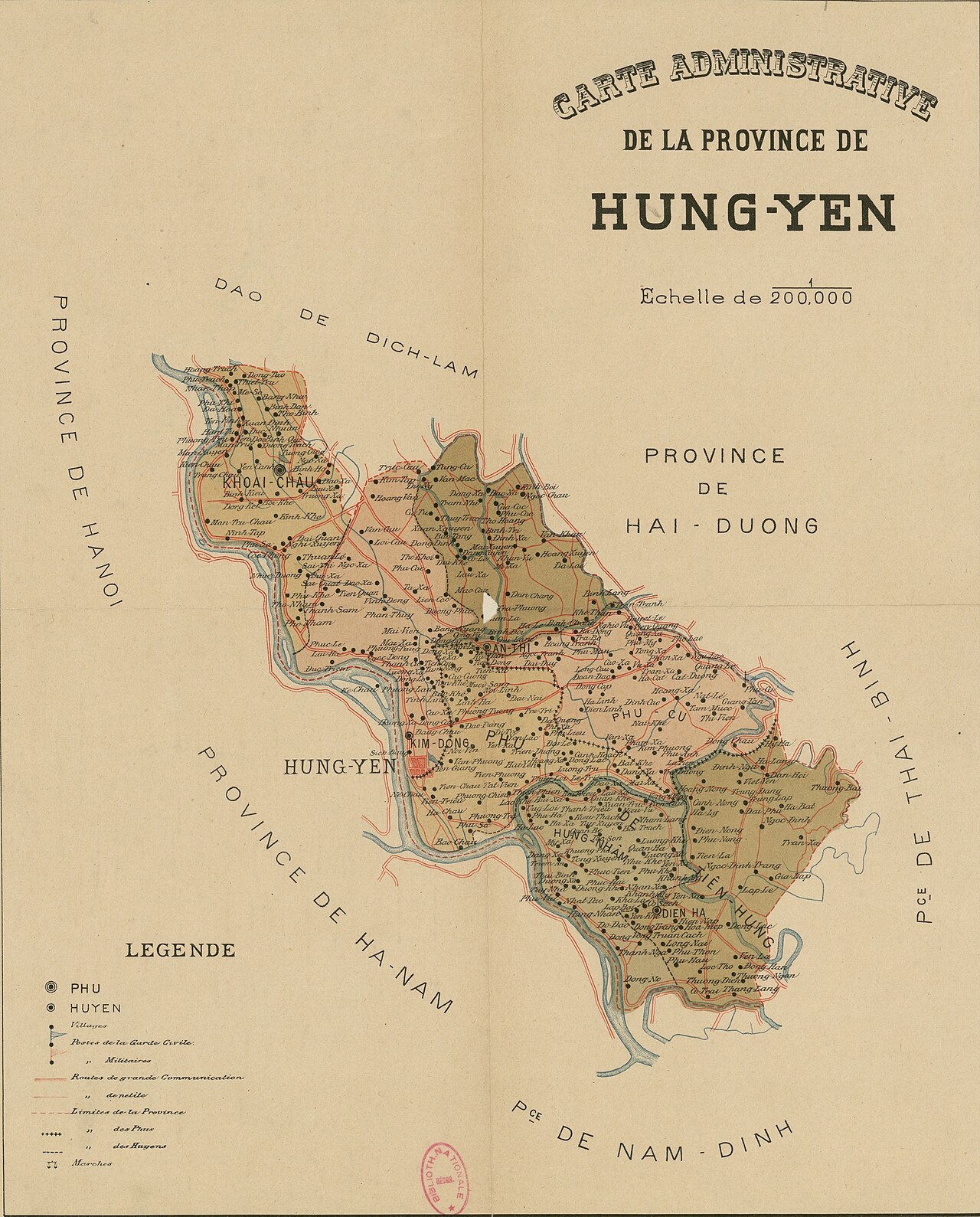
Hung Yen province sits at the heart of the Red River Delta, bordered by the Red River to the west and north-west. Since 1 July 2025 it has absorbed the former province of Thai Binh to the south, forming a larger administrative unit that stretches from the delta's interior to the coast. The province's capital, also called Hung Yen, was a major commercial port during the seventeenth and eighteenth centuries and retains a compact historic core that distinguishes it from other delta towns.
What Hung Yen is known for
Hung Yen's most recognisable product is its longan fruit (nhãn lồng), which has been grown in the province for centuries and is considered by many Vietnamese to be the finest in the country. The harvest season in late summer draws buyers from across the north. Dried longan and longan-based confectionery are among the most commonly purchased goods to take away from the province.
The provincial capital's historic quarter contains a notable concentration of communal houses (đình), temples and pagodas dating from the seventeenth to nineteenth centuries, a legacy of the town's former role as a trading hub rivalling Hoi An in the south. Pho Hien, the old merchant quarter of Hung Yen city, was once home to Chinese, Japanese and Dutch trading communities, and several of their assembly halls survive. The area is sometimes called the "small Pho Hien" in Vietnamese historical writing, a reference to its past commercial importance.
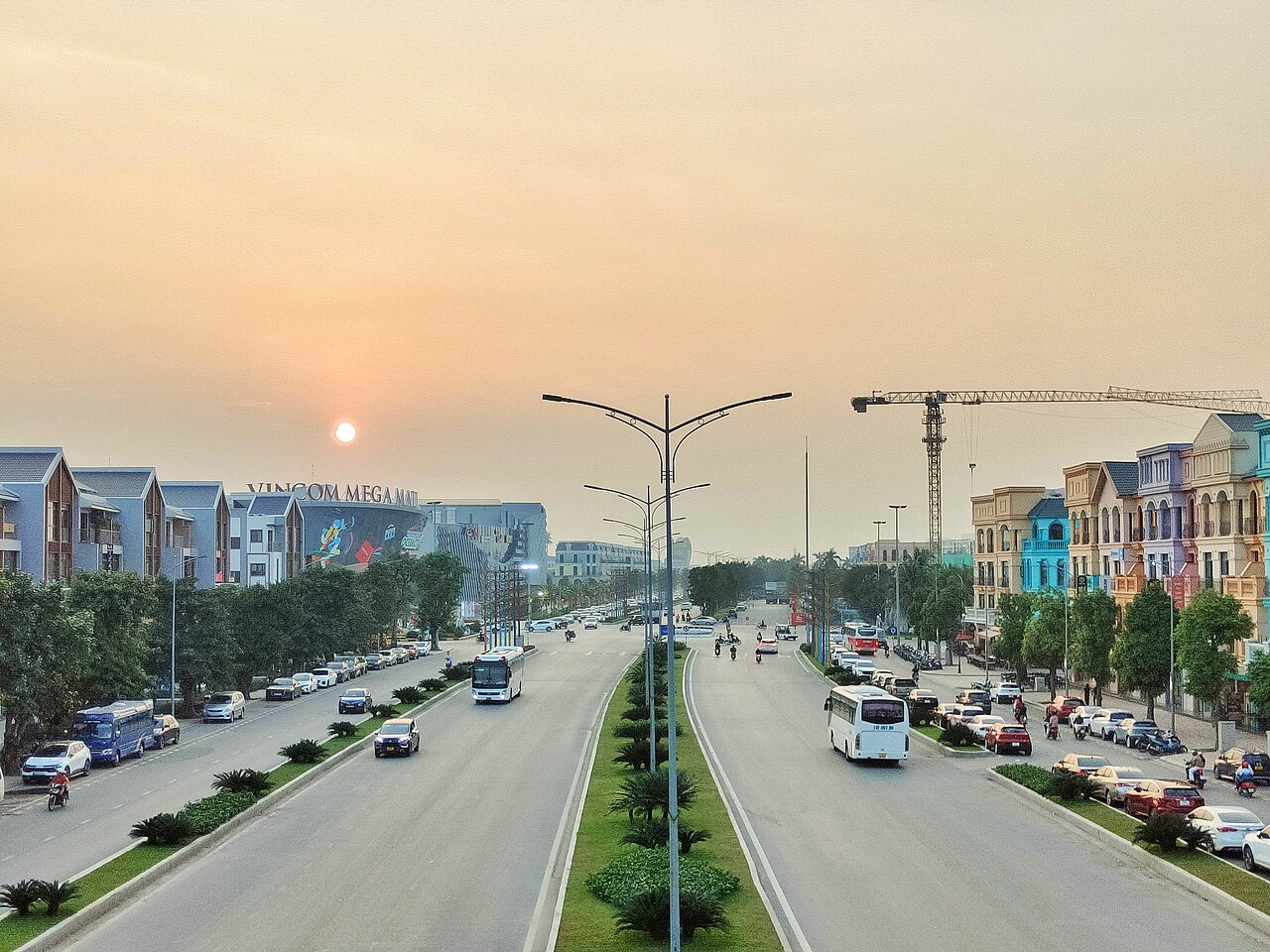
The province also has a number of traditional craft villages producing items such as silk and lacquerware, though industrial manufacturing has become increasingly dominant in the local economy in recent decades.

Getting there and away
Hung Yen city lies roughly 60 kilometres south-east of central Hanoi by road. The most direct route by car or motorbike crosses the Red River and follows National Highway 38. The journey is straightforward on a clear day but can slow considerably during peak hours on the approaches to Hanoi.
Regular public bus services connect Hung Yen city with Hanoi's Giap Bat and My Dinh bus stations. Buses also run south into what was formerly Thai Binh province and east towards Hai Phong. There is no rail station in Hung Yen city itself; the nearest mainline rail connections are in Hanoi.
For visitors combining Hung Yen with other delta destinations, the road network across the flat delta plain is generally in good condition, and the province is within practical day-trip distance of Hanoi, though an overnight stay allows more time in the historic quarter. Motorbike hire is available in the city for those who prefer independent movement around the province's rural areas.
When to go
Hung Yen has a classic northern Vietnamese monsoon climate: hot and wet from May to September, cooler and drier from October to April. See weather by region for a fuller account of seasonal patterns across the country.
The coolest and driest months — November through February — are generally the most comfortable for walking around the historic town. January and February can bring persistent low cloud and a damp chill that feels more penetrating than the temperature suggests; light layers are advisable.
The longan harvest falls in July and August, overlapping with the hottest and most humid part of the year. Visiting during harvest brings the advantage of seeing the orchards and markets in full activity, but the heat can be oppressive, particularly in the middle of the day.
Typhoons occasionally affect the delta in September and October, and the low-lying terrain makes parts of the province susceptible to flooding during heavy rain. Local conditions can change quickly at these times.
What there is to see
Pho Hien historic quarter: The old merchant district of Hung Yen city contains the densest collection of historic structures in the province. Key sites include Hien Duc Pagoda (Chua Pho), one of the oldest Buddhist temples in the delta, and the Mau Temple complex on the bank of the Bai Say lake. The lake itself, ringed by trees, forms the centre of the old town and is pleasant to walk around in the early morning or evening.
Ba Vuong Temple: Dedicated to the spirit of the Red River, this temple on the riverbank is among the most visited religious sites in the province and sees large numbers of worshippers during the Lunar New Year period and other festivals.
Longan orchards: The rural districts around Hung Yen city, particularly along the river, are planted with longan groves that are visually distinctive in late summer when the fruit hangs in heavy clusters. Access is generally on minor roads and paths.
Southern areas (former Thai Binh): The southern part of the enlarged province, incorporating the former Thai Binh, includes coastal mudflats and the Red River estuary, areas of interest for birdwatching and for those seeking less-visited delta landscapes. Infrastructure for international visitors in this zone remains limited.
Where to stay
Accommodation is concentrated in Hung Yen city. The range runs from small guesthouses (nhà nghỉ) and family-run hotels near the historic lake to a small number of larger business hotels. Facilities oriented specifically at international tourists are limited compared with Hanoi or Hai Phong, and the province sees relatively few foreign visitors outside of day-trippers.
Many visitors to Hung Yen base themselves in Hanoi and make a day trip, which is feasible given the road distance. Those wishing to explore the southern areas of the province, including the former Thai Binh territory, may find it more practical to overnight in the provincial capital rather than attempting to cover the full extent of the province from Hanoi in a single day.
For practical matters including currency exchange and cash access, see Money, ATMs and cards. ATMs are available in the city centre but less reliably so in rural areas.
Things first-time visitors get wrong
The province has changed significantly in 2025. From 1 July 2025, the former Thai Binh province was merged into Hung Yen. Maps, guidebooks and transport timetables produced before that date will not reflect this change. Administrative references to Thai Binh as a separate province are now out of date. The population figures shown on this page were recorded before the merger and should be treated as indicative rather than current.
Districts no longer exist as administrative units. Vietnam abolished the district tier on 1 July 2025, moving to a two-tier system of province and commune or ward. Older sources referring to specific districts of Hung Yen or Thai Binh are describing units that have since been dissolved.
Pho Hien is not a separate town. Some older sources treat Pho Hien as a distinct settlement; it is in fact the historic quarter of Hung Yen city itself.
Visa requirements should be verified with official sources. Entry rules can change by ministerial decree. See Vietnam e-visa for current information, and check the official Vietnamese immigration authority for the most recent requirements before travel. For awareness of common tourist scams in Vietnam, see Safety and common scams.
المناخ حسب الشهر
متوسطات طويلة الأمد، وليست تنبؤاً. الفترة المرجعية: 2015–2024. المصدر: ERA5 reanalysis (Copernicus) via the Open-Meteo archive API.
Show the numbers
| الشهر | أعلى درجة حرارة °م | الحد الأدنى °C | كمية الأمطار (ملم) | أيام الأمطار | Humidity % |
|---|---|---|---|---|---|
| January | 21.1 | 14.3 | 64 | 11 | 77 |
| February | 22.6 | 15.4 | 47 | 9 | 77 |
| March | 25.8 | 18.9 | 72 | 12 | 82 |
| April | 29.0 | 21.6 | 102 | 12 | 82 |
| May | 31.7 | 24.9 | 201 | 17 | 81 |
| June | 33.7 | 26.9 | 211 | 17 | 78 |
| July | 33.1 | 26.4 | 296 | 20 | 80 |
| August | 31.8 | 25.7 | 394 | 24 | 86 |
| September | 30.7 | 24.7 | 361 | 22 | 85 |
| October | 28.4 | 21.8 | 176 | 14 | 78 |
| November | 26.2 | 19.2 | 61 | 9 | 77 |
| December | 21.5 | 14.6 | 34 | 7 | 71 |
Where it is
Also known as / see also
قريب
مُدمج
مُشار إليه من
المصادر
- ERA5 climate normals — Copernicus / Open-Meteo (CC BY 4.0) تم الوصول إليه 30 August 2026
Supports: monthly temperature and rainfall normals, and elevation - Map data from OpenStreetMap contributors, ODbL 1.0 — OpenStreetMap (ODbL 1.0) تم الوصول إليه 29 August 2026
Supports: carried over from the first build - Hung Yen (Q36235) — Wikidata (CC0 1.0) تم الوصول إليه 30 August 2026
Supports: coordinates, area, population - Hung Yen — Wikipedia (CC BY-SA 4.0) تم الوصول إليه 30 August 2026
Supports: background
Current آخر تحقق: 29 August 2026. Rules, fares and prices change — check the official source before acting on anything here. Report a mistake.
Picture credits (5)
Hung Yen 1891, Schneider, F. H. (18..-18..?). Auteur du texte, Public domain, Wikimedia Commons · Duong vanh dai 3,5 qua dia ban tinh Hung Yen, Wkpd.donhat89, CC BY-SA 4.0, Wikimedia Commons · Phật Quang, QuangDanDang, CC BY-SA 4.0, Wikimedia Commons · Van Giang Hung Yen, Nguyễn Văn Thành 1992, CC BY-SA 4.0, Wikimedia Commons · Ecopark Hung Yen, Nguyễn Văn Thành 1992, CC BY-SA 4.0, Wikimedia Commons