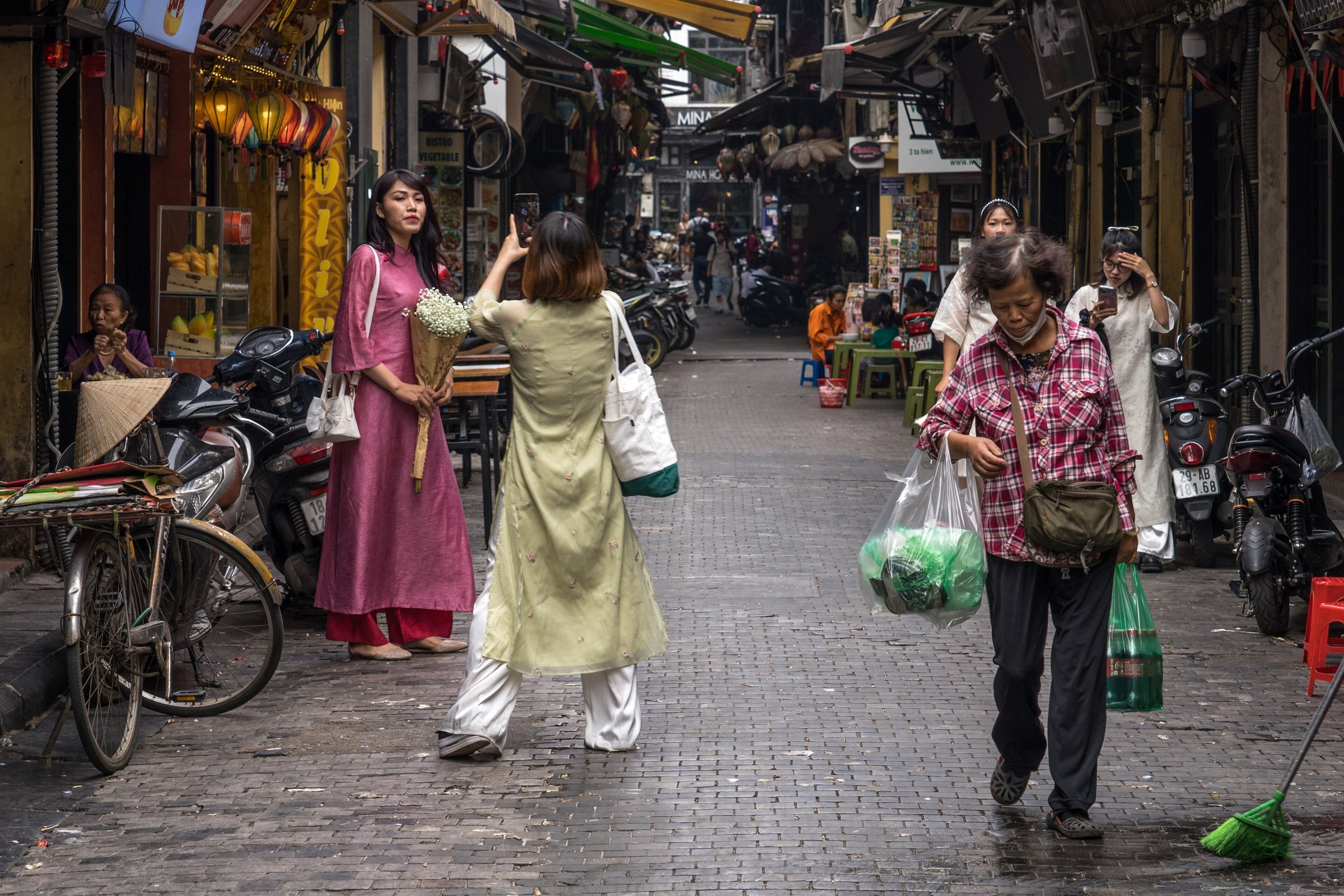
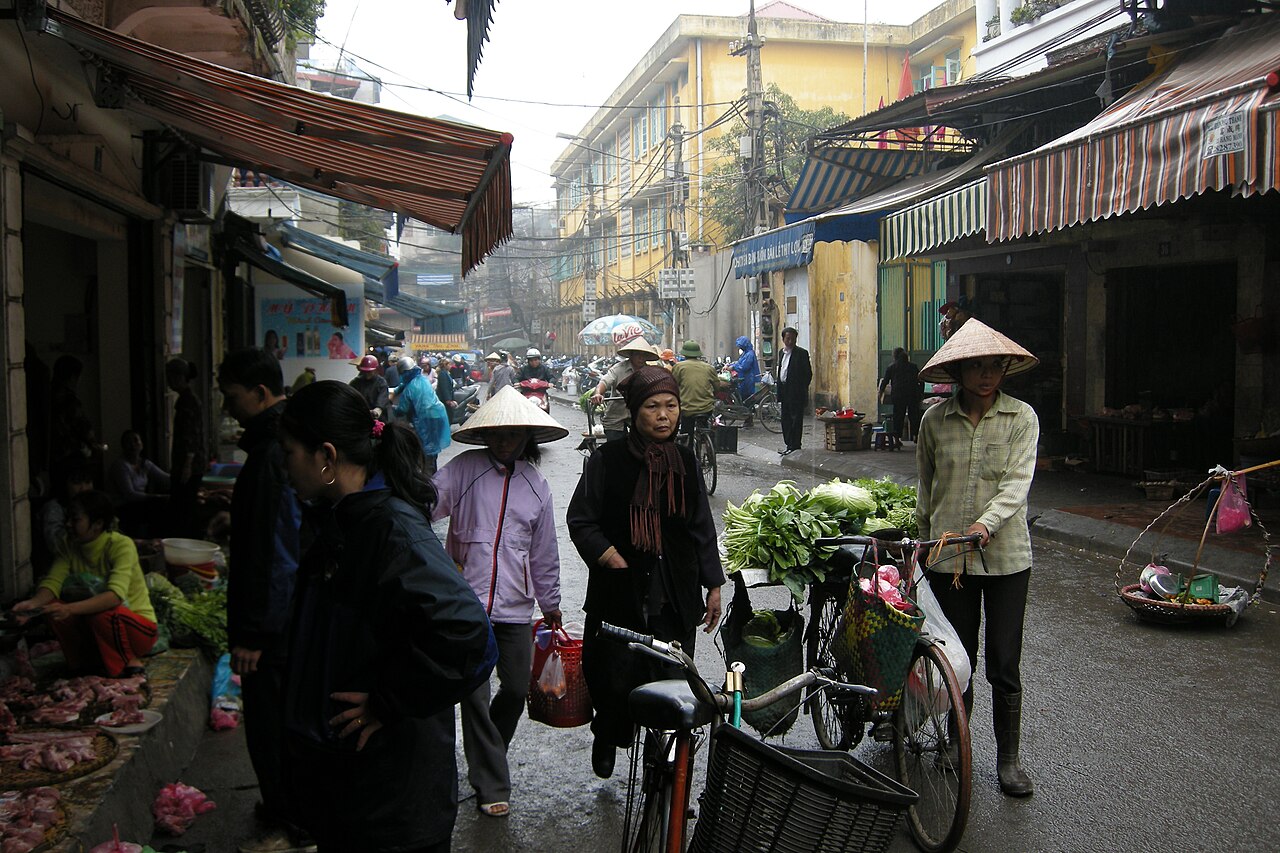
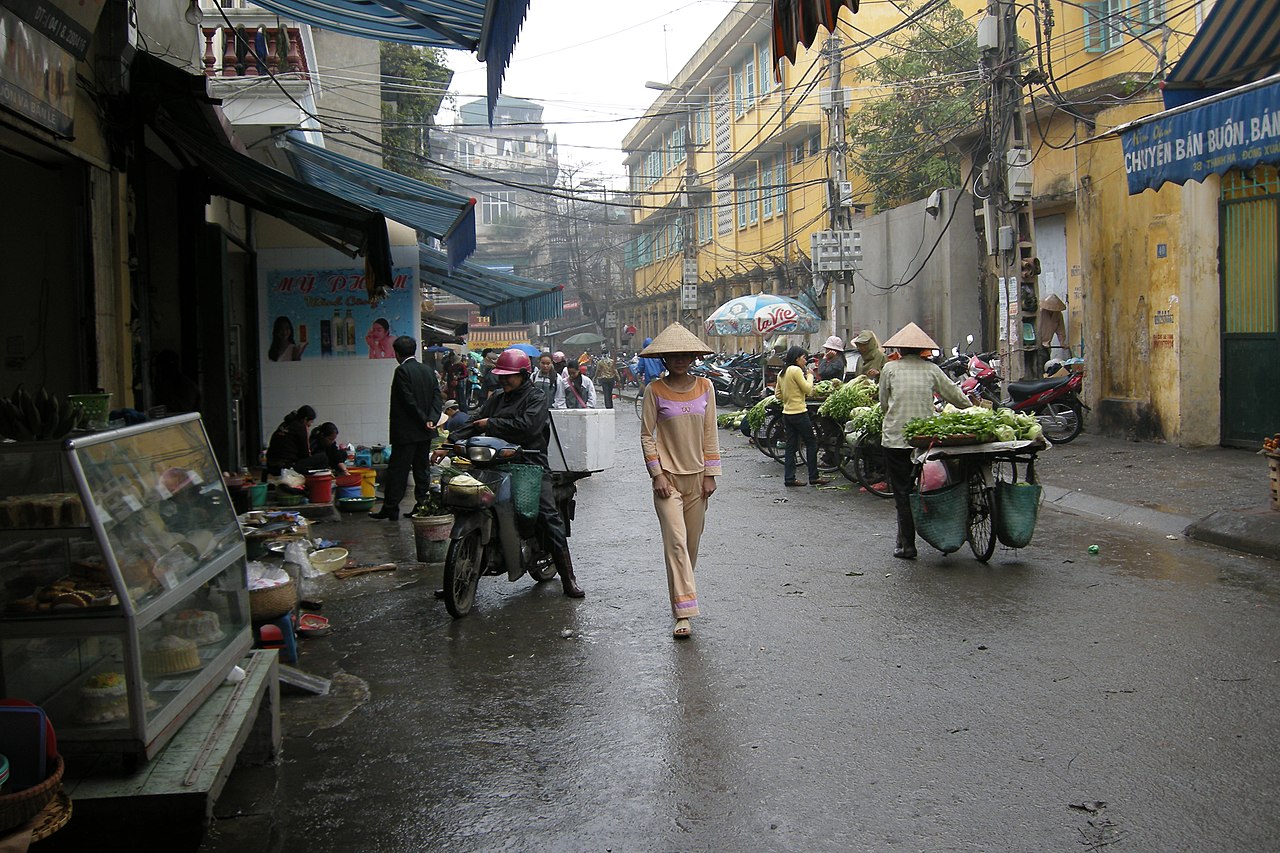
Hanoi's Old Quarter — Phố cổ Hà Nội — occupies roughly one square kilometre north of Hoan Kiem Lake in Hanoi. Its street plan descends from a medieval merchant city where each lane was controlled by a guild selling a single commodity. That logic is now blurred by tourism and retail change, but the physical fabric — narrow tube houses, layered shopfronts, street-food stalls embedded in the footpath — remains distinctively intact.
The guild streets and what the names mean
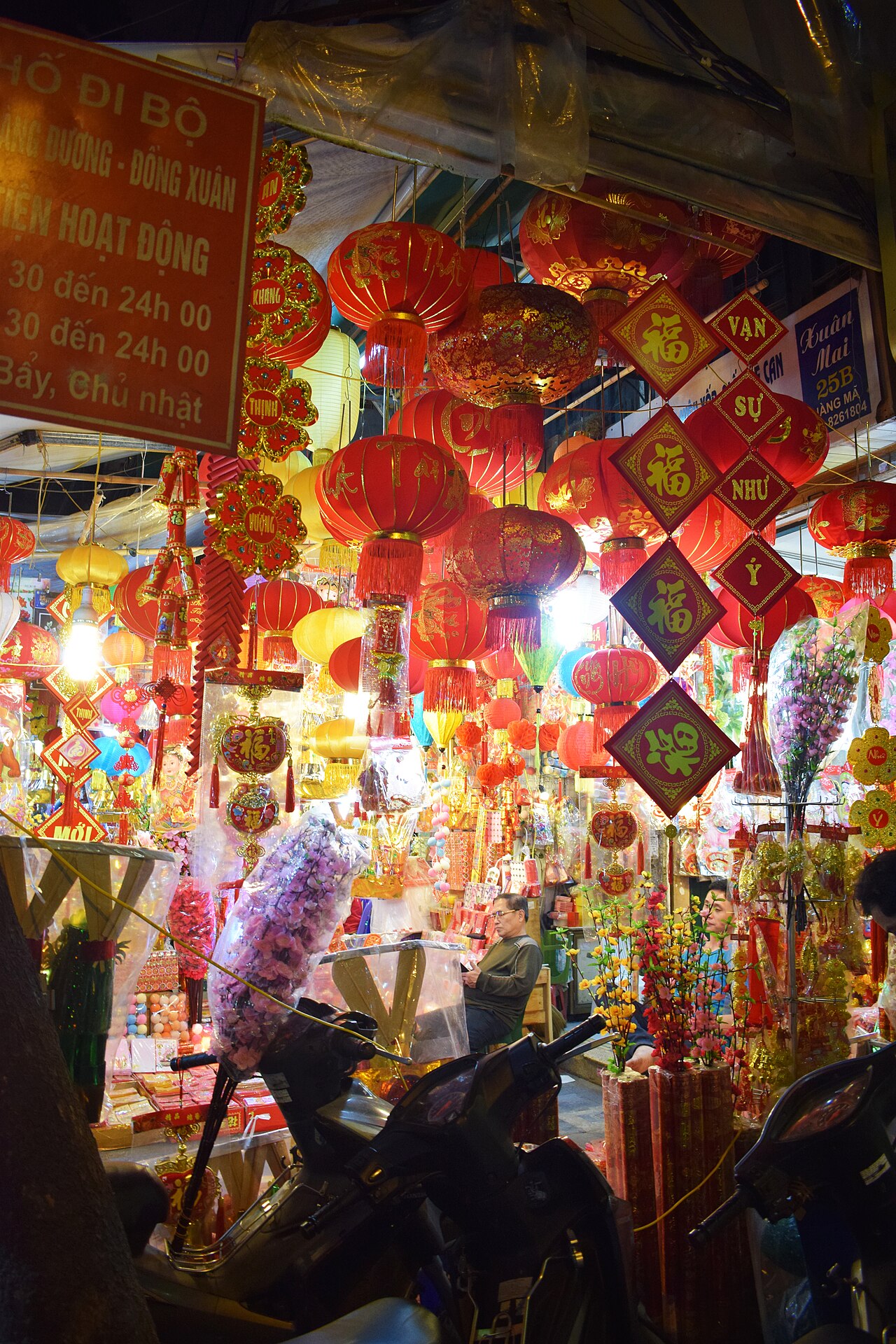
The district is popularly described as the "36 streets", though the actual count of historically designated guild lanes is higher and the boundaries have shifted over centuries. The convention comes from the Vietnamese administrative unit of phường (ward), each of which was originally dominated by craftsmen or traders from a particular village outside Hanoi who came to sell their goods in the capital.
Street names encode the trade: Hàng Bạc (silverware), Hàng Đồng (copper goods), Hàng Tre (bamboo), Hàng Mã (votive paper offerings). Many streets have drifted from their original trade — Hàng Bạc now mixes jewellers with restaurants and guesthouses — but enough specialist shops survive on enough streets to make the pattern legible. Hàng Thiếc (tinware) and Lò Rèn (blacksmiths) retain unusually strong concentrations of their original craft. Walking the grid systematically rather than randomly rewards attention to signage: the word hàng simply means "goods" or "merchandise", so each street name is a small piece of economic history.
Hoan Kiem Lake and the weekend walking street
Hoan Kiem Lake — Lake of the Restored Sword — forms the southern boundary of the Old Quarter and is the symbolic centre of Hanoi. The name refers to a legend in which Emperor Lê Lợi returned a magic sword to a divine turtle in these waters after defeating Chinese forces in the fifteenth century. A small tower on Jade Island (Đảo Ngọc) in the middle of the lake, reached by the red-painted Thê Húc Bridge, leads to Ngọc Sơn Temple, which has an entry fee. The bridge and lakeside circuit are free to walk at any time.
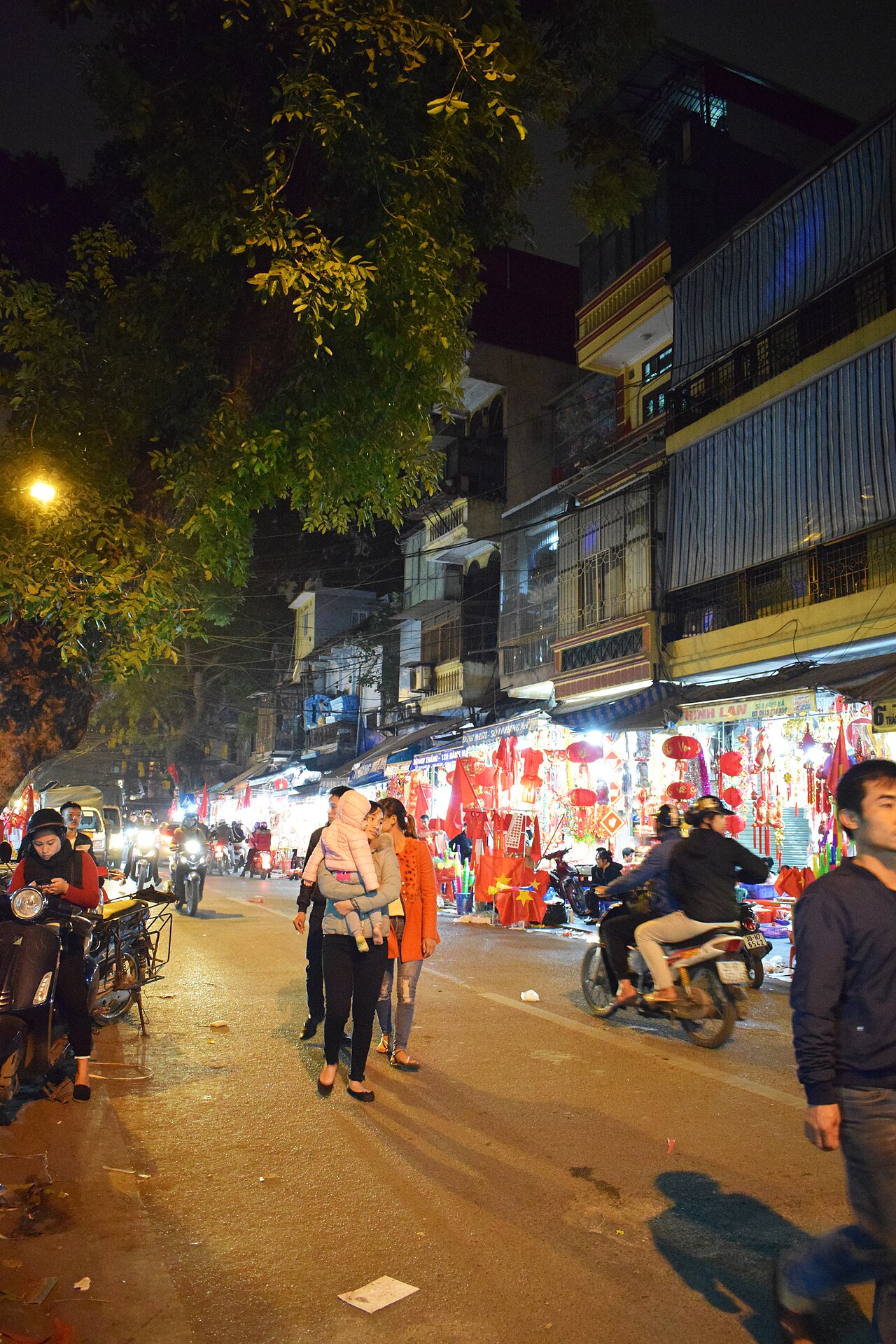
On weekend evenings — Friday, Saturday and Sunday nights — the streets immediately surrounding the lake and several Old Quarter lanes are closed to motor traffic and become a pedestrian zone. Street performers, food vendors and large numbers of local families use the space alongside tourists. The arrangement is popular and tends to be crowded; it is also the clearest illustration of how the Old Quarter functions as a social space for Hanoians, not only a visitor attraction.
A small population of large softshell turtles (Rafetus swinhoei) historically inhabited the lake; whether any survive is a matter of ongoing scientific uncertainty and public interest in Vietnam.
Dong Xuan market, bia hoi corner and train street
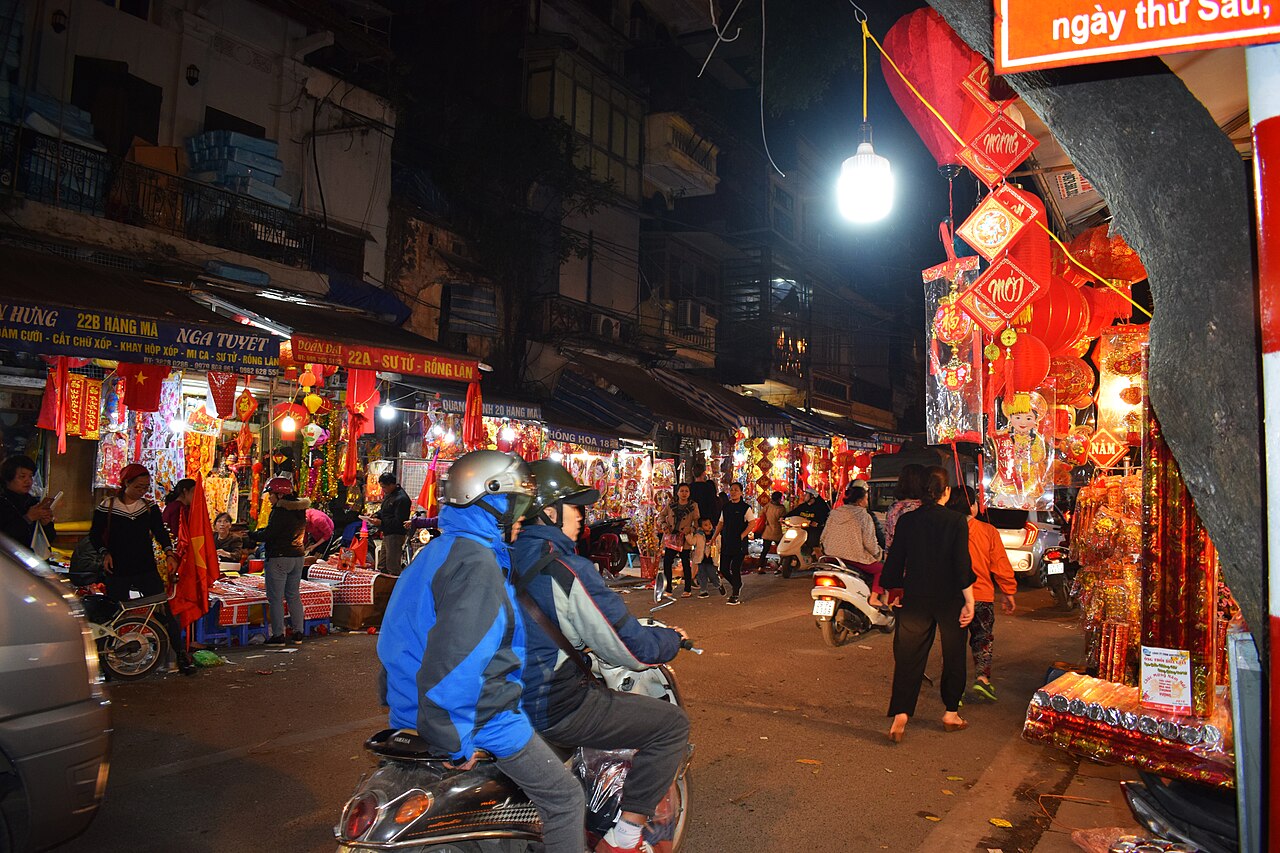
Dong Xuan Market (Chợ Đồng Xuân) stands at the northern end of the Old Quarter, the largest covered market in Hanoi. The present building dates from a post-fire reconstruction in the 1990s. The ground floor sells fresh produce, meat and household goods to local buyers; upper floors concentrate on wholesale fabric, clothing and general merchandise. It is a working market that happens to be accessible to visitors rather than a curated experience.
Bia hoi corner — at the junction of Tạ Hiện and Lương Ngọc Quyến streets — is the most internationally noted spot in the Old Quarter for drinking fresh-brewed draught beer (bia hơi) at pavement level on low plastic stools. The intersection is busy most evenings and very busy on weekends. The surrounding lanes have a high density of bars and restaurants.
Train Street refers to a narrow residential alley (principally on Phùng Hưng and a connecting lane near Điện Biên Phủ) through which an active rail line runs at close range to the houses on either side. The area gained international attention as a photography subject and then became heavily commercialised with cafés operating during train passages. Hanoi authorities have periodically closed sections to tourists and issued restrictions on café operation; the situation has changed more than once and the current access rules should be checked locally on arrival.
Where to stay and the noise trade-off
Accommodation is concentrated along and between the main tourist streets: Hàng Bè, Mã Mây, Tạ Hiện, Hàng Bạc and the lanes connecting them. Options range from small family guesthouses in restored tube houses to internationally branded hotels on the periphery near the lake. Staying inside the Old Quarter means proximity to everything but also means noise: scooter traffic resumes early, street vendors use loudspeakers, and the lanes near Tạ Hiện remain loud well after midnight on weekends.
Streets one or two blocks further from the core — or on the western side toward Hàng Điếu and Hàng Da — tend to be quieter without being a significant walking distance from the main sights. The area immediately south of the lake, in the French Quarter, offers a different character: wider streets, more shade, lower density of tourist infrastructure.
Whichever part of the district one stays in, upper-floor rooms and those facing interior courtyards or rear walls are generally quieter than street-facing ground-floor rooms.
Orientation for a first morning
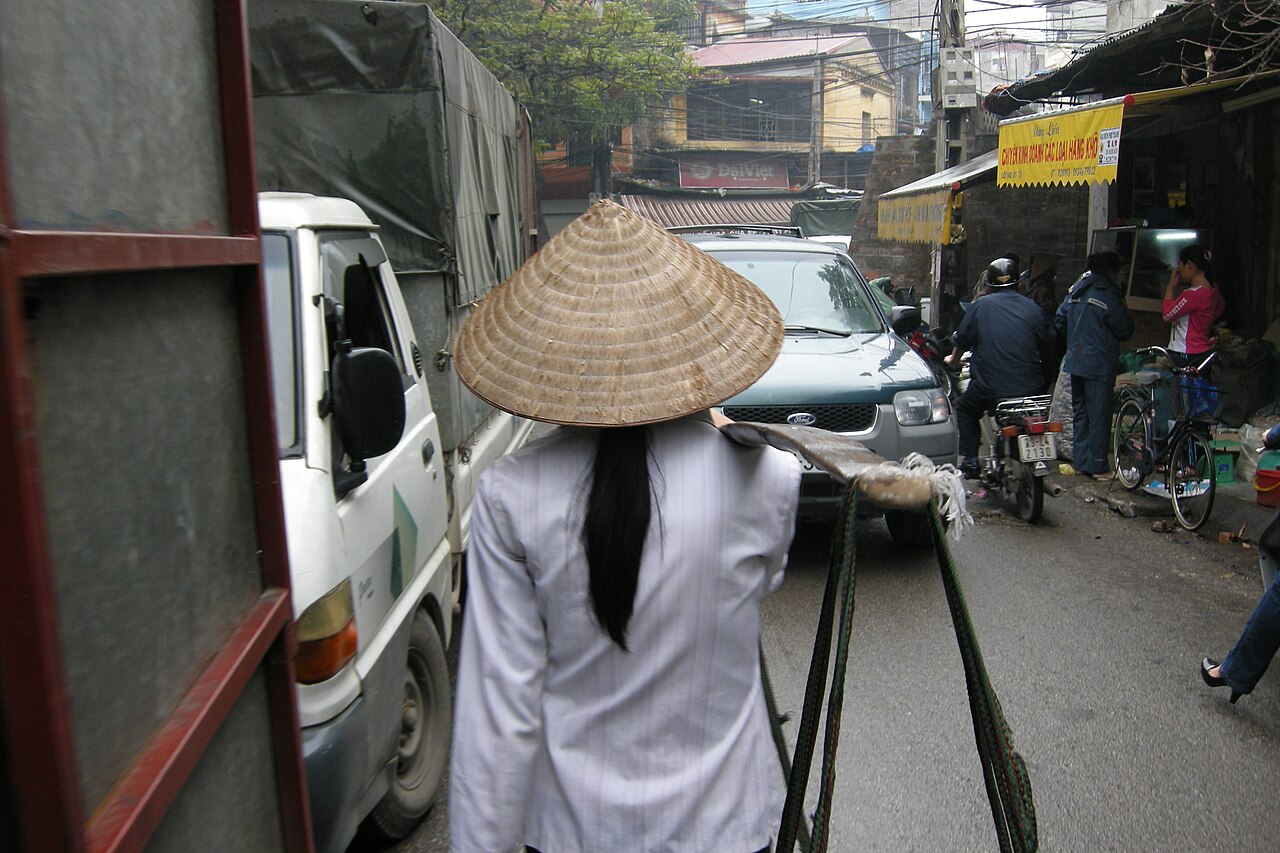
The Old Quarter is small enough to walk across in twenty minutes, but the one-way street system, dense traffic and frequent dead ends make it disorienting on first encounter. A useful anchor point is the junction of Đinh Tiên Hoàng along the lake's east shore, which connects south toward the post office and Ngọc Sơn Temple entrance and north into the Old Quarter proper. The Thê Húc Bridge is visible from the lakeside path.
A first-morning circuit might follow the lake south to north along the shore, enter the Old Quarter via Hàng Bạc, walk north through the grid as far as Dong Xuan Market, then return south via a different set of lanes. The whole loop is under three kilometres. Street food is available from early morning: phở and bún chả stalls open before seven on most streets. Pavement space is often occupied by parked motorbikes; walking in the street alongside slow-moving traffic is normal and generally safe.
For practical matters before and during a visit — visa requirements, currency, local SIM cards and common scams — see the related pages: Vietnam e-visa, Money, ATMs and cards, SIM cards and eSIMs, and Safety and common scams.
When to go
The Old Quarter is a year-round destination but the experience varies considerably by season. Hanoi has four seasons; the Old Quarter does not offer the kind of weather-dependent activity — beach, trekking — that makes timing critical elsewhere, but comfort and crowd levels differ.
October to April is generally considered the better half of the year. October and November are widely regarded as the most pleasant months: temperatures are mild, humidity is lower than summer, and the air is clearer than the hazy months of late winter. December and January can be cool and damp, occasionally cold enough to require a jacket, which surprises visitors expecting a tropical climate throughout Vietnam.
May to September is hot and humid, with heavy rainfall concentrated in afternoon and evening thunderstorms from June onward. The heat is intense at midday. The Old Quarter continues to function normally, and some travellers prefer the city in this period for lower tourist density in accommodation and on the streets.
The Tết lunar new year period (late January or February depending on the year) brings significant disruption: many shops and restaurants close for several days to a week, the city empties of its own population, and the normally frantic streets become briefly quiet. This is a genuine contrast to the rest of the year and is itself of interest, but visitors should plan for reduced services. See When to go: weather by region for broader context.
Климат по месяцам
Многолетние средние значения, не прогноз. Референсный период: 2015–2024. Источник: ERA5 reanalysis (Copernicus) via the Open-Meteo archive API.
Show the numbers
| Месяц | Макс. °C | Мин. °C | Осадки, мм | Дождливых дней | Humidity % |
|---|---|---|---|---|---|
| January | 20.9 | 14.3 | 65 | 11 | 77 |
| February | 22.4 | 15.5 | 47 | 9 | 77 |
| March | 25.8 | 19.0 | 76 | 13 | 82 |
| April | 29.1 | 21.7 | 97 | 12 | 81 |
| May | 31.8 | 24.9 | 212 | 18 | 81 |
| June | 33.5 | 26.7 | 242 | 17 | 79 |
| July | 32.8 | 26.4 | 302 | 20 | 81 |
| August | 31.8 | 25.9 | 404 | 24 | 85 |
| September | 30.8 | 24.9 | 348 | 22 | 85 |
| October | 28.3 | 21.9 | 190 | 13 | 78 |
| November | 26.1 | 19.2 | 59 | 9 | 77 |
| December | 21.3 | 14.6 | 35 | 7 | 72 |
Practical notes
Where it is
Also known as / see also
Рядом
Упоминается на страницах
Источники
- ERA5 climate normals — Copernicus / Open-Meteo (CC BY 4.0) просмотрено 30 August 2026
Supports: monthly temperature and rainfall normals, and elevation - Khu phố cổ Hà Nội — Wikipedia (Vietnamese) (CC BY-SA 4.0) просмотрено 29 August 2026
Supports: carried over from the first build
Current Последняя проверка: 29 August 2026. Rules, fares and prices change — check the official source before acting on anything here. Report a mistake.
Picture credits (7)
Alexkom000, CC BY 4.0, Wikimedia Commons · Hanoi Old Quarter (25397128097), Mig Gilbert from Brighton, CC BY-SA 2.0, Wikimedia Commons · Hanoi Old Quarter (25397132177), Mig Gilbert from Brighton, CC BY-SA 2.0, Wikimedia Commons · Hanoi Old Quarter (40267872341), Mig Gilbert from Brighton, CC BY-SA 2.0, Wikimedia Commons · Vietnam, Hanoi, Life on the streets of Hanoi 2, Vyacheslav Argenberg, CC BY 4.0, Wikimedia Commons · Vietnam, Hanoi, Life on the streets of central Hanoi, Vyacheslav Argenberg, CC BY 4.0, Wikimedia Commons · Vietnam, Hanoi, Streets of central Hanoi, Vyacheslav Argenberg, CC BY 4.0, Wikimedia Commons