What the site is
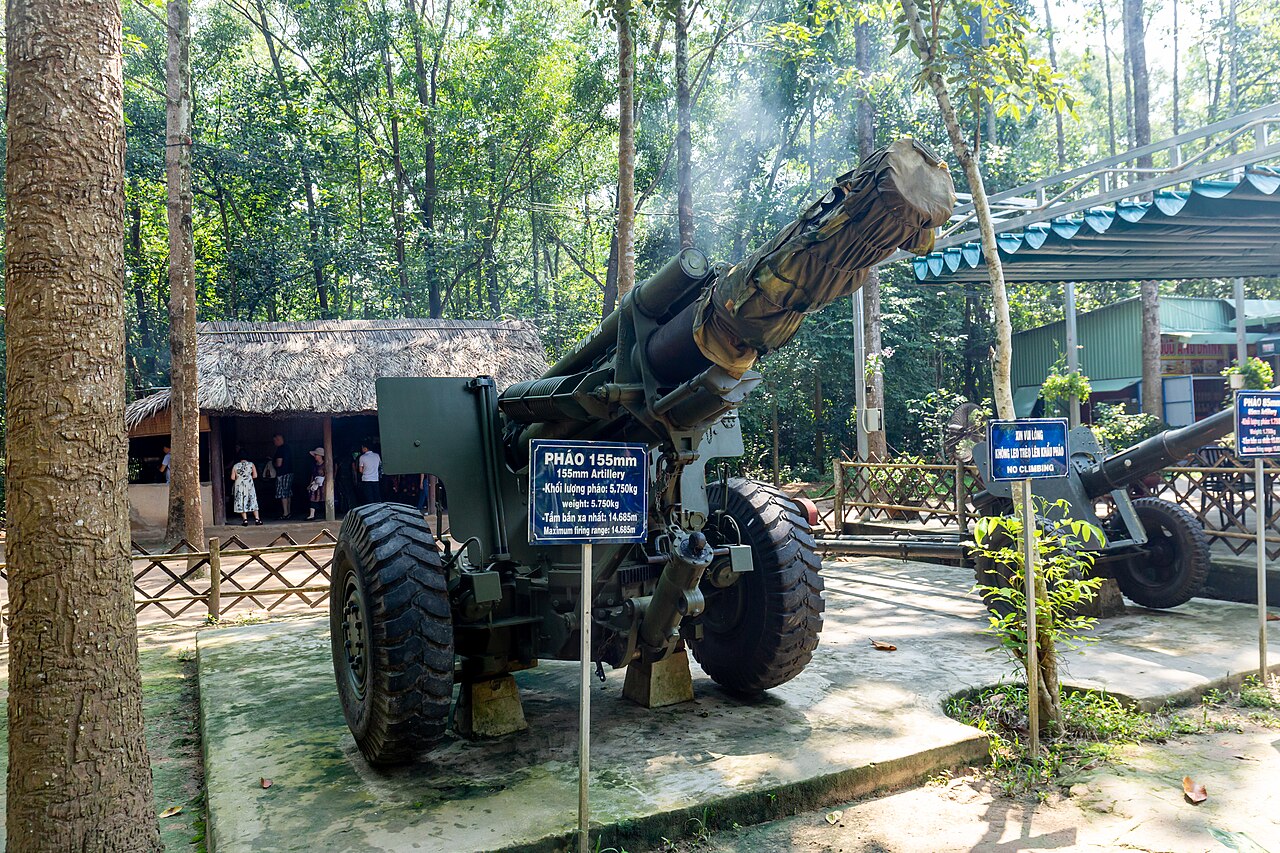
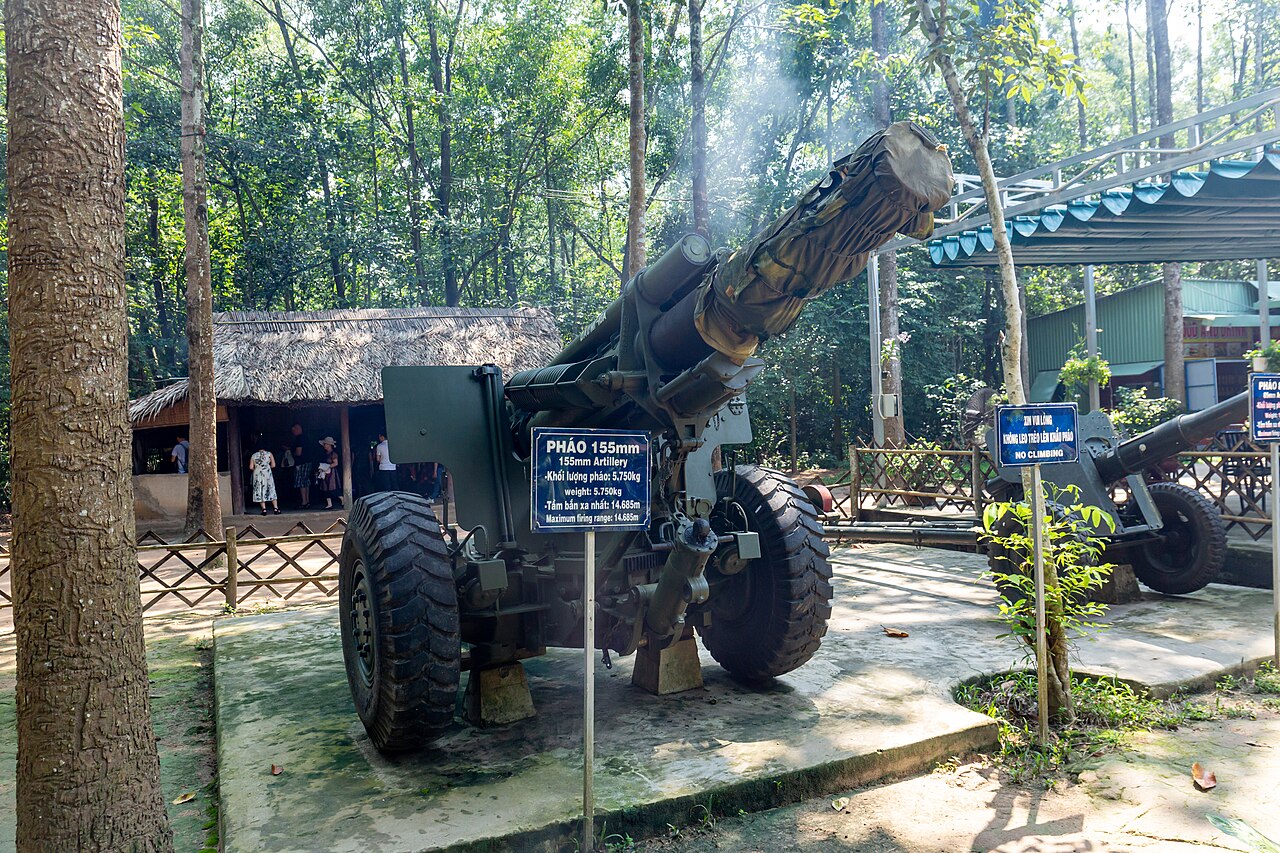
The Cu Chi tunnel network extends for roughly 250 kilometres beneath the red-clay district northwest of Ho Chi Minh City. Dug progressively from the late 1940s through the American War (known in the West as the Vietnam War), the tunnels served as supply routes, field hospitals, command posts and living quarters for Viet Cong fighters and local civilians. At their peak they allowed guerrillas to operate within striking distance of Saigon while remaining largely invisible to US and Army of the Republic of Vietnam forces.
The tunnel system passes through three levels. The upper passages, typically less than a metre wide and under a metre tall, connected to deeper corridors used for shelter during bombing. Air vents, disguised as termite mounds or concealed under dry leaves, allowed the network to function for years despite repeated attempts to destroy or flood it. The surrounding area was one of the most heavily bombed zones in the war.
Ben Dinh and Ben Duoc: choosing a site
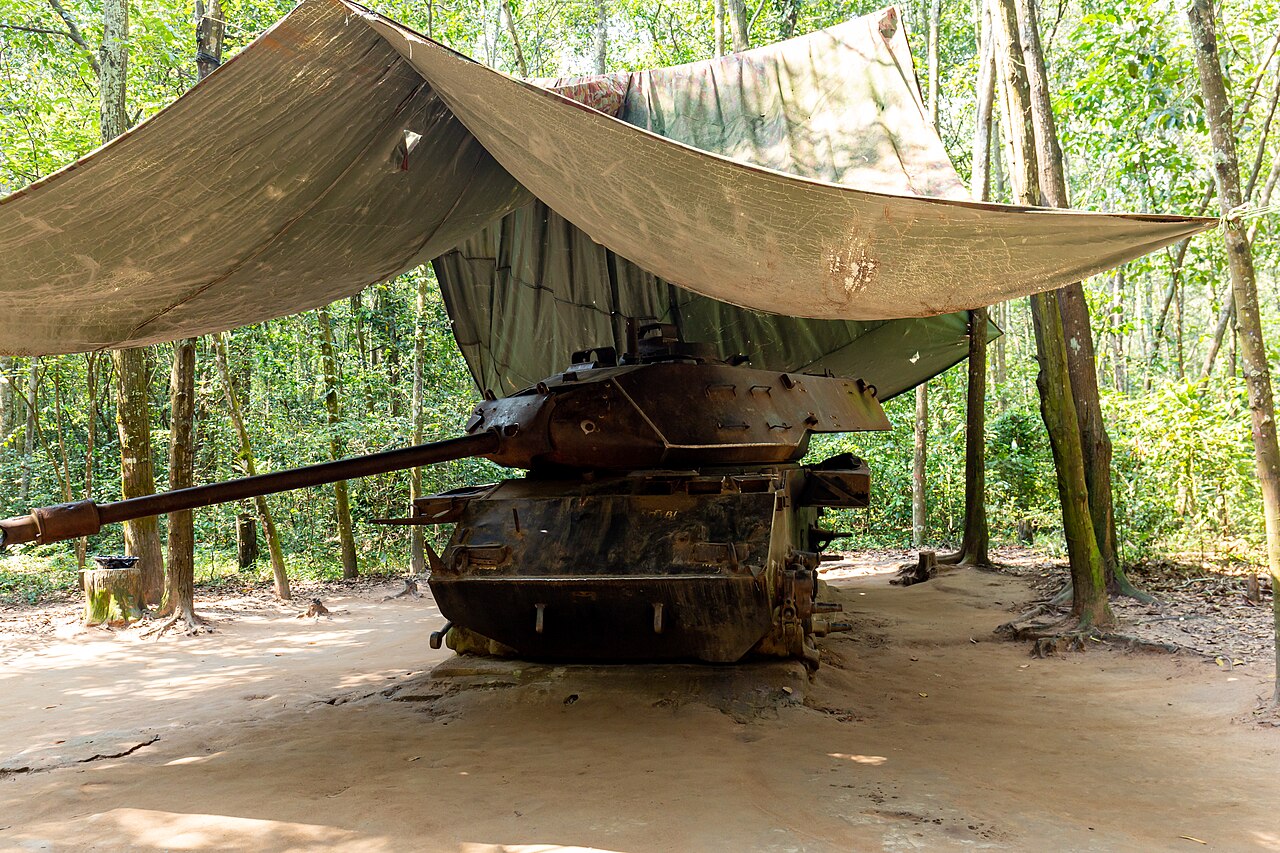
Two sections of the tunnel network are open to visitors: Ben Dinh and Ben Duoc. They are about 15 kilometres apart and operated independently.
- Ben Dinh is closer to Ho Chi Minh City and receives the large majority of tour groups. It has a more compact layout, a shooting range, and is the default stop on most packaged day trips. The crowds, particularly mid-morning, can be heavy.
- Ben Duoc is further northwest and sees considerably fewer visitors. It is larger in area, includes a significant war memorial temple — the Đền Bến Dược — listing the names of tens of thousands of fallen fighters, and gives a quieter experience of the site. The tunnels and exhibits here are broadly comparable in quality to Ben Dinh.
Independent travellers who prioritise atmosphere over convenience generally find Ben Duoc the more rewarding choice. Groups on standard tour packages will almost always be taken to Ben Dinh.
The tunnels themselves and the widened sections
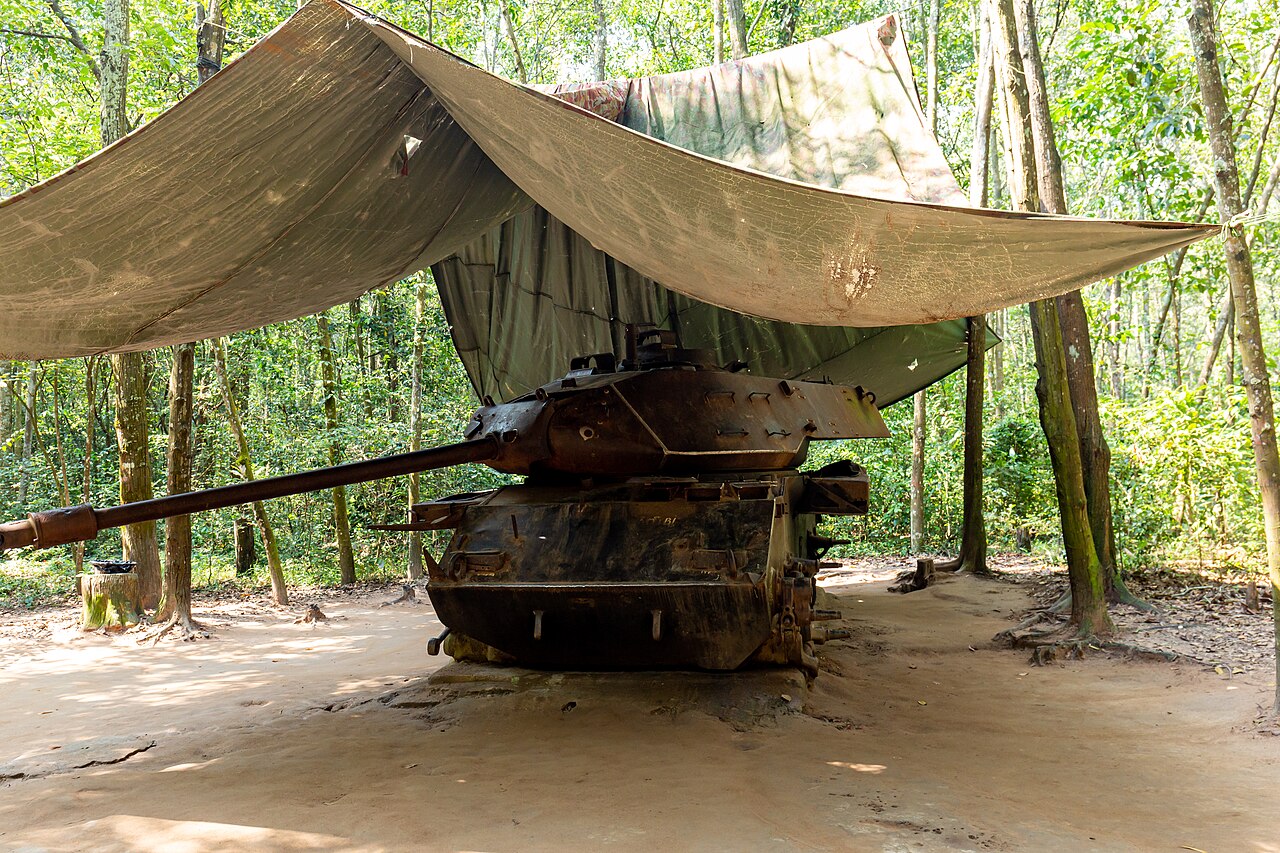
Original tunnel passages are far too narrow for most visitors: the Viet Cong fighters who used them were small even by the standards of the era, and the tunnels were deliberately kept tight to prevent enemy soldiers from following. Both sites now offer widened sections — typically enlarged to roughly twice the original diameter — which allow visitors of average build to crawl through a short demonstration stretch, usually 20 to 40 metres long.
The experience is close, dark and warm. Visitors with claustrophobia, respiratory conditions or limited mobility should consider whether crawling underground is appropriate for them. There is no obligation to enter the tunnels; the above-ground exhibits, including replica bunkers, trapdoor entrances, bamboo spike traps and displays of improvised weapons, convey the history without requiring anyone to go underground.
Staff at both sites demonstrate how trapdoor entrances were concealed and can show visitors how to enter and exit a tunnel opening — a task that requires significant agility even on the modern, enlarged versions.
The shooting range and the propaganda film
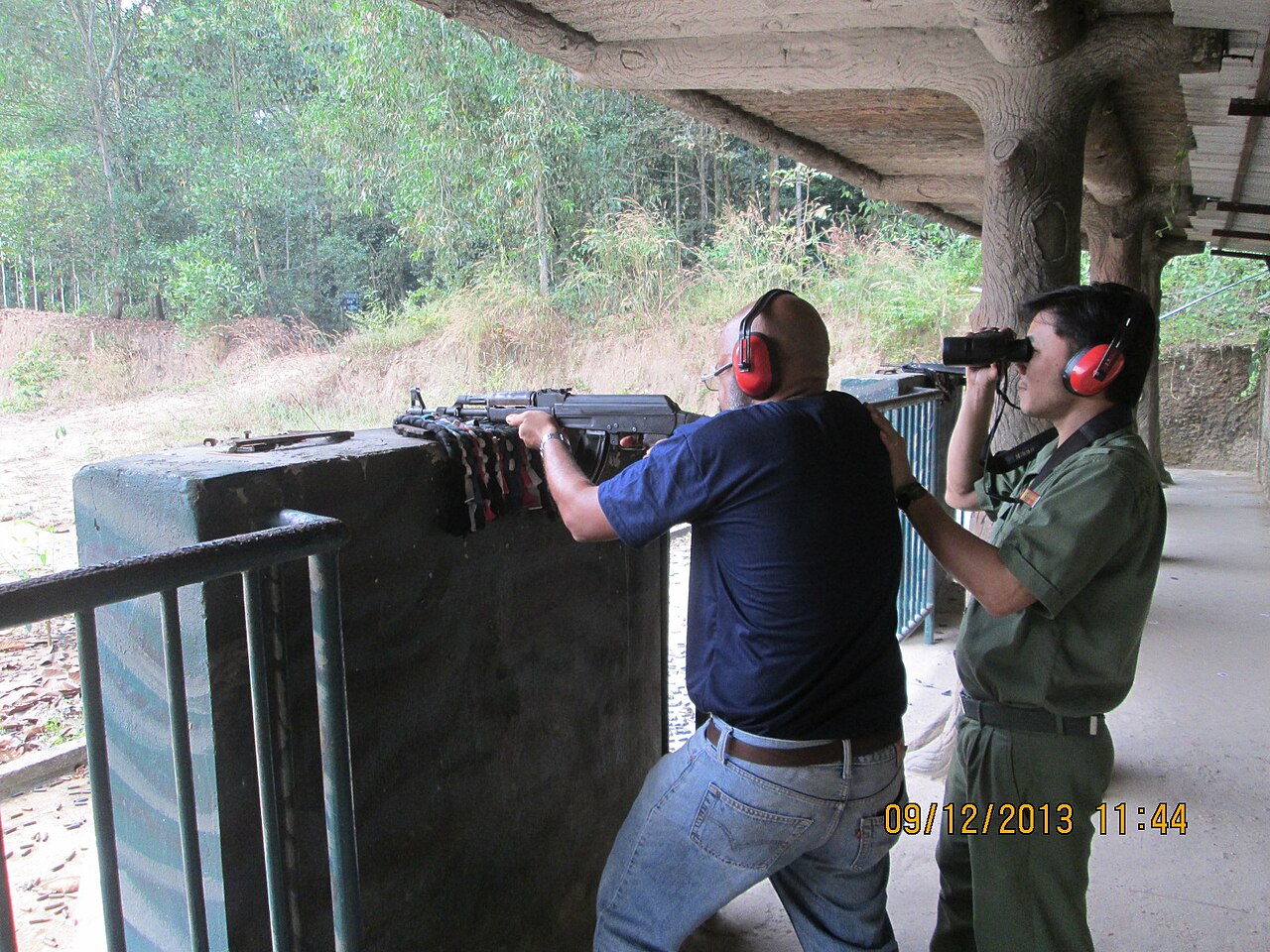
Both Ben Dinh and Ben Duoc operate shooting ranges where visitors can fire a selection of war-era weapons including AK-47s, M16s and M60s. Ammunition is sold by the round. The ranges are loud — ear protection is provided — and generate significant revenue for the sites. Many visitors choose to skip them entirely; others find the experience worthwhile as a concrete encounter with the hardware of the war. The choice is individual and there is no pressure to participate.
On arrival at either site, visitors are shown a short black-and-white documentary film made during the war period by Vietnamese state filmmakers. The film presents Cu Chi residents as heroic resisters and praises those who killed the highest number of American soldiers by name, describing them as "American killer heroes." The framing is explicitly one-sided and reflects the political context in which it was produced. It is worth watching as a primary source document rather than as balanced history, and it sets a tone that runs through much of the on-site interpretation.
Tours: half-day, full-day and combining with the Mekong
Cu Chi is most commonly visited as a half-day trip from Ho Chi Minh City. The drive takes roughly 1.5 to 2 hours each way depending on traffic, and two to three hours on site is sufficient to see the principal exhibits, watch the film, crawl a tunnel section and walk the grounds. A half-day tour departing early morning typically returns to the city by early afternoon.
Some operators offer full-day tours that combine Cu Chi with a separate destination. The most common pairing is with the Mekong Delta, usually a stop in the Ben Tre area. The logic is geographical convenience from Ho Chi Minh City rather than any thematic connection between the sites; the resulting day is long and covers very different types of experience. A less common but more historically coherent pairing combines Cu Chi with Tay Ninh, site of the Cao Dai Holy See and the former Viet Cong zone known as the Iron Triangle.
Independent travellers can reach Ben Dinh by motorbike, by public bus to Cu Chi town followed by a local connection, or by speedboat along the Saigon River — a scenic option that avoids road traffic. Ben Duoc requires more planning to reach independently.
When to visit
Cu Chi's climate follows the same pattern as Ho Chi Minh City: a pronounced dry season from roughly December through April and a wet season that peaks between July and September, when monthly rainfall totals are at their highest. Temperatures are warm throughout the year, with the hottest months falling in March and April before the rains arrive to moderate conditions slightly.
The dry season, particularly December to February, offers the most comfortable conditions for walking the outdoor exhibits and crawling the tunnel sections. Visiting in the wet season is possible but the outdoor areas become muddy and the heat-humidity combination underground is more oppressive. Regardless of season, arriving when the site opens — early morning — reduces both crowd density and midday heat. See When to go: weather by region for broader context on the southeast's seasonal pattern.
Practical notes
Wear clothing you are comfortable getting dirty: the red laterite soil of Cu Chi stains fabric and shoes. Closed-toe shoes and long trousers are advisable for crawling sections. The site has no dress code in a religious sense but the tunnel sections are physically demanding in any form of restrictive clothing.
Bring water; the grounds are largely open and shade is limited outside the wooded tunnel areas. Both sites have on-site food options.
Cu Chi is part of Ho Chi Minh City administratively following the July 2025 provincial consolidation. For entry requirements, see Vietnam e-visa. For payment on the ground, see Money, ATMs and cards. For mobile connectivity, see SIM cards and eSIMs. Visitors should be aware that the site attracts significant numbers of tourists and that some transport operators in the area use tourist-adjacent pricing; see Safety and common scams for context.
Klima nach Monat
Langzeitdurchschnitte, keine Vorhersage. Referenzzeitraum: 2015–2024. Quelle: ERA5 reanalysis (Copernicus) via the Open-Meteo archive API.
Show the numbers
| Monat | Höchsttemperatur °C | Tief °C | Regen mm | Regentage | Humidity % |
|---|---|---|---|---|---|
| January | 32.1 | 22.3 | 24 | 4 | 68 |
| February | 33.4 | 22.5 | 12 | 3 | 63 |
| March | 34.6 | 23.9 | 25 | 4 | 65 |
| April | 34.5 | 25.2 | 97 | 11 | 71 |
| May | 33.1 | 25.4 | 234 | 26 | 81 |
| June | 31.4 | 24.6 | 289 | 27 | 87 |
| July | 30.6 | 24.4 | 381 | 29 | 88 |
| August | 30.9 | 24.3 | 360 | 30 | 87 |
| September | 30.5 | 24.0 | 404 | 29 | 89 |
| October | 30.4 | 23.6 | 318 | 26 | 88 |
| November | 30.8 | 23.3 | 166 | 18 | 84 |
| December | 31.0 | 22.6 | 60 | 9 | 74 |
Where it is
Also known as / see also
In der Nähe
Referenziert von
Quellen
- ERA5 climate normals — Copernicus / Open-Meteo (CC BY 4.0) abgerufen 30 August 2026
Supports: monthly temperature and rainfall normals, and elevation - Vietnam National Authority of Tourism — VNAT abgerufen 29 August 2026
Supports: the rules and definitions on this page - Củ Chi tunnels — Wikipedia (CC BY-SA 4.0) abgerufen 31 August 2026
Supports: background - Địa đạo Củ Chi — Wikipedia (Vietnamese) (CC BY-SA 4.0) abgerufen 31 August 2026
Supports: background, Vietnamese edition
Current Zuletzt geprüft: 31 August 2026. Rules, fares and prices change — check the official source before acting on anything here. Report a mistake.
Picture credits (6)
20190925 Cu Chi tunnels 155mm artillery-1, Balon Greyjoy, CC0, Wikimedia Commons · 20190925 Cu Chi tunnels 155mm artillery-2, Balon Greyjoy, CC0, Wikimedia Commons · 20190925 Cu Chi tunnels tank display-1, Balon Greyjoy, CC0, Wikimedia Commons · 20190925 Cu Chi tunnels tank display-2, Balon Greyjoy, CC0, Wikimedia Commons · Tourist Rudolph.A.Furtado at the 'Cu Chi Tunnels' firing range in Vietnam., Rudolph.A.Furtado, CC0, Wikimedia Commons · Cu Chi Tunnels, Ho Chi Minh City, Vietnam (49579303068), flowcomm, CC BY 2.0, Wikimedia Commons