The place itself has not changed, and this page continues to cover it.
2025 constitutional amendment and Law on Organisation of Local Government establishing a two-tier local government
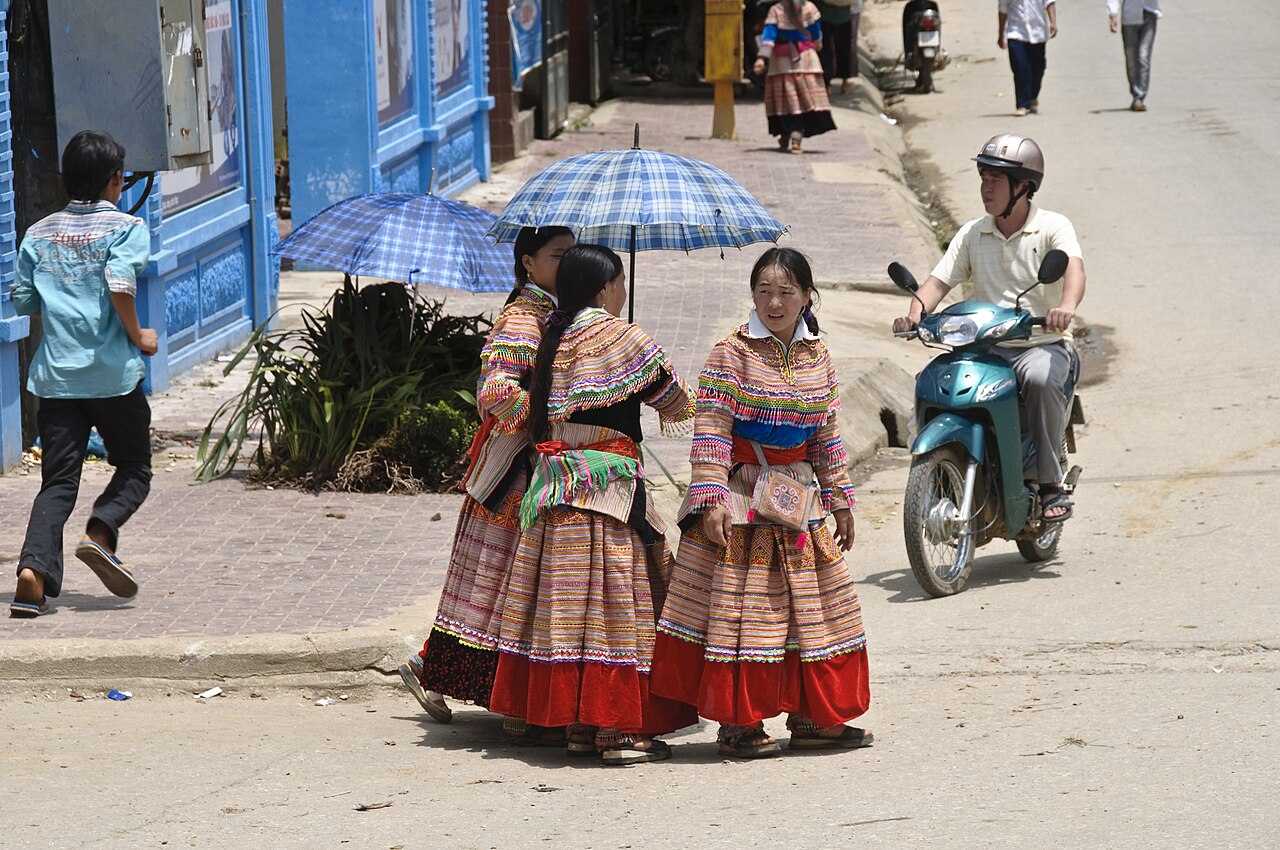
Bac Ha (Bắc Hà) lies in the northern highlands of Lao Cai province, about 60 kilometres northeast of Sapa and reachable from Lao Cai city. The town is the cultural hub of the Flower Hmong, one of the most visually distinctive subgroups of the Hmong people, whose embroidered and appliquéd clothing gives the weekly market much of its character.
The Sunday Market
The Sunday market is the principal reason most visitors come to Bac Ha. It is one of the largest hill-tribe markets in the northwest, drawing Flower Hmong, Dao, Tay, Nung and other ethnic groups from surrounding villages to trade livestock, agricultural produce, textiles, tools and household goods.
The market divides roughly into zones: animals — horses, pigs and poultry — occupy one area, while fabric, silver jewellery, ready-made clothing and food stalls occupy others. Local rice wine, known as ngô (corn wine), is a consistent feature and is sold and consumed openly on the premises.
Honest assessment: the market has become significantly more commercialised over the past decade. Tour groups arrive in volume from Sapa and Lao Cai, and many stalls now stock machine-made goods and souvenirs alongside or instead of locally produced items. The livestock section and the food stalls retain more of the market's original character. Whether the current balance between local trade and tourism commerce suits a particular visitor depends on their expectations.
Can Cau Market
About 20 kilometres north of Bac Ha town, closer to the Chinese border, Can Cau market runs on Saturdays. It is smaller than the Sunday market and receives fewer independent travellers and tour groups, which means the ratio of local trade to tourist commerce is generally higher.
Flower Hmong and Black Hmong vendors predominate, and the livestock trade — particularly horses — is prominent. The road north to Can Cau passes through terraced valley scenery. Can Cau and Bac Ha can be combined over a weekend, though this requires either a vehicle or coordination with a local operator, as public transport connections between the two are limited.
Hoang A Tuong Palace
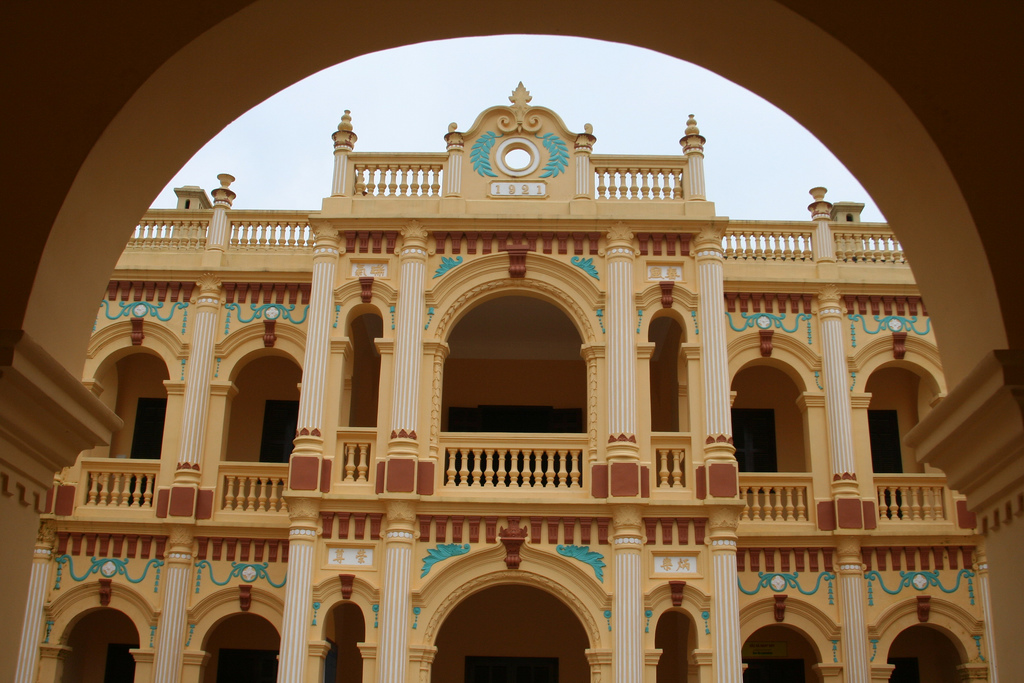
On a low hill above Bac Ha town stands the Hoang A Tuong palace, built in the early twentieth century for the local Tay feudal lord of the same name. The structure is an unusual hybrid: its basic form and scale follow Chinese palatial conventions, but French colonial architectural details appear throughout — arched windows, European-style balustrades and decorative tilework.
The building is open to visitors and provides context for the political history of the region, when the northwestern highlands were administered through a network of local chieftains who operated under both French colonial authority and, to varying degrees, Chinese influence. The interior holds period photographs and some original furnishings. The surrounding grounds offer an elevated view over the town and the valley.
Getting There and Away
Bac Ha is most commonly reached from Lao Cai city or from Sapa. From Lao Cai, the road journey follows the Red River valley before climbing into the hills; the distance is roughly 65 kilometres. From Sapa, the route is longer and involves more mountain road. Both journeys are done by minibus, motorbike or private car — there is no rail connection to Bac Ha itself.
Many visitors travel from Lao Cai or Sapa on Saturday evening or early Sunday morning to catch the market, then return the same day. Overnight stays allow for a less hurried experience and the possibility of combining the Sunday market with Can Cau on Saturday.
Shared minibuses run to coincide with the Sunday market, departing Lao Cai in the morning and returning in the afternoon. Timetables and availability change seasonally; local guesthouses and travel agents in Lao Cai or Sapa are the most reliable source of current schedules.
When to Go
The market runs every Sunday regardless of season, but the quality of a visit is affected considerably by weather and the agricultural calendar. September to November is generally considered the best period: the rice harvest terraces are at their most striking, rainfall has eased from the summer peak, and temperatures at Bac Ha's elevation are comfortable rather than cold.
December through February brings cooler, sometimes cold and misty conditions. The Lunar New Year period sees heightened market activity and local festivals, though this coincides with peak domestic travel. The summer months (June to August) are wetter, with some risk of road disruption from landslides on mountain routes. For a fuller picture of seasonal patterns across the region, see When to go: weather by region.
Accommodation and Stays
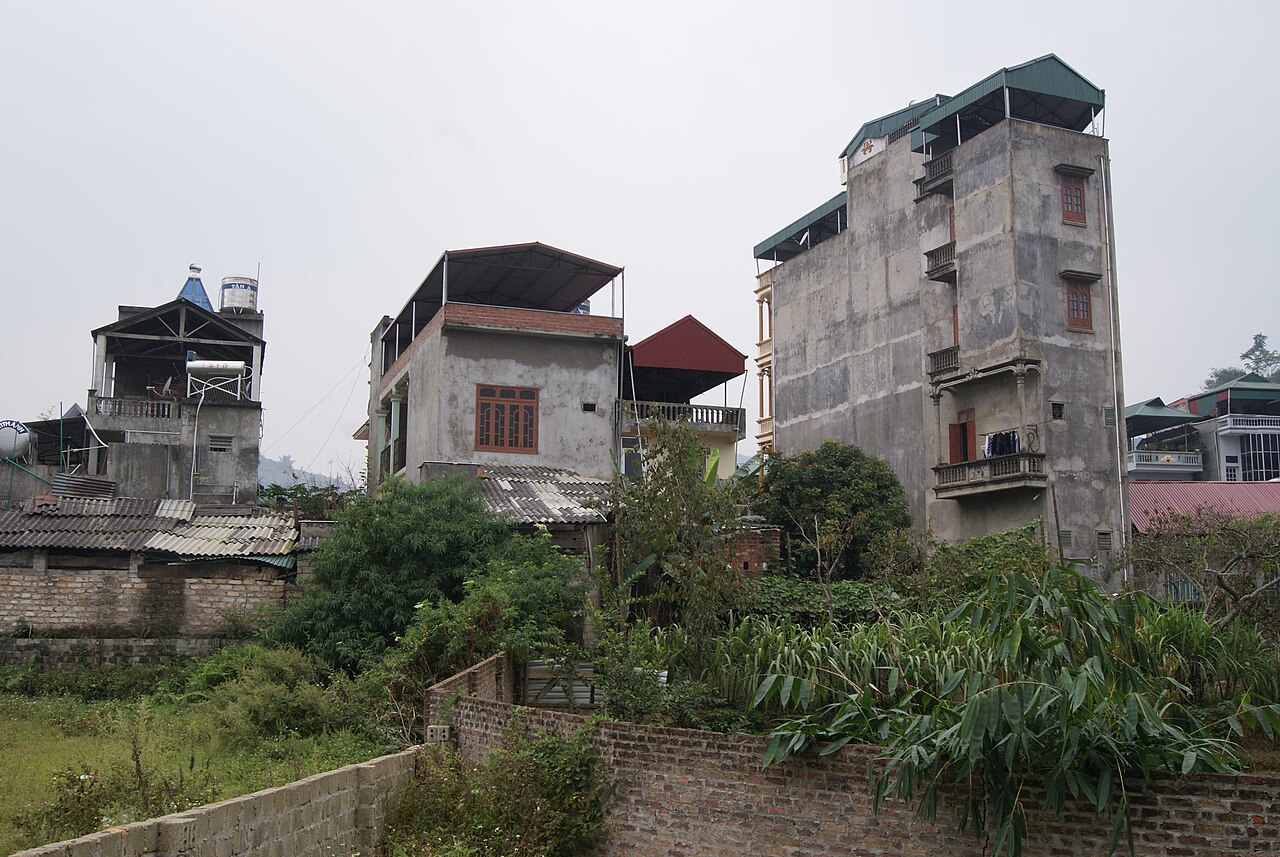
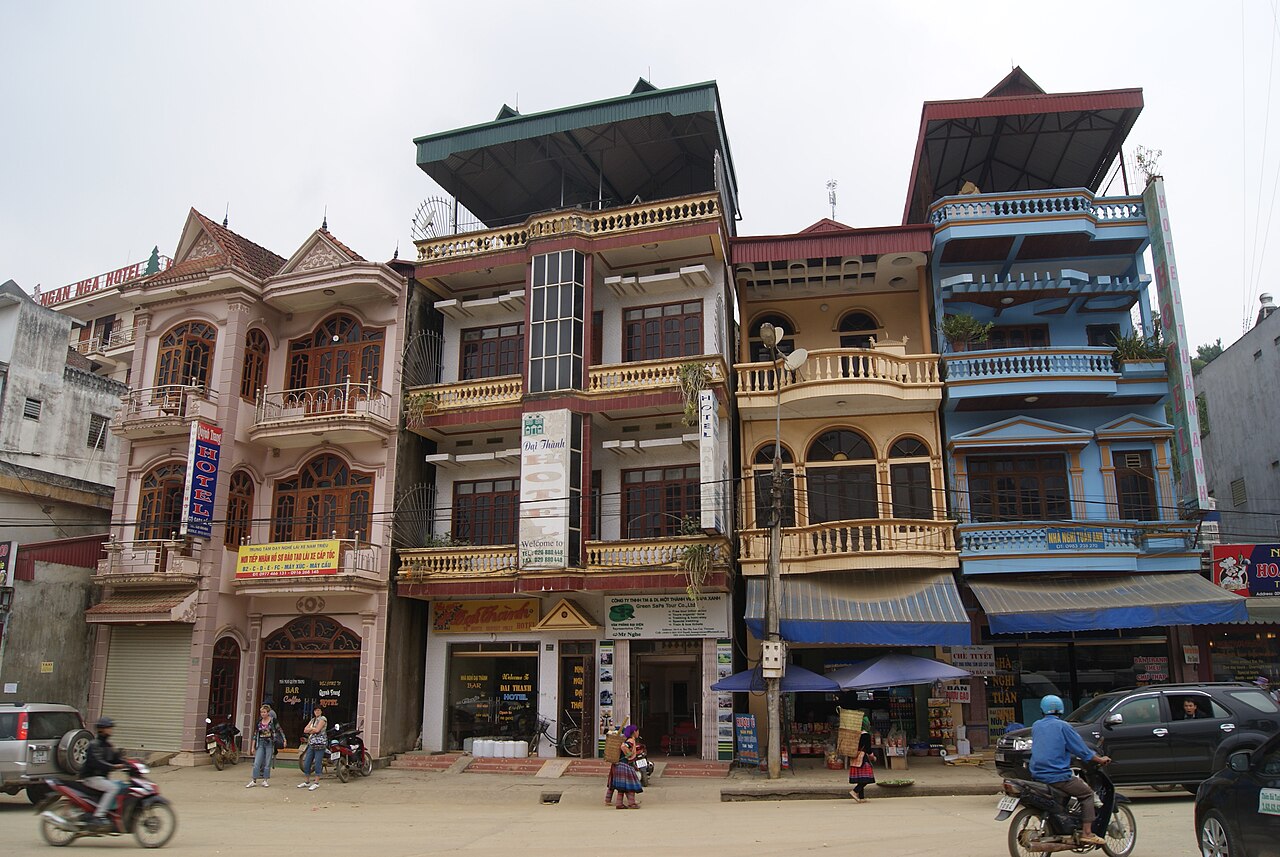
Bac Ha town has a range of guesthouses and small hotels. Homestays in surrounding Flower Hmong villages are also available and offer direct contact with daily life outside the market context — cooking over wood fires, sleeping on traditional bedding, and walking between villages. Standards vary, and the experience is generally basic rather than comfortable in a conventional hotel sense.
Staying overnight rather than day-tripping changes the character of a visit: the town is quieter once tour groups leave on Sunday afternoon, and the surrounding paths and villages are more accessible on foot without market-day crowds. Homestay arrangements are typically made through guesthouses in town or through operators in Lao Cai and Sapa.
Practical Notes
ATM coverage in Bac Ha is limited; carrying sufficient cash from Lao Cai is advisable. See Money, ATMs and cards for general guidance. Mobile data signal is available in the town centre but patchy in surrounding villages; a local SIM is useful — see SIM cards and eSIMs.
Vietnam's visa rules are subject to change by government decree. The Vietnam e-visa page covers the current framework, but the official immigration authority is always the definitive source. On safety, the usual considerations for market environments apply — see Safety and common scams. Bac Ha is close to the Chinese border; border zone regulations may apply to movement in the northern parts of the district, and local guidance should be sought before travelling toward Can Cau or beyond.
Nearby destinations that form natural extensions of a northwest itinerary include Y Ty, Lai Chau and the Ha Giang Loop.
Klimaat per maand
Langjarige gemiddelden, geen voorspelling. Referentieperiode: 2015–2024. Bron: ERA5 reanalysis (Copernicus) via the Open-Meteo archive API.
Show the numbers
| Maand | Hoog °C | Laag °C | Neerslag mm | Regendagen | Humidity % |
|---|---|---|---|---|---|
| January | 15.3 | 9.9 | 101 | 16 | 88 |
| February | 17.1 | 11.1 | 64 | 13 | 86 |
| March | 21.3 | 14.7 | 127 | 18 | 86 |
| April | 24.4 | 17.6 | 147 | 18 | 83 |
| May | 26.4 | 20.0 | 331 | 24 | 85 |
| June | 27.2 | 21.3 | 505 | 26 | 86 |
| July | 26.8 | 21.2 | 490 | 28 | 87 |
| August | 26.4 | 20.9 | 607 | 29 | 89 |
| September | 25.2 | 20.1 | 396 | 26 | 88 |
| October | 22.6 | 17.5 | 199 | 20 | 85 |
| November | 20.1 | 15.0 | 102 | 16 | 86 |
| December | 15.5 | 10.3 | 69 | 12 | 85 |
Where it is
Also known as / see also
In de buurt
Verwezen door
Bronnen
- ERA5 climate normals — Copernicus / Open-Meteo (CC BY 4.0) geraadpleegd 30 August 2026
Supports: monthly temperature and rainfall normals, and elevation - Bắc Hà (Q4838559) — Wikidata (CC0 1.0) geraadpleegd 30 August 2026
Supports: coordinates, area, population - Bắc Hà — Wikipedia (CC BY-SA 4.0) geraadpleegd 30 August 2026
Supports: background - Bắc Hà — Wikipedia (CC BY-SA 4.0) geraadpleegd 29 August 2026
Supports: carried over from the first build
Current Laatst geverifieerd: 29 August 2026. Rules, fares and prices change — check the official source before acting on anything here. Report a mistake.
Picture credits (6)
Mèo Hoàng A Tưởng, Thai Nhai, Public domain, Wikimedia Commons · Girls at Bac Ha, startracker, CC BY-SA 2.0, Wikimedia Commons · Pa Kha - roadworks, Hardscarf, CC BY-SA 4.0, Wikimedia Commons · Pa Kha - sunrise, Hardscarf, CC BY-SA 4.0, Wikimedia Commons · Buildings in Bắc Hà, Vietnam - 20131027, Truth'soutthere, CC BY-SA 3.0, Wikimedia Commons · Buildings in the centre of Bắc Hà, Vietnam - 20131027, Truth'soutthere, CC BY-SA 3.0, Wikimedia Commons