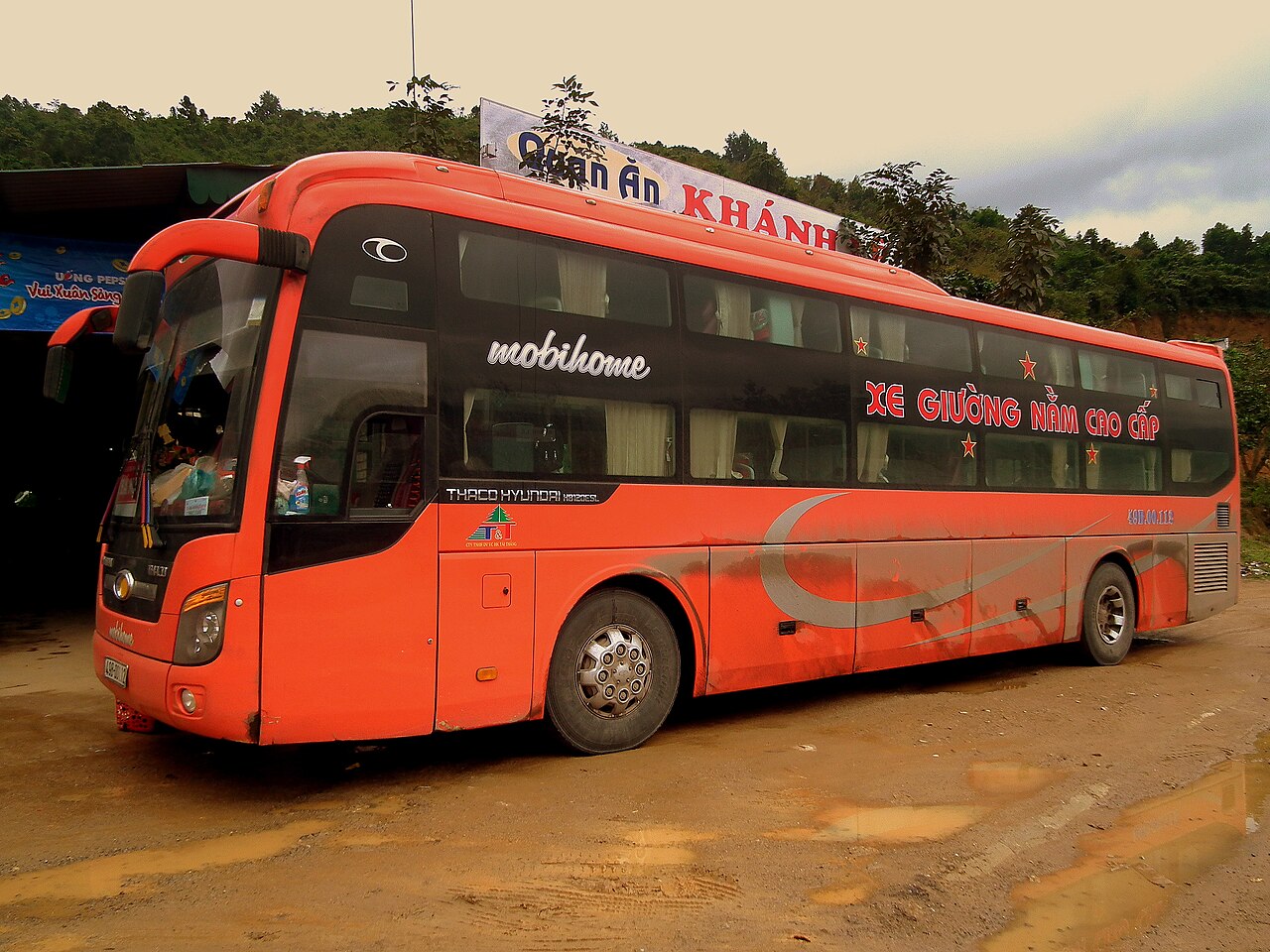
Sleeper busesXe giường nằm
Vietnam's sleeper bus network, known locally as xe giường nằm, connects cities, highland towns and beach destinations across the country. The format ranges from older open-berth coaches to newer cabin-style buses with semi-enclosed pods. For many routes the overnight bus competes directly with the train and, on some corridors, with budget airlines.
Typical journey times
| Journey | Typical time | How often | Notes |
|---|---|---|---|
| Bus Hanoi → Sapa | 5 – 6 hours | Frequent | |
| Bus Hanoi → Ha Giang | 6 – 7 hours | Nightly | The standard overnight run. |
| Bus Ho Chi Minh City → Da Lat | 7 – 8 hours | Frequent | |
| Bus Ho Chi Minh City → Mui Ne | 4 – 5 hours | Frequent | |
| Bus Nha Trang → Da Lat | 4 hours | Several daily | Climbs most of 1,500 m. |
Typical door-to-door ranges, not a timetable. Road times move with traffic and weather, and sea crossings are cancelled outright in rough conditions — confirm with the operator on the day. Last reviewed: 2026-09-10.
What a berth is actually like
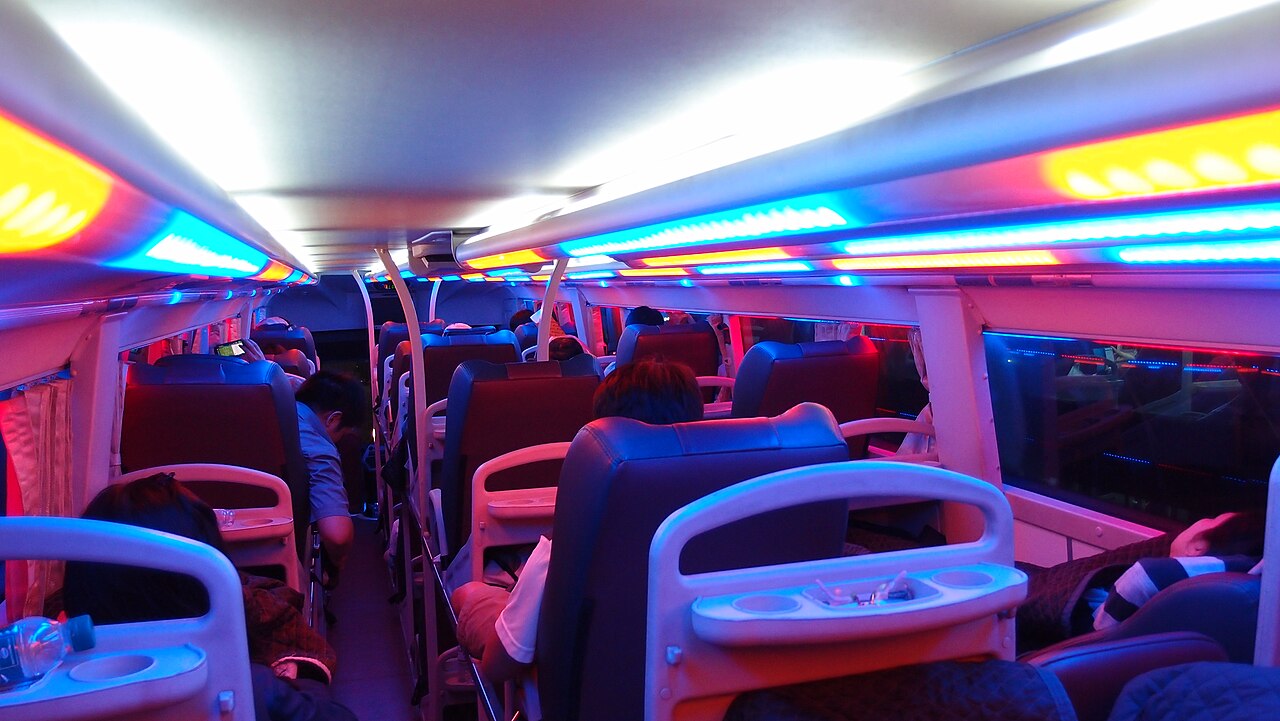
A standard sleeper bus has two or three tiers of reclining berths arranged in columns along the length of the vehicle. Each berth is roughly the width of a narrow single bed and reclines to somewhere between 150 and 180 degrees — flat enough to lie down, though not always fully horizontal. Berths on the lower tier are easier to climb into and less affected by road vibration, while upper berths give slightly more privacy but require climbing a small ladder. The middle tier, where one exists, tends to be the least desirable.
Berths are typically fitted with a thin mattress, a pillow and a blanket of variable cleanliness. Overhead headroom is limited; sitting fully upright is usually not possible. Passengers on the taller end of the international average may find their feet press against the front panel or a neighbouring berth.
All sleeper buses operate a shoes-off policy. Shoes are placed in a plastic bag provided at the door. Passengers travelling alone are usually paired with a stranger in a double berth unless they pay to reserve both spaces, which is possible on most operators.
Cabin buses versus open berths
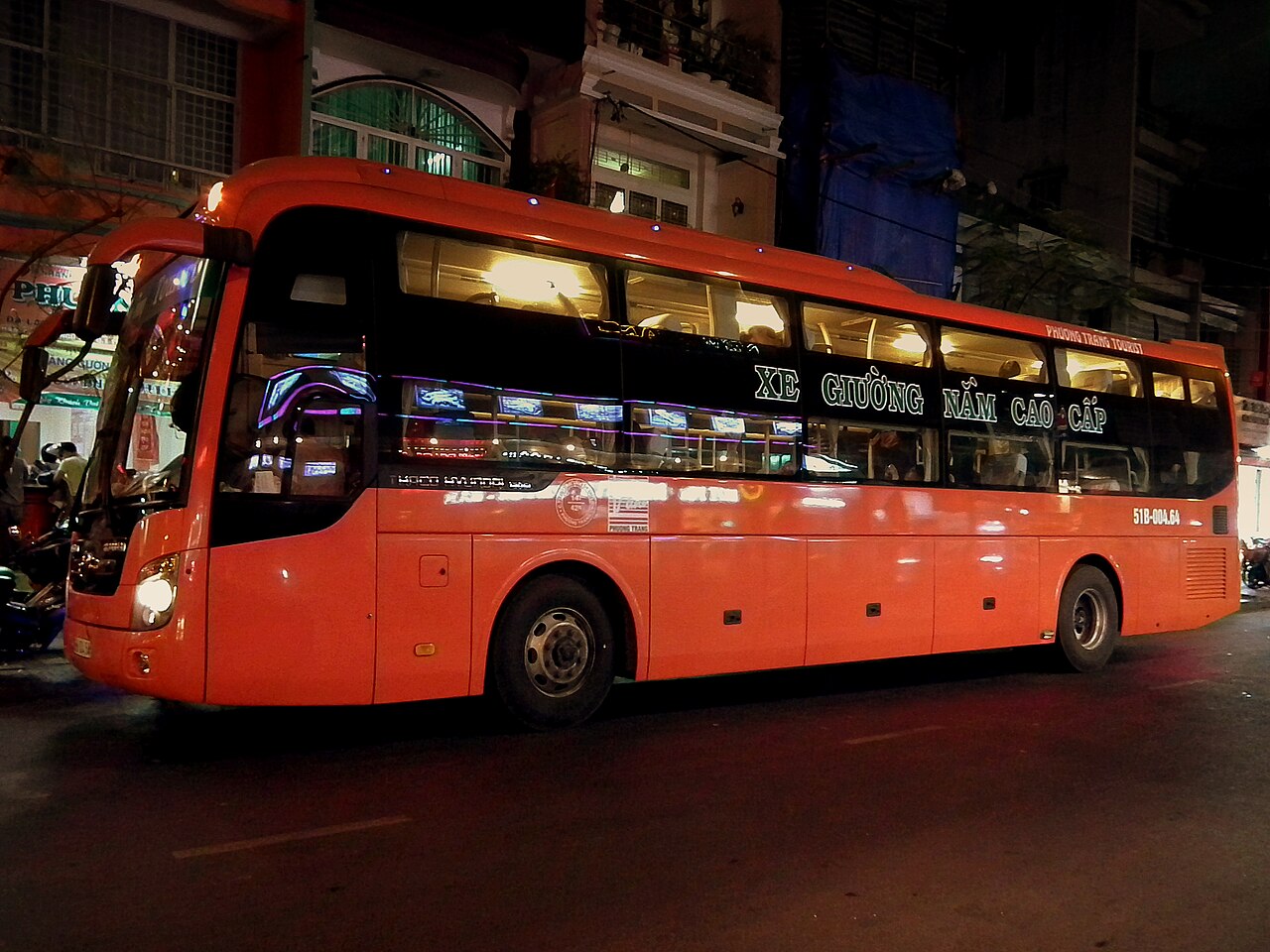
The newer generation of coaches — often marketed as "cabin buses" or "limousine sleepers" — replaces the open communal layout with semi-enclosed individual pods, sometimes with a sliding curtain or partial shell. Each pod typically has a small shelf, a USB charging point and slightly better padding than older stock. Cabin buses generally run fewer passengers per vehicle and are priced accordingly.
Open-berth coaches remain more common on most routes and are the standard format on budget fares. The two formats are easy to confuse from ticket listings alone; checking photographs on the operator's booking page, or asking at a booking desk, is the most reliable way to confirm what vehicle will actually be used. The quality gap between the best open-berth buses and the worst cabin buses is narrower than the marketing suggests.
Whether a given route uses cabin or open-berth stock can also change based on demand, season or vehicle availability, so the bus that departs is not always the one advertised.
Luggage, practicalities and motion sickness
Large bags go in the underfloor hold or a rear luggage compartment. Small bags can be kept on the berth or in a net overhead, though space is tight. Valuables should be kept on the person; theft from luggage compartments, while not routine, is reported often enough to be worth noting.
Toilets are not standard on Vietnamese sleeper buses. Most services make one or two scheduled stops at roadside rest stations, typically around midnight and again in the early hours. The quality of these facilities varies widely.
Motion sickness is a significant concern on routes that cross mountain passes, particularly roads serving Da Lat and Sapa. These sections involve extended stretches of tight bends, and the combination of a reclining position, darkness and road movement affects some passengers more severely than an upright seat would. Passengers prone to motion sickness should factor this in carefully before choosing the bus over alternative transport on highland routes.
Night-driving safety
Night driving on Vietnamese highways carries higher risk than in many countries. Overtaking on blind curves, poorly lit vehicles and variable road quality are documented factors. Serious accidents involving sleeper buses have occurred and have been reported in Vietnamese and international press.
Risk varies by route and operator. The main north–south expressway corridor between Hanoi and Ho Chi Minh City is generally better maintained than mountain roads. Older operators with long-established fleets tend to have more consistent records, though this is not a guarantee. The question of which operators have the best current safety records is genuinely difficult to assess from outside Vietnam; recent traveller reports and locally maintained review aggregators are more current than any static reference.
Passengers who place high weight on transport safety often prefer the overnight train on routes where it is available, as the rail network is not subject to the same road conditions.
Main operators and booking
The largest operators running national networks include Futa Bus Lines (Phương Trang), Hoang Long, Sinh Tourist and The Sinh Tourist, among others. Several regional operators serve specific corridors. Quality, punctuality and vehicle condition differ between companies and can also differ between routes operated by the same company.
Tickets can be booked through the operators' own offices or websites, through guesthouses and travel agents in tourist areas, or through third-party aggregator platforms that consolidate multiple operators. Aggregators are convenient but do not always make clear which operator or vehicle type is being booked. Booking directly with a known operator reduces this ambiguity.
Departure points are not always the main bus station; many operators use their own private terminals, sometimes on the outskirts of a city, and some pick up passengers at guesthouses on certain routes. Confirming the exact pick-up location at the time of booking avoids last-minute confusion.
Routes better suited to train or plane
The overnight train between Hanoi and Ho Chi Minh City covers the same corridor as most of the major bus operators. On this route, the train offers a wider berth, a dining car, and is considered by many travellers to be meaningfully safer and more comfortable, though the journey is longer and fares for sleeper class are higher. The train is generally preferred over the bus for very long overnight legs on this corridor.
Budget airlines now serve most major city pairs — Hanoi, Ho Chi Minh City, Da Nang, Da Lat and others — often at fares that, once booked in advance, are not greatly more expensive than a sleeper bus. Flying eliminates overnight travel time entirely and is worth comparing on longer routes.
The sleeper bus holds its strongest comparative advantage on routes where no train runs and air connections are absent or inconvenient: the mountain road to Sapa, for instance, or secondary coastal and highland destinations. On those routes the bus is often the only practical surface option for budget-conscious travel.
Also known as / see also
服务范围
被以下页面引用
来源
- Ministry of Transport — Ministry of Transport of Vietnam 访问于 29 August 2026
Supports: carried over from the first build - Vietnam National Authority of Tourism — VNAT 访问于 29 August 2026
Supports: carried over from the first build
Ageing 最后核实: 29 August 2026. Rules, fares and prices change — check the official source before acting on anything here. Report a mistake.
Picture credits (3)
HYUNDAI AERODECK SLEEPER BUS NEAR DA LAT VIETNAM JAN 2012 (6821943988), calflier001, CC BY-SA 2.0, Wikimedia Commons · Thanh Buoi sleeper coach, Tobias b köhler, CC BY-SA 3.0, Wikimedia Commons · HYUNDAI AERODECK SLEEPER BUS SAIGON HO CHI MINH CITY VIETNAM JAN 2012 (6794684342), calflier001, CC BY-SA 2.0, Wikimedia Commons