Reunification ExpressĐường sắt Bắc – Nam
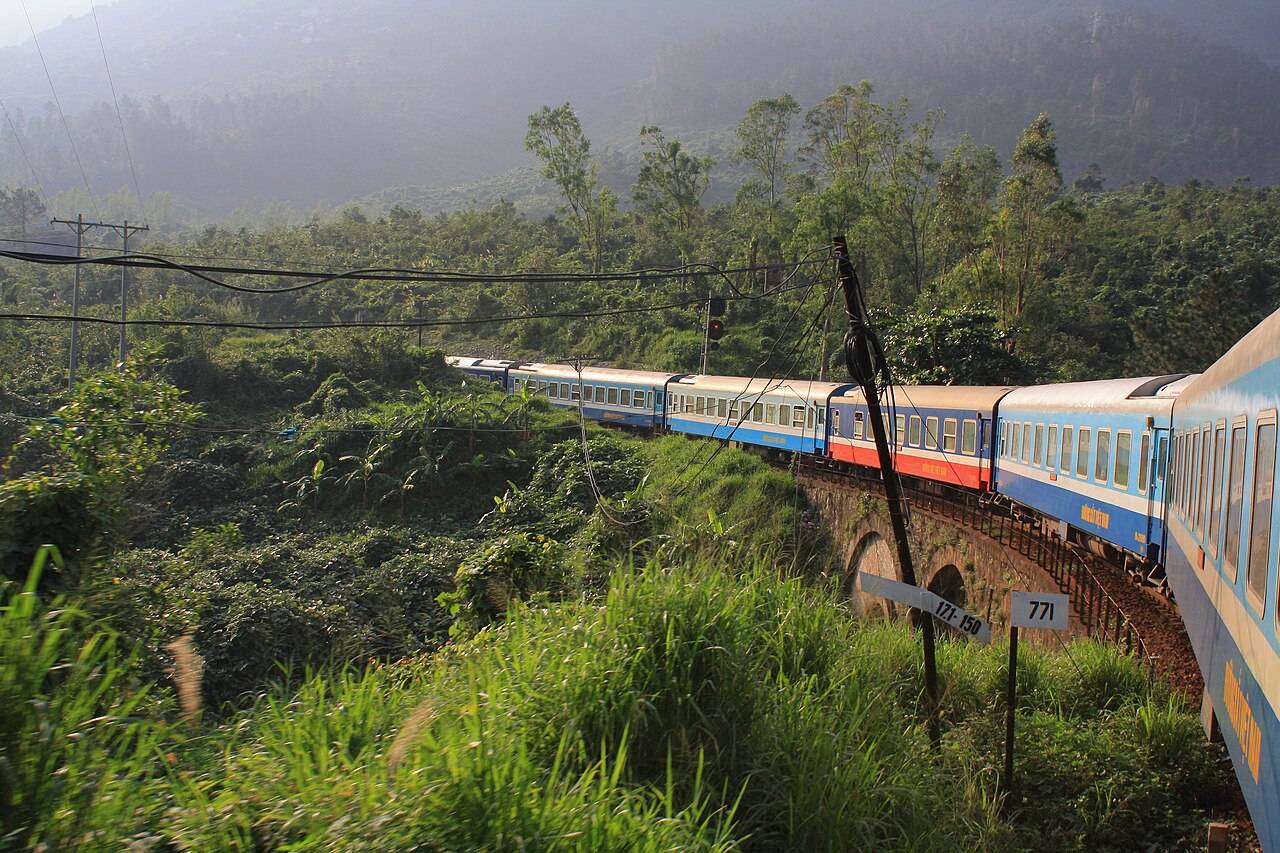
Operated by Vietnam Railways (Đường sắt Việt Nam), the Reunification Express links Hanoi and Ho Chi Minh City along a single-track metre-gauge line that follows the coast through Hue, Da Nang and dozens of smaller cities. The route has been in continuous operation, in various forms, since the French colonial era, and was rebuilt and unified after 1975 — hence the name.
Typical journey times
| Journey | Typical time | How often | Notes |
|---|---|---|---|
| Train Hanoi → Hue | 13 – 14 hours | Several daily | |
| Train Hue → Da Nang | 2h 30m – 3 hours | Several daily | Over the Hai Van pass; the best stretch of the line. |
| Train Da Nang → Nha Trang | 9 – 10 hours | Several daily | |
| Train Nha Trang → Ho Chi Minh City | 7 – 8 hours | Several daily | |
| Train Hanoi → Ho Chi Minh City | 32 – 35 hours | Several daily | The full length of the line. |
Typical door-to-door ranges, not a timetable. Road times move with traffic and weather, and sea crossings are cancelled outright in rough conditions — confirm with the operator on the day. Last reviewed: 2026-09-10.
Train numbers and speed
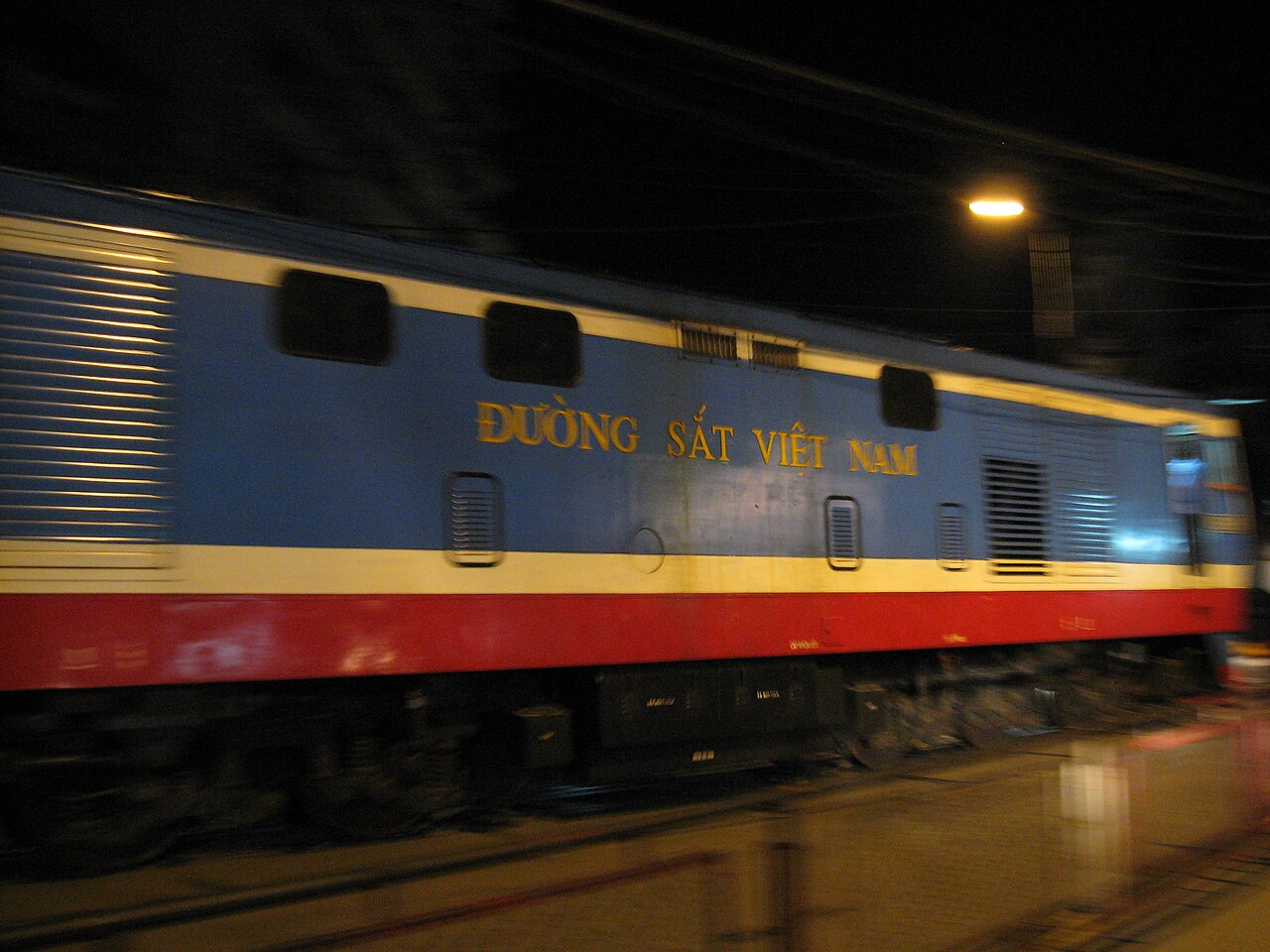
Vietnam Railways designates its Hanoi–Ho Chi Minh City services with the prefixes SE (Saigon Express) and TN (Thống Nhất, meaning Reunification). SE trains are the faster and better-equipped services; TN trains make more intermediate stops and are generally slower, older in rolling stock, and less frequently chosen by long-distance travellers.
Within the SE series, train numbers are paired: an odd number runs southbound (Hanoi to Ho Chi Minh City), an even number runs northbound. Lower SE numbers — SE1/SE2, SE3/SE4 — are conventionally the premier services with the newest carriages, though this can change with scheduling revisions. The end-to-end journey takes 32 to 36 hours on the fastest SE trains; TN services can take considerably longer.
Whether Vietnam Railways requires a printed ticket or accepts a digital confirmation is an operational question that changes periodically — check the current policy when booking.
Classes and what they are like
There are four classes on the Reunification Express, and the difference between them is substantial enough to affect the experience of a long journey meaningfully.
- Hard seat (ghế cứng): Bench seating, not reserved on all services. Acceptable for a journey of two or three hours; uncomfortable for an overnight trip. Used heavily by local passengers travelling between nearby cities.
- Soft seat (ghế mềm): Padded, reclining seats in a configuration similar to an aircraft cabin. Viable for daytime legs of four to six hours; still not recommended for the full end-to-end journey.
- Hard sleeper, 6-berth (nằm cứng): Open-bay compartments with six berths in three tiers. Mattresses are thin. The lower berth offers more headroom and is easier to sit upright on during the day; upper berths are cheaper and more private at night. Adequate for overnight travel.
- Soft sleeper, 4-berth (nằm mềm): Enclosed compartments with four berths, thicker mattresses, a lockable door, and generally air conditioning that is more reliably regulated. This is the class most independent travellers choose for journeys of more than twelve hours.
First-class (top-tier soft sleeper) carriages on SE1 and SE2 represent the highest standard Vietnam Railways currently operates on this line.
The Hải Vân Pass: Hue to Da Nang
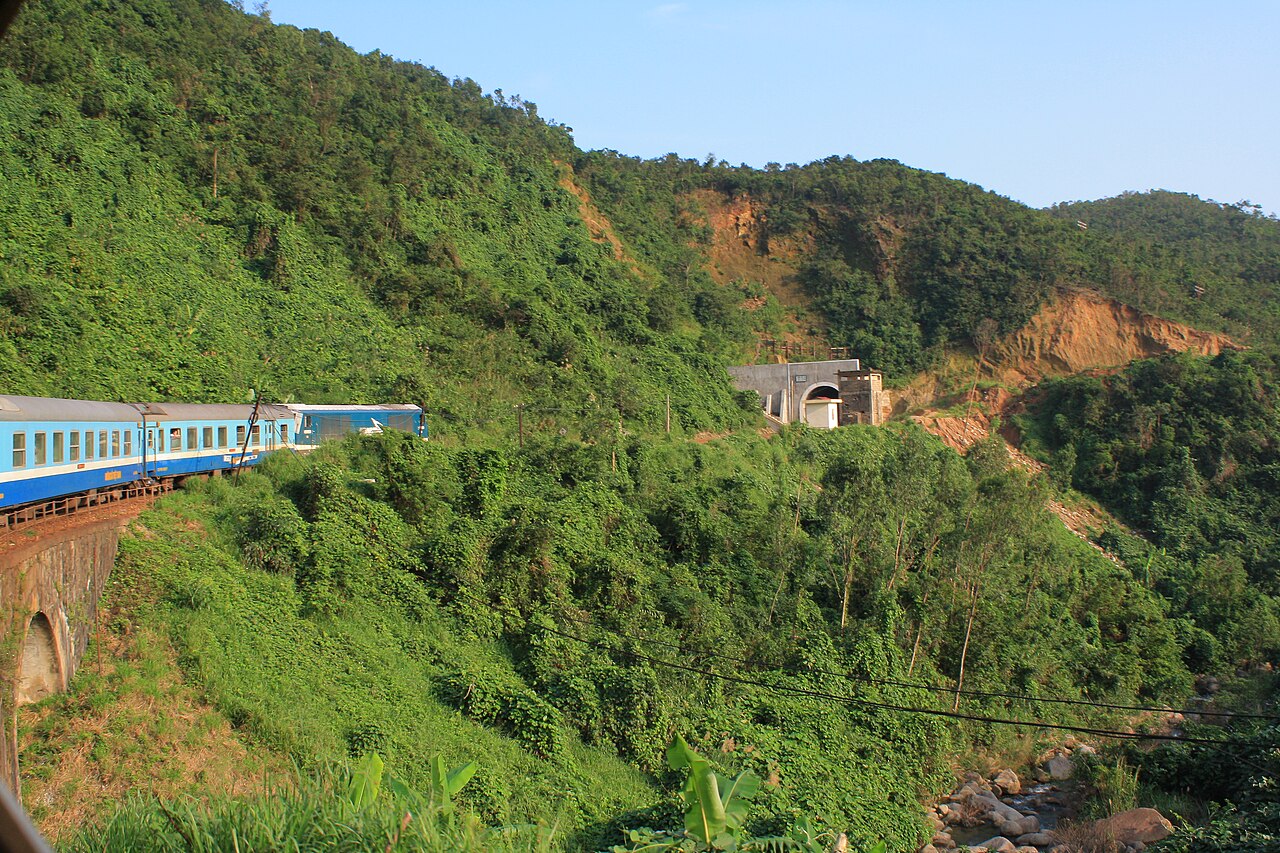
The three hours between Hue and Da Nang are widely regarded as the most scenic section of the entire line, and among the most impressive rail journeys in South-East Asia. The track crosses the Hải Vân Pass (Pass of Ocean Clouds) — a spur of the Trường Sơn range that descends directly into the sea — climbing through tunnels and over exposed coastal viaducts with views of the South China Sea on one side and forested mountains on the other.
This section runs in daylight if travelling southbound on morning departures from Hue, or northbound in the afternoon. Travellers who want to see it should check the timetable and choose a departure that places this leg in daylight hours. The crossing takes roughly 2.5 to 3 hours. At the southern end, the line descends into Da Nang Bay with the city visible below.
The pass is also notable historically: it formed the boundary between the old Vietnamese kingdoms of the north and south, and later marked the approximate frontier between North and South Vietnam during the war.
Booking: official site versus agents
Vietnam Railways operates an official online booking system at its own website, where seats and berths can be reserved and paid for by card. The interface has English-language support, though it has a reputation for occasional technical difficulties with foreign-issued cards. Tickets go on sale up to 60 days before departure.
Third-party booking agents — both Vietnamese platforms and international travel sites — offer the same inventory with a service fee added. The trade-off is a more reliable payment process and customer support in English versus a higher total cost. Some agents also sell tickets at railway station offices in major cities, which is an option for travellers already in the country.
Soft sleeper berths on popular SE services during holidays (Tết in late January or early February, public holidays in April and September) sell out weeks in advance. Hard sleeper and soft seat availability typically lasts longer. Whether a ticket is transferable, refundable, or can be amended depends on the agent and the fare type — confirm the conditions before purchasing.
Food, luggage and practicalities
Food is available on board from a dining car and from vendors who move through the carriages. The menu is limited — rice dishes, instant noodles, snacks — and quality is variable. Most travellers on long journeys supplement this with food bought at station stops, of which there are many. Major stops of ten minutes or more allow passengers to step onto the platform where vendors sell banh mi, fruit and hot food.
There is no formal luggage allowance enforced in the way airlines enforce one, but storage space in sleeper compartments is limited to the overhead rack and the space beneath the lower berth. Large backpacks and suitcases can create friction in tight compartments shared with other passengers. Soft bags compress more easily than rigid cases.
Electrical outlets are present in soft sleeper carriages on newer rolling stock; availability in hard sleeper and seat carriages is inconsistent. Mobile data coverage is generally good through the coastal corridor but drops in tunnels and some mountain sections. Toilets are squat-style on most carriages, western-style on some newer SE carriages.
Train versus bus versus flight
The same corridors are served by sleeper buses (giường nằm) and by budget airlines, and each mode has a different profile of trade-offs.
- Sleeper bus: Operates on the same intercity routes, often departing at night and arriving in the morning. The fare is typically lower than a soft sleeper berth. The bus is faster on many city-to-city pairs. Trade-offs: the ride on mountain roads is rougher, buses do not carry the Hải Vân scenery, and road safety standards in Vietnam are a legitimate consideration for longer night journeys.
- Budget flight: The fastest option by a large margin — Hanoi to Ho Chi Minh City in under two hours. Fares vary widely by booking window and demand. The airports of both cities are not centrally located, and the full door-to-door journey, including transit and check-in, compresses the time advantage on city-centre-to-city-centre comparisons. Internal flights between the main cities are frequent and competitive.
- Train: The journey itself is part of the experience on a route like this. Soft sleeper travel is broadly comparable in cost to budget air travel once airport transfers are factored in, though fares must be compared at the time of booking. The train allows passengers to see the country rather than fly over it, and to board and alight at intermediate cities — Hue and Da Nang in particular — without treating them as detours.
On the Hanoi–Hue or Hue–Ho Chi Minh City partial segments, the train is frequently the most practical choice for travellers who would otherwise need to connect by road.
요금 및 소요 시간
| 구간 | 등급 | 요금 | 기간 | 기준일 |
|---|---|---|---|---|
| Hanoi → Ho Chi Minh City Vietnam Railways (SE1–SE8) |
Soft sleeper, 4-berth | 1,600,000 ₫ – 2,100,000 ₫ | 32h | 2026-08-28 |
Fares are what was published on the date shown. Operators change them without notice.
비용
| 항목 | 가격 | 단위 | 기준일 | 출처 |
|---|---|---|---|---|
| Hanoi to Ho Chi Minh City, soft sleeper, 4-berth Reported figures on the date checked ranged from about 1.6 million dong to the equivalent of roughly US$85, varying by train, berth position and how far ahead the ticket is bought, so the range is given rather than a single figure. The end-to-end run takes 32–35 hours. Confirm on the Vietnam Railways site before booking. |
1,600,000 ₫ – 2,100,000 ₫ | per person | 2026-08-28 | Published fare information from Vietnam Railways ticketing and travel sources |
Every price carries the date it was observed and where it came from. Prices move; treat them as a guide, not a quote.
Also known as / see also
제공 지역
참조 페이지
출처 목록
- North–South railway (Vietnam) — Wikipedia (CC BY-SA 4.0) 접근됨 29 August 2026
Supports: carried over from the first build - Vietnam Railways — Đường sắt Việt Nam 접근됨 29 August 2026
Supports: carried over from the first build
Ageing 마지막 확인: 29 August 2026. Rules, fares and prices change — check the official source before acting on anything here. Report a mistake.
Picture credits (3)
FileRTW2009-HoiAn to Hanoi2, Benjamin Vander Steen, CC BY 2.0, Wikimedia Commons · RTW2009-HoiAn to Hanoi1, Benjamin Vander Steen, CC BY 2.0, Wikimedia Commons · Duong Sat Viet Nam speeding Hanoi, Dragfyre, CC BY-SA 3.0, Wikimedia Commons