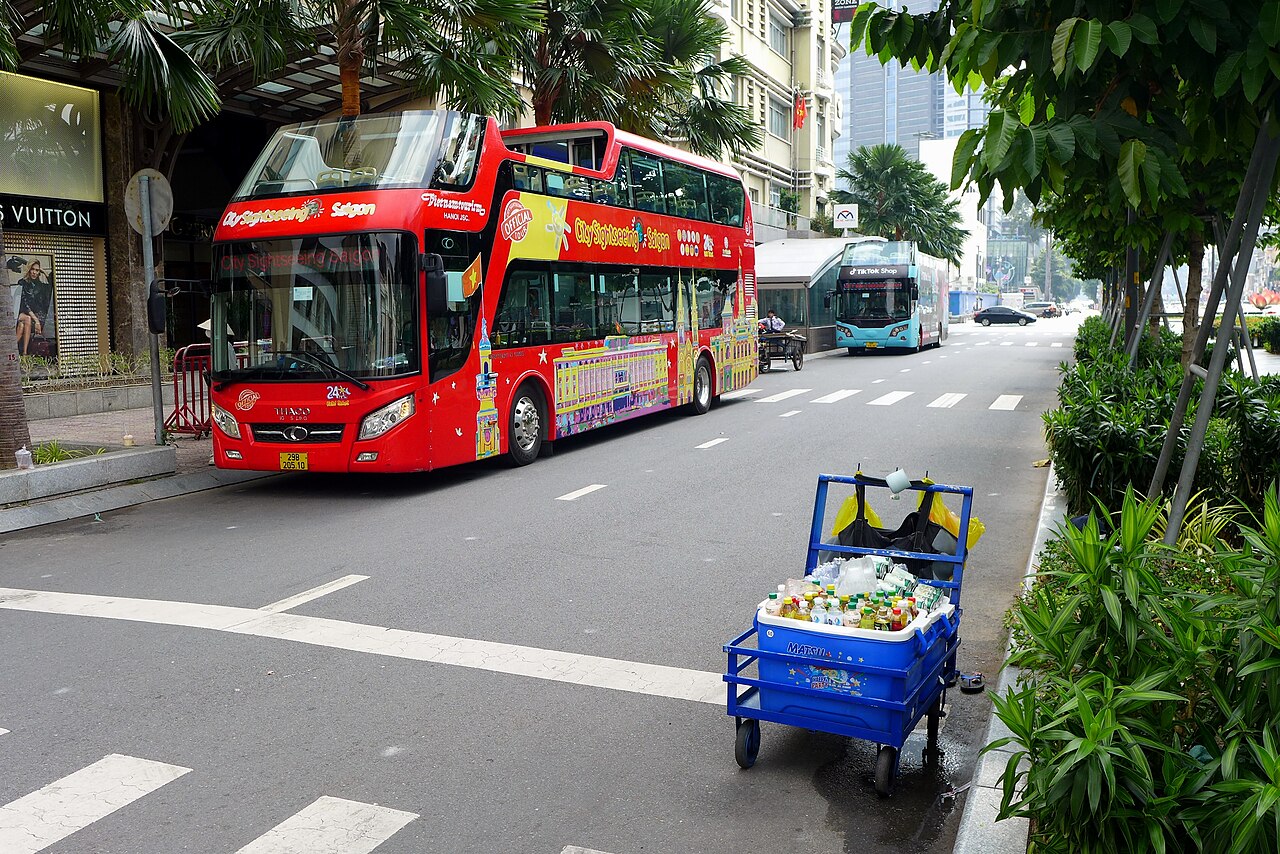
Open-tour busesXe mở tuyến
The open-tour bus — xe mở tuyến — is a privately operated coach ticket sold as a flexible pass between the major tourist stops on Vietnam's north–south corridor. First popular in the 1990s, the format remains common, but the growth of budget airlines and point-to-point sleeper buses has altered its competitive position.
Typical journey times
| Journey | Typical time | How often | Notes |
|---|---|---|---|
| Bus Hanoi → Hue | 13 – 15 hours | Daily | Usually overnight. |
| Bus Hue → Hoi An | 3 – 4 hours | Daily | Some services take the Hai Van pass rather than the tunnel. |
| Bus Hoi An → Nha Trang | 11 – 12 hours | Daily | Overnight. |
| Bus Nha Trang → Da Lat | 4 hours | Daily | |
| Bus Da Lat → Ho Chi Minh City | 7 – 8 hours | Daily |
Typical door-to-door ranges, not a timetable. Road times move with traffic and weather, and sea crossings are cancelled outright in rough conditions — confirm with the operator on the day. Last reviewed: 2026-09-10.
How the ticket works
A standard open-tour ticket covers a set sequence of stops — most commonly Hanoi, Hue, Da Nang, Nha Trang and Ho Chi Minh City — in one direction only, almost always north to south. The traveller pays once and books each leg separately at the operator's local office or hostel desk as they move along the route.
Flexibility is relative: seats on popular legs fill quickly during high season, and rescheduling depends on availability. The ticket does not guarantee travel on any particular date; it guarantees a seat eventually. Travellers who need to move on a fixed day can find this frustrating.
Some operators allow the ticket to be used across a network of affiliated coaches rather than their own vehicles exclusively, while others restrict travel to their own fleet. The terms vary by operator and should be confirmed at the point of purchase.
Standard stops and the route
The corridor runs roughly 1,700 kilometres from Hanoi to Ho Chi Minh City. The canonical stops are:
- Hanoi — northern terminus
- Hue — imperial capital, approximately halfway up the country
- Da Nang / Hoi An — coaches typically drop in Da Nang with a transfer or short taxi ride to Hoi An
- Nha Trang — coastal city, the main stop before the south
- Ho Chi Minh City — southern terminus
Additional stops such as Ninh Binh, Dong Hoi or Mui Ne appear on some operators' networks. The Hai Van Pass between Hue and Da Nang is a scenic stretch; some operators use a tunnel bypass instead, which is faster but passes through rather than over the mountains. Which route is used is worth checking in advance.
Value against alternatives
When open-tour passes emerged, they undercut almost everything on the market. That advantage is now narrower. Budget carriers fly the full Hanoi–Ho Chi Minh City route in under two hours, and fares on short notice are not always dramatically higher than a multi-day bus pass. Point-to-point sleeper buses on individual legs can be booked directly and are often competitive on a per-leg basis, sometimes with newer vehicles.
The open-tour ticket still makes sense for travellers who are genuinely undecided about how long to spend at each stop, who want to avoid the friction of booking each leg independently, or who are travelling at a pace slow enough that the time cost of the bus is acceptable.
Whether the open-tour ticket represents better overall value than assembling legs individually is, honestly, unsettled: it depends on route, season, operator quality, and how many legs are actually used. Travellers who skip a stop lose the value of that leg with no refund.
Sleeper berths and the reality for taller travellers
Most overnight and long-distance legs use sleeper coaches (xe giường nằm), which have reclining or fully flat berths stacked two high. The berths were designed around Vietnamese body proportions and are typically around 1.8 metres in length. Travellers above roughly 185 cm will find their feet pressed against the front panel or forced into an awkward angle.
Upper berths tend to be warmer and can feel claustrophobic; lower berths are easier to enter and exit but receive more disturbance from boarding passengers. Neither is especially wide — two strangers sharing a bunk-row is the norm on some operators, though many now sell each berth as an individual unit.
Air conditioning is standard but varies in intensity; it is often set very cold overnight, so a layer is useful regardless of the outside temperature. Road conditions between Hue and Da Nang and in mountain sections can mean significant movement through the night.
Operators and safety
The open-tour market is fragmented. Dozens of operators sell tickets, some running their own fleet and some acting as resellers for coaches they do not control. Vehicle quality, driver standards and the reliability of connections vary considerably and are not regulated in a way that produces a public, up-to-date safety ranking.
Names that travellers encounter repeatedly include The Sinh Tourist (also written Thê Sinh Tourist), Futa Bus Lines (Phương Trang) and Hanh Café, among others. Futa is notable for operating its own large, relatively modern fleet on fixed routes rather than the classic open-tour model; its safety record is generally discussed more favourably in traveller communities, though no formal comparative data is publicly available.
The practical check is to look at recent reviews on booking platforms and forums, ask at the hostel or guesthouse which operator's vehicles are currently running the leg in question, and confirm whether the ticket sold is on the named operator's own coach or subcontracted.
When to travel and booking
The Tet holiday period (late January to mid-February, varying by year) and the summer months of June through August see the highest demand. On popular legs such as Hue to Da Nang or Nha Trang to Ho Chi Minh City, seats can be fully booked several days ahead during these windows.
Tickets can be bought at the operator's offices in each city, through guesthouses and hostels who work as agents, and through online booking platforms. Buying through an agent adds a commission layer but is often more convenient; the agent handles the rebooking at each stop. Buying direct from the operator's office removes the intermediary but requires more legwork on arrival in each city.
The central stretch of Vietnam, particularly around Hue and Da Nang, can experience heavy rainfall and occasional typhoon-related disruption between October and December. Bus schedules do continue through poor weather, but delays are common and road conditions can deteriorate.
Also known as / see also
सेवा देता है
संदर्भित
स्रोत
- Ministry of Transport — Ministry of Transport of Vietnam accessed 29 August 2026
Supports: carried over from the first build - Vietnam National Authority of Tourism — VNAT accessed 29 August 2026
Supports: carried over from the first build
Ageing अंतिम सत्यापन: 29 August 2026. Rules, fares and prices change — check the official source before acting on anything here. Report a mistake.
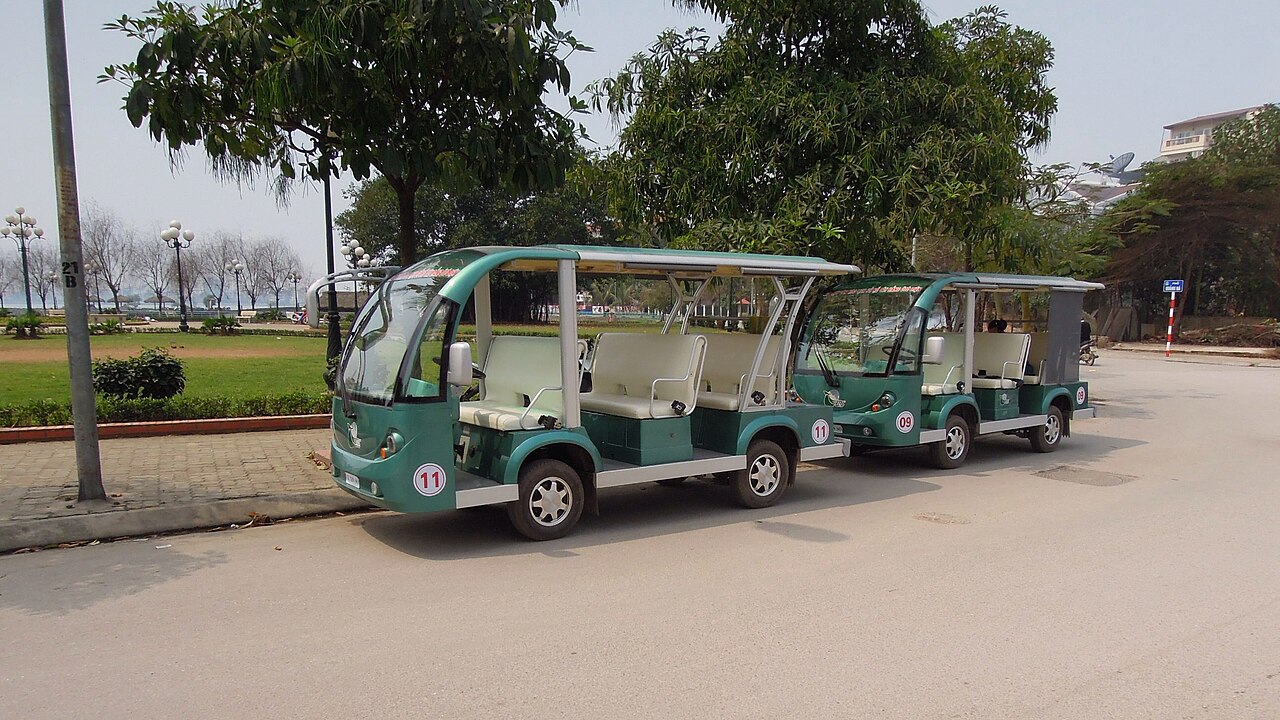
Picture credits (2)
CSS Thaco Sightseeing 120SS, Lê Lợi Boulevard, Ho Chi Minh City, 2023 (01), Bahnfrend, CC BY-SA 4.0, Wikimedia Commons · Electric Bus, West Lake, Urban Discovery Bicycle Tour, Tây Hồ District, Hanoi (7060834979), David McKelvey from Brisbane, Australia, CC BY 2.0, Wikimedia Commons