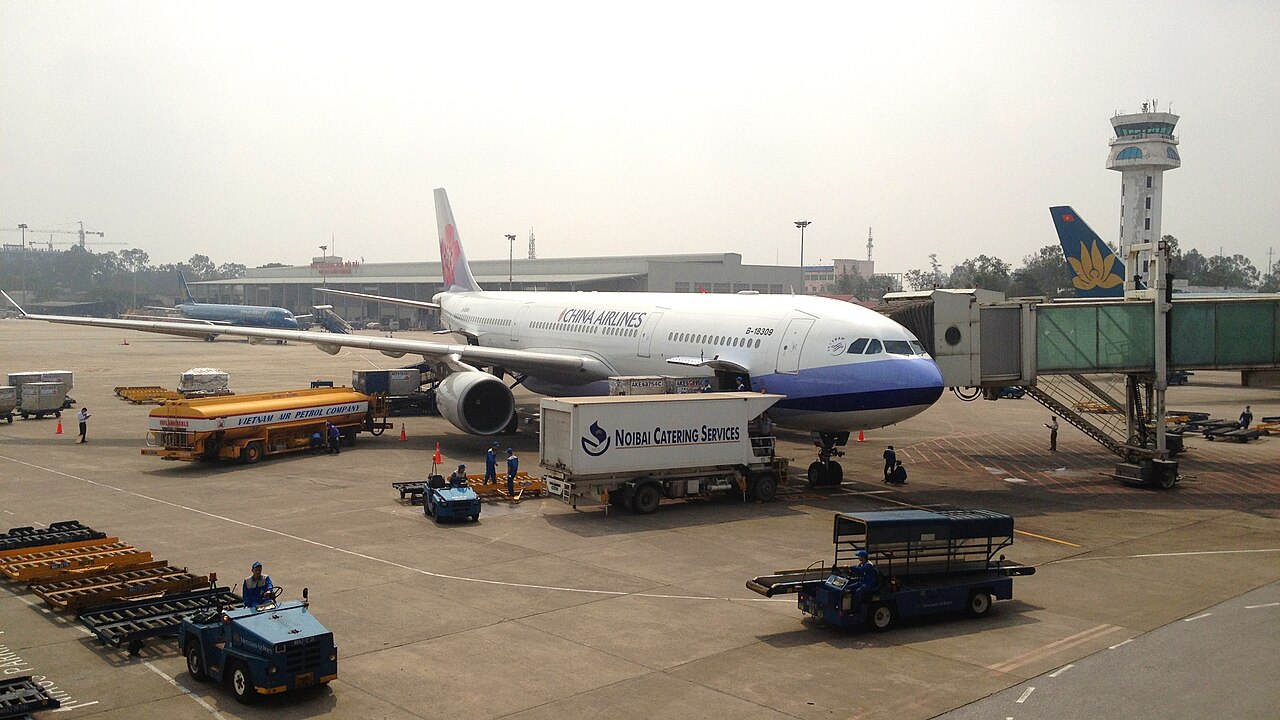
Noi Bai International Airport (HAN)Sân bay Nội Bài
Noi Bai International Airport (IATA: HAN, ICAO: VVNB) is the principal gateway to Hanoi and northern Vietnam. It handles the full range of international long-haul, regional and domestic traffic, and is one of the two busiest airports in the country alongside Tan Son Nhat in Ho Chi Minh City.
Typical journey times
| Journey | Typical time | How often | Notes |
|---|---|---|---|
| Car Noi Bai → Hanoi Old Quarter | 40 – 60 min | On demand | 27 km. Longer in the evening peak. |
| Bus Noi Bai → Hanoi Old Quarter | about 60 min | Regular | The 86 airport bus. |
Typical door-to-door ranges, not a timetable. Road times move with traffic and weather, and sea crossings are cancelled outright in rough conditions — confirm with the operator on the day. Last reviewed: 2026-09-10.
Terminals and the shuttle between them
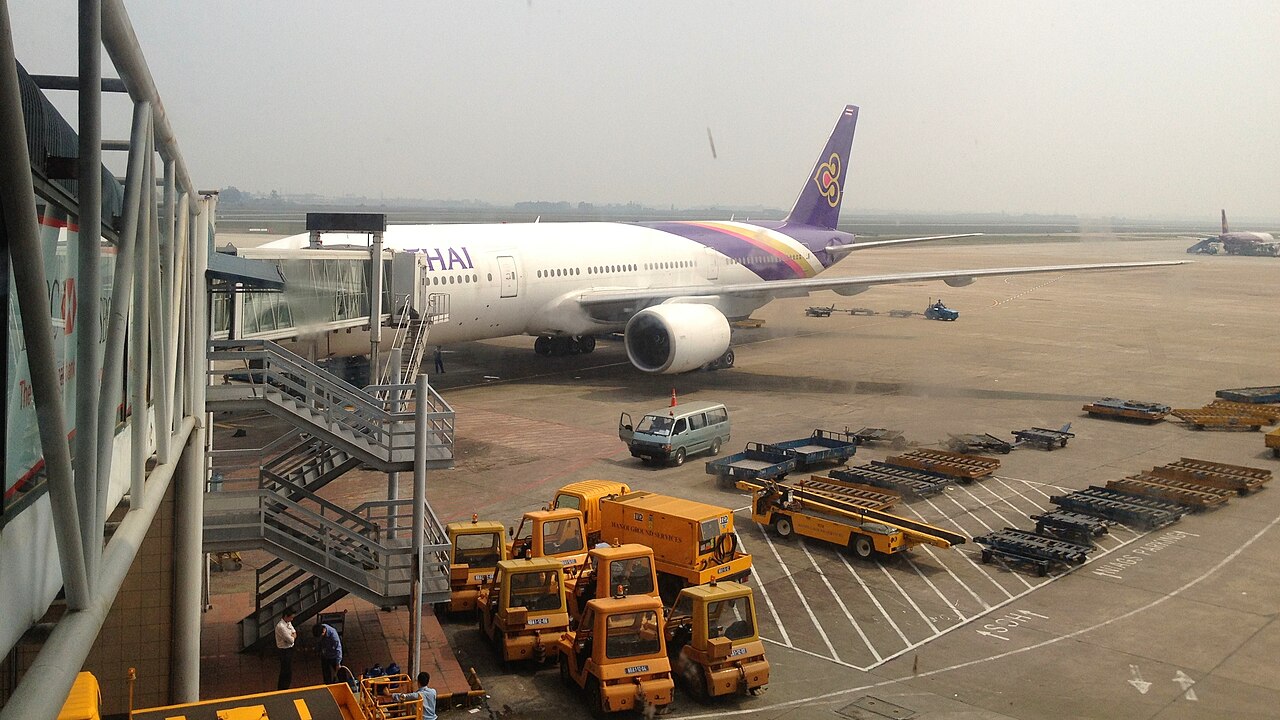
Noi Bai operates across two terminals on the same airport campus. Terminal 1 (T1) handles domestic flights, including services operated by Vietnam Airlines, VietJet Air, Bamboo Airways and other carriers on routes within Vietnam. Terminal 2 (T2) was purpose-built for international traffic and opened in 2015; it is a large, modern facility with airbridges, a relatively efficient immigration hall and a landside arrivals concourse.
The two terminals are not within walking distance of each other. A free shuttle bus connects them; the journey takes roughly ten minutes depending on traffic within the airport precinct. Passengers connecting between an international and a domestic flight should allow adequate time for this transfer on top of the usual check-in and security requirements. Confirm which terminal your flight uses before travelling, as the pick-up and drop-off points differ significantly.
Arrival formalities
Immigration at T2 is organised into separate queues. Holders of a valid Vietnamese e-visa or visa-on-arrival approval letter are directed to dedicated counters; the process involves fingerprinting and a photograph. Queue lengths vary considerably depending on the time of day and how many wide-body aircraft have landed within the same window. Early morning arrivals from long-haul routes from Europe can produce substantial queues.
Whether Vietnam requires a written visa page — as distinct from the e-visa system — is a question the official Vietnamese immigration authority is the only reliable source on, as policy in this area can change by ministerial decree with little notice. Check the current requirements with the Vietnamese embassy or consulate relevant to your nationality, or via the official government portal, well before travel.
After immigration, baggage reclaim feeds into a customs hall. The green (nothing to declare) and red (goods to declare) channels are clearly signed. Beyond customs, the arrivals concourse has counters for SIM cards, currency exchange and car hire.
SIM cards and money on arrival
Authorised counters for the major Vietnamese mobile operators — Viettel, Mobifone and Vietnamobile among others — are located in the arrivals concourse of T2. Tourist SIM cards with a data allowance are available; the staff at these counters are accustomed to serving international arrivals and registration, which is required by law, is handled at the counter. Bringing a passport is necessary for the purchase.
Currency exchange booths operate in the arrivals hall. The rates offered inside the terminal are generally less favourable than those available in the city, but are adequate for obtaining enough dong to cover ground transport and immediate expenses. ATMs are also present in the terminal. There is an entry fee for using certain airport facilities; specifics are posted on-site. Do not rely on card payment being universally accepted for transport or small purchases at the airport.
Getting to and from the city
Three main options connect Noi Bai with central Hanoi.
- Bus 86 is the dedicated airport express bus service, running between T2 and the Hanoi Railway Station area via several stops in the city. It is the lowest-cost option by a considerable margin. The fare depends on the route taken. Journey time depends heavily on traffic; the Nhat Tan Bridge and the Hanoi–Noi Bai Expressway make the corridor faster than it once was, but peak-hour congestion can extend the trip noticeably.
- Grab (the dominant ride-hailing platform in Vietnam) operates at Noi Bai. Drivers meet passengers in a designated zone outside arrivals. The fare depends on vehicle type, time of day and demand; surge pricing applies during busy periods. Payment can be made through the app or in cash. This option offers door-to-door convenience at a middle price point.
- Hotel and pre-arranged cars are offered by most mid-range and upmarket hotels in Hanoi and by specialist transfer companies. The fare is agreed in advance, removing uncertainty, and a driver holding a name sign meets arriving passengers. This is typically the most expensive of the three options.
The Noi Bai–Hanoi Expressway has reduced drive times significantly compared with the old road. Under light traffic the journey to the Old Quarter takes around 40 to 45 minutes; in heavy traffic, particularly during morning and evening rush hours, this can extend to an hour or more.
Facilities and practical notes
T2's departures level has a range of food outlets, duty-free shops and currency exchange, all airside after security. Wi-Fi is available throughout the terminal. Charging points are present in the gate areas but availability varies.
T1, while older, has been progressively upgraded and handles significant passenger volumes given the growth of domestic aviation in Vietnam. Check-in queues at T1 during Vietnamese public holidays — Tết in particular — can be long, and the terminal can become crowded.
Porters and luggage trolleys are available. Smoking is restricted to designated areas. The airport operates around the clock to accommodate overnight long-haul arrivals and early-morning departures.
Also known as / see also
Serves
Referenced by
Sources
- Airports Corporation of Vietnam — ACV accessed 29 August 2026
Supports: carried over from the first build - Vietnam National Authority of Tourism — VNAT accessed 29 August 2026
Supports: carried over from the first build
Ageing Last verified: 29 August 2026. Rules, fares and prices change — check the official source before acting on anything here. Report a mistake.
Picture credits (3)
China Airlines, Airbus A330-300 (B-18309), Noi Bai International Airport, Hanoi (6913344618), David McKelvey from Brisbane, Australia, CC BY 2.0, Wikimedia Commons · Thai Airways International, 777-200ER, Noi Bai International Airport, Hanoi (7059423157), David McKelvey from Brisbane, Australia, CC BY 2.0, Wikimedia Commons · ANZ bank, Noi Bai International Airport, Hanoi (6914042844), David McKelvey from Brisbane, Australia, CC BY 2.0, Wikimedia Commons