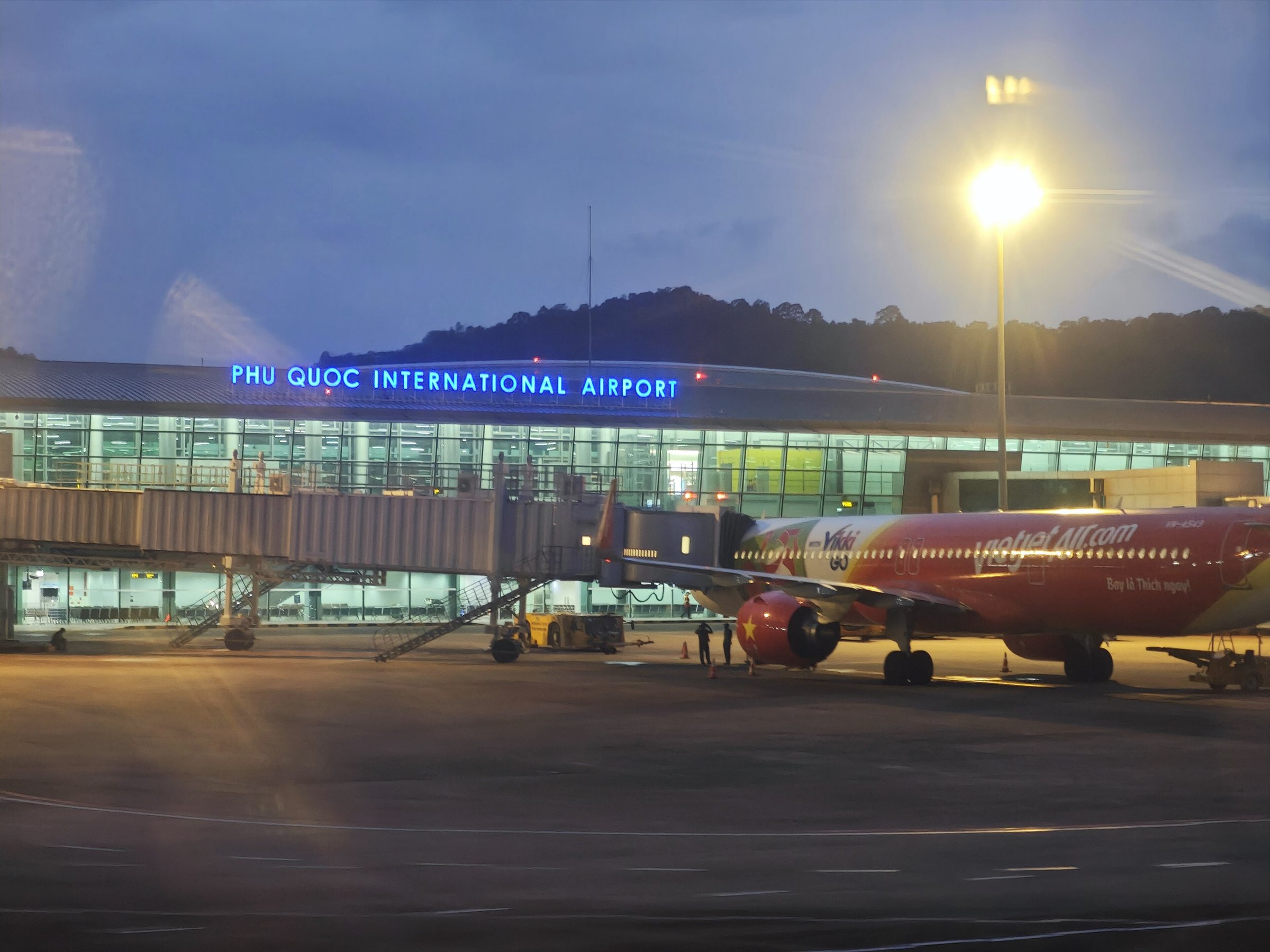
Ho Chi Minh City to Phu Quoc
How to get there
400 kmFly, unless you specifically want the ferry — which means getting to Rach Gia or Ha Tien first.
| Option | Typical time | How often | What it is like | Best for | Tarifa |
|---|---|---|---|---|---|
| Flight Flight | 1 hour in the air | Very frequent | Standard short-haul | Nearly everyone | not verified |
| Ferry Bus to Rach Gia or Ha Tien, then fast ferry | 6–8 hours by road, then 2–2.5 hours at sea | Daily, weather permitting | Coach then fast catamaran; cancellations in rough weather | Travellers already in the delta, or moving a motorbike | not verified |
Times are typical door-to-door ranges, not a timetable, and they move with traffic, weather and season. A fare is shown only where we have checked it against a published source on the date given; everywhere else it says so rather than guessing. Confirm both with the operator before you book.
Options last reviewed: 2026-09-03
The direct choice: why flying dominates this route
Ho Chi Minh City and Phu Quoc are served by a busy air corridor. Vietnam Airlines, VietJet Air and Bamboo Airways all operate the route, and seats are rarely hard to find outside of major Vietnamese holidays — Tết in late January or early February being the most acute crunch period. The combined journey from the city centre to Phu Quoc International Airport (PQC), including the taxi or bus ride to Tan Son Nhat, security and the flight itself, typically runs to three or four hours door-to-door.
Tan Son Nhat Airport (SGN) is the departure point for all Ho Chi Minh City flights to Phu Quoc. It sits in the north of the city; allow generous time to reach it from the central districts, particularly during morning and evening peak hours when road congestion can be severe. Ride-hailing apps are the most common way to get there.
On arrival, Phu Quoc International Airport is in the southern part of the island. Taxis and ride-hailing services meet arriving flights. The north of the island — where Long Beach, Duong Dong town and many resorts are located — is a significant drive from the terminal.
The ferry route: bus to Rach Gia or Ha Tien, then sea
There is no direct ferry from Ho Chi Minh City to Phu Quoc. Travellers taking the sea route must first travel overland through the Mekong Delta to one of two departure ports: Rach Gia or Ha Tien. Both are in Kien Giang province. Rach Gia has more frequent crossings and is the larger port; Ha Tien is closer to the northern tip of Phu Quoc and is often chosen by travellers coming from or heading to Cambodia.
Coaches from Ho Chi Minh City's western bus terminals (Mien Tay in particular) run to both towns. The sea crossing is made by fast catamaran; Superdong and Tho Chu ferries are the established operators, though the market has seen changes over the years. Tickets can be bought at the ports or through booking agents.
The chief practical risk is weather. The Gulf of Thailand is subject to the southwest monsoon from roughly May to October, and crossings are cancelled when seas are rough — sometimes for multiple days in succession. Anyone on a tight schedule should have a contingency. During calm season the crossing is straightforward, and the open-deck seating provides views of the island's forested coastline on approach.
Which option suits which traveller
The flight is suited to nearly everyone travelling directly between the two cities. It is reliable, the logistics are simple, and the time saving over the ferry route is substantial.
The ferry combination makes practical sense in two specific situations. First, travellers who are already touring the Mekong Delta — and have, say, been visiting Can Tho or Chau Doc — can reach Rach Gia or Ha Tien without backtracking to Ho Chi Minh City, making the overland-and-sea route a logical continuation rather than a detour. Second, anyone travelling with a motorbike will find that motorcycles can be loaded onto the ferry; they cannot, in normal circumstances, be checked onto a domestic flight. This makes the ferry the standard route for riders on motorbike trips.
Travellers with seasickness concerns, rigid schedules, or who are travelling with young children or significant luggage typically find the ferry combination more demanding than the comparison of journey times alone suggests, given the multi-stage nature of the trip and the weather dependency.
Booking and what goes wrong
Flights can be booked directly through airline websites or through third-party aggregators. Prices vary by season, with the dry season peak (roughly November to April) and Vietnamese public holidays — particularly Tết — seeing higher fares and fuller aircraft. Booking a few weeks ahead is sufficient for most of the year; for Tết travel, advance planning of several months is advisable.
The most common flight disruption on this route is delay at Tan Son Nhat, which is one of the busiest airports in Southeast Asia and is prone to congestion-related delays. Weather rarely grounds flights on this short over-sea route, though tropical storms in the peak of the wet season can cause cancellations.
For the ferry, tickets are sold at Rach Gia and Ha Tien ports and through guesthouses and travel agents in Ho Chi Minh City. Some bus companies sell combined bus-and-ferry packages. Independently arranging the bus and ferry separately gives more flexibility over timing. The principal failure mode is weather cancellation of the sea crossing; travellers should check conditions and operator announcements before committing to the overland leg.
Arriving on Phu Quoc
Phu Quoc is a large island and internal transport matters. Phu Quoc has no public bus network of the kind found in Vietnamese cities; motorbike taxis, taxis and ride-hailing are the main options from both the airport and the ferry terminals.
Flights arrive at Phu Quoc International Airport in the south. The main tourist concentration around Duong Dong town and Long Beach on the west coast is a drive north. The Bai Vong ferry port, which receives arrivals from Rach Gia, is on the island's east coast; An Thoi port in the south receives some services from Ha Tien. Neither port is particularly close to the main accommodation areas, and an onward taxi or transfer should be arranged or anticipated.
Renting a motorbike or scooter on the island is common and gives the most flexibility for reaching beaches and villages away from the main roads. This is particularly relevant for travellers who brought their own motorbike on the ferry.
Seasonal considerations
Phu Quoc's weather divides clearly into a dry season (roughly November through April) and a wet season (roughly May through October). The dry season is when the island receives the majority of its visitors; the sea is calm, the ferry crossings are reliable, and the beaches on the west coast are at their clearest.
During the wet season, heavy rainfall and strong winds from the southwest monsoon are common. The ferry route becomes unreliable — crossings may be suspended for days at a time — and even the western beaches can be choppy. The island remains open and accessible by air throughout the wet season, though some beach operators and smaller resorts close or reduce services. Prices vary by season across accommodation and transport alike.
Vietnamese school holidays in June and July, and the Tết period in late January or early February, generate strong domestic demand for both flights and accommodation. Planning well in advance for these windows is important regardless of which transport mode is chosen.
Connects
Referenciado por
Fontes
- Ministry of Transport — Ministry of Transport of Vietnam truy cập 29 August 2026
Supports: the rules and definitions on this page - Vietnam National Authority of Tourism — VNAT truy cập 29 August 2026
Supports: the rules and definitions on this page
Ageing Última verificação: 3 September 2026. Rules, fares and prices change — check the official source before acting on anything here. Report a mistake.
Picture credits (1)
Phu Quoc International Airport at night, FrogsLegs71, CC BY-SA 3.0, Wikimedia Commons