Ho Chi Minh City to Mui Ne
How to get there
220 kmBus or train to Phan Thiet, then a short transfer to the resort strip.
| Option | Typical time | How often | What it is like | Best for | Giá vé |
|---|---|---|---|---|---|
| Bus Sleeper bus | 4–5 hours | Frequent | Lie-flat berth | Direct to the resort strip | not verified |
| Train Train to Phan Thiet + transfer | 4 hours, then 30 minutes | Daily | Seat | Avoiding the road | not verified |
Times are typical door-to-door ranges, not a timetable, and they move with traffic, weather and season. A fare is shown only where we have checked it against a published source on the date given; everywhere else it says so rather than guessing. Confirm both with the operator before you book.
Options last reviewed: 2026-09-03
Overview of the route
Ho Chi Minh City and Mui Ne are separated by roughly 220 kilometres of coastal highway. The road runs north-east through Binh Thuan province, passing flat agricultural land and occasional fishing villages before reaching the dunes and resort strip that define Mui Ne.
Two realistic options exist for most travellers: a sleeper bus that goes door-to-door along the resort strip, or a combination of train to Phan Thiet followed by a short road transfer. A private car or taxi hire is a third option but falls outside the scope of this page. There is no direct rail service that terminates inside Mui Ne itself — the nearest station with meaningful services is Phan Thiet.
The route is subject to seasonal variation. The road can be congested around Vietnamese public holidays and the Tet period, and tropical storms between June and October occasionally affect both road and rail schedules.
Sleeper bus
Sleeper buses — coaches fitted with lie-flat or semi-reclined berths — depart from several points in Ho Chi Minh City, most commonly from the Pham Ngu Lao backpacker area in District 1 or from operators' own offices nearby. The key advantage is that most services drop passengers directly at hotels or at marked stops along the Mui Ne resort strip, avoiding the need for a separate transfer.
Operators active on this route include Phuong Trang (FUTA Bus Lines), The Sinh Tourist and Hanh Cafe, among others. Schedules are frequent, with morning, afternoon and overnight departures available on most days. Booking is possible through operator websites, third-party aggregators and in person at the departure office.
What can go wrong: berth widths vary between operators and vehicles; the overnight route sometimes picks up additional passengers at roadside stops, adding time; and drop-off points along the resort strip can be several kilometres from a particular hotel. Confirming the exact drop-off location before boarding is advisable. The road through the coast can be slow during peak holiday periods.
Train to Phan Thiet, then transfer
Vietnam Railways operates services from Ho Chi Minh City's Saigon Station (in the Thu Duc area of the city) to Phan Thiet Station. Phan Thiet is the urban centre of Binh Thuan province and lies roughly 20–30 kilometres south-west of the Mui Ne resort strip. A taxi, ride-hailing app or pre-arranged transfer is required for the final leg.
The train option suits travellers who prefer to avoid long periods on the road, or those who want a more comfortable seat with the ability to move around. Seating classes vary; lie-flat berths of the type common on longer overnight routes are not the norm on this shorter corridor — seat carriages are more usual.
Saigon Station is not in the historic city centre; it sits further north. Allow extra time to reach it from central accommodation, particularly during morning rush hours. Phan Thiet Station is outside the town centre, and onward transport to Mui Ne needs to be arranged on arrival — ride-hailing apps work reliably in Phan Thiet. Booking train tickets through the Vietnam Railways website or authorised resellers is possible; early booking is recommended around public holidays when seats sell out.
Choosing between modes
The sleeper bus delivers travellers closest to their final destination on the Mui Ne strip, and for most visitors this convenience outweighs other considerations. It is the dominant choice among both budget travellers and those staying mid-range.
The train is worth considering for travellers who find bus travel uncomfortable over several hours, or those who want a more reliable schedule during periods when road congestion is heavy. The added transfer at Phan Thiet introduces a separate logistical step, which may be a disadvantage if arriving at night or travelling with significant luggage.
Families with young children may find the sleeper bus berths awkward for shared occupancy, since each berth is designed for one adult. Travellers with limited mobility should check with operators about boarding assistance, as sleeper bus steps can be steep.
Prices vary by season, operator and booking lead time — fare data is held separately with an observation date and not reproduced here.
Departure points in Ho Chi Minh City
Sleeper bus operators typically have ticketing offices and departure points concentrated around Pham Ngu Lao Street and De Tham Street in the central area of Ho Chi Minh City. Some operators offer hotel pick-up for an additional fee or as part of the ticket; this should be confirmed at booking.
For the train, Saigon Station (Ga Sài Gòn) is the main terminus. It is located on Nguyen Thong Street, well north of the Pham Ngu Lao area. A taxi or ride-hailing app from central accommodation takes roughly 20–40 minutes depending on traffic. There is no direct metro connection as of the current network stage, though Ho Chi Minh City's metro is expanding and this may change.
Neither mode has a single central booking hub — travellers typically compare options online before arriving or book through accommodation staff.
Arriving in Mui Ne
The Mui Ne resort strip is a linear stretch of hotels, guesthouses and restaurants running roughly along Nguyen Dinh Chieu Street for several kilometres. There is no central bus station — sleeper buses stop at points along this road, sometimes at the operator's own office or at a roadside shelter.
Travellers arriving by train at Phan Thiet have several options for the final transfer: metered taxis, Grab (the dominant ride-hailing app in Vietnam), or pre-arranged hotel transfers. Journey time from Phan Thiet Station to the Mui Ne strip is typically 20–40 minutes by road. Agreeing a price or confirming the meter before getting into a non-app taxi is standard practice.
Accommodation at the far ends of the resort strip — particularly the quieter northern end near the fishing village — can be a significant additional distance from common drop-off points. Knowing the kilometre position of a hotel along the strip is useful when boarding a sleeper bus and requesting the nearest stop.
Connects
Được tham chiếu bởi
Các nguồn
- Ministry of Transport — Ministry of Transport of Vietnam đã truy cập 29 August 2026
Supports: the rules and definitions on this page - Vietnam National Authority of Tourism — VNAT đã truy cập 29 August 2026
Supports: the rules and definitions on this page
Ageing Đã xác minh lần cuối: 3 September 2026. Rules, fares and prices change — check the official source before acting on anything here. Report a mistake.
Picture credits (1)
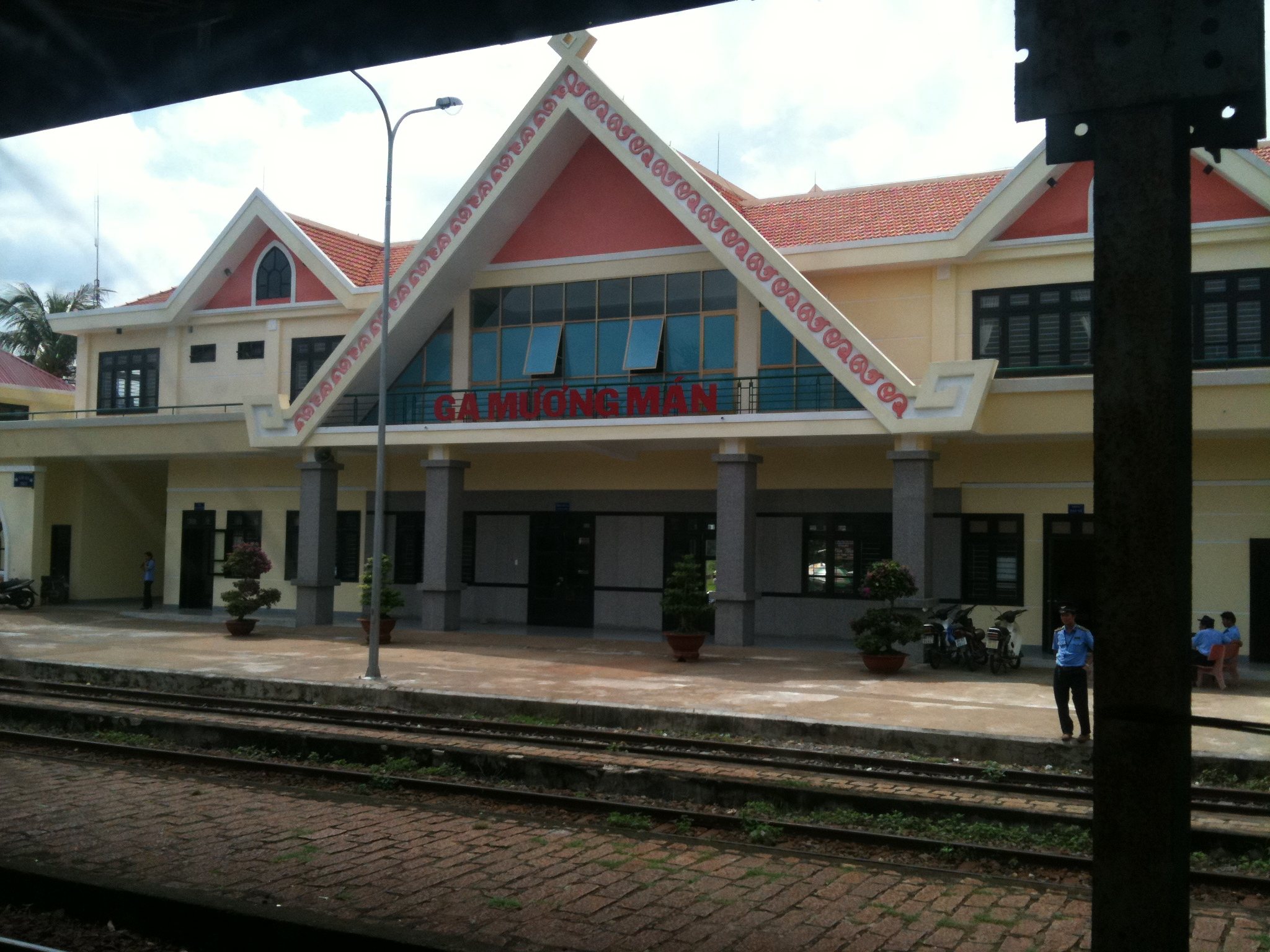
Ga Muong Man, Dragfyre, CC BY-SA 3.0, Wikimedia Commons