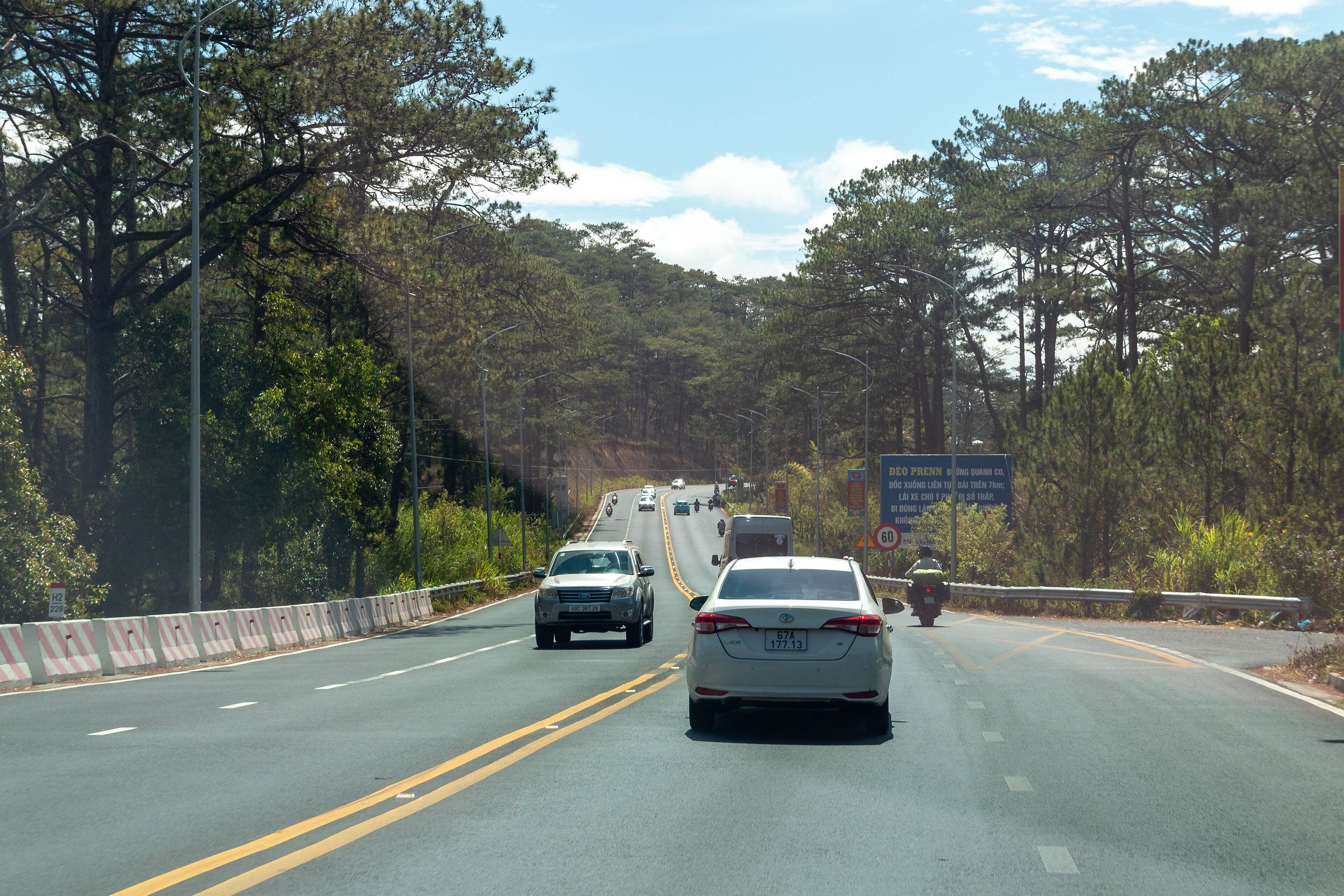
Ho Chi Minh City to Da Lat
How to get there
300 kmSleeper bus overnight, or a short flight; the road climbs 1,500 m and the temperature drops with it.
| Option | Typical time | How often | What it is like | Best for | Tarif |
|---|---|---|---|---|---|
| Bus Sleeper bus | 7–8 hours | Frequent, day and night | Lie-flat berth or cabin | Most travellers; overnight saves a hotel night | not verified |
| Flight Flight | 50 minutes in the air | Several daily | Standard short-haul | Saving most of a day | not verified |
Times are typical door-to-door ranges, not a timetable, and they move with traffic, weather and season. A fare is shown only where we have checked it against a published source on the date given; everywhere else it says so rather than guessing. Confirm both with the operator before you book.
Options last reviewed: 2026-09-03
The sleeper bus
Sleeper buses on this route use either lie-flat berths arranged in three columns or enclosed cabin-style pods. Operators such as Futa Bus Lines (Phương Trang), Kumho Samco and several boutique limousine companies depart from Ho Chi Minh City's Miền Đông bus terminal or, in many cases, from their own ticket offices closer to the city centre. Arrival in Da Lat is typically at the Phù Đổng transport hub on the edge of town, a short ride from the central market area.
The road climbs the Prenn Pass and the Bảo Lộc range, with bends that some passengers find uncomfortable. Sitting or lying toward the middle of the bus reduces motion. Blankets are often provided; the temperature in Da Lat can be noticeably cold by early morning even for travellers arriving in summer.
An overnight departure from Ho Chi Minh City centre means arriving at dawn, which allows a full day in Da Lat without spending a night in transit accommodation. Daytime departures are also available for those who prefer to travel in daylight and see the landscape change.
The flight
Lien Khuong Airport (airport code DLI) serves Da Lat and lies roughly 30 km south of the city centre. Vietnam Airlines, VietJet and Bamboo Airways all operate the route from Tan Son Nhat International Airport (SGN) in Ho Chi Minh City. The airborne portion is short, but the total door-to-door time depends heavily on check-in, security and the transfer at the Da Lat end.
From Lien Khuong, taxis and ride-hailing apps (Grab operates here) connect to Da Lat city centre. The road between the airport and town passes through pine forest and is straightforward, though the drive adds meaningful time and cost to the journey.
Flying suits travellers on tight schedules, those moving heavy luggage, or anyone who finds long bus rides difficult. Early morning flights sometimes offer clearer mountain views on approach, though cloud cover around Da Lat is common, especially outside the dry season.
Booking and what goes wrong
Sleeper bus tickets are sold through operator websites, the 12go.asia aggregator, and guesthouse reception desks across Ho Chi Minh City centre. Booking a day or two ahead is generally sufficient outside of Vietnamese public holidays; over Tết (Lunar New Year, late January or early February depending on the year) and the April 30 – May 1 holiday period, buses fill well in advance.
A common point of confusion is the pickup arrangement. Many operators advertise a central city pickup but in practice send a smaller vehicle to collect passengers from several hotels, adding time before the main bus departs. Confirm the actual pickup address and time at the point of booking, not on the day.
Flight bookings on airline websites are straightforward. Baggage allowances vary by ticket class and airline; low-cost fares on VietJet often carry a separate baggage fee. Delays at Tan Son Nhat, one of Southeast Asia's busiest airports, are not unusual during peak domestic travel periods.
Arrival in Da Lat
Sleeper buses deposit passengers at Phù Đổng terminal or, for some limousine operators, at a dedicated office near Da Lat's central market (Chợ Đà Lạt). Neither location is walkable to most accommodation, so a short taxi or Grab ride is the norm. Grab coverage in Da Lat is present but patchier than in Ho Chi Minh City; having the local taxi company numbers saved is useful as a backup.
The city is hilly and the streets around the market are often congested in the early morning as vendors set up. Arrivals by overnight bus at 5–6 am may find that accommodation check-in is not yet available; most guesthouses will hold luggage.
From Lien Khuong Airport, the 30 km road to Da Lat passes through Đức Trọng and takes roughly 45 minutes in normal traffic, longer during the afternoon peak or when fog reduces visibility on the highland road.
Seasonal considerations
Da Lat's rainy season runs roughly from May through October, with the heaviest rainfall in July and August. The Prenn and Bảo Lộc passes can be affected by landslides and reduced visibility during this period, occasionally delaying or diverting sleeper buses. Travellers on a fixed schedule may prefer to fly during the rainy season.
Fog is a year-round feature of the Da Lat highlands and can affect flights into Lien Khuong Airport. The airport has a reputation for diversions to Cam Ranh (Nha Trang's airport) when conditions are poor. Travellers should be aware of this possibility and avoid booking connecting transport too tightly after a Da Lat flight arrival.
Prices vary by season, with higher fares common around Tết, the April and September long weekends, and the Christmas–New Year period when Da Lat is particularly popular with domestic tourists seeking cooler weather.
Choosing between the options
The sleeper bus is the default choice for most travellers on this route. The overnight journey preserves daytime hours at both ends, the cost difference from flying is significant, and the bus drops passengers closer to the city centre than the airport does. The trade-off is journey comfort: the road has persistent curves, and a full night's sleep is not guaranteed.
Flying makes clear sense when time is the primary constraint, when a traveller is moving between cities as part of a broader itinerary with fixed dates, or when the bus journey is likely to be sold out — as it often is over long weekends. The additional transfer from Lien Khuong is a real cost in both time and money that is worth factoring into the comparison.
There is no train and no car-share service currently operating the full route. Private car hire is available through local operators in Ho Chi Minh City centre, giving flexibility for stops along the way, but this is a more expensive arrangement suited to groups or those with specific itinerary needs.
Connects
Référencé par
Sources
- Ministry of Transport — Ministry of Transport of Vietnam consulté 29 August 2026
Supports: the rules and definitions on this page - Vietnam National Authority of Tourism — VNAT consulté 29 August 2026
Supports: the rules and definitions on this page
Ageing Dernière vérification: 3 September 2026. Rules, fares and prices change — check the official source before acting on anything here. Report a mistake.
Picture credits (1)
Prenn Pass 2026, MinhVN1863, CC BY-SA 4.0, Wikimedia Commons