Ho Chi Minh City to Can Tho
How to get there
170 kmThe gateway to the Mekong Delta, and an easy road trip — but the floating market starts before dawn, so most people stay the night.
| Option | Typical time | How often | What it is like | Best for | 運賃 |
|---|---|---|---|---|---|
| Bus Express coach | 3–4 hours | Very frequent | Reclining seat, some sleeper services | Most travellers | not verified |
| Car Private car | 3–3.5 hours | On demand | Door to door | Groups, or stopping en route | not verified |
| Flight Flight | 1 hour in the air | Limited | Standard short-haul | Rarely worth it over such a short distance | not verified |
Times are typical door-to-door ranges, not a timetable, and they move with traffic, weather and season. A fare is shown only where we have checked it against a published source on the date given; everywhere else it says so rather than guessing. Confirm both with the operator before you book.
Options last reviewed: 2026-09-03
The route
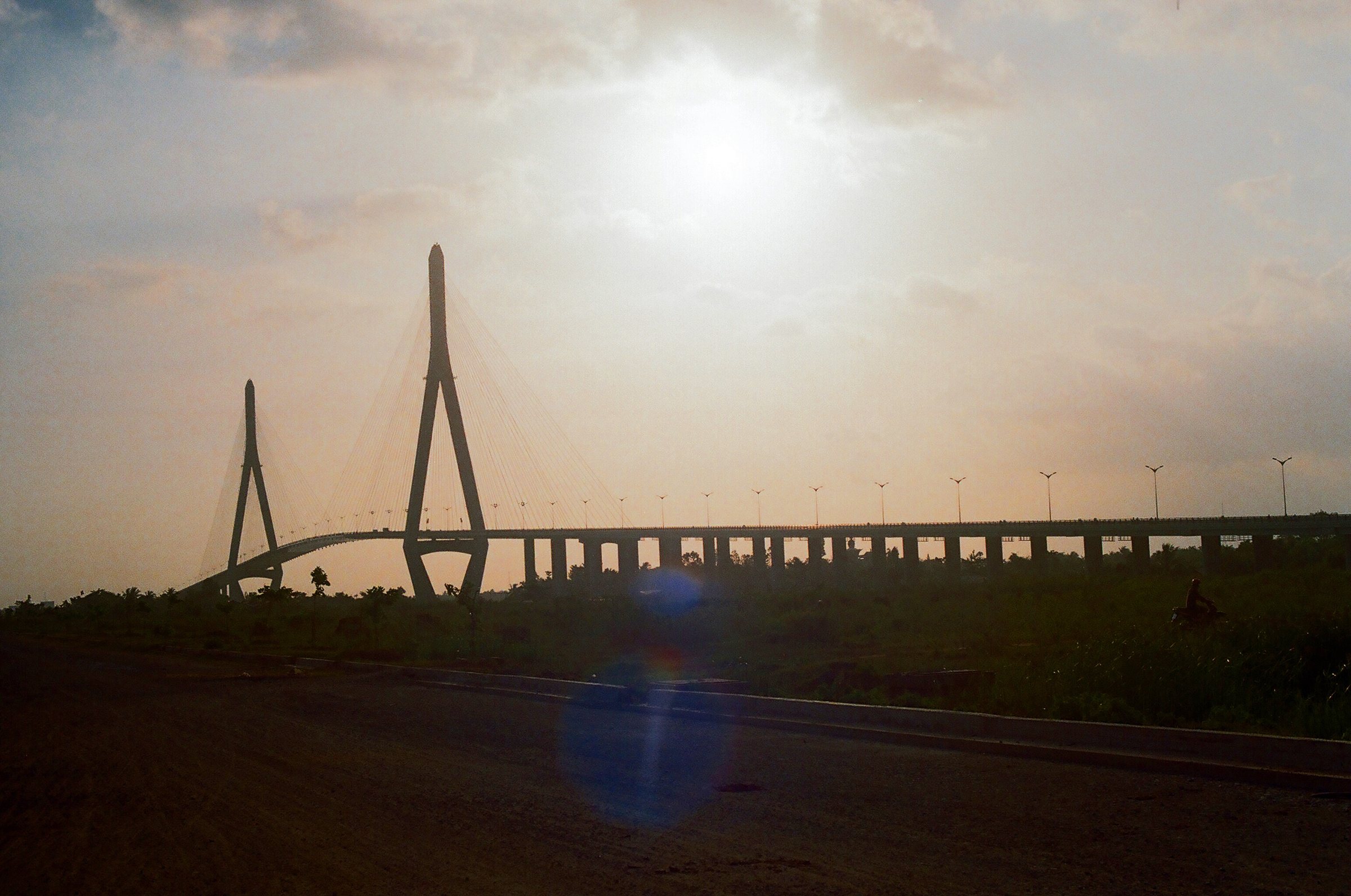
Ho Chi Minh City and Can Tho are connected by National Highway 1 and the expressway that runs beside it through Long An and Tien Giang before crossing into the delta proper. The road is flat and largely straight — the Mekong Delta has no hills — and the landscape shifts from suburban sprawl to rice paddies and canal-side settlements within an hour of leaving the city. The Cao Lanh and Vam Cong bridges, completed in 2018–2019, eliminated the ferry crossings that once extended journey times unpredictably, making the route significantly more reliable than it was even a few years ago.
Traffic leaving Ho Chi Minh City is the main variable. Friday afternoons and the days before public holidays see heavy outbound congestion; Sunday evenings and Monday mornings see the same in reverse. The floating market at Cai Rang begins well before 06:00 and is largely finished by mid-morning, which is the main reason most visitors travelling from Ho Chi Minh City choose to spend at least one night in Can Tho rather than day-tripping.
Express coach
Express coaches are the most common choice for independent travellers and locals alike. Several operators run scheduled departures throughout the day from dedicated bus stations in Ho Chi Minh City — most services originate at Mien Tay bus station (Ben Xe Mien Tay) in Binh Chanh, which is the city's main terminal for south-western routes. Some operators also offer pick-up points closer to the city centre or at tourist-area hotels, which saves the effort of reaching Mien Tay independently.
At the Can Tho end, coaches typically terminate at Can Tho bus station, which sits on the edge of the city rather than in the centre. A short taxi or ride-hailing trip is usually needed to reach riverside accommodation. Reclining seats are standard on express services; a smaller number of sleeper-configuration coaches also operate, more commonly on evening departures. Booking through operator websites or aggregator apps is straightforward; seats can also be bought at the terminal on the day, though advance booking is sensible around Tet and national holidays when capacity fills quickly.
Private car
A private car with driver is arranged through hotels, guesthouses or transport agencies at either end, and can also be booked through ride-hailing platforms that offer intercity services. The practical advantage over a coach is flexibility: the car leaves when the passenger is ready, can stop at points along the route — a riverside lunch spot, a provincial market — and drops off directly at the destination rather than at a bus terminal.
This option is particularly practical for groups of three or four, where the per-person cost becomes comparable to other modes, or for travellers carrying bulky luggage or travelling with young children. The main thing to confirm when booking is whether the quoted price covers tolls and waiting time, as both are sometimes added separately. Confirm the pick-up address precisely; addresses in Ho Chi Minh City can be ambiguous where streets share names across different parts of the city.
Flight
Can Tho International Airport (IATA: VCA) receives a small number of domestic flights, but the destination is close enough to Ho Chi Minh City that flying is rarely practical. Airport transfer time at both ends, check-in, and the limited schedule typically make the total door-to-door time comparable to or longer than a road journey, at considerably greater inconvenience and cost. The option is noted here for completeness; it is used mainly by travellers whose onward connections from Can Tho to other domestic destinations happen to align with available flights.
Seasonal considerations
The Mekong Delta has two seasons: a dry season roughly from November to April, and a wet season from May to October. Travel along the route itself is not significantly disrupted by rain, as the road infrastructure is modern and well-maintained. Within Can Tho, however, heavy rain and high tides can cause localised flooding in low-lying riverside areas, which occasionally affects access to guesthouses and market areas. The flood season (September to November) also coincides with the period when the delta's waterways are fullest, which some visitors consider the most visually interesting time to be on the water.
The period around Tet (Lunar New Year, falling in January or February depending on the year) sees very high demand in both directions. Buses and private cars book out well in advance, and prices vary by season. Travel a day or two before or after the peak dates where possible.
Departure and arrival points
In Ho Chi Minh City, Mien Tay bus station is the primary hub for Mekong Delta services. It is located in Binh Chanh and is most easily reached by taxi or ride-hailing app from the city centre; allow extra time during morning rush hours. Some express operators maintain a secondary pick-up point in the backpacker and tourist accommodation area around Pham Ngu Lao, which can be a more convenient starting point depending on where you are staying.
In Can Tho, the main bus station is on Nguyen Trai street, roughly 2–3 km from the Ninh Kieu riverside area where most visitor accommodation is concentrated. The walk is not practical with luggage; taxis and ride-hailing apps are readily available outside the terminal. Some coach operators also drop passengers at a stop closer to Ninh Kieu — confirm this when booking. The Cai Rang floating market is accessed separately by boat from the Ninh Kieu quay area; it is not walkable from anywhere coaches stop.
Connects
参照元
出典
- Ministry of Transport — Ministry of Transport of Vietnam アクセス日 29 August 2026
Supports: the rules and definitions on this page - Vietnam National Authority of Tourism — VNAT アクセス日 29 August 2026
Supports: the rules and definitions on this page
Ageing 最終確認: 3 September 2026. Rules, fares and prices change — check the official source before acting on anything here. Report a mistake.
Picture credits (1)
Cầu Cần Thơ (6321757880), Quang Vũ Trương from Hochiminh City, Vietnam, CC BY 2.0, Wikimedia Commons