Hanoi to Ninh Binh
How to get there
95 kmClose enough to do as a day trip, though the karst landscape rewards a night.
| Option | Typical time | How often | What it is like | Best for | الأجرة |
|---|---|---|---|---|---|
| Train Train | 2–2.5 hours | Several daily on the north–south line | Seat | Simplicity — the station is central at both ends | not verified |
| Bus Limousine van | 1.5–2 hours | Frequent | 9-seat van, hotel pickup | Door-to-door speed | not verified |
| Car Private car | 1.5–2 hours | On demand | Door to door | Day trips taking in several sites | not verified |
Times are typical door-to-door ranges, not a timetable, and they move with traffic, weather and season. A fare is shown only where we have checked it against a published source on the date given; everywhere else it says so rather than guessing. Confirm both with the operator before you book.
Options last reviewed: 2026-09-03
Overview
Hanoi and Ninh Binh and Tam Coc are separated by roughly 95 km of the Red River Delta, most of it flat agricultural land before the limestone karst formations appear on the southern approach. The route is one of the most-travelled short corridors in northern Vietnam, served by the national rail line, a well-established limousine van network and private hire vehicles.
The comparison table on this page lists durations and frequencies for each mode. What it cannot show is what the journey actually feels like, how booking works in practice, and where things go wrong — all covered in the sections below.
Seasonally, the road south of Hanoi is prone to slow traffic during the Tet holiday window in late January or early February, when large numbers of people travel home to the provinces. Flooding after heavy rain can also affect road times in summer months, though the rail line is less exposed to this.
By train
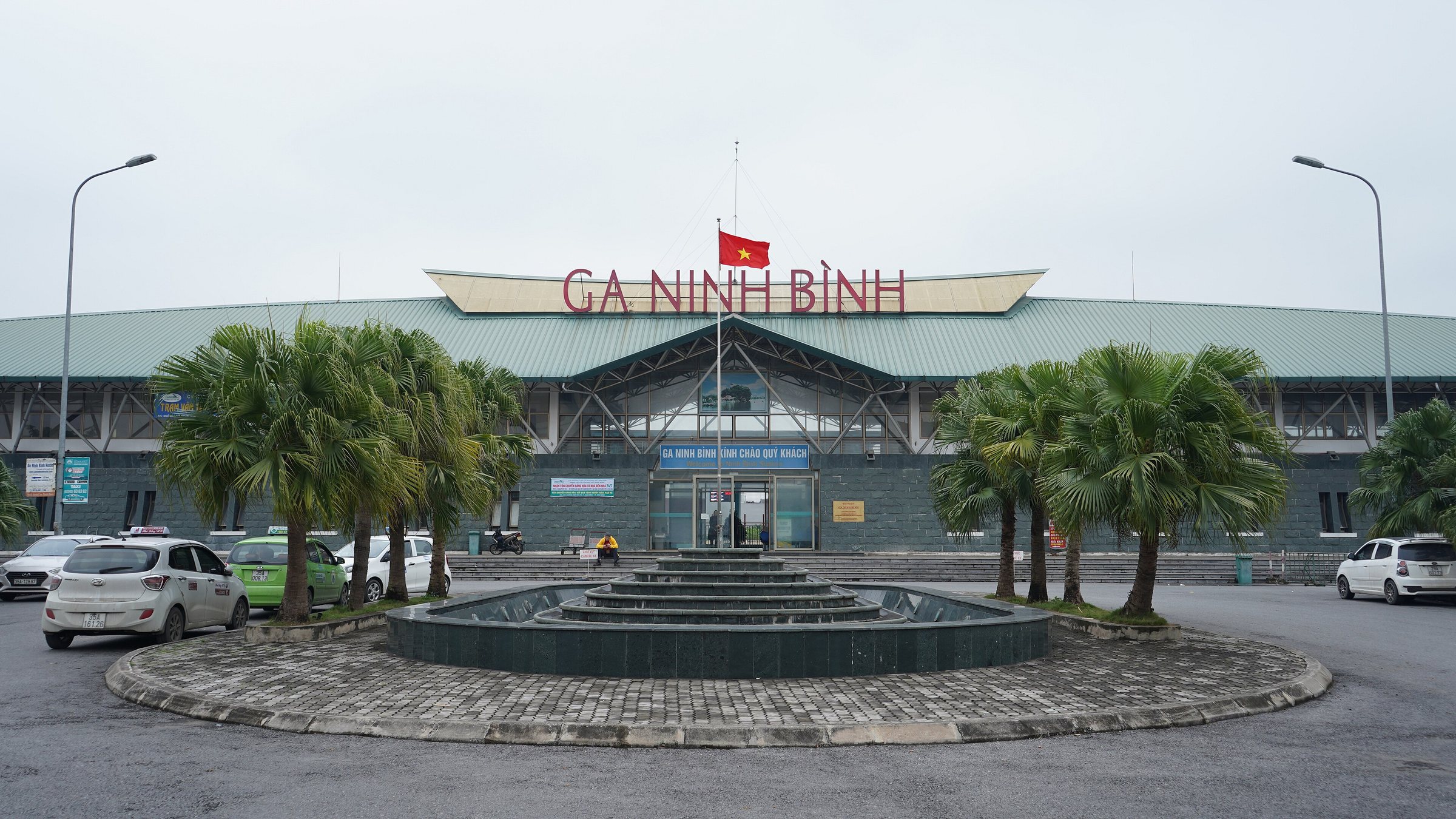
The train is the most straightforward option for independent travellers. Hanoi's main station, Ga Hà Nội, sits just west of the Old Quarter — walkable with light luggage or a short ride by taxi or motorbike taxi. Ninh Binh station is equally central, placing you within a short taxi or xe ôm ride of most accommodation.
Several trains on the north–south Reunification Express line stop at Ninh Binh each day. Hard seats are functional; soft seats are more comfortable for a journey of this length. Booking through the Vietnam Railways website or a third-party app requires choosing the specific service and seat class. Seats can sell out on weekends and public holidays, so booking a day or two ahead is prudent.
What can go wrong: trains sometimes run late, particularly southbound services that originate in Hanoi and accumulate delays. The station at Ninh Binh has limited facilities, so if you arrive at an awkward hour, onward transport options may be scarce. There is no left-luggage facility at Ninh Binh station; some hotels will hold bags if you arrange it in advance.
By limousine van
Nine-seat limousine vans — sometimes called 'express' or 'limousine' buses — have become the standard choice for travellers who want door-to-door convenience without hiring a full private car. Operators collect passengers from hotels in central Hanoi and drop them at accommodation or a fixed point in Ninh Binh town or Tam Coc.
Booking is done through hotel receptions, guesthouse staff, or transport apps. Several competing operators run the route, and quality varies: newer vans with reclining seats are noticeably more comfortable than older vehicles pressed back into service during busy periods. Reading recent reviews on whichever platform you use is the most reliable way to distinguish operators.
Pickup logistics require some attention. Drivers collect passengers from multiple addresses in sequence, so your actual departure time may be later than advertised if the van is coming from the far side of Hanoi. Allow a buffer if you have a fixed commitment at the other end. Drop-off in Ninh Binh is usually at the operator's office or a fixed point on the main road; confirm the exact location when booking, especially if your accommodation is in Tam Coc rather than the town.
By private car
A private car — typically booked through a hotel, guesthouse or travel agency — suits those doing a day trip who want to move between sites such as Tràng An, Tam Coc, Bích Động pagoda and Hoa Lư without depending on local transport at the destination. The driver waits or follows a loose itinerary rather than leaving you to arrange onward movement independently.
Door-to-door travel time is broadly similar to the limousine van but the experience is more flexible: stops en route are possible, and the vehicle is not shared with other passengers. For a group of three or four, the per-person cost differential versus the limousine van narrows considerably.
Negotiating or confirming the itinerary in writing before departure avoids misunderstandings, particularly around how many hours the driver is contracted for and whether a return journey is included. Some drivers are also licensed guides; others are not, and conflating the two roles creates confusion about responsibilities.
At each end: stations and pick-up points
Hanoi: Ga Hà Nội (Hanoi station) is on Lê Duẩn street, roughly 1 km southwest of Hoàn Kiếm Lake. It is accessible by taxi, Grab or motorbike. Note that there is a secondary station, Gia Lâm, on the east bank of the Red River — trains to Ninh Binh depart from the main station, not Gia Lâm. Limousine vans and private cars depart from wherever pickup is arranged, not from the station.
Ninh Binh: The train station is on Hoàng Hoa Thám street near the centre of Ninh Binh town. From there, motorbike taxis and taxis cover the 8–10 km to Tam Coc and Tràng An. Agreed fares in advance are advisable for this leg. Limousine van drop-off points vary by operator; the most common is near the roundabout in town or at the operator's local office.
Tam Coc village itself has no rail or coach access; all modes require a local transfer for the final stretch.
Which option suits which traveller
- Solo traveller, no fixed schedule: The train offers a reliable, bookable journey with no shared-vehicle logistics. It is the easiest to plan around.
- Couple or small group wanting convenience: The limousine van removes the station taxi step at both ends and is widely available. Confirm pickup and drop-off addresses carefully.
- Day trip covering multiple sites: A private car is the most practical; you keep the vehicle for the day and avoid the complexity of moving between Tràng An, Hoa Lư and Tam Coc by local transport.
- Travelling with significant luggage or young children: Private car is the most forgiving; loading and unloading a nine-seat van or navigating a busy station with large bags adds friction.
- Travelling during Tet or a national holiday: Book any option well in advance. Train seats in particular sell out days or weeks ahead during peak periods.
Connects
مُشار إليه من
المصادر
- Ministry of Transport — Ministry of Transport of Vietnam تم الوصول إليه 29 August 2026
Supports: the rules and definitions on this page - Vietnam National Authority of Tourism — VNAT تم الوصول إليه 29 August 2026
Supports: the rules and definitions on this page
Ageing آخر تحقق: 3 September 2026. Rules, fares and prices change — check the official source before acting on anything here. Report a mistake.
Picture credits (1)
Ninh Binh Railway Station (Jan 19, 2020), Yhxc57082, CC BY-SA 4.0, Wikimedia Commons