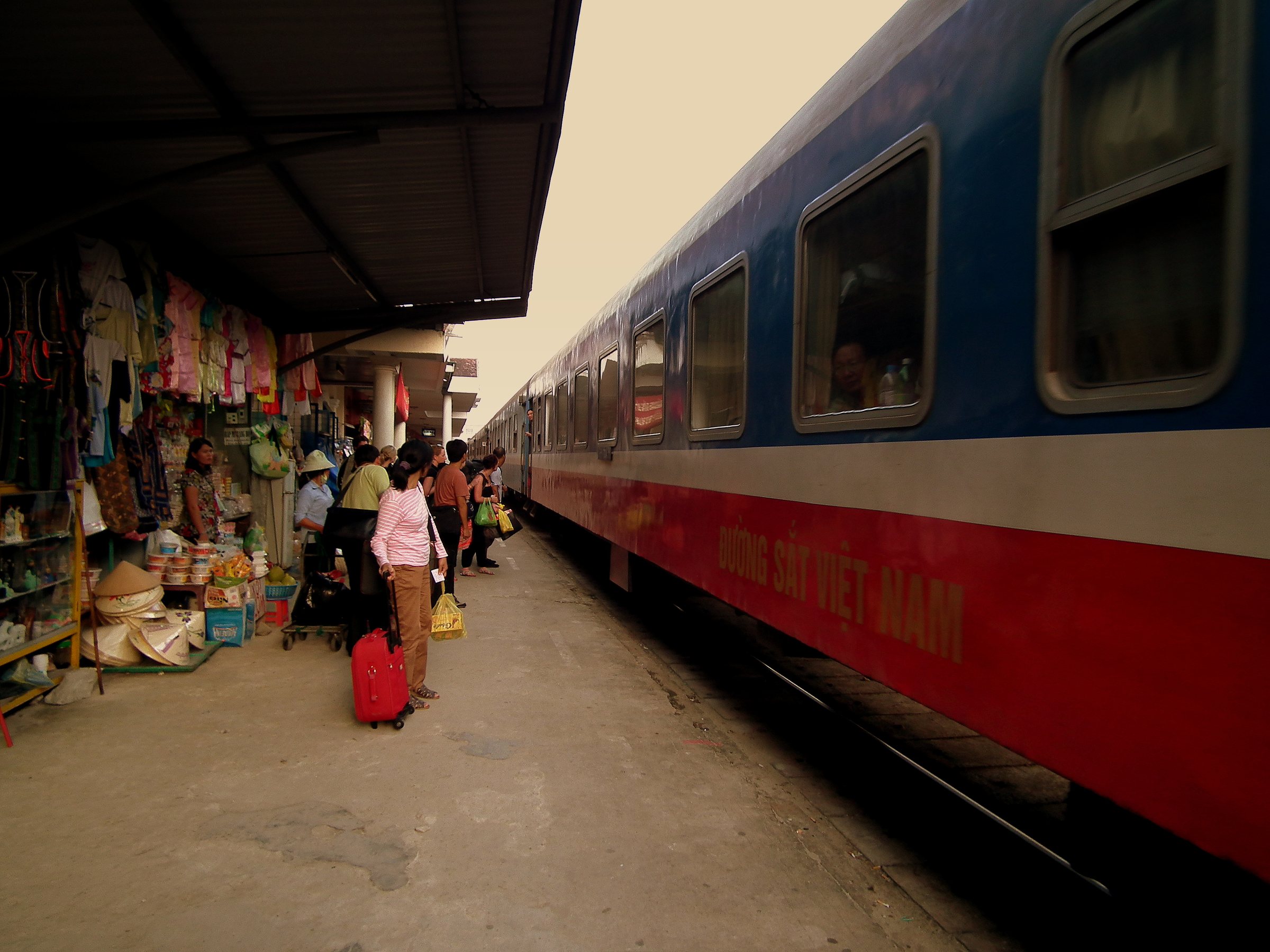
Hanoi to Hue
How to get there
670 kmFlying takes an hour; the train takes most of a day but runs the coast.
| Option | Typical time | How often | What it is like | Best for | Fahrpreis |
|---|---|---|---|---|---|
| Flight Flight | 1h 15m in the air | Several daily | Standard short-haul | Saving a day | not verified |
| Train Reunification Express | 13–14 hours | Several daily | Soft sleeper or seat | Travellers who want the journey itself; overnight saves a hotel night | not verified |
| Bus Sleeper bus | 13–15 hours | Daily | Lie-flat berth | Lowest cost | not verified |
Times are typical door-to-door ranges, not a timetable, and they move with traffic, weather and season. A fare is shown only where we have checked it against a published source on the date given; everywhere else it says so rather than guessing. Confirm both with the operator before you book.
Options last reviewed: 2026-09-03
The route in brief
Hanoi and Hue are separated by around 670 km, with much of the distance running parallel to the South China Sea. The terrain is mostly flat through the Red River Delta, then increasingly hilly as the route passes through Nghe An and Ha Tinh provinces before the Hai Van Pass area near Hue. Three modes of transport cover the route regularly: domestic flights, the Reunification Express train, and overnight sleeper buses. There is no practical road option for self-driving travellers without a full day to spare.
The choice between modes is largely a question of what you value: speed, the journey experience itself, or cost. All three options run year-round, though weather — particularly typhoon season from roughly September to November — can affect flights and road conditions. The train is the least disrupted by weather short of a serious storm.
Flying
Noi Bai International Airport serves Hanoi; Phu Bai International Airport serves Hue. Both are outside the city centres, so transfers at each end add time to the headline flight duration. Vietnam Airlines, VietJet and Bamboo Airways all operate the route, with several departures across the day.
Booking is done through airline websites or travel agents; third-party booking platforms also carry the route. The main thing that goes wrong with flights here is last-minute schedule changes or consolidations — particularly on the smaller carriers — so checking the booking confirmation a day before departure is sensible. Luggage allowances vary between carriers and fare classes, and low-cost fares often treat carry-on and checked bags separately.
From Phu Bai Airport, taxis and ride-hailing apps connect to the Hue city centre; the drive is typically 15–20 minutes depending on traffic. Airport buses also run into the city, though schedules change periodically.
The Reunification Express
The Reunification Express — Thống Nhất in Vietnamese — is the rail line connecting Hanoi with Ho Chi Minh City, and the Hanoi–Hue leg is among the most scenically varied sections. The line hugs the coast for long stretches, passes through the Hai Van Pass tunnel (the original track over the pass is no longer in regular passenger service), and gives views of lagoons and rice paddies that the other two modes entirely miss.
Trains depart from Hanoi Railway Station (Ga Hà Nội), a short distance from the Old Quarter. Hue Railway Station is centrally located within the city, making arrival straightforward. Soft sleeper berths — four berths per compartment — are the most comfortable option for the overnight journey. Hard sleeper (six berths) and seat carriages are also available. The overnight trains allow travellers to board in the evening and arrive in the morning, avoiding a hotel night in either direction.
Tickets can be booked through the Vietnam Railways website or ticketing offices; demand on popular dates and holiday periods (Tết, national holidays, summer school holidays) means booking several days ahead is worthwhile. Seat and berth availability is shown in real time on the booking platform. Occasional delays occur, more commonly at the southern end of longer journeys; the Hanoi–Hue section is generally reliable.
Sleeper bus
Sleeper buses on this route use lie-flat or semi-reclined berths arranged in two or three rows. The buses are operated by a range of companies — Hoang Long, Techbus and others — and depart from bus stations or dedicated pick-up points in the Hanoi Old Quarter area. Drop-off in Hue is typically at the operator's own station or a central point; exact locations vary by company and should be confirmed at booking.
Booking is done through operator websites, travel desks in hostels and hotels, or aggregator platforms. The buses are the lowest-cost option on the route. The main practical drawbacks are road quality on certain sections overnight, noise variation between operators, and the occasional unscheduled stop. Berth widths also vary; taller travellers may find the space limiting. Luggage goes in the hold or under the berth depending on the bus configuration.
Departure times are typically evening, arriving in Hue in the early morning. Buses depart from several points across Hanoi; confirm the exact pick-up address when booking, as it differs from the main long-distance bus stations on some routes.
Choosing between options
The flight suits travellers for whom time is the primary constraint and who are comfortable with airport transfers at both ends. It is the only option that leaves the majority of the day free on arrival.
The train is suited to travellers who want the journey to be part of the experience, those travelling with significant luggage, or anyone doing the route in daylight who wants a view of the coast. The overnight train also functions as accommodation, which changes the cost comparison with the bus for travellers who would otherwise pay for a hotel night.
The sleeper bus suits travellers prioritising cost above other factors, and those who are comfortable sleeping on a moving vehicle. It requires the least advance planning of the three options, as tickets are generally available close to departure outside peak periods.
Seasonal note: the central Vietnamese coast — including Hue — is prone to heavy rain and occasional flooding between roughly October and December. This does not typically disrupt the train, but can affect road journey times and occasionally flights. Checking weather forecasts before a bus journey in this period is worthwhile.
Connects
Referenziert von
Quellen
- Ministry of Transport — Ministry of Transport of Vietnam abgerufen 29 August 2026
Supports: the rules and definitions on this page - Vietnam National Authority of Tourism — VNAT abgerufen 29 August 2026
Supports: the rules and definitions on this page
Ageing Zuletzt geprüft: 3 September 2026. Rules, fares and prices change — check the official source before acting on anything here. Report a mistake.
Picture credits (1)
Hue Station train stop, calflier001, CC BY-SA 2.0, Wikimedia Commons