Hanoi to Ho Chi Minh City
How to get there
1,726 kmTwo hours by air, or 32–35 hours end to end on the Reunification Express — the full length of the country.
| Option | Typical time | How often | What it is like | Best for | 運賃 |
|---|---|---|---|---|---|
| Flight Flight | 2h 10m in the air | Very frequent, all day | Standard short-haul | Almost everyone | not verified |
| Train Reunification Express, soft sleeper | 32–35 hours | Several daily | 4-berth air-conditioned sleeper | Travellers treating the journey as the point | 1,600,000 ₫ – 2,100,000 ₫
checked 2026-08-28 |
Times are typical door-to-door ranges, not a timetable, and they move with traffic, weather and season. A fare is shown only where we have checked it against a published source on the date given; everywhere else it says so rather than guessing. Confirm both with the operator before you book.
Options last reviewed: 2026-09-03
The two options at a glance
Every day, dozens of flights connect Hanoi and Ho Chi Minh City, making this one of the busiest domestic air corridors in the world. The alternative is the Reunification Express (tàu Thống Nhất), which follows the coast the full length of the country on the same railway line that was painstakingly restored after the American War. There is no direct long-distance bus option that competes meaningfully in time or comfort over this distance, and no motorway running the full route. The choice is therefore almost always between speed and experience.
The comparison table above shows durations and frequencies drawn from scheduled data. Prices are held separately with an observation date, as they shift with demand and season.
Flying: what the journey is actually like
Flights depart from Noi Bai International Airport (HAN), roughly 45 minutes north of central Hanoi by road depending on traffic. They arrive at Tan Son Nhat International Airport (SGN), which sits inside the city — the taxi or ride-hail journey to central districts such as District 1 is typically 30–45 minutes, longer during morning or evening peaks.
The flight itself is a standard short-haul operation. The carriers on this route include Vietnam Airlines, VietJet Air, Bamboo Airways and Pacific Airlines, and aircraft are usually narrow-body jets. Cabin service is minimal on the low-cost carriers. Baggage allowances and change fees vary considerably between carriers and fare classes, so checking the specific fare conditions before booking matters more than the headline price.
Delays are common, particularly later in the day when disruption accumulates across the network, and Tan Son Nhat is capacity-constrained — ground holds and circling are not unusual during busy periods. Typhoon season (roughly June to November, with peaks in September and October) can affect northern Vietnam; flight disruptions from weather are most likely during this window.
The Reunification Express: what the journey is actually like
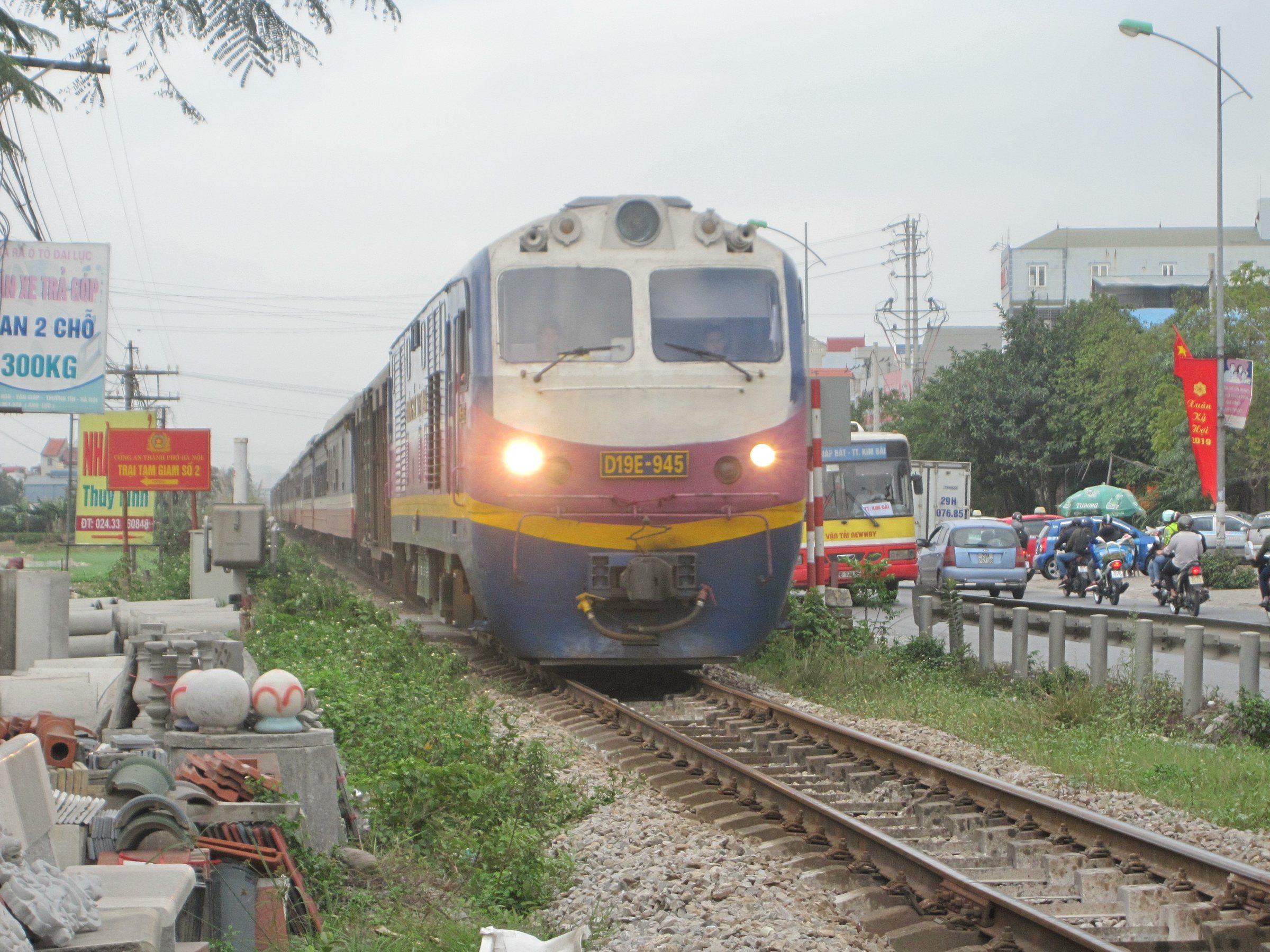
The train departs from Hanoi Station (Ga Hà Nội), on Le Duan street near the southern edge of the Old Quarter — straightforward to reach from most central accommodation. It arrives at Saigon Station (Ga Sài Gòn) in the Phu Nhuan area, a short taxi or ride-hail ride from District 1.
The soft sleeper option places four berths in a lockable compartment with air conditioning. Linen is provided. Upper berths are cheaper and have less headroom; lower berths are wider and easier to climb into. The train passes through Hue, Da Nang, Nha Trang and several other cities, so compartment-mates change through the journey. A dining car serves simple Vietnamese dishes; vendors board at major stops with food and drinks.
The scenery through the Hai Van Pass between Da Nang and Hue — where the line runs along a coastal cliff — is frequently cited as among the most dramatic rail scenery in Southeast Asia. This section is traversed in daylight on some but not all train numbers, so the specific train chosen affects what passengers see when. Overnight trains leave both ends in the evening and arrive the following afternoon; day-start trains run the full route largely in daylight across two days.
Booking and what goes wrong
Flights are booked directly through airline websites or through standard online travel agencies. The main complication is the baggage and change-fee small print on low-cost fares. Booking well ahead during Tết (Vietnamese Lunar New Year, falling in late January or early February) is essential — this is the single busiest travel period of the year in Vietnam, and seats sell out weeks in advance. Prices during the Tết window are also at their annual peak; the same is true of the return direction.
Train tickets are sold through the Vietnam Railways website (dsvn.vn) and at station ticket offices. The website accepts international cards but has historically had reliability issues with foreign-issued Visa and Mastercard; some travellers find it easier to book through a licensed third-party agent, which typically adds a service fee. Soft sleeper berths on popular departures — particularly those timed to pass the Hai Van Pass in daylight — can sell out days ahead during holidays and the summer peak (July to August). Tickets are non-transferable and tied to the passenger's identity document number, which must match what is presented at the station.
A common error is booking the wrong train number without checking which berths pass key scenery in daylight. Train numbers and schedules are published on the Vietnam Railways site but are subject to seasonal revision.
Arrival and onward transfer
At Tan Son Nhat, metered taxis from the official rank and ride-hail apps (Grab is the dominant platform) both operate from the arrivals hall. The airport express bus connects to central stops for those without luggage constraints. Traffic into central Ho Chi Minh City is heavy throughout the day; the journey is longest during the morning rush (roughly 7–9 am) and evening rush (roughly 5–7 pm).
At Saigon Station, the same ride-hail apps and metered taxis serve the forecourt. The station is in Phu Nhuan, adjacent to the former District 3 area, and is not far from the historic centre by Vietnamese city standards — the journey is shorter and cheaper than from the airport.
At Hanoi Station on the departure side, the station is walkable from parts of the Old Quarter and a short ride from most central hotels. Luggage storage is available at the station if there is time to fill before a late departure.
Seasonal considerations
Vietnam's climate varies significantly along the 1,726 km of this route. Hanoi has four seasons with a cool, occasionally chilly winter (December to February) and a hot, humid summer. Ho Chi Minh City has two seasons — dry (roughly November to April) and wet (May to October) — with consistently high temperatures year-round. Travellers on the train pass through multiple climate zones, which affects packing decisions more than it does route choice.
The busiest booking periods are Tết (late January or early February, varying by lunar calendar year), the national holidays in late April and early May, and the summer school break (July to August). During these windows, both flight and train capacity tightens sharply and advance booking becomes important. Typhoon risk is highest in central Vietnam from September through November, which can cause train delays as well as flight disruption.
Connects
参照元
出典
- Ministry of Transport — Ministry of Transport of Vietnam アクセス日 29 August 2026
Supports: the rules and definitions on this page - Vietnam National Authority of Tourism — VNAT アクセス日 29 August 2026
Supports: the rules and definitions on this page
Ageing 最終確認: 3 September 2026. Rules, fares and prices change — check the official source before acting on anything here. Report a mistake.
Picture credits (1)
Train in Hanoi, Anh Đức HRT, CC BY-SA 4.0, Wikimedia Commons