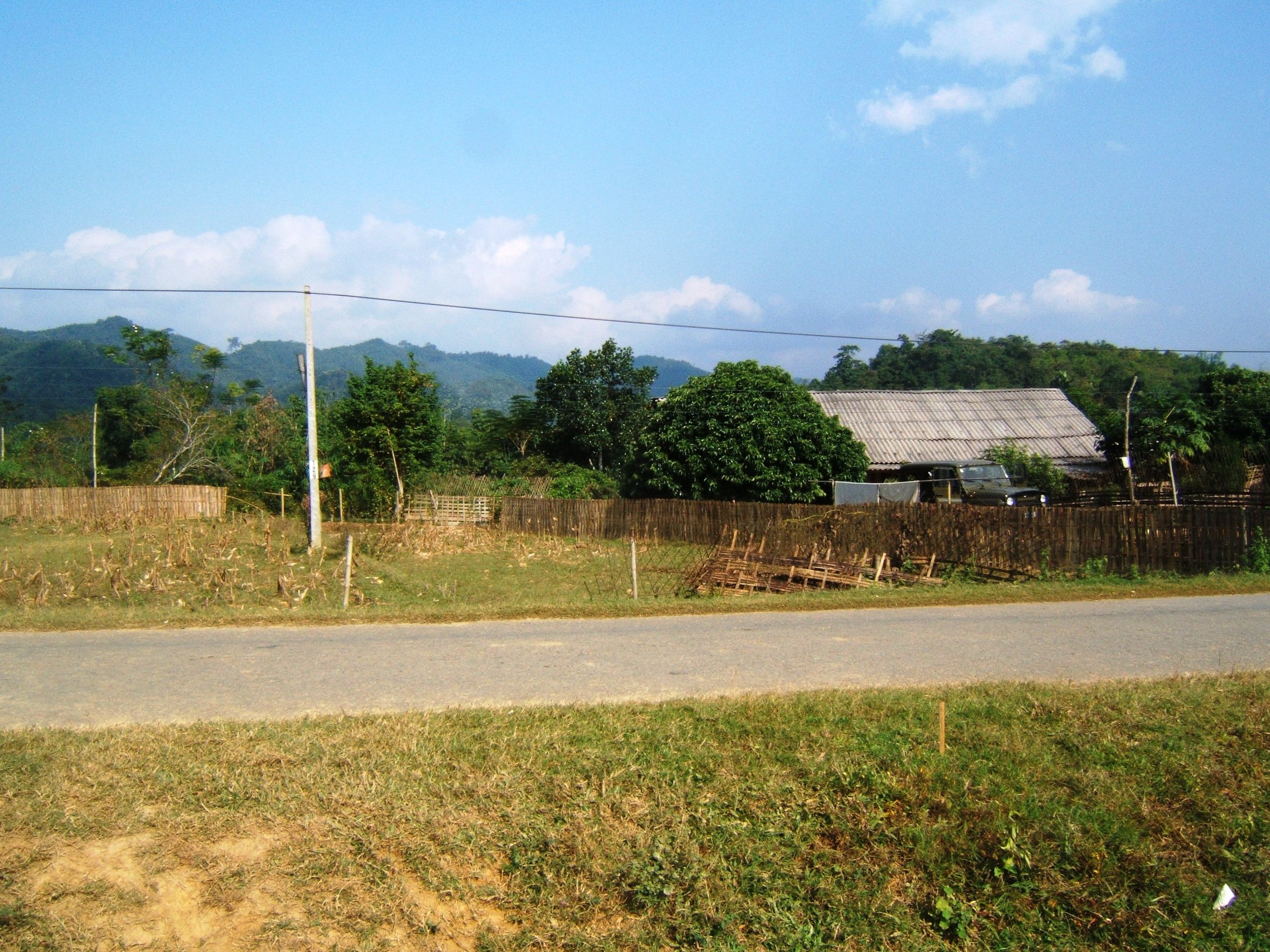
Hanoi to Ha Giang
How to get there
300 kmOvernight sleeper bus is the standard approach, arriving in time to start the loop the same morning. There is no train and no airport.
| Option | Typical time | How often | What it is like | Best for | Giá vé |
|---|---|---|---|---|---|
| Bus Overnight sleeper bus | 6–7 hours | Nightly, plus daytime services | Lie-flat berth or cabin | Nearly everyone; arrive at dawn and ride the same day | not verified |
| Car Private car | 6 hours | On demand | Door to door | Groups splitting the cost | not verified |
Times are typical door-to-door ranges, not a timetable, and they move with traffic, weather and season. A fare is shown only where we have checked it against a published source on the date given; everywhere else it says so rather than guessing. Confirm both with the operator before you book.
Options last reviewed: 2026-09-03
The route at a glance
The road between Hanoi and Ha Giang city covers roughly 300 km, running north through Tuyen Quang province before climbing into the mountains. There is no railway to Ha Giang and no commercial airport, so road travel is the only option. The two main choices are the overnight sleeper bus and a chartered private car; motorbike rental for the full journey from Hanoi is uncommon because the distance before the loop itself is long and relatively unremarkable.
The route is a means to an end: almost every traveller is heading for the Ha Giang Loop rather than Ha Giang city itself, and the practical goal is to arrive with enough time and energy to start riding.
Overnight sleeper bus
The sleeper bus is the standard choice. Buses leave Hanoi in the evening, typically from pick-up points in the Old Quarter or nearby, and arrive in Ha Giang city in the early morning — timed deliberately so that loop riders can collect a motorbike and set off the same day without losing a night's sleep to travel.
Berths are either lie-flat individual seats or enclosed pod-style cabins depending on the operator. The road is mostly dual carriageway as far as Tuyen Quang, then narrows and winds as it gains altitude. Light sleepers should know that mountain hairpins in the final hour or two can disturb sleep.
Booking is straightforward through hostel front desks in Hanoi's Old Quarter, operator websites, or general Vietnamese bus-booking apps. The main risk is booking a bus whose pick-up point is far from where you are staying, or whose drop-off in Ha Giang is not central — confirm both when booking. During the peak autumn foliage season (roughly October to November) and Vietnamese public holidays, buses fill quickly and advance booking of a day or two is advisable.
Private car
A chartered car with driver covers the same road in roughly six hours by day, making it the faster option in daylight. The door-to-door convenience is its main practical advantage: the driver picks up from any address in Hanoi and drops off at a specific guesthouse or motorbike-hire point in Ha Giang city.
The cost per seat becomes comparable to a sleeper bus only when a group of three or four people splits it, which is why this mode suits groups rather than solo travellers or pairs. Agencies in Hanoi handle bookings; quality varies, so confirming the vehicle type and the driver's phone number before departure is standard practice.
A daytime car journey does not replicate the sleeper bus's timing advantage — arriving in the afternoon rather than at dawn means most travellers lose half a day on the loop or must spend an extra night in Ha Giang city. Some groups use a car for the return, when timing is less critical.
Departure and arrival points
Hanoi departures: Sleeper buses serving Ha Giang typically depart from, or have pick-up stops in, the Old Quarter, around Luong Yen area, or from the operator's own office. There is no single dedicated terminal for this route. Confirm the exact pick-up address and allow for Hanoi evening traffic when timing your departure from your accommodation.
Ha Giang arrivals: Buses drop passengers at the operator's office or a central point in Ha Giang city. Most motorbike-hire guesthouses and hostels cluster along and around Nguyen Thai Hoc street; several will send a representative to meet arriving buses if arranged in advance. The city is small and walkable, so most drop-off points are within easy reach of accommodation.
Private cars drop passengers wherever the customer specifies, which removes the transfer question entirely.
Seasonal considerations
The road is open year-round, but conditions and demand shift significantly by season. The October–November window, when buckwheat flowers are in bloom on the loop, draws the largest crowds; bus seats and loop-side guesthouses book out well ahead, and the mountain road near Ha Giang can be busy with tour groups.
The summer months (June–August) bring heavy rain to the northern mountains. Landslides occasionally block the road north of Tuyen Quang, causing delays. Travellers on tight schedules should have a contingency if an overnight bus arrives several hours late.
Winter (December–February) sees cold temperatures and occasional fog on the high sections of road near Ha Giang city, but buses continue to run. The loop itself is quieter and the road generally clear of the landslide risk present in summer.
What goes wrong, and how to handle it
Late arrivals: Mountain roads and weather mean overnight buses are not always on schedule. If arriving after motorbike-hire offices open, guesthouses in Ha Giang city can usually store luggage while riders sort paperwork.
Wrong drop-off: Some cheaper buses drop at a point outside the centre, occasionally at a guesthouse the operator has a commercial arrangement with rather than the passenger's chosen accommodation. Confirm the drop-off address before boarding rather than assuming it will be central.
Double bookings and no-shows: Small operators occasionally overbook or cancel during low season. Booking through a hostel in Hanoi that has an ongoing relationship with the operator reduces this risk, as the hostel has commercial incentive to ensure the bus actually runs.
Luggage: Sleeper buses have under-bus storage. Large bags stay below; a small overnight bag in the berth is manageable. Most loop travellers leave the bulk of their luggage in Hanoi storage and travel light to Ha Giang.
Connects
Được tham chiếu bởi
Các nguồn
- Ministry of Transport — Ministry of Transport of Vietnam đã truy cập 29 August 2026
Supports: the rules and definitions on this page - Vietnam National Authority of Tourism — VNAT đã truy cập 29 August 2026
Supports: the rules and definitions on this page
Ageing Đã xác minh lần cuối: 3 September 2026. Rules, fares and prices change — check the official source before acting on anything here. Report a mistake.
Picture credits (1)
Road 279@LienHiep-BacQuang-HaGiang-Vietnam, BacLuong, CC BY-SA 4.0, Wikimedia Commons