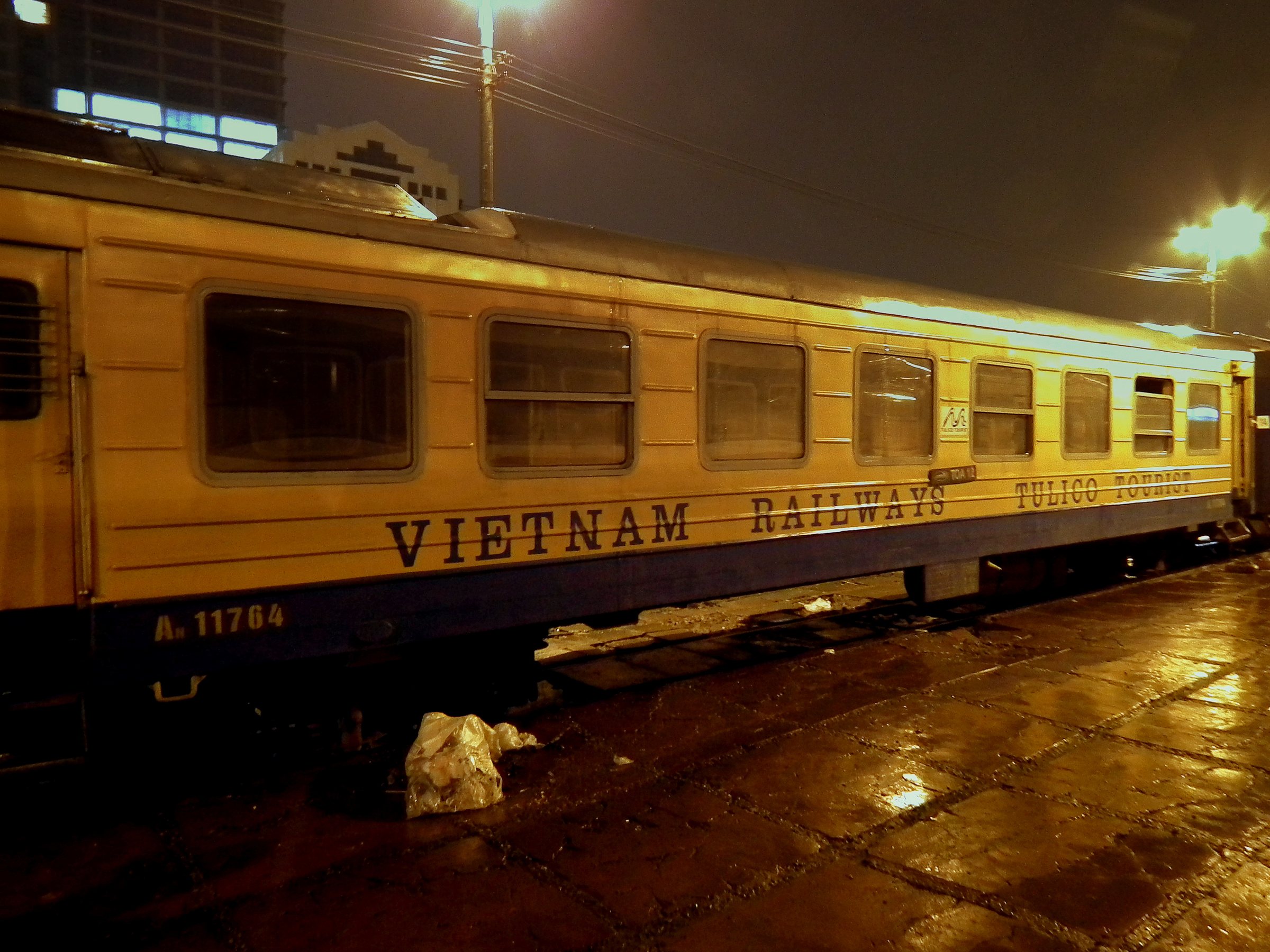
Hanoi to Lao Cai train (for Sapa)Tàu Hà Nội – Lào Cai
The Hanoi–Lao Cai railway is the standard long-distance route connecting the capital with the mountainous northwest. The line is 296 km long and the journey takes roughly eight hours, making an overnight departure the practical default for most travellers. Vietnam Railways operates the base service, but several private operators attach independently managed sleeper carriages to the same train, so the experience varies considerably depending on which ticket is booked.
Typical journey times
| Journey | Typical time | How often | Notes |
|---|---|---|---|
| Train Hanoi → Lao Cai | 8 hours | Nightly | Overnight sleeper. |
| Car Lao Cai station → Sapa | 45 – 60 min | Meets the trains | 38 km by road; the train does not reach Sapa. |
Typical door-to-door ranges, not a timetable. Road times move with traffic and weather, and sea crossings are cancelled outright in rough conditions — confirm with the operator on the day. Last reviewed: 2026-09-10.
The overnight service
Trains depart Hanoi in the evening and arrive in Lao Cai in the early morning, a timing that suits travellers who want to avoid losing a day to transit. Return services follow the same logic, leaving Lao Cai in the evening and reaching Hanoi by morning. The typical journey time is around eight hours, though this can vary with delays. Because the arrival falls before most guesthouses serve breakfast, travellers generally have time to transfer up to Sapa without losing the full day.
Tickets on the state service are sold in hard-seat, soft-seat, hard-sleeper and soft-sleeper configurations. The state sleeper berths are functional rather than luxurious, with four or six berths per compartment. Bedding is provided but the carriages are older than those operated by private companies.
Private sleeper carriages
Three private operators — Chapa Express, Victoria Express and King Express — attach their own carriages to the Vietnam Railways locomotive, running on the same track and timetable but offering a noticeably different interior. Each company manages its own booking, boarding and onboard service independently of the state train.
- Chapa Express offers enclosed two-berth cabins with more privacy than the standard four- or six-berth state compartments, along with softer bedding and a more attentive onboard service.
- Victoria Express is associated with the Victoria hotel group and has historically been among the more polished options, with wood-panelled cabins and a club-car atmosphere, though it has at times been reserved primarily for Victoria hotel guests.
- King Express occupies a similar tier to Chapa, with enclosed cabins and amenities positioned above the state soft-sleeper.
The trade-off with private carriages is cost relative to the state option, and the fact that all carriages share the same locomotive means no private operator can deliver a faster or more punctual journey than the state service on any given night.
Lao Cai station and the transfer to Sapa
Lao Cai station sits in the valley town of the same name, 38 km from Sapa. The road between them climbs steeply into the mountains, and the transfer takes somewhere in the region of an hour depending on conditions and the vehicle used. Minibuses, shared taxis and private taxis meet arriving trains; some private carriage operators include or arrange onward transport as part of their package, while state-train passengers make their own arrangements at the station.
The road up to Sapa follows a mountain pass and can be affected by fog, rain and occasional landslips, particularly during the wet season. Early-morning arrivals in Lao Cai generally coincide with the start of the transfer vehicle runs, so waiting times are usually short.
The sleeper-bus alternative
Since the completion of the Noi Bai–Lao Cai expressway, sleeper buses running directly from Hanoi to Sapa have become a significant competitor to the train. The expressway route is faster than the rail journey — the bus typically reaches Sapa in under six hours — and because many bus services terminate in Sapa itself rather than Lao Cai, passengers avoid the 38 km mountain transfer entirely.
The trade-off is one of comfort and character. Train sleeper cabins, particularly the private-operator ones, offer more space to move around and are less affected by road conditions. Buses on mountain roads can be uncomfortable for those susceptible to motion sickness, and the expressway, while modern, still gives way to a winding mountain road for the final ascent. The question of which option is preferable depends on individual priorities around journey time, transfer convenience and onboard comfort.
Booking and practical notes
State-train tickets can be purchased at Hanoi station or through agents. Private carriage tickets are sold through each operator's own channels and through third-party booking platforms. Demand is high on weekends and during Vietnamese public holidays; berths on the popular private carriages can sell out well in advance during peak periods such as the cooler autumn months when Sapa receives heavy visitor numbers.
Whether a visa or entry permit is required for travel to the northwest depends on nationality and is subject to change by government decree; the official authority on current visa rules is the Vietnamese immigration service. The fare varies by class, operator and season; no fixed price should be assumed.
It is worth noting that the administrative question of how Lao Cai's status is reflected following Vietnam's 2025 provincial consolidation is unsettled in some reference sources, though the station and the route itself are unchanged.
Also known as / see also
Hizmet verdiği yerler
Referans veren sayfalar
Kaynaklar
- Vietnam National Authority of Tourism — VNAT erişildi 29 August 2026
Supports: carried over from the first build - Vietnam Railways — Đường sắt Việt Nam erişildi 29 August 2026
Supports: carried over from the first build
Ageing Son doğrulama: 29 August 2026. Rules, fares and prices change — check the official source before acting on anything here. Report a mistake.
Picture credits (1)
VIETNAMESE RAILWAYS TULICO TOURIST CAR NIGHT SLEEPER TRAIN HANOI B STATION TO LAO CAI NORTHERN VIETNAM FEB 2012 (6869485364), calflier001, CC BY-SA 2.0, Wikimedia Commons