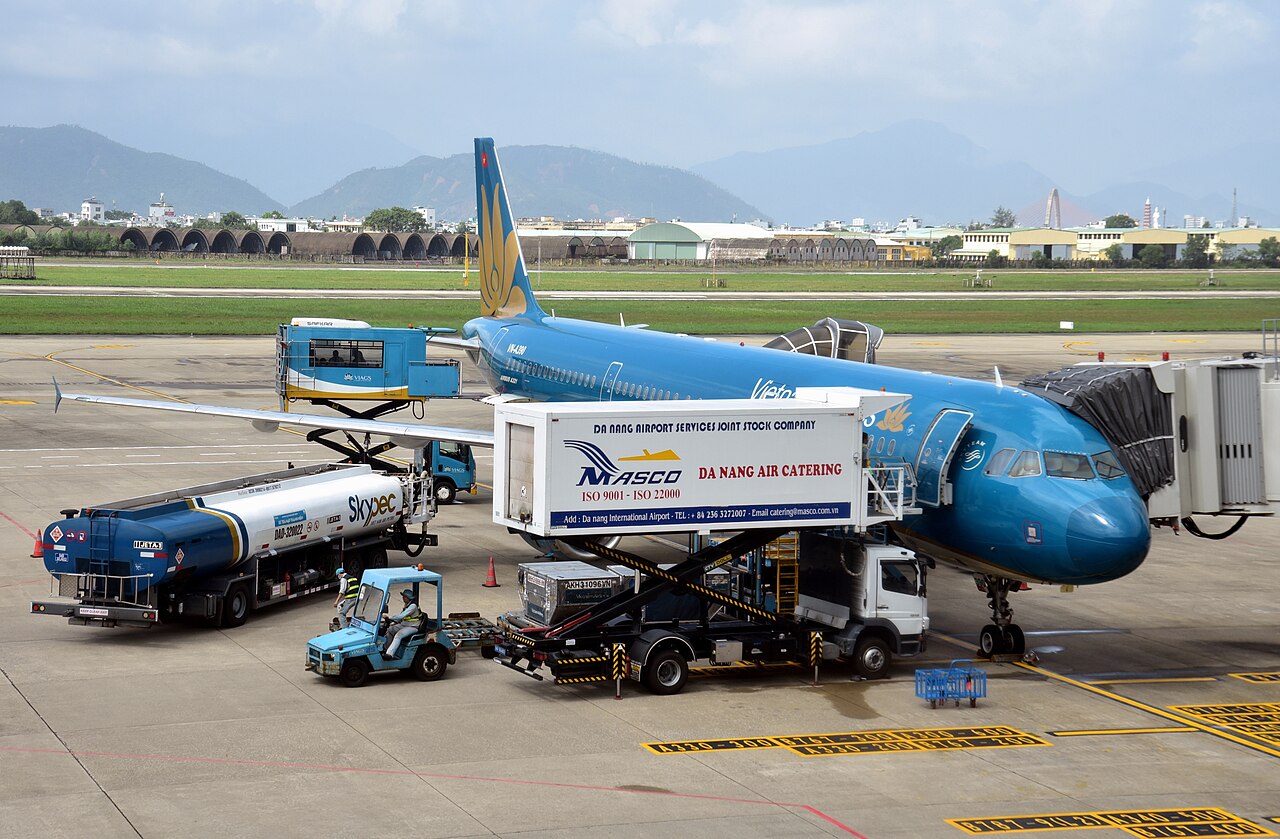
Da Nang International Airport (DAD)Sân bay Đà Nẵng
Da Nang International Airport (IATA: DAD, ICAO: VVDN) is the main commercial airport for central Vietnam, located 3 km from Da Nang's urban core. Its position makes it the logical entry point for travellers heading to any of the region's three principal destinations: Da Nang itself, the ancient trading port of Hoi An, and the former imperial capital of Hue.
Typical journey times
| Journey | Typical time | How often | Notes |
|---|---|---|---|
| Car Da Nang airport → Da Nang city centre | 10 – 15 min | On demand | 3 km; unusually central. |
| Car Da Nang airport → Hoi An | 45 min | On demand | |
| Car Da Nang airport → Hue | 2 – 2h 30m | On demand | Through the tunnel; longer over the pass. |
Typical door-to-door ranges, not a timetable. Road times move with traffic and weather, and sea crossings are cancelled outright in rough conditions — confirm with the operator on the day. Last reviewed: 2026-09-10.
Role in central Vietnam
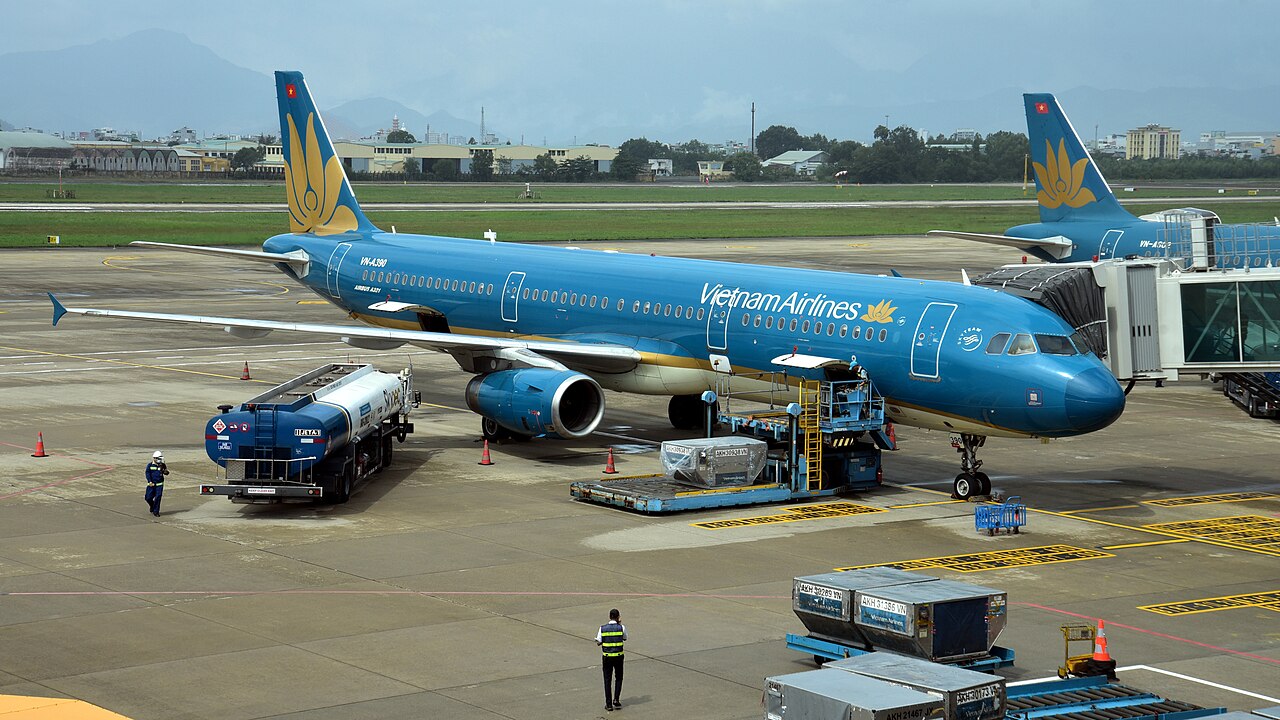
Most itineraries covering central Vietnam begin and end at Da Nang rather than at any other airport in the region. The airport's combination of domestic frequency and international reach, together with its proximity to three distinct destinations, gives it a practical dominance that the smaller airports at Hue cannot match on volume. Travellers flying into DAD can reach Hoi An in roughly 45 minutes by road, and Hue in approximately two to two and a half hours, depending on the route taken over or through the Hai Van Pass. This single airport therefore serves as the hub for a triangular travel zone that covers some of the country's most visited heritage sites.
International routes
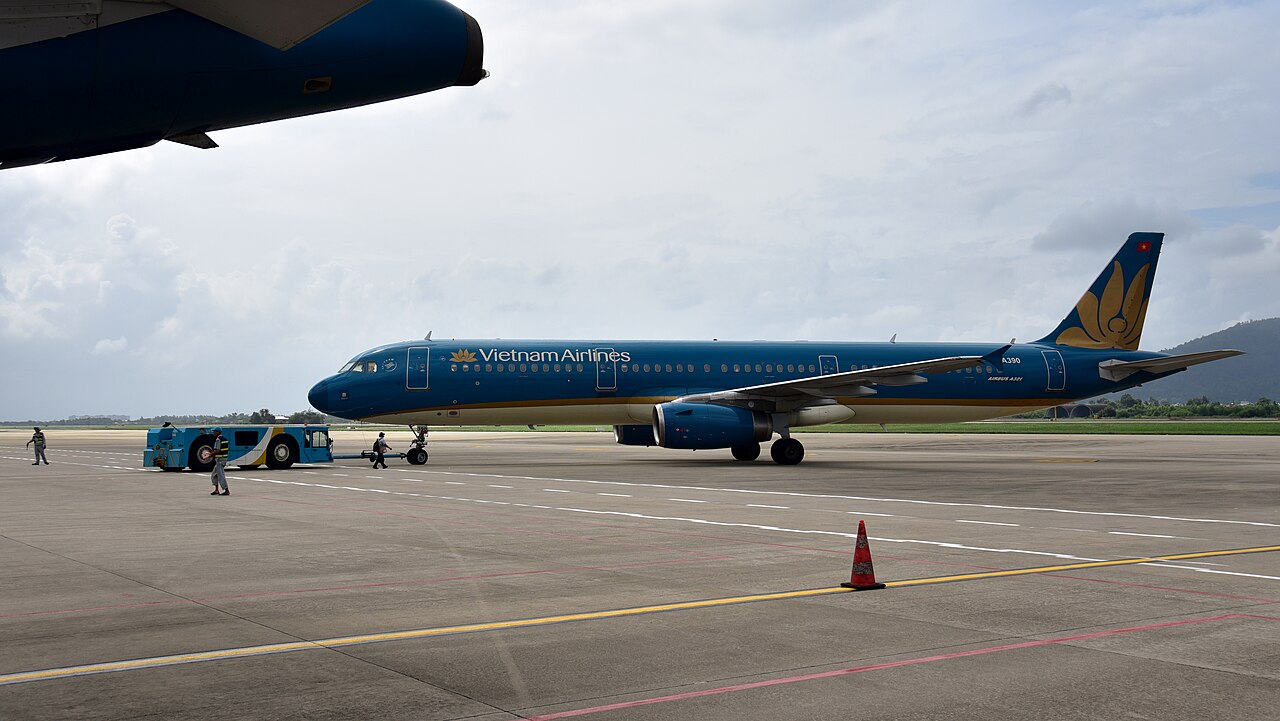
Da Nang handles direct international services from a range of Asian cities, including connections from Northeast Asia — South Korea, Japan, China, Taiwan and Hong Kong among them — as well as Southeast Asian hubs such as Singapore, Bangkok and Kuala Lumpur. Direct links to Europe and beyond are limited; travellers from farther afield typically connect through a major hub such as Hanoi, Ho Chi Minh City, or an Asian transit point. The mix of routes shifts seasonally, and airlines adjust schedules and frequencies from year to year, so current route information is best confirmed directly with carriers or through an airline booking platform close to the time of travel.
Whether the airport requires a separate written visa page is a question that remains unsettled and is not addressed here.
Location and transfers to the city
Da Nang city centre lies approximately 3 km from the terminal, which is unusually close for a major international airport. The short distance means that transfer times to central Da Nang hotels are brief even in moderate traffic. Taxis, ride-hailing apps and pre-arranged hotel shuttles are the standard options for this leg. The fare depends on the mode of transport and any surcharges applicable at the time of travel.
The terminal building is a single complex handling both domestic and international operations. Facilities inside include currency exchange counters, ATMs, food and beverage outlets, and the expected range of airport retail. Arriving passengers should be aware that the exits for domestic and international arrivals are separate, which matters if arranging a pick-up.
Transfer to Hoi An
Hoi An lies roughly 30 km south of the airport. Under normal conditions the road journey takes approximately 45 minutes, though the route passes through suburban Da Nang and along the coast, and traffic can extend this during peak hours or holiday periods. There is no rail connection to Hoi An. Private taxis, ride-hailing services and shuttle buses organised by hotels or tour operators are the practical options. Shuttle services exist specifically for the airport-to-Hoi An route and are popular with independent travellers; the fare for any of these options varies by vehicle type and season.
Transfer to Hue
Hue is around 100 km to the north. The journey by road takes approximately two to two and a half hours, a duration that depends heavily on the route chosen. The main highway crosses the Hai Van Pass, a mountain spur where the Truong Son range meets the sea — a section that is scenic but can be slow due to gradients, curves and, in poor weather, low visibility or closures. An alternative road runs through the Hai Van Tunnel, which is faster and less weather-dependent but bypasses the pass scenery entirely. Travellers can also take the train between Da Nang station and Hue, a route widely regarded as one of the more dramatic rail journeys in the country; the station is in the city rather than at the airport, requiring an additional transfer.
Domestic connections
Da Nang is well connected domestically to Hanoi and Ho Chi Minh City, both served at high frequency throughout the day by Vietnam's main carriers. Secondary domestic routes link Da Nang to other cities including Can Tho, Hai Phong and a number of resort destinations. For travellers combining central Vietnam with other parts of the country, flying in and out of Da Nang rather than crossing by road or rail can substantially reduce journey times, though this depends on the overall itinerary.
Also known as / see also
제공 지역
참조 페이지
출처 목록
- Airports Corporation of Vietnam — ACV 접근됨 29 August 2026
Supports: carried over from the first build - Vietnam National Authority of Tourism — VNAT 접근됨 29 August 2026
Supports: carried over from the first build
Ageing 마지막 확인: 29 August 2026. Rules, fares and prices change — check the official source before acting on anything here. Report a mistake.
Picture credits (3)
Vietnam Airlines Airbus A321 VN-A390 Da Nang 2023 (01), Bahnfrend, CC BY-SA 4.0, Wikimedia Commons · Vietnam Airlines Airbus A321 VN-A390 Da Nang 2023 (02), Bahnfrend, CC BY-SA 4.0, Wikimedia Commons · Vietnam Airlines Airbus A321 VN-A390 Da Nang 2023 (03), Bahnfrend, CC BY-SA 4.0, Wikimedia Commons