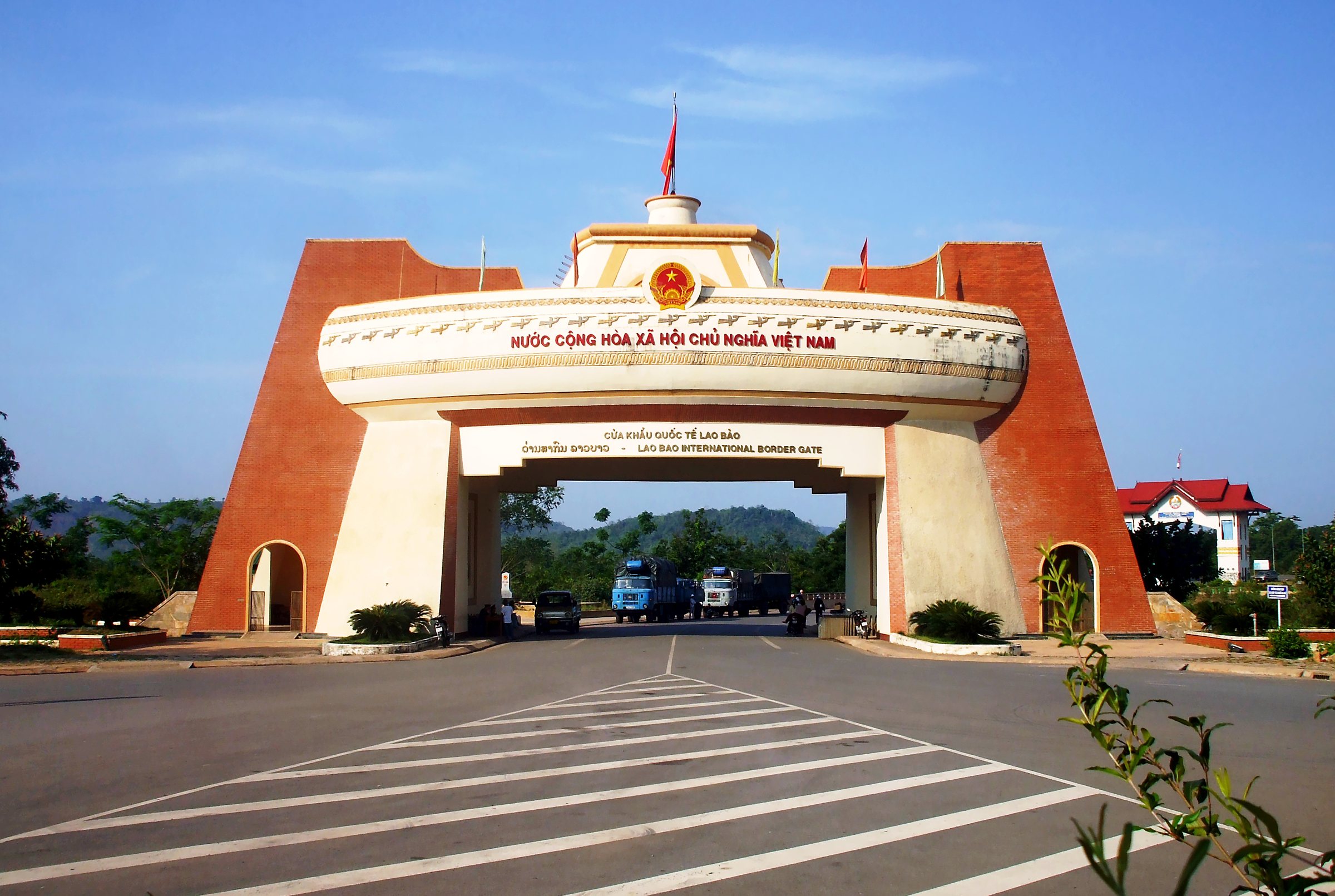
Land border crossingsCửa khẩu đường bộ
Vietnam has dozens of border gates (cửa khẩu) along its northern and western frontiers, but only a subset are authorised for foreign travellers. The remainder are reserved for Vietnamese citizens and, in some cases, local cross-border trade. Which crossings accept which nationalities, and which accept electronic visas or visa-on-arrival, is subject to change by government decree. The information here reflects the general picture; travellers should confirm current rules with official sources before departure.
Typical journey times
| Journey | Typical time | How often | Notes |
|---|---|---|---|
| Ferry Chau Doc → Phnom Penh | 4 – 5 hours | Daily | Fast boat up the Mekong. Formalities are done at the river border and add to this. |
| Bus Ho Chi Minh City → Phnom Penh | 6 – 7 hours | Frequent | Via Moc Bai. The busiest crossing to Cambodia. |
| Bus Ha Tien → Kep or Kampot | 2 – 3 hours | Daily | Via Xa Xia, in the far south west. |
| Bus Dong Ha or Hue → Savannakhet | 8 – 10 hours | Daily | Via Lao Bao, the main crossing into Laos. |
| Bus Hanoi → Vientiane | 22 – 24 hours | Daily | A long overnight run; most people fly instead. |
| Car Lao Cai → Hekou, China | a few minutes on foot | Daytime opening hours | The bridge crossing itself is short; the visa is the obstacle, not the distance. |
Typical door-to-door ranges, not a timetable. Road times move with traffic and weather, and sea crossings are cancelled outright in rough conditions — confirm with the operator on the day. Last reviewed: 2026-09-10.
How the system works
Border gates are classified by tier — international gates (cửa khẩu quốc tế) are the most open and generally admit all nationalities holding valid visas; national gates and local gates have tighter restrictions. The distinction matters because a crossing that is open for Vietnamese citizens may turn away a foreign passport holder entirely.
Since 1 July 2025 Vietnam operates a two-tier administrative system of provinces and communes; there is no longer a district tier. Crossing locations are described here by province and commune only.
Visa rules, crossing hours and authorised nationalities are set centrally and can change on short notice. The Vietnamese Immigration Department and the embassies of the relevant neighbouring countries are the authoritative sources. No third-party listing, including this one, should be treated as final.
Crossings into Cambodia
The busiest crossing for foreign travellers is Moc Bai – Bavet, on the highway between Ho Chi Minh City and Phnom Penh. Direct buses use this route and the journey takes several hours depending on border queues. Xa Xia – Prek Chak, in the far south-west, connects the Phu Quoc and Ha Tien area with Kep and Kampot in Cambodia. Tinh Bien – Phnom Den is a third option used by overland travellers in the Mekong Delta region.
Cambodia offers e-visa and visa-on-arrival facilities at its major international crossings, but travellers should confirm this is still the case at their intended gate before travel, as the Cambodian side controls its own entry rules independently of Vietnam.
Scams at Cambodian crossings: unofficial fixers, touts and in some cases uniformed staff at Cambodian land crossings have been reported soliciting fees for forms, fast-track processing or visa assistance. Cambodian tourist visas can be obtained officially in advance online. Paying unofficial fees is not required, but refusing can involve delays. Travellers should carry exact amounts for any legitimate fees, retain all receipts and be aware that amounts demanded informally may bear no relation to official charges.
The Chau Doc – Phnom Penh river route
One of the most distinctive border crossings in Southeast Asia runs by boat along the Mekong from Chau Doc, in what is now An Giang province, upstream to Phnom Penh. Several operators run tourist speedboats and slower ferries on this route. The crossing point on the Vietnamese side is Vinh Xuong; passengers clear Vietnamese immigration before boarding or at the waterfront facility, then clear Cambodian immigration at Kaom Samnor.
The river journey passes through open waterways and floating villages typical of the lower Mekong. Journey times vary between operators and vessel type. A Cambodian visa must be arranged in advance or obtained at the crossing, depending on nationality — check current rules before booking. Vietnam's exit procedures are handled on the Vietnamese side; there is no separate land-border infrastructure.
This route is popular as a one-way trip between the Mekong Delta and the Cambodian capital, often used by travellers leaving Ho Chi Minh City southward through the delta.
Crossings into Laos
Lao Bao – Dansavanh, in Quang Tri province, is the most trafficked crossing on the central Vietnamese-Lao border and is served by direct buses between Da Nang and Savannakhet or Vientiane. Cau Treo – Nam Phao, in Ha Tinh province, connects the Vietnamese coast with the Lao town of Lak Sao and the Route 8 corridor. Nam Can – Nong Haet, further north in Nghe An province, provides an alternative on Route 7. In the north, Tay Trang – Pang Hok in Dien Bien province links Dien Bien Phu with northern Laos.
Laos issues e-visas valid for entry at designated crossings, but not all Lao border gates are included. The list of approved crossings on the Lao side should be verified against the Lao official e-visa portal before travel. Vietnam's own exit requirements are governed separately.
Crossings into China
The main crossing for foreign nationals in the north is Huu Nghi – Youyi Guan (Friendship Pass), in Lang Son province, which carries the railway and the highway between Hanoi and Nanning. The Hanoi–Nanning rail service passes through here, though train schedules and service patterns can change; check current timetables with the rail operators. Lao Cai – Hekou, in Lao Cai province, is the second major crossing and has historically carried rail traffic to Kunming, though the status of cross-border rail services should be verified. Mong Cai – Dongxing, in Quang Ninh province on the coastal edge, is a busy commercial crossing that also admits tourists.
China does not issue visas on arrival at land borders. A Chinese visa must be obtained in advance from a Chinese embassy or consulate. Requirements for Chinese nationals entering Vietnam, and for third-country nationals, are governed by bilateral agreements that can change. The question of which crossings accept Vietnam's e-visa on the entry side has been subject to periodic revision; confirm the current list with the Vietnamese Immigration Department.
Which crossings accept Vietnam's e-visa
Vietnam's e-visa system designates specific ports of entry — airports, seaports and land crossings — where the e-visa is valid for entry or exit. Not every open land crossing is on the e-visa list. Travellers who enter Vietnam on an e-visa at one gate and intend to exit by land at a different gate need to confirm that the exit gate also accepts e-visas; exiting through an unauthorised gate can create problems even if the entry was lawful.
The authorised list is published by the Vietnamese Ministry of Public Security and updated periodically. Any changes take effect by decree and supersede previously published lists. Given that this is one of the most practically consequential details of border travel, and one of the most frequently changed, it is strongly advisable to check the official current list, not travel blogs or aggregator sites, close to the date of travel.
Practical considerations
Visa for the neighbouring country: Vietnam controls only its own exit. Whether a traveller can enter Cambodia, Laos or China depends entirely on that country's rules, which Vietnam has no control over.
Bus services: Direct international buses operate on several corridors, particularly Hanoi–Vientiane via Lao Bao, Ho Chi Minh City–Phnom Penh via Moc Bai, and various routes to Yunnan and Guangxi in China. Buses handle immigration stops but passengers are responsible for their own documents and fees on both sides.
Opening hours: Land crossings are not open 24 hours. Most have set daytime hours that can vary by gate and by day. Arriving at a crossing late in the afternoon without confirming hours in advance has left travellers stranded.
Currency and fees: Both sides of a land border may levy departure or entry fees. Unofficial fees are also common at some crossings, particularly on the Cambodian side. Carrying small denominations in relevant currencies reduces exposure to inflated change-giving.
Need for written pages: Whether travellers crossing certain borders require a written visa page rather than, or in addition to, an e-visa stamp is currently unsettled for some crossing combinations. This is a point to verify directly with the relevant embassies.
Also known as / see also
Dessert
Référencé par
Sources
- Vietnam Immigration Department — Ministry of Public Security consulté 29 August 2026
Supports: carried over from the first build - Vietnam National Authority of Tourism — VNAT consulté 29 August 2026
Supports: carried over from the first build
Ageing Dernière vérification: 29 August 2026. Rules, fares and prices change — check the official source before acting on anything here. Report a mistake.
Picture credits (1)
Cửa khẩu Lao Bảo, Bùi Thụy Đào Nguyên, CC BY-SA 3.0, Wikimedia Commons