Emergency numbers and embassiesSố điện thoại khẩn cấp
Emergency services in Vietnam operate through a national three-number system that functions in all 34 provinces and cities. The practical reality for foreign visitors is that response times, English-language capability and service quality vary considerably between a major city and a remote commune, so preparation matters.
The three emergency numbers
The national emergency numbers are:
- 113 — Police
- 114 — Fire
- 115 — Ambulance
These numbers work from Vietnamese mobile and landline networks. Whether they work from a foreign SIM or over internet-based calls depends on the network and device; buying a local SIM on arrival is the more reliable option. Callers should be prepared to state their location in Vietnamese or have it written down, as English-speaking operators are not guaranteed on any of these lines. In practice, many travellers contact their hotel, guesthouse or a local contact first to help place or relay an emergency call.
Tourist police and English-language assistance
Several major cities, including Hanoi and Ho Chi Minh City, have tourist police units specifically intended to assist foreign visitors. These units are more likely to have English-speaking officers than general police stations. Whether a dedicated tourist police presence exists in a given location — and how reliably it is staffed — is something worth confirming locally on arrival rather than assuming. Hotels in tourist areas commonly have a contact number for the nearest tourist police post. Whether tourist police have a unified national hotline is a question that remains unsettled; do not rely on a single number being available everywhere.
After an accident or theft: the police report
Anyone intending to make an insurance claim following a theft, road accident or other incident will almost certainly need an official police report. This document must typically be obtained from the local police station covering the area where the incident occurred — not from a central or tourist office. The report is usually issued in Vietnamese; a certified translation may be required by an insurer.
Practical steps in the immediate aftermath include: securing personal safety first, noting the location precisely (street name, ward and province), photographing any scene or damage where safe to do so, and contacting the nearest police station as soon as possible. Delays in reporting can complicate both the official process and any subsequent insurance claim. Keep all documentation issued.
Hospital and medical care
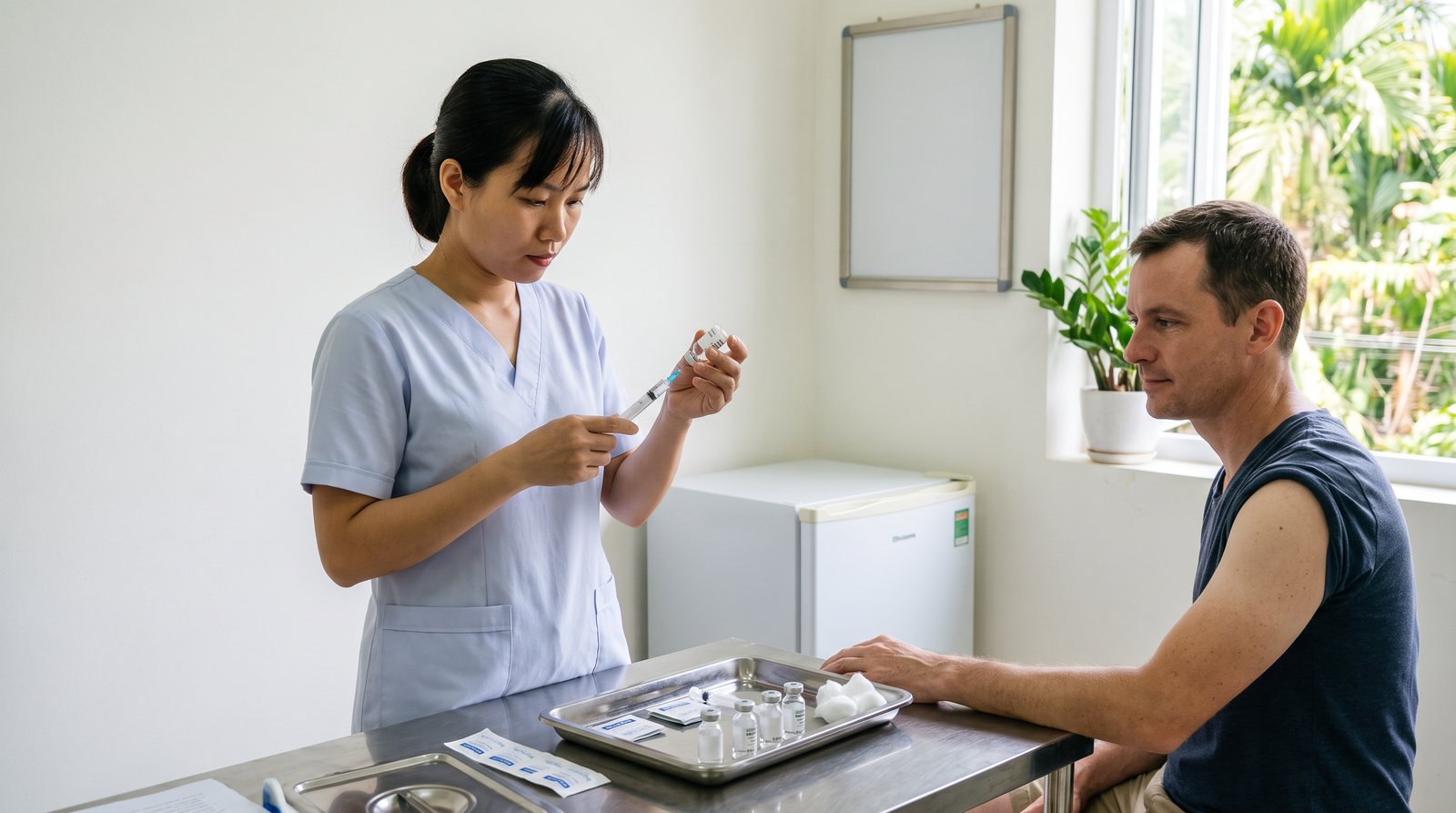
Vietnam's healthcare system is divided between public hospitals — which are numerous but vary widely in equipment and English-language capability — and private or international hospitals, which are concentrated in Hanoi and Ho Chi Minh City and are generally better equipped to treat foreign patients and handle international insurance directly. In a serious emergency, the 115 ambulance service will transport to the nearest public facility, which may not be the most suitable for a foreign patient.
Travellers with comprehensive travel insurance should check in advance whether their policy requires pre-authorisation for hospital admission and which facilities their insurer recognises in Vietnam. International hospitals in major cities often have direct billing arrangements with insurers, which avoids the need to pay upfront and claim back. Medical evacuation to a third country is an option some policies cover; this is relevant in remote provinces where specialist care is limited.
Reaching your embassy or consulate
Embassies and consulates provide consular assistance to their nationals in genuine emergencies: loss of a passport, arrest, serious accident or the death of a travelling companion. They do not pay medical bills, intervene in private legal disputes or replace lost travel money. Most embassies maintain an after-hours emergency line for nationals in serious distress.
Embassy addresses, phone numbers and emergency contact details change. The authoritative source is the official website of your home country's foreign ministry or consular service. Look this up and save the number before travelling. Vietnam's Ministry of Foreign Affairs publishes a list of accredited diplomatic missions in the country, which can help identify whether your country has a full embassy in Hanoi, a consulate in Ho Chi Minh City or Da Nang, or relies on a mission in a neighbouring country.
Practical preparation
A few steps taken before an emergency occurs reduce the difficulty considerably:
- Buy a local SIM on arrival so that 113, 114 and 115 are accessible without network complications.
- Save your embassy's emergency number in your phone before you travel.
- Carry a note of your accommodation address in Vietnamese, or photograph the business card at check-in.
- Know the name of your travel insurer and the policy number, and understand the claim requirements in advance.
- If travelling in a remote area, identify the nearest town with a hospital before setting out.
Registration with your home country's embassy — many offer a voluntary traveller registration service — can make it easier for consular staff to reach you or your family in an emergency.
Also known as / see also
参照元
出典
- Vietnam travel advice — Smartraveller, Australian Government アクセス日 29 August 2026
Supports: carried over from the first build - Vietnam international travel information — U.S. Department of State アクセス日 29 August 2026
Supports: carried over from the first build - Vietnam travel advice — UK Foreign, Commonwealth & Development Office アクセス日 29 August 2026
Supports: carried over from the first build - Vietnam National Authority of Tourism — VNAT アクセス日 29 August 2026
Supports: carried over from the first build
最終確認: 29 August 2026. Rules, fares and prices change — check the official source before acting on anything here. Report a mistake.