Travel insurance for VietnamBảo hiểm du lịch
Vietnam has excellent private hospitals in its major cities and very limited public medical infrastructure in rural and island areas. The gap between what a standard travel policy covers and what Vietnam-specific risks actually require is wide enough that many travellers discover the problem only when they need to make a claim.
The motorbike licence exclusion
The single most expensive mistake travellers make in Vietnam is riding a motorbike — or being a passenger on one — while holding a policy that excludes motorised two-wheelers, or that requires a valid licence for the class of vehicle being ridden.
Most travel insurance policies void any medical claim arising from a motorbike or scooter incident unless the rider held, at the time of the accident, a licence that was both valid in the country of issue and legally recognised in Vietnam for that engine class. An ordinary car licence does not satisfy this condition. An international driving permit (IDP) is only valid in Vietnam if it is accompanied by a home-country licence that itself covers motorcycles.
The practical consequences are severe. Road traffic accidents involving two-wheelers are among the most common causes of serious injury to foreign visitors in Vietnam. Hospitalisation, surgery and medical evacuation can reach costs that are financially ruinous without insurance. A policy that excludes the incident entirely leaves the traveller meeting those costs personally.
Before renting or riding any motorbike, the traveller should: confirm exactly what their policy says about motorised two-wheelers; confirm what licence class is required; and obtain documentary evidence from their insurer in writing. Verbal assurances are not a substitute.
Adventure and activity exclusions
Vietnam has a growing adventure tourism industry concentrated in areas such as the karst highlands, the central coast and the islands of the south. Activities that commonly appear on exclusion lists or require add-on cover include:
- Canyoning — specifically the type involving abseiling into water-filled gorges, common around the Da Lat area of Lam Dong province.
- Cave exploration — both commercial tours through systems such as Phong Nha and guided technical caving in Quang Binh province.
- Motorised water sports — jet-skiing, wakeboarding and similar activities.
- Trekking above certain altitudes — some policies define a height threshold above which cover changes or lapses.
- Rock climbing and via ferrata — available in several highland areas.
The relevant question is not whether an activity sounds adventurous but whether the specific policy document lists it as excluded or as requiring an additional premium. Many standard policies treat activities offered commercially by licensed operators differently from independent attempts; that distinction is not universal.
Medical evacuation from islands and the highlands
Medical evacuation — the organised transfer of a patient to a facility capable of treating them — is a specific benefit that operates separately from general medical cover, and it is particularly relevant in Vietnam for two categories of location.
Island destinations such as Phu Quoc (in Kien Giang province), Con Dao (in Ba Ria–Vung Tau province) and the Cham Islands (in Quang Nam province) have limited or no surgical capacity. Stabilisation is possible at local clinics; definitive treatment typically requires transfer to the mainland by air or boat, with costs that can be substantial.
Remote highland areas — including trekking routes in Ha Giang province, the border regions of Lai Chau and Dien Bien provinces, and parts of the Central Highlands — may require helicopter evacuation or long road transfer to reach adequate care.
A policy's evacuation benefit should be checked for: whether it covers evacuation to the nearest adequate facility or only to the traveller's home country; whether there is a monetary cap on evacuation costs; and whether the insurer operates a 24-hour assistance line capable of coordinating logistics in Vietnam. Some policies require pre-authorisation before evacuation costs are covered.
Private hospital costs in Vietnam
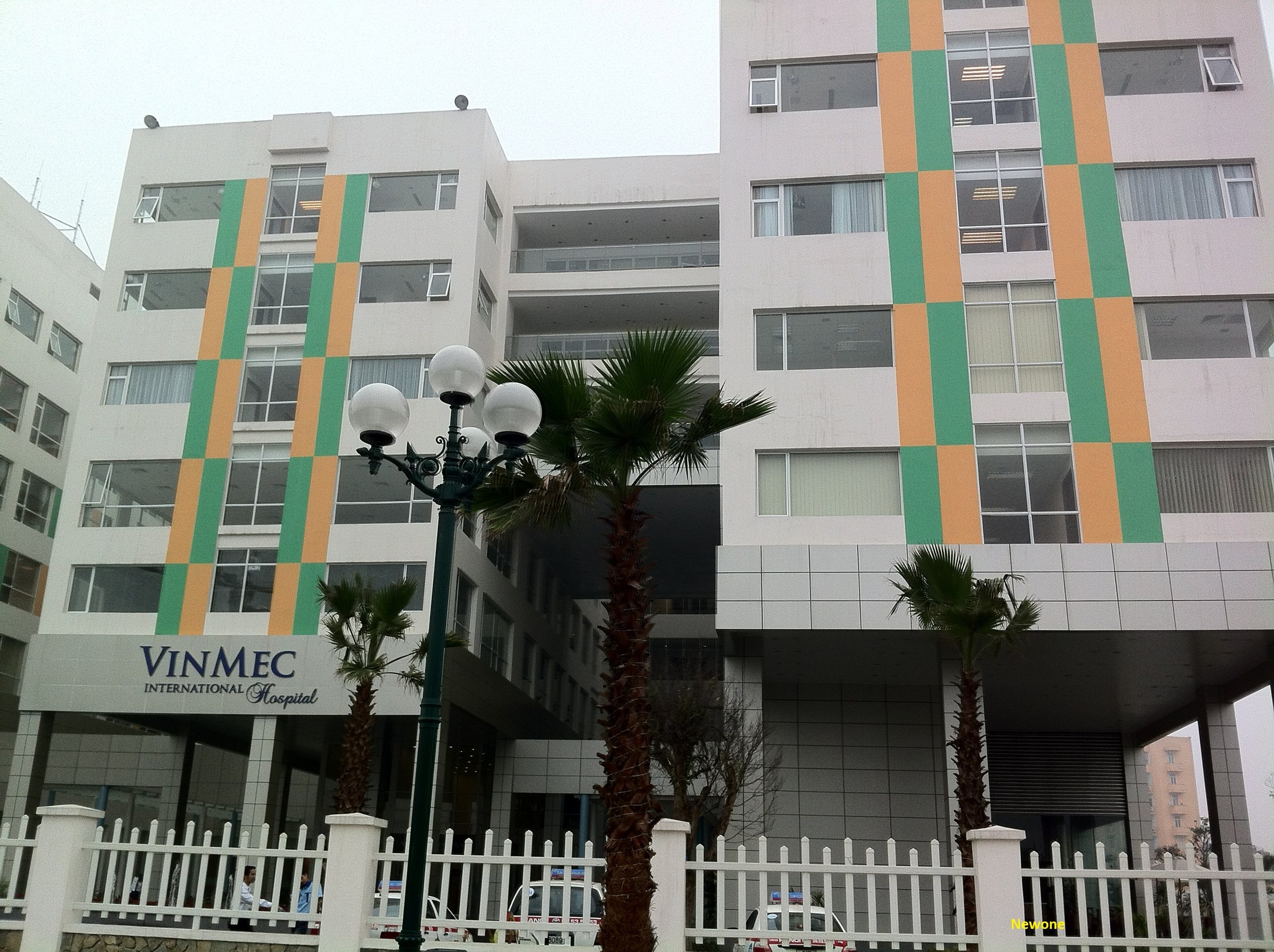
Public hospitals in Vietnam are available to foreign visitors but are often overcrowded, and the standard of care and English-language communication varies considerably. Most foreign travellers who require serious treatment use international or private hospitals, which exist in Ho Chi Minh City, Hanoi, Da Nang and a small number of other cities.
Private and international hospitals in Vietnam charge at rates comparable in some cases to private healthcare in Europe or Australia. The cost of a night in a private facility, specialist consultations, imaging, surgery and post-operative care can accumulate quickly. Without insurance, these costs fall entirely on the patient or their family.
A policy's medical cover limit should be sufficient to cover extended hospitalisation at private rates. Policies with low overall medical limits — set for countries with cheap healthcare — may be inadequate for a serious incident requiring intensive care or surgery at an international hospital.
It is also worth checking whether a policy requires the traveller to pay costs upfront and claim reimbursement, or whether the insurer will deal directly with the hospital. International hospitals in Vietnam are generally experienced in working with insurers, but confirmation of direct billing arrangements should be sought before treatment begins where possible.
What a policy for Vietnam should address
The following is a checklist of policy conditions specifically worth verifying before travelling to Vietnam. This is not exhaustive and policies vary by insurer, country of purchase and product type.
- Motorised two-wheelers: does the policy cover medical claims arising from riding or being a passenger on a motorbike or scooter, and if so, what licence is required?
- Activity cover: are the specific activities the traveller intends to do listed as covered, excluded or available as an add-on?
- Medical cover limit: is the limit adequate for private hospital care in Vietnam?
- Medical evacuation: is evacuation covered, to what destination, up to what limit, and is pre-authorisation required?
- 24-hour emergency assistance: does the insurer operate a line capable of coordinating care in Vietnam specifically?
- Pre-existing conditions: are any relevant conditions disclosed and covered, or excluded?
- Policy documentation: is a copy of the policy document and the emergency assistance number accessible without internet, in case of an incident in a remote area?
Because policy terms change and the correct source is the insurer's current documentation, nothing on this page should be taken as a statement about any specific product. The policy wording, not a summary description, is the authoritative document.
Also known as / see also
참조 페이지
출처 목록
- Ministry of Health — Bộ Y tế 접근됨 29 August 2026
Supports: carried over from the first build - Vietnam country profile — World Health Organization 접근됨 29 August 2026
Supports: carried over from the first build
Ageing 마지막 확인: 29 August 2026. Rules, fares and prices change — check the official source before acting on anything here. Report a mistake.
Picture credits (1)
Vinmec-IMG 0074-08032012, Newone, CC BY-SA 3.0, Wikimedia Commons