National Assembly Resolution 202/2025/QH15 on the rearrangement of provincial-level administrative units
Thai Nguyen province sits in Vietnam's northeast, where the Red River Delta gives way to forested limestone hills. Long associated with steel production and, more distinctively, with tea cultivation on the slopes around the capital city, the province expanded on 1 July 2025 to absorb the former Bac Kan province, making it one of the larger provinces in the region by area and adding significant highland wilderness to its profile.
What Thai Nguyen is known for
Tea is the defining product of the province. The Tan Cuong area, a short distance from the provincial capital, produces what is widely regarded as among the finest green tea in Vietnam. The local variety — typically described as having a clean, slightly sweet flavour — is sold across the country and forms the basis of a modest agritourism circuit. Visitors can observe plucking and processing at small family-run operations during the harvest seasons.
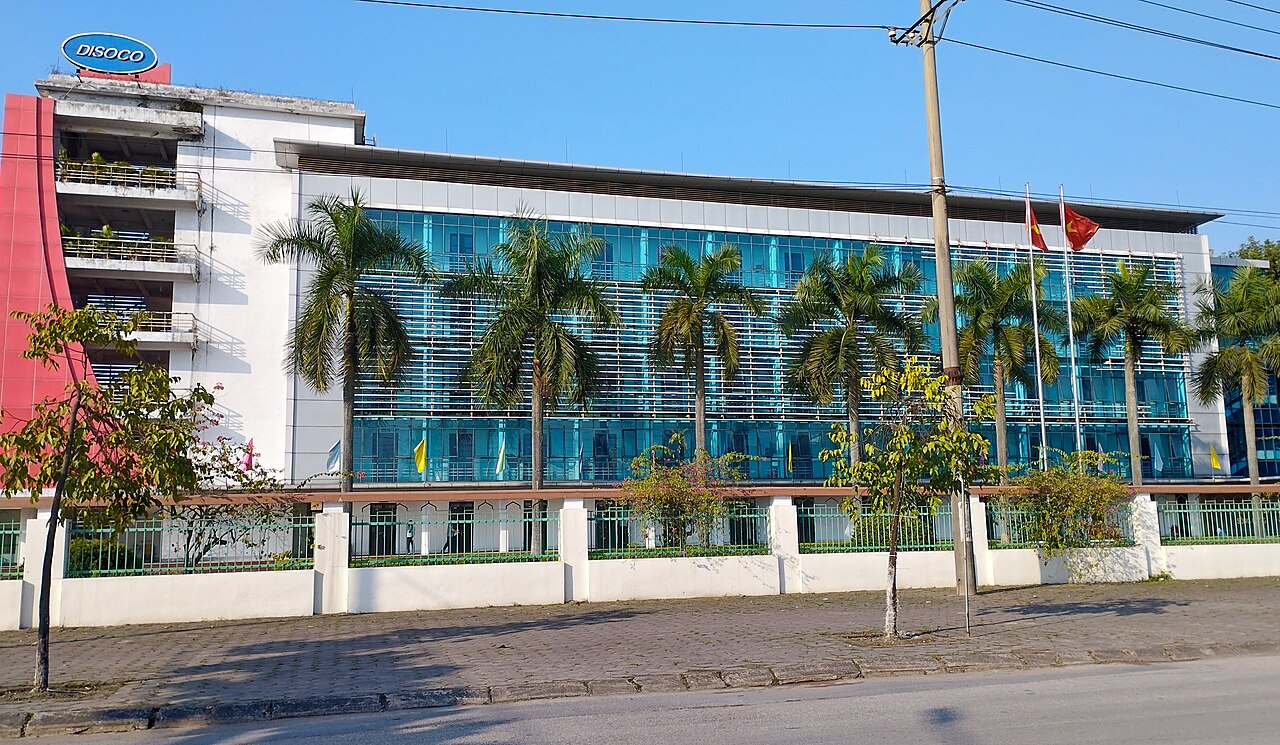
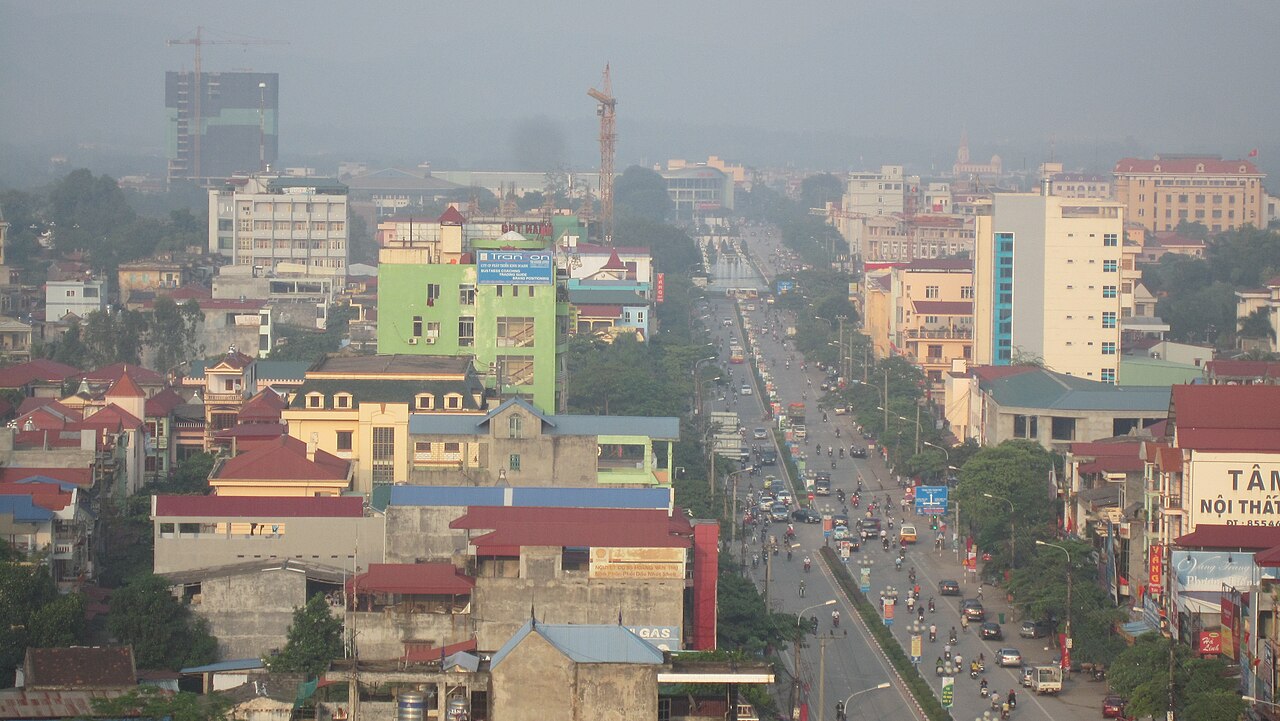
The province also has a heavy-industrial side: Thai Nguyen city hosts one of Vietnam's oldest integrated steel mills, a legacy of Soviet-era investment in the 1960s. This gives the capital a working-city character distinct from the market towns and hill-station resorts found elsewhere in the northeast.
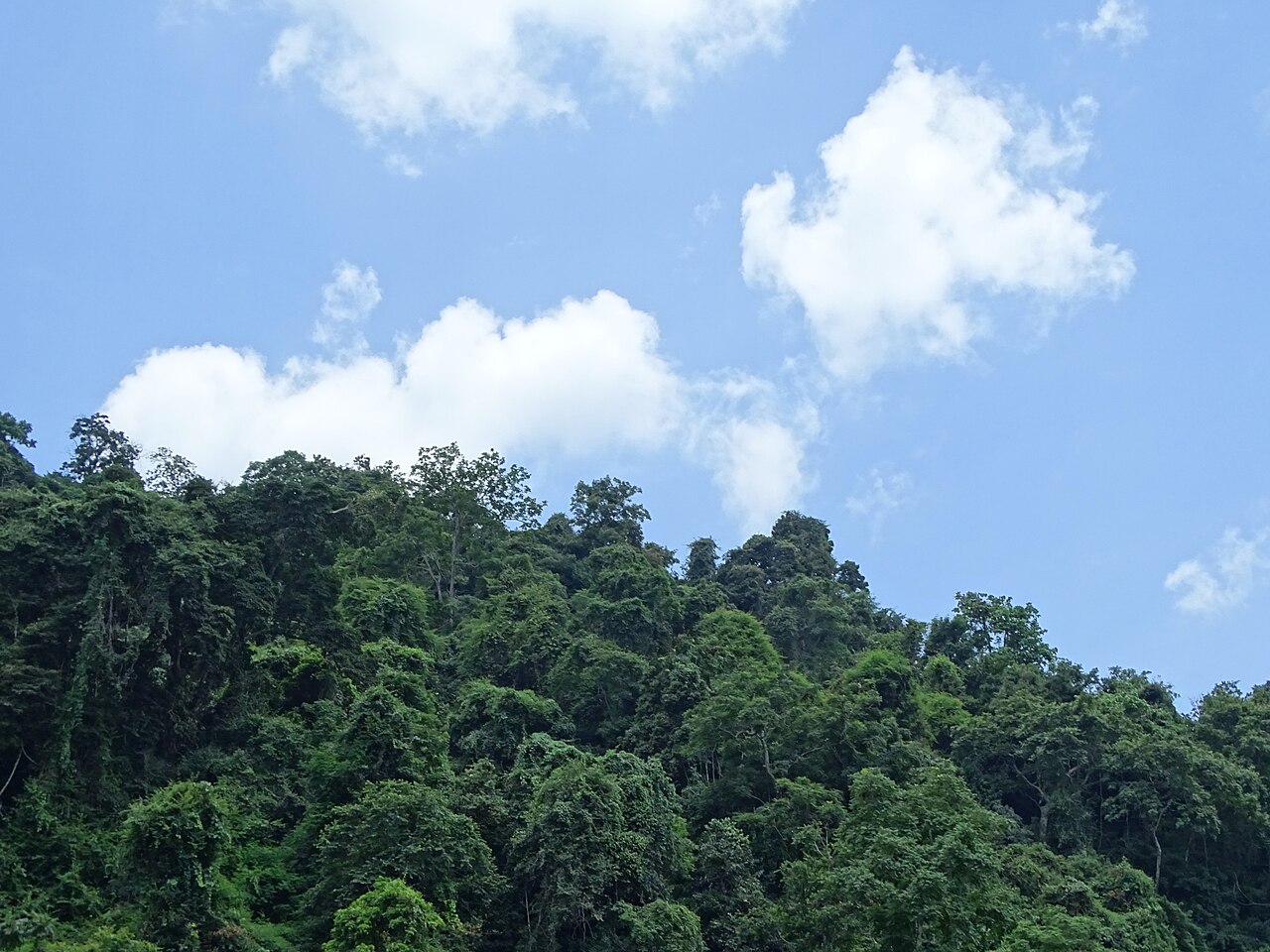
With the 2025 merger, Ba Be National Park — a large freshwater lake system set within forested karst — now falls administratively within Thai Nguyen, though it lies in the former Bac Kan territory and retains its own distinct character and visitor infrastructure.
Getting there and away
Thai Nguyen city is the most straightforward entry point. From Hanoi, the most common approach is by road: national highway and expressway connections have shortened the journey considerably, and bus services depart regularly from Hanoi's northern terminals. The drive is generally manageable in under two hours under normal traffic conditions.
There is no commercial airport in the province. Travellers arriving in Vietnam internationally will almost always land at Noi Bai International Airport, which serves Hanoi, and then continue overland.
For the Ba Be area in the former Bac Kan territory, the journey from Thai Nguyen city is substantially longer, on winding highland roads. Many visitors to Ba Be approach directly from Hanoi rather than routing through Thai Nguyen city; both options are viable but the roads require patience.
Onward connections north towards Lang Son or west towards mountain provinces are by road. There is no passenger rail service of practical use for tourists within the province.
When to go
Thai Nguyen has a humid subtropical climate with four loosely defined seasons. Winters (roughly November to March) are cool and often misty, particularly in the hills; temperatures can drop noticeably at elevation in the Ba Be and former Bac Kan areas. This is not the most comfortable time to be outdoors for extended periods, but the cooler air suits walking.
Spring (March to May) and autumn (September to October) are generally considered the most agreeable periods: moderate temperatures, lower rainfall, and for the tea circuit, the spring flush (late March to April) and autumn harvest are the times to see plucking in progress.
Summer (June to August) brings heat and significant rainfall. The upland areas, including Ba Be, can be humid and roads are occasionally affected by flooding or landslides after heavy rain. That said, Ba Be's lake is often described as most photogenic in the mist that follows summer rain.
See When to go: weather by region for a broader comparison across Vietnam's northeast.
What there is to see and do
Tan Cuong tea area: The villages around Tan Cuong, west of the city, are the core of the tea-tourism offer. Small farms receive visitors for tastings and simple explanations of processing. The landscape of terraced tea bushes on gentle slopes is visually distinctive.
Thai Nguyen Museum of Cultures of Vietnam's Ethnic Groups: A national-level museum in the provincial capital documenting the material culture, costumes and practices of Vietnam's many recognised ethnic minorities. The collection is substantial and the museum is one of the more serious ethnographic institutions outside Hanoi.
Ba Be National Park: Now within the expanded province, Ba Be centres on a system of interconnected freshwater lakes — among the largest natural freshwater lakes in Vietnam — surrounded by karst forest. Boat trips on the lakes, walks to waterfalls and overnight stays in Tay minority villages are the main activities. See the Ba Be National Park page for detail.
Nui Coc Reservoir: A large artificial lake southwest of the city, used mainly by domestic visitors for boat trips and lakeside recreation. The atmosphere is relaxed rather than dramatic.
Where to stay
Accommodation is concentrated in three areas. Thai Nguyen city has the widest range, from budget guesthouses to mid-range business hotels suited to the province's significant commercial traffic. The Tan Cuong tea villages have a small number of homestays, mostly simple, aimed at visitors wanting to experience the agricultural setting. The Ba Be area — geographically in the former Bac Kan territory — has guesthouses in the gateway town of Cho Ra and homestays within the national park buffer zone, the latter offering a closer experience of Tay village life but with basic facilities.
There is no resort or luxury accommodation of note in the province. Travellers wanting higher-end options generally stay in Hanoi and make day or overnight trips.
Common misunderstandings
The merger and Bac Kan: As of 1 July 2025, the former Bac Kan province no longer exists as a separate administrative unit; it is now part of Thai Nguyen. Maps and signage produced before that date will show it as independent. Ba Be National Park is physically unchanged — the park boundary, access roads and facilities are the same — but its administrative address has changed.
District references: Vietnam abolished the district tier on 1 July 2025. References to Dinh Hoa district, Pho Yen district or others you may see in older guidebooks or online sources are no longer current administrative designations, though the place names remain in common use colloquially.
Population figures: Any population figure for the current Thai Nguyen province is necessarily an estimate assembled from previously separate units. The question of the combined population is unsettled pending official post-merger enumeration.
Tea quality claims: "Tan Cuong tea" is a specific local brand identity, but the label is used loosely in retail. Buying directly from farms in Tan Cuong is the most reliable way to obtain the genuine product.
For entry requirements, see Vietnam e-visa. For practical matters on arrival, see Money, ATMs and cards and SIM cards and eSIMs.
月別気候
長期平均値であり、予報ではありません。 参照期間: 2015–2024. 出典: ERA5 reanalysis (Copernicus) via the Open-Meteo archive API.
Show the numbers
| 月 | 最高気温 °C | 最低気温 °C | 降水量(mm) | 雨天日数 | Humidity % |
|---|---|---|---|---|---|
| January | 20.2 | 13.5 | 72 | 12 | 78 |
| February | 21.4 | 14.6 | 66 | 12 | 79 |
| March | 24.8 | 18.4 | 78 | 16 | 83 |
| April | 28.2 | 20.9 | 101 | 15 | 82 |
| May | 30.8 | 23.9 | 258 | 21 | 84 |
| June | 32.1 | 25.4 | 347 | 22 | 85 |
| July | 31.9 | 25.4 | 338 | 24 | 86 |
| August | 31.2 | 24.9 | 426 | 26 | 89 |
| September | 30.4 | 24.0 | 336 | 21 | 87 |
| October | 28.1 | 20.8 | 165 | 13 | 80 |
| November | 25.5 | 18.1 | 61 | 10 | 78 |
| December | 20.9 | 13.5 | 40 | 8 | 72 |
Places within Thai Nguyen
Where it is
Also known as / see also
近隣
統合済み
参照元
出典
- ERA5 climate normals — Copernicus / Open-Meteo (CC BY 4.0) アクセス日 30 August 2026
Supports: monthly temperature and rainfall normals, and elevation - Map data from OpenStreetMap contributors, ODbL 1.0 — OpenStreetMap (ODbL 1.0) アクセス日 29 August 2026
Supports: carried over from the first build - Thai Nguyen (Q26575) — Wikidata (CC0 1.0) アクセス日 30 August 2026
Supports: coordinates, area, population - Thai Nguyen — Wikipedia (CC BY-SA 4.0) アクセス日 30 August 2026
Supports: background
Current 最終確認: 29 August 2026. Rules, fares and prices change — check the official source before acting on anything here. Report a mistake.
Picture credits (7)
Vietnam-ThaiNguyen-PhoenixCave-stalactites, Joel Bradshaw, CC0, Wikimedia Commons · Festival Huế 2008-11, Lưu Ly, Public domain, Wikimedia Commons · Go Thai Nguyen 2, Richard613, CC BY-SA 4.0, Wikimedia Commons · Bi xanh bac kan, Hoàng Lương, CC0, Wikimedia Commons · Diesel Song Cong TN, Bacthai20, CC0, Wikimedia Commons · Scenery at Ba Be Lake - Ba Be National Park - Vietnam - 02 (48102255951), Adam Jones from Kelowna, BC, Canada, CC BY-SA 2.0, Wikimedia Commons · Thainguyencity, Lilknight, Public domain, Wikimedia Commons