2025 constitutional amendment and Law on Organisation of Local Government establishing a two-tier local government
Administrative status
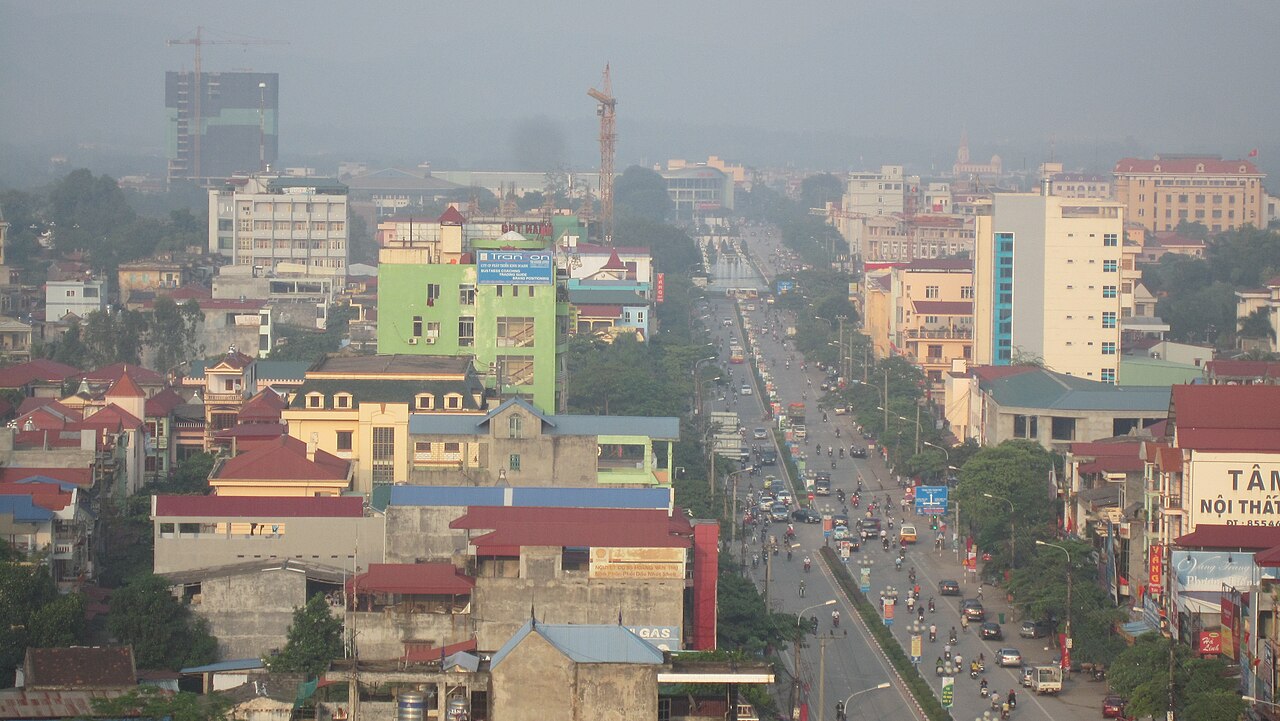
Until 30 June 2025, Thái Nguyên city functioned as a provincial city — the administrative centre of Thái Nguyên province. Under Vietnam's nationwide reform effective 1 July 2025, the country consolidated its 63 provincial-level units into 34 and abolished the district tier entirely. As part of that reorganisation, Thái Nguyên city no longer exists as a distinct administrative unit. The area it covered is now governed directly under the province-level authority of Thái Nguyên, using a two-tier province/commune system.
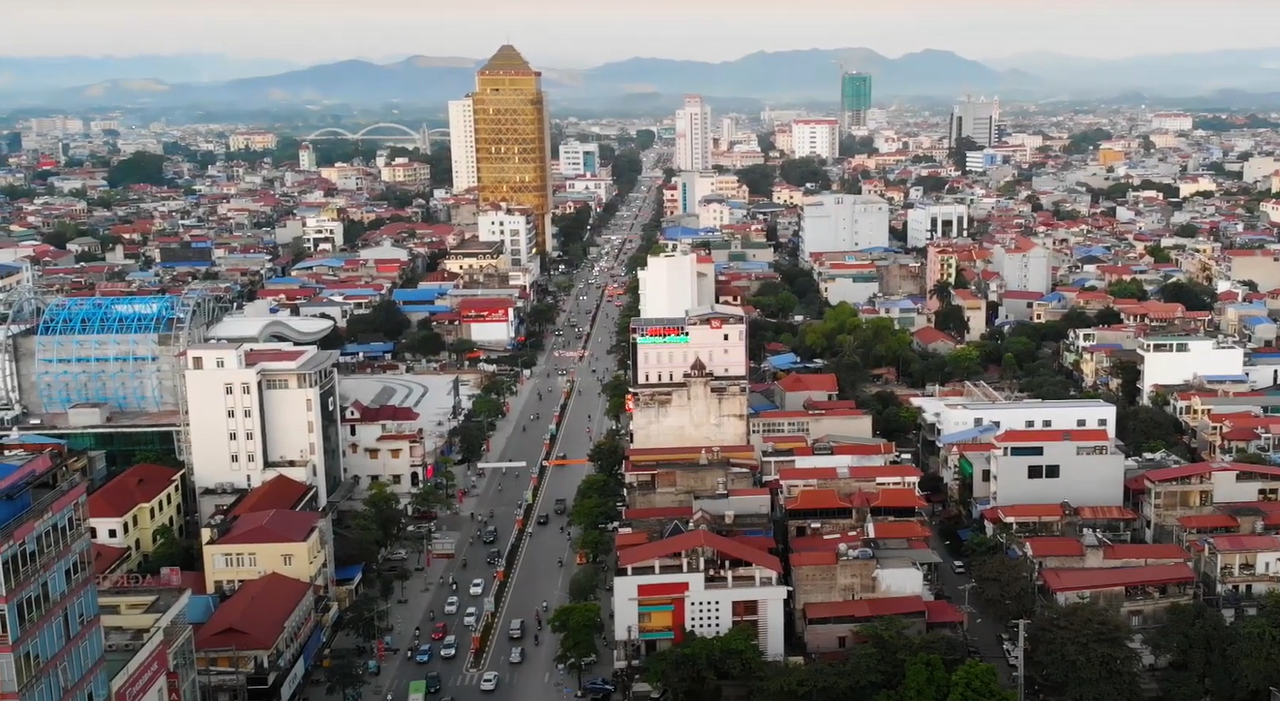
The place itself has not changed. The streets, neighbourhoods, institutions and landmarks that made up the city remain exactly where they were. Only the administrative category has been dissolved.
What the city is known for
Thái Nguyên's strongest association is with tea. The area around the city — particularly the Tân Cương ward to the west — produces what many Vietnamese consider the country's finest green tea. Tân Cương tea is characterised by a pale golden liquor, a grassy and slightly nutty flavour, and a clean finish. It is processed by both small family operations and larger cooperatives, and sold throughout Vietnam. The annual Thái Nguyên Tea Festival, typically held in November, draws buyers, producers and visitors from across the country.
Beyond tea, the city is the site of the Thai Nguyen Iron and Steel Plant, one of the first large-scale industrial facilities built in northern Vietnam during the 1960s with Soviet technical assistance. The plant shaped the city's character as an industrial as well as agricultural centre. The University of Thai Nguyen, a multi-campus institution, gives the city a noticeable student population.
Getting there and away
The most direct connection is by road from Hanoi. National Route 3 runs north from the capital through Bắc Ninh and into Thái Nguyên, a journey that takes roughly two hours under normal traffic conditions, though delays around Hanoi's northern outskirts are common. Buses on this corridor depart from Hanoi's Mỹ Đình terminal and several other points. Sleeper and express bus options are limited given the short distance; most services are standard coaches or minibuses.
A rail line also connects Thái Nguyên to Hanoi, though train frequency is low and journey times are not significantly faster than road. For travellers continuing further north toward Thái Nguyên province's more remote areas, the city functions as a logistics point where supplies and transport can be arranged.
Seasons and when to visit
Thái Nguyên experiences a subtropical monsoon climate with four loosely defined seasons. The rainy season runs approximately from May through September, bringing high humidity and frequent afternoon downpours. Flooding on lower ground near the Cầu River can occur during peak rainfall months. The dry season from October through March is cooler and clearer, with January and February occasionally bringing cold mist in the mornings.
For tea tourism specifically, the spring harvest — typically from late February through April — is considered the most prized. Early spring teas fetch the highest regard among connoisseurs. The November festival period brings organised events and easier access to plantation visits, though prices for accommodation and transport vary by season.
Things to see and do
The Tân Cương tea plantations are the primary draw for visitors with a specific interest in the city. Several family-run operations accept informal visits and offer tea tastings; arrangements are typically made through local contacts or accommodation hosts rather than through any formal booking system. The landscape of terraced tea bushes against low hills is visually distinctive.
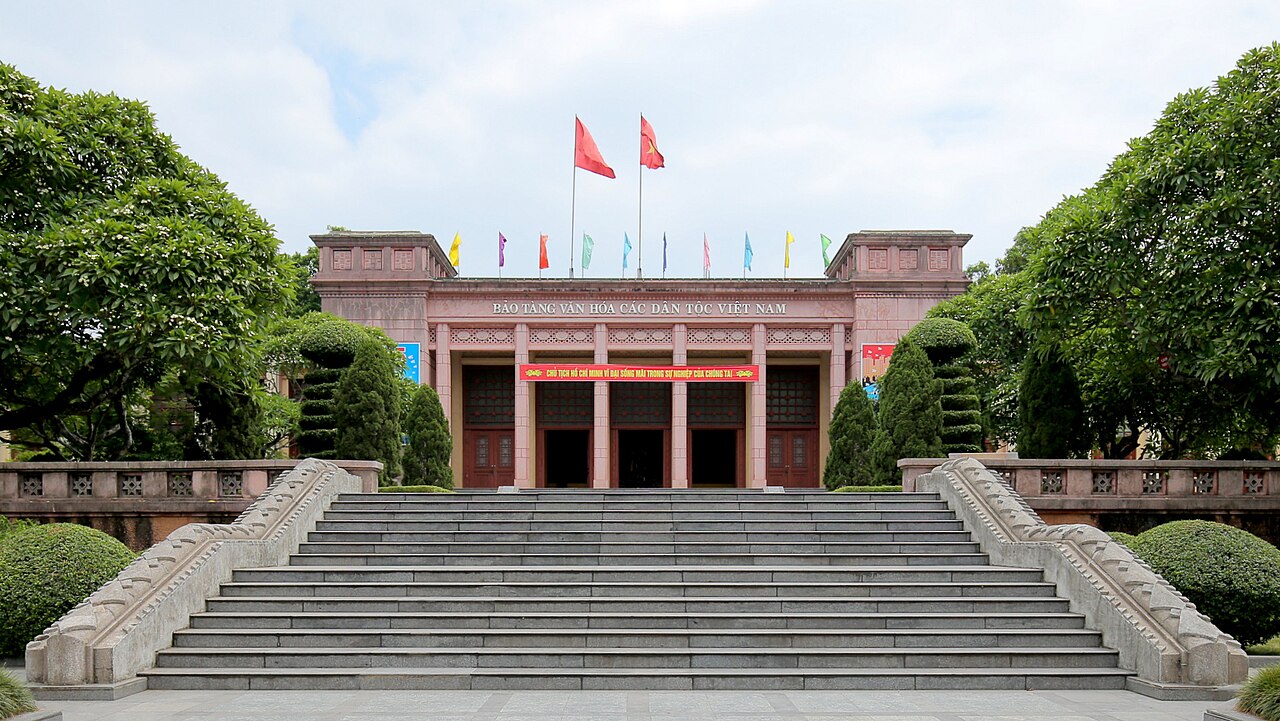
The Thái Nguyên Museum holds collections covering the ethnic minority cultures of the northeast region, alongside exhibits on the area's role during the First Indochina War, when Thái Nguyên served as a base zone for Việt Minh forces. The Núi Cốc Lake, west of the urban centre, is a reservoir created in the 1970s that has become a recreational area with boat hire and lakeside accommodation. It is popular primarily with Vietnamese domestic visitors rather than international tourists.
Staying and getting around locally
Accommodation in the city centre is concentrated around the main commercial streets near the market area and along routes toward the university campuses. Options range from budget guesthouses to mid-range business hotels; international-branded hotels are absent. The Tân Cương area has a small number of homestay operations run by tea-farming families, which offer a different experience from the urban centre but require either a motorbike or arranged transport to reach.
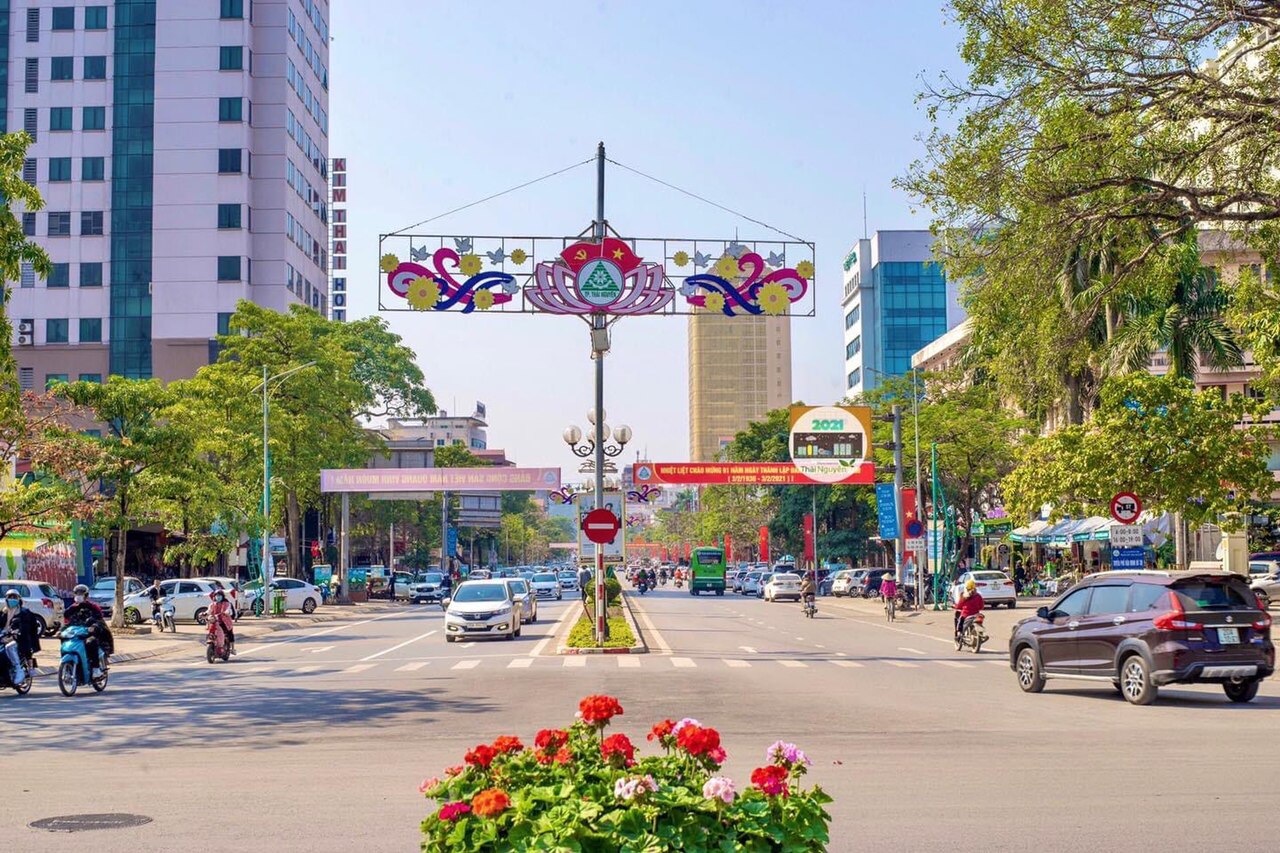
Within the city, motorbike taxis and ride-hailing apps operational in northern Vietnam cover most journeys. Hiring a motorbike independently is straightforward for those with experience riding in Vietnamese urban traffic. The city is compact enough that the central area is walkable, though the distances to outlying sites like Núi Cốc or Tân Cương require motorised transport.
Common misunderstandings
Visitors sometimes assume that Thái Nguyên tea refers to any tea grown anywhere in Thái Nguyên province, but producers and buyers in Vietnam typically use the name most specifically to mean tea from the Tân Cương area. Tea sold under the Thái Nguyên label elsewhere may come from other districts and may differ considerably in character.
A second point of confusion follows the 2025 administrative reform: references in older guidebooks or online sources to Thái Nguyên city as a distinct administrative unit are now out of date. The governance structure has changed, but nothing about the physical city — its roads, its tea plantations, its museum or its market — has been altered as a result.
Finally, travellers who pass through quickly on the way further north sometimes underestimate how much of what the city offers requires a degree of local introduction. Tea plantation visits in particular work better with some prior arrangement than as unannounced drop-ins.
Where it is
Bronnen
- Thái Nguyên (Q26581) — Wikidata (CC0 1.0) geraadpleegd 30 August 2026
Supports: coordinates, area, population - Thái Nguyên — Wikipedia (CC BY-SA 4.0) geraadpleegd 30 August 2026
Supports: background
Current Laatst geverifieerd: 31 August 2026. Rules, fares and prices change — check the official source before acting on anything here. Report a mistake.
Picture credits (4)
Thainguyencity, Lilknight, Public domain, Wikimedia Commons · Bảo tàng Văn hóa các Dân tộc Việt Nam, [Tycho] talk , http://shansov.net, CC BY-SA 3.0, Wikimedia Commons · Đường Hoàng Văn Thụ, thành phố Thái Nguyên, Hj bro, CC BY-SA 4.0, Wikimedia Commons · Trung tâm thành phố Thái Nguyên, Huyleictu, CC BY-SA 4.0, Wikimedia Commons