2025 constitutional amendment and Law on Organisation of Local Government establishing a two-tier local government
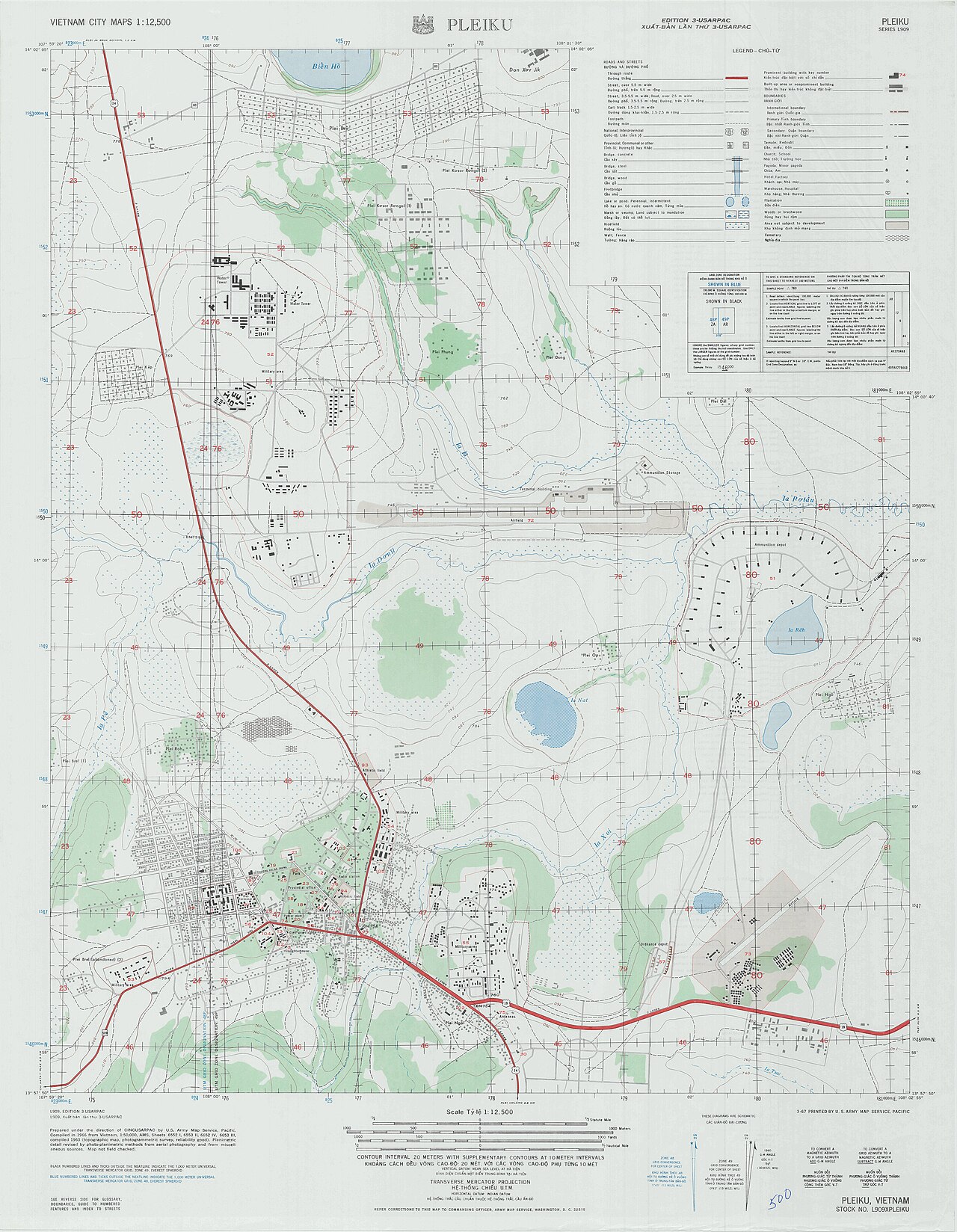
What Pleiku Is
Pleiku is a city on the Kon Tum Plateau in Vietnam's Gia Lai province, sitting at an elevation of around 800 metres. The altitude gives it a noticeably cooler and often mistier climate than the lowland coast, and the surrounding land is characterised by red basalt soil well suited to coffee, pepper and rubber cultivation.
The city has a marked dual character. Its urban core has wide, tree-lined streets built up during the French colonial period and later expanded after the American War, in which Pleiku was a major military hub. Beyond the commercial centre, Jarai longhouses, communal rong halls and villages dot the surrounding countryside, reflecting the indigenous Jarai people who remain a substantial part of the local population.
Pleiku is not a major leisure destination in the way that Dalat or Hoi An are, but it functions as the principal gateway and service city for the broader Gia Lai highlands.
Administrative Status
Until 30 June 2025, Pleiku held the status of a provincial city — the administrative seat of Gia Lai province. On 1 July 2025, Vietnam's nationwide administrative reorganisation came into effect, collapsing the former 63 provincial-level units into 34 and abolishing the district tier entirely. As part of this reform, Pleiku's status as a distinct administrative unit ceased.
Governance of the area now falls under Gia Lai province directly, operating within the new two-tier province/commune system. The city itself has not moved, been renamed or changed in any physical or cultural sense — Pleiku remains Pleiku, and its streets, landmarks and communities are unaffected by the administrative change. Visitors and residents simply no longer navigate a separate city-level government layer.

Climate and When to Visit
Pleiku's highland elevation produces a climate divided into two clear seasons. The dry season runs roughly from November to April, bringing cooler temperatures, lower humidity and frequent morning mist that burns off by midday. This is generally the more comfortable period for moving around the city and exploring the surrounding countryside.
The wet season, from May to October, brings heavy and persistent rainfall. Roads in rural areas can become difficult, particularly on unpaved tracks leading to Jarai villages or crater lakes. The landscape turns intensely green during this period and coffee trees are in active growth, but flooding and landslides are occasional hazards on highland roads.
Temperatures in Pleiku are moderate year-round by Vietnamese standards — rarely extreme in either direction — but evenings in the dry season can be genuinely cold by local reckoning, and visitors accustomed to the coastal heat are often caught unprepared. Prices vary by season, with the dry months seeing higher demand from domestic travellers.
Getting There and Away
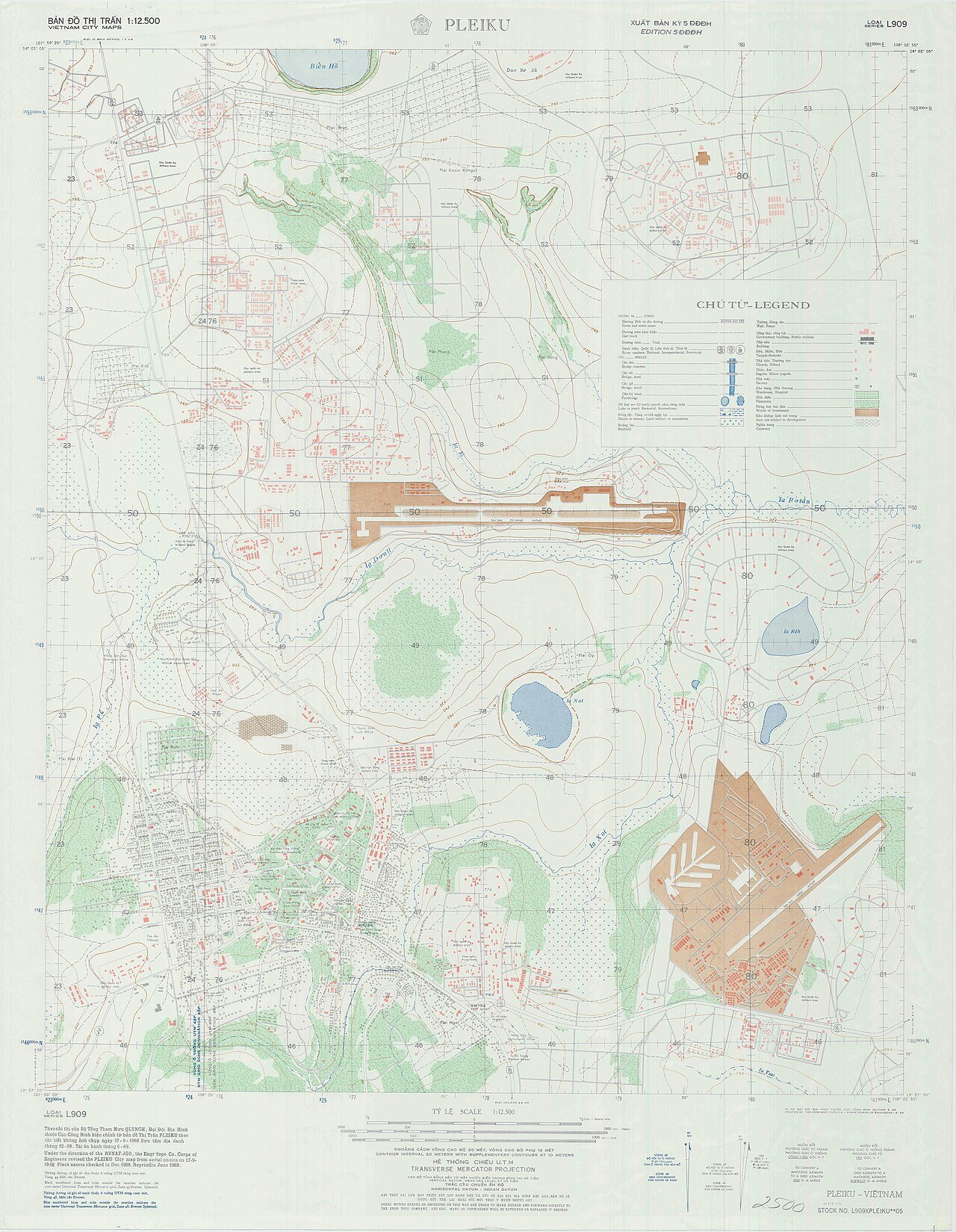
Pleiku Airbase serves the city as Pleiku Airport (PXU), with domestic flights connecting to Hanoi and Ho Chi Minh City. The airport sits close to the city centre, making transfers straightforward. Flight frequency is moderate and subject to change; checking schedules in advance is advisable, particularly during public holidays when seats fill quickly.
Overland, Pleiku sits on National Highway 14 (part of the Ho Chi Minh Highway corridor), connecting it northward to Kon Tum and southward to Buon Ma Thuot and on into the southern highlands. Long-distance buses operate on these routes, and open-tour bus services pass through. Travel times are longer than they appear on a map because highland roads, while generally sealed on the main routes, are winding and subject to slow-moving freight traffic.
From the coast, Highway 19 links Pleiku to Quy Nhon in Binh Dinh province — a dramatic crossing of the Mang Yang Pass that drops from the plateau to the coastal plain. This route is used by both buses and private vehicles.
Things to See and Do
The most visited natural site near Pleiku is Bien Ho (Bau Can Lake), a crater lake formed in a dormant volcano roughly 7 kilometres north of the city centre. The lake is encircled by pine forest and is a common destination for early-morning visits when mist sits on the water. A smaller companion lake, Bien Ho Chu, lies adjacent to it.
Pleiku's market, Cho Pleiku, is the commercial hub of the city and a working market rather than a tourist attraction — stalls sell highland produce including locally grown coffee beans, pepper, dried goods and textiles. The surrounding streets are where most daily commerce takes place.
The Jarai cultural presence is most tangible in villages to the south and west of the city, where traditional communal rong halls with their steep thatched roofs remain in use. The Jarai are known for their gong music, a tradition recognised by UNESCO as Intangible Cultural Heritage; performances take place at community level rather than in formal venues, and timing is not predictable.
The American War left a significant material legacy in the area. Several sites associated with the 1965 Ia Drang Valley battles — the first large-scale engagement between US forces and the North Vietnamese Army — are accessible from Pleiku, though they require local guidance and some are on poor roads.
Where People Stay
Accommodation in Pleiku is concentrated around the city centre, particularly on and near Hung Vuong Street and the streets running off the central roundabout. The range runs from budget guesthouses (nha nghi) to mid-range hotels; there is no international luxury property in the city. Most visitors choose central options to be within walking distance of the market and main restaurants.
There is no distinct backpacker district. The city's accommodation stock is oriented primarily toward domestic business travellers, government visitors and Vietnamese tourists rather than international leisure travellers, so English-language service varies and is not guaranteed at smaller properties.
Common Misunderstandings
Expecting warmth: Visitors arriving from the coast in the dry season are frequently underprepared for Pleiku's evenings. The city is meaningfully cooler than Quy Nhon or Hoi An at any time of year, and in December and January night temperatures can be sharp enough to require a proper layer.
Treating the Jarai villages as open-air museums: The communities around Pleiku are living settlements, not heritage sites. Turning up unannounced at a village to photograph ceremonies or interiors of longhouses is considered intrusive. Local guides familiar with specific communities are the appropriate way to make contact.
Assuming road times from the map: Highland roads, even sealed ones, take significantly longer to drive than the distance suggests. Highway 19 over the Mang Yang Pass and rural tracks to the crater lakes or Ia Drang valley all require more time than a flat-road calculation would indicate.
Conflating administrative change with physical change: Since July 2025, Pleiku is no longer a separately administered city unit. Some older maps, apps and printed guides will still show it as such. The place is unchanged; only the governance layer has been reorganised under Gia Lai province.
Where it is
Also known as / see also
Sources
- Pleiku (Q30599) — Wikidata (CC0 1.0) consulté 30 August 2026
Supports: coordinates, area, population - Pleiku — Wikipedia (CC BY-SA 4.0) consulté 30 August 2026
Supports: background
Current Dernière vérification: 31 August 2026. Rules, fares and prices change — check the official source before acting on anything here. Report a mistake.
Picture credits (4)
AMS - Pleiku, Vietnam, Unknown author Unknown author or not provided, Public domain, Wikimedia Commons · AMS - Pleiku, Vietnam, Unknown author Unknown author or not provided, Public domain, Wikimedia Commons · AMS - Pleiku, Vietnam, Unknown author Unknown author or not provided, Public domain, Wikimedia Commons · Catch (Unsplash), Larm Rmah larm, CC0, Wikimedia Commons