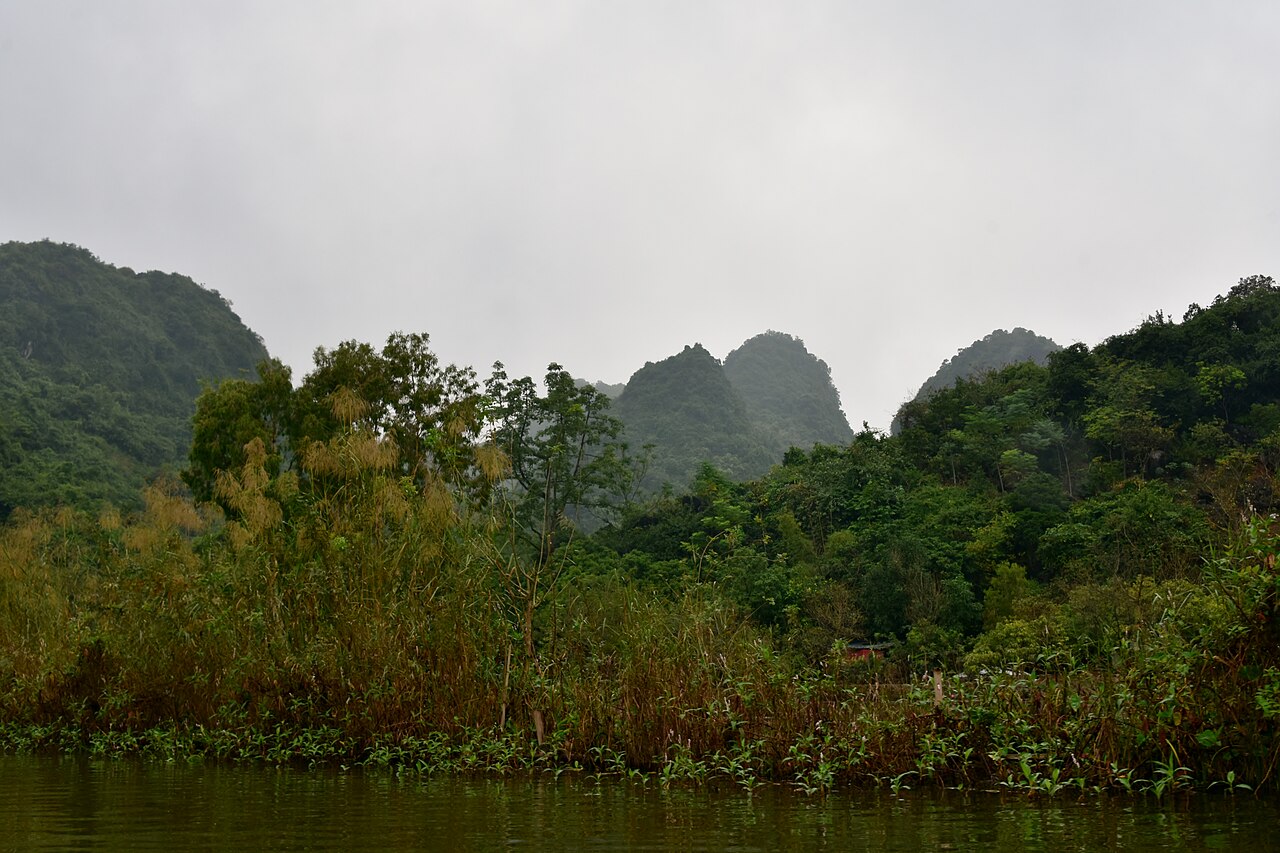
Chùa Hương — known in English as the Perfume Pagoda — is not a single building but a complex of temples, grottoes and shrines spread across the Hương Sơn mountains in Hanoi province. The site draws both religious pilgrims and general visitors, and for a concentrated period in late winter and early spring it becomes one of the busiest pilgrimage destinations in northern Vietnam.
What the site is
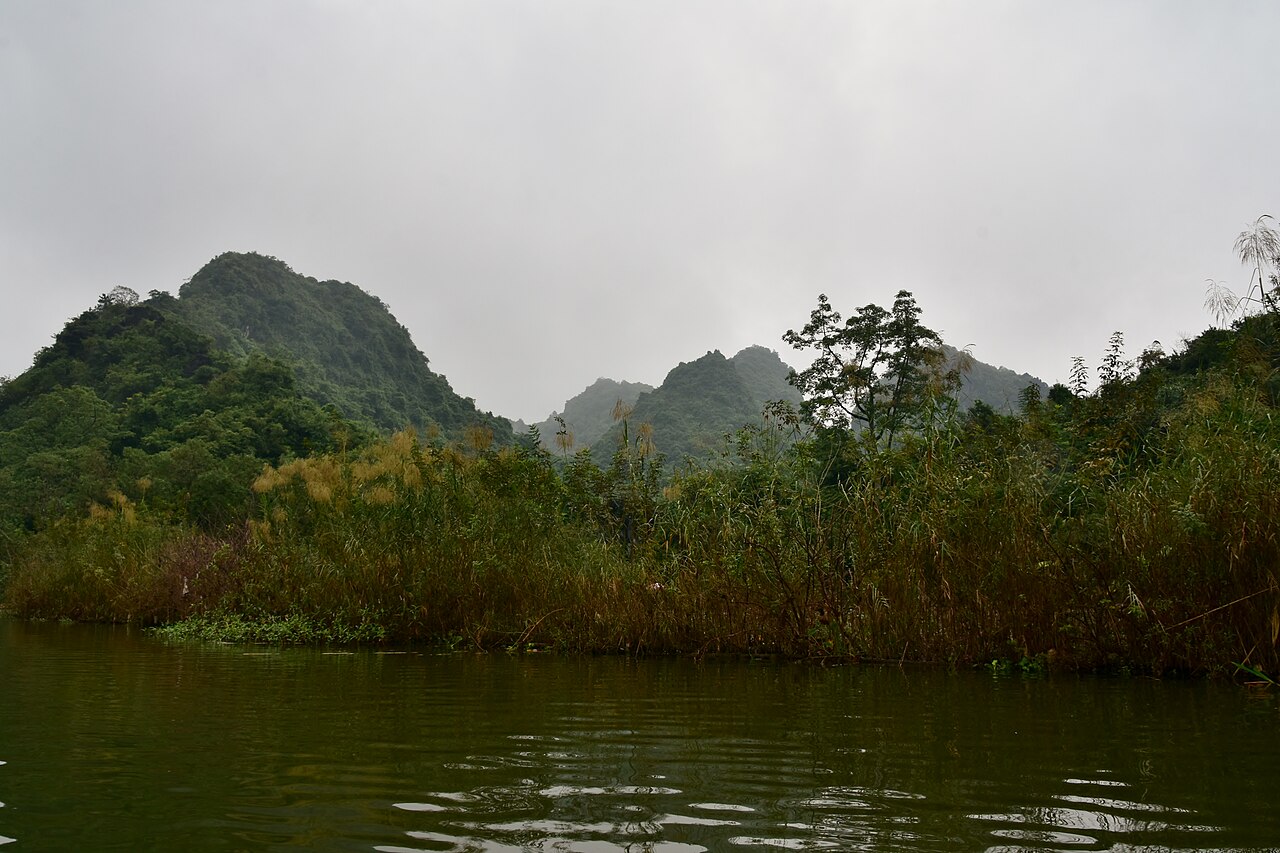
The Perfume Pagoda complex sits within a protected landscape of karst limestone hills, forested valleys and the Yen stream. Dozens of individual shrines and pagodas are scattered across the area, many of them built into natural caves or tucked against cliff faces. The most important is Huong Tich cave, known informally as the "southern sky cave", a large grotto deep inside the mountain containing Buddhist altars and statuary that have accumulated over several centuries. Other significant stops include Thien Tru pagoda — the first major structure encountered after the boat landing — and a series of smaller shrines along the paths between them. The site is simultaneously a working place of worship and a geographic curiosity: the combination of water, forest and cave architecture is specific to this kind of Vietnamese karst terrain.
The boat trip up the Yen stream
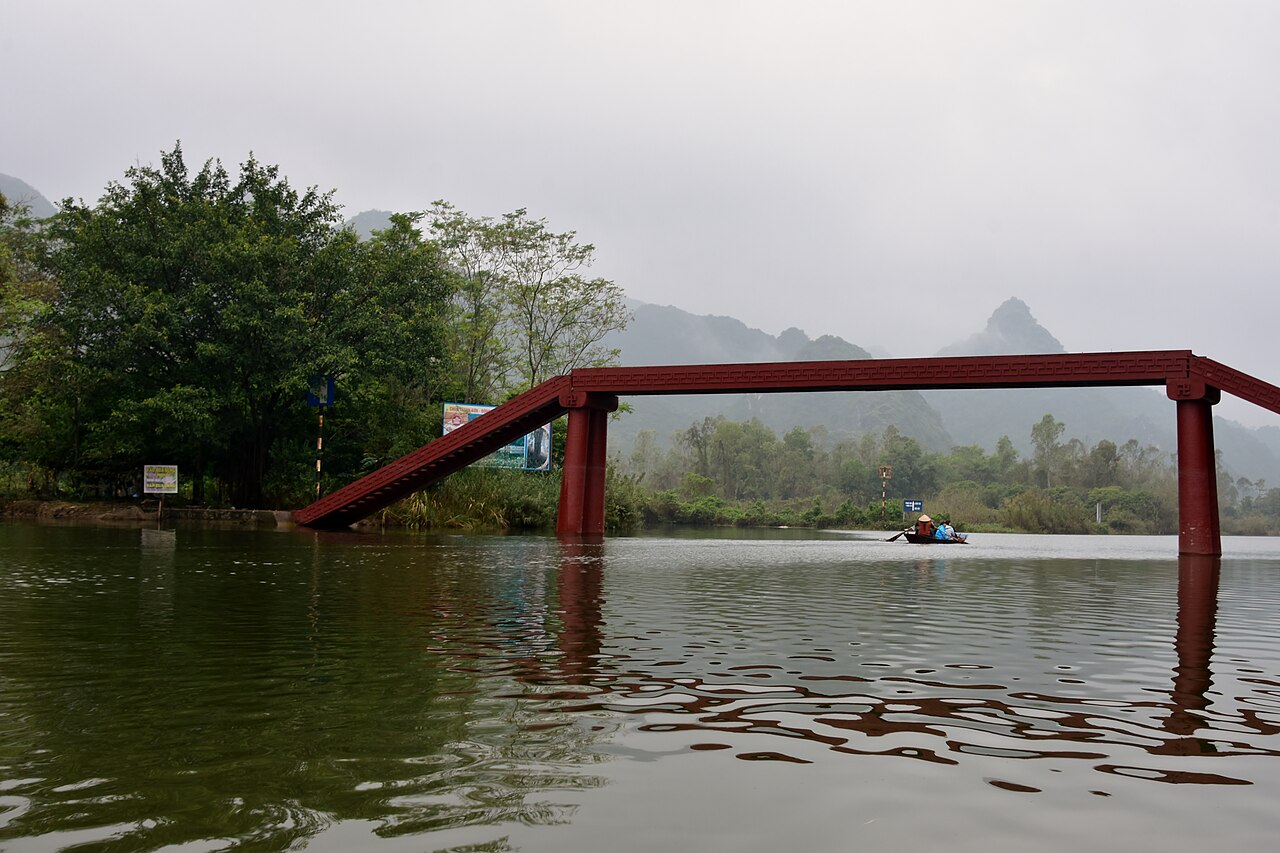
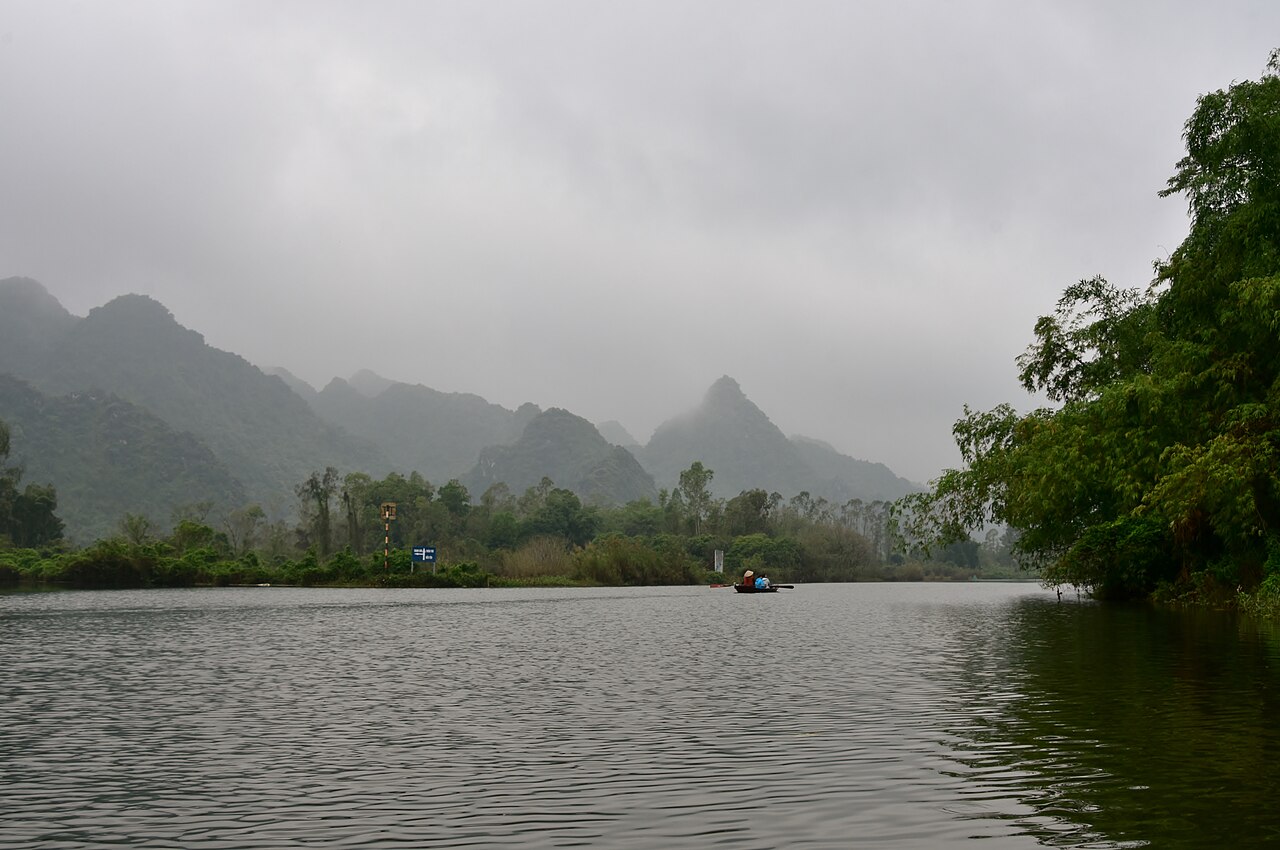
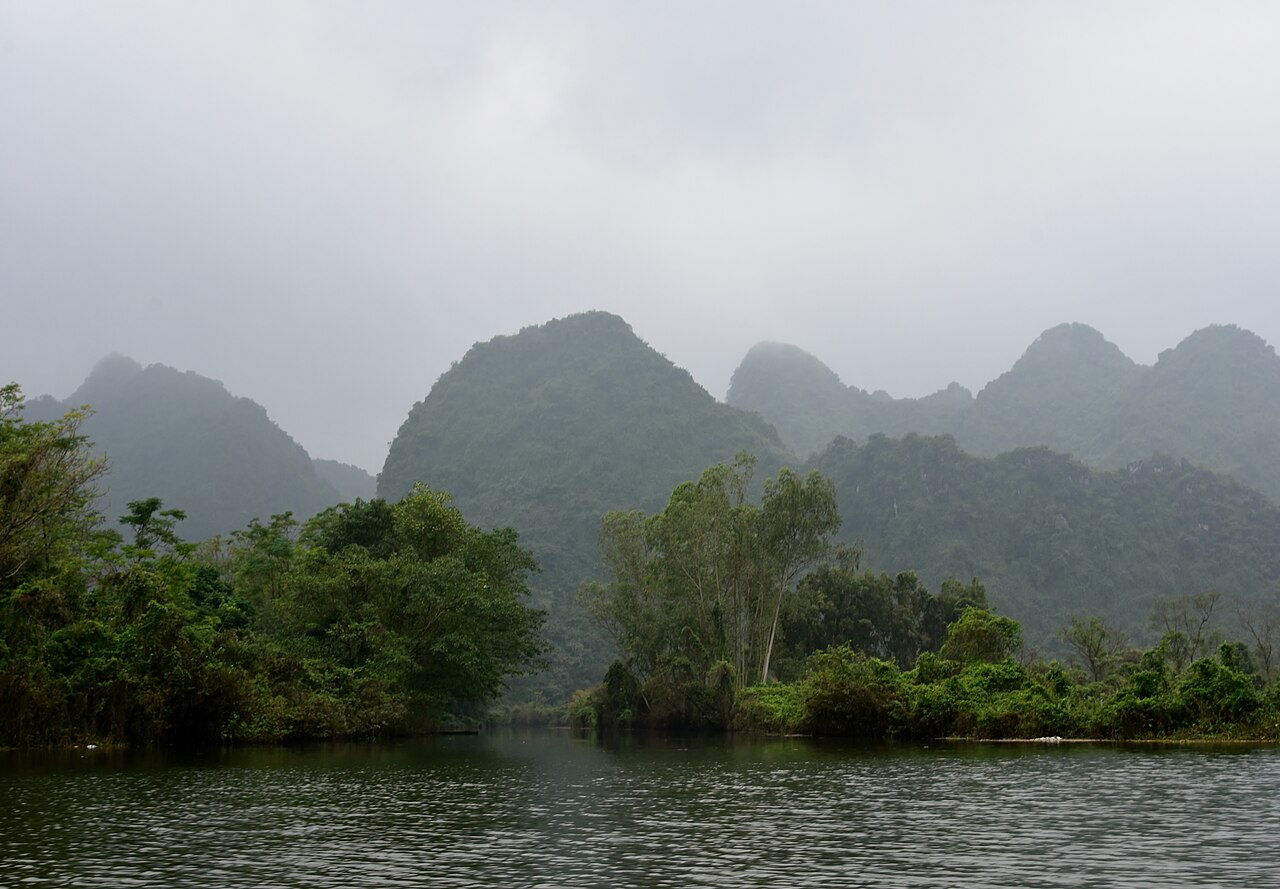
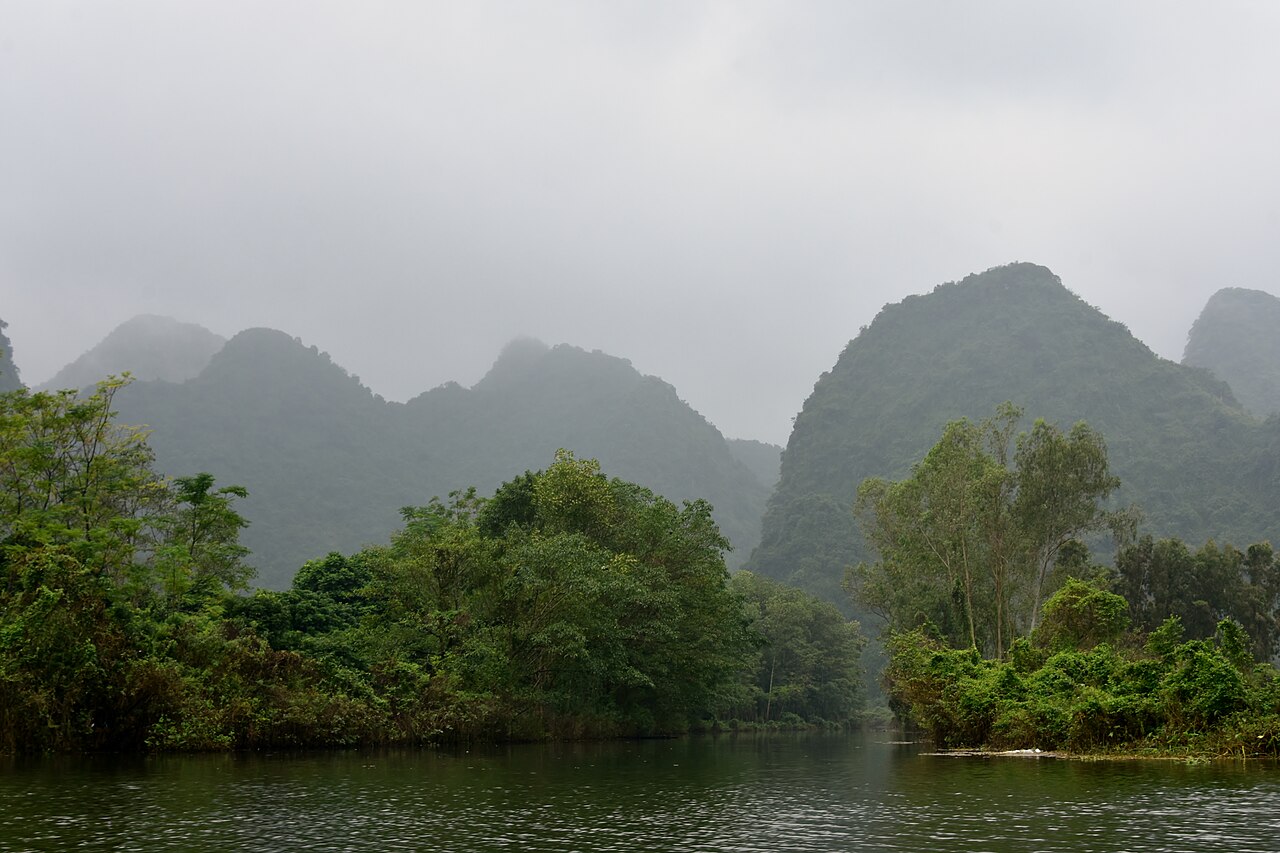
Access to the complex begins at Duc Vong wharf, where visitors board flat-bottomed rowing boats that travel along the Yen stream. The stream is narrow and calm, flanked by rice paddies and low limestone hills, and the journey to the main landing takes roughly an hour each way. The boats are traditionally rowed by local women, often using their feet on the oars, and the craft hold a small number of passengers. Returning by boat is the standard arrangement.
The landscape along the water is the visual centrepiece of the experience for many visitors: the reflections of the hills and the unhurried pace are deliberately different from what follows. During the festival season the stream becomes heavily congested and wait times at the wharf can be substantial. Outside the peak period, the journey is considerably quieter.
Cable car or the climb
From the upper boat landing, reaching Huong Tich cave requires either climbing a stone stairway through the forest — roughly 2 kilometres of stepped path with a significant elevation gain — or taking the cable car, which was installed in the early 2000s and significantly shortened journey times. The cable car carries passengers in gondolas above the tree canopy and deposits them close to the cave entrance; the ride itself offers a view across the forested hills.
The climb on foot passes smaller shrines and offers a slower, quieter approach for those who prefer it, though it is physically demanding, particularly in heat or after rain when the stone steps become slippery. There is an entry fee for the site and a separate fare for the cable car. Both the climb and the cable car are used in both directions; many visitors take the cable car up and descend on foot, or vice versa.
The festival season
The Perfume Pagoda festival is one of the longest religious festivals in Vietnam, running from the sixth day of the first lunar month — which falls in late January or February by the Gregorian calendar — through to the end of the third lunar month, typically late March or April. The peak days, particularly around the opening, see very large numbers of pilgrims making the journey to pray at the cave altar and seek blessings for the new year.
The practical consequences of festival timing are significant. The wharf, the stream, the cable car and the cave itself become crowded to a degree that can make the visit feel more like crowd management than contemplation. Prices for boat hire and related services rise during this period. Outside festival season the site is much quieter, the landscape is arguably easier to appreciate, and the journey is smoother — though the religious atmosphere is less intense. Visitors who are specifically interested in the pilgrimage culture may find the festival period worthwhile despite the congestion; those seeking a calmer outing may prefer the autumn months.
Tickets and practical structure
The site operates a tiered entry system. There is a general entrance fee to the protected area, a separate fee for the boat, and an optional fare for the cable car. All of these are paid at different points along the route rather than as a single combined ticket. It is worth understanding this structure before arrival, as costs accumulate across several stages. The official fee schedule is set by local authorities and subject to revision; the ticket offices at the wharf are the authoritative source on current charges.
Facilities at the site include food stalls and basic rest areas along the main routes, concentrated around Thien Tru pagoda. The cave itself is dimly lit by artificial lighting. Visitors with mobility limitations should note that the approach involves uneven stone paths and steps regardless of whether the cable car is used.
Getting there from Hanoi
The Perfume Pagoda is approximately 60 kilometres south-west of central Hanoi, a journey that takes roughly two hours by road depending on conditions and point of departure. The standard approach is to travel to My Duc district by bus or organised transport, then proceed to the Duc Vong wharf by local vehicle. Hanoi's My Dinh bus station serves routes in this direction.
Organised day trips from Hanoi are widely available and include transport, boat and sometimes a guide; these simplify logistics considerably, particularly for first-time visitors unfamiliar with the wharf and ticketing process. Independent travel is straightforward for those comfortable navigating Vietnamese bus systems. The site is not easily combined in a single day with Ninh Binh and Tam Coc, though both destinations share a broadly similar landscape character. For wider practical preparation, see the pages on Vietnam e-visa, money and ATMs, and when to go by region.
월별 기후
장기 평균값이며 예보가 아닙니다. 기준 기간: 2015–2024. 출처: ERA5 reanalysis (Copernicus) via the Open-Meteo archive API.
Show the numbers
| 월 | 최고 기온 °C | 최저 기온(°C) | 강수량(mm) | 강수일수 | Humidity % |
|---|---|---|---|---|---|
| January | 20.8 | 14.2 | 84 | 13 | 80 |
| February | 22.2 | 15.2 | 51 | 10 | 80 |
| March | 25.6 | 18.8 | 80 | 13 | 84 |
| April | 29.0 | 21.3 | 114 | 11 | 84 |
| May | 31.7 | 24.4 | 220 | 17 | 83 |
| June | 33.5 | 26.1 | 205 | 15 | 81 |
| July | 32.6 | 25.8 | 332 | 20 | 83 |
| August | 31.6 | 25.3 | 377 | 24 | 87 |
| September | 30.3 | 24.3 | 350 | 22 | 86 |
| October | 27.7 | 21.5 | 221 | 14 | 81 |
| November | 25.6 | 18.9 | 76 | 10 | 79 |
| December | 21.0 | 14.4 | 49 | 8 | 74 |
Practical notes
Where it is
Also known as / see also
주변
참조 페이지
출처 목록
- ERA5 climate normals — Copernicus / Open-Meteo (CC BY 4.0) 접근됨 30 August 2026
Supports: monthly temperature and rainfall normals, and elevation - Hương Temple — Wikipedia (CC BY-SA 4.0) 접근됨 29 August 2026
Supports: carried over from the first build - Chùa Hương — Wikipedia (Vietnamese) (CC BY-SA 4.0) 접근됨 29 August 2026
Supports: carried over from the first build
Current 마지막 확인: 29 August 2026. Rules, fares and prices change — check the official source before acting on anything here. Report a mistake.
Picture credits (6)
River journey to the Perfume Pagoda, Vietnam (10) (37632771785), Richard Mortel from Riyadh, Saudi Arabia, CC BY 2.0, Wikimedia Commons · River journey to the Perfume Pagoda, Vietnam (11) (38463516576), Richard Mortel from Riyadh, Saudi Arabia, CC BY 2.0, Wikimedia Commons · River journey to the Perfume Pagoda, Vietnam (12) (38463507856), Richard Mortel from Riyadh, Saudi Arabia, CC BY 2.0, Wikimedia Commons · River journey to the Perfume Pagoda, Vietnam (13) (37632743875), Richard Mortel from Riyadh, Saudi Arabia, CC BY 2.0, Wikimedia Commons · River journey to the Perfume Pagoda, Vietnam (14) (38487711962), Richard Mortel from Riyadh, Saudi Arabia, CC BY 2.0, Wikimedia Commons · River journey to the Perfume Pagoda, Vietnam (15) (37632707705), Richard Mortel from Riyadh, Saudi Arabia, CC BY 2.0, Wikimedia Commons