2025 constitutional amendment and Law on Organisation of Local Government establishing a two-tier local government
What Long Xuyên is
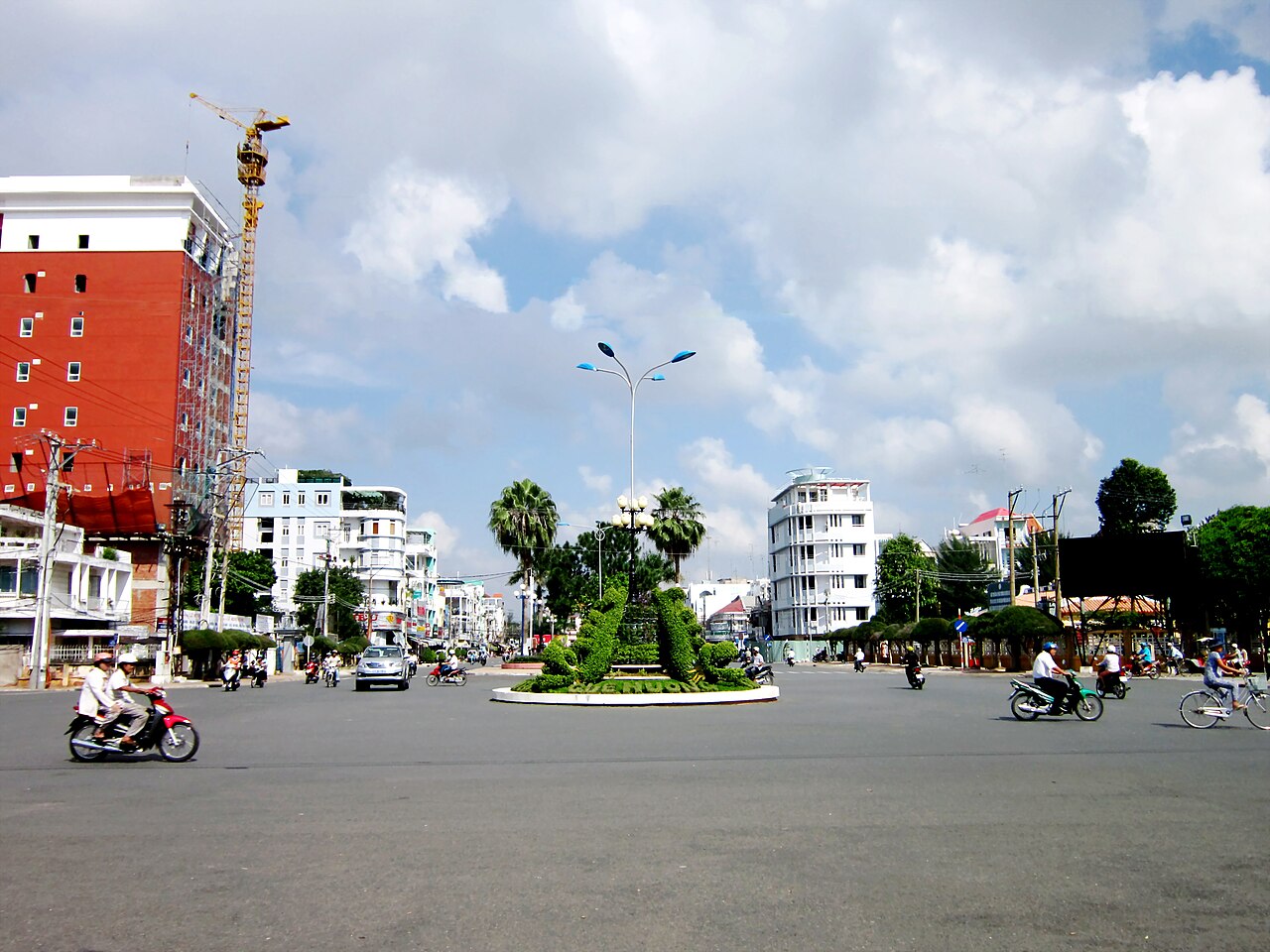
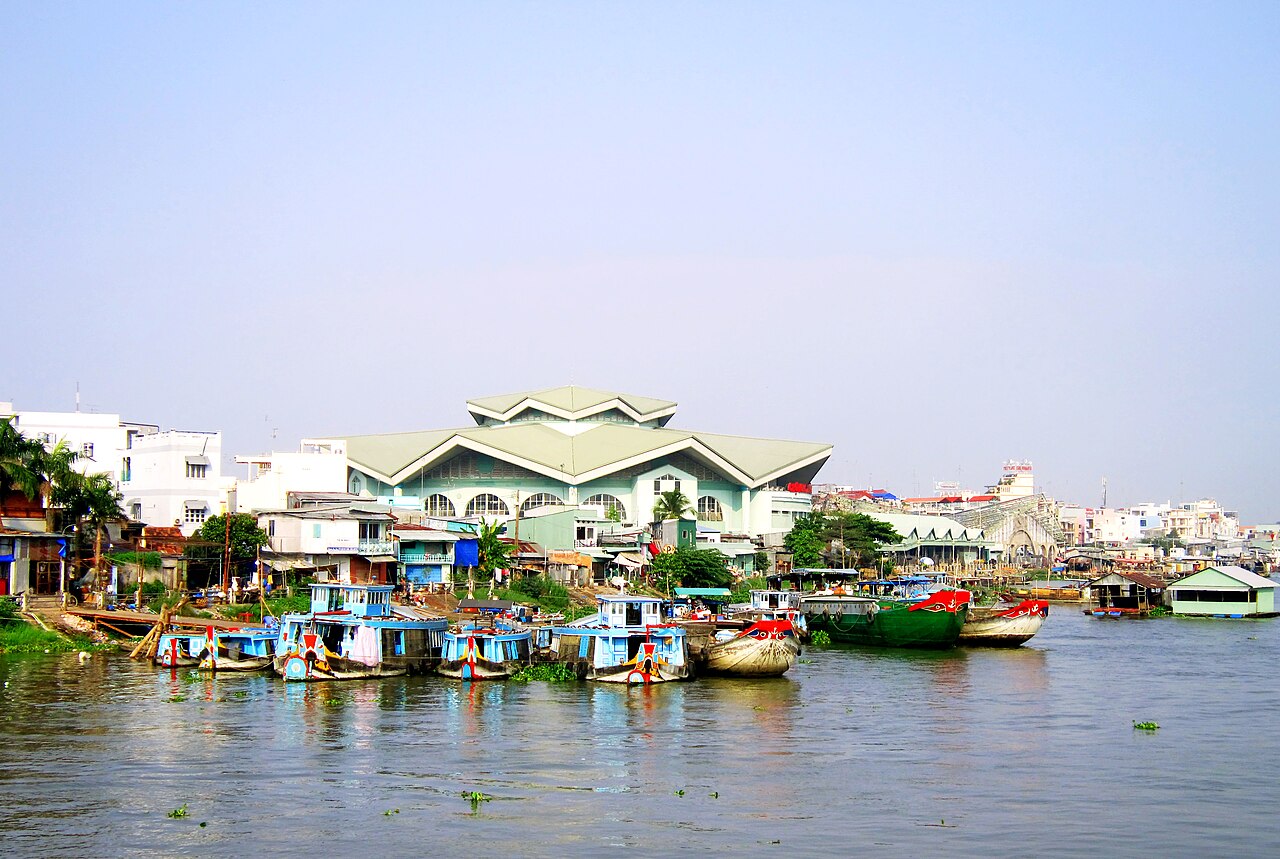
Long Xuyên sits on the western bank of the Hậu River (a branch of the Mekong), roughly midway between Cần Thơ to the east and the Cambodian border to the northwest. It is a working river city built on rice trade, fish-sauce production and river commerce rather than on tourism. The city centre is compact and navigable on foot along the riverfront boulevard.
Long Xuyên is the birthplace and spiritual heartland of Hòa Hảo Buddhism, a reformist Vietnamese Buddhist movement founded by Huỳnh Phú Sổ in 1939 in the nearby village of Hòa Hảo. The movement's history — including its politically complicated relationship with successive Vietnamese governments — is woven into local identity in ways that outsiders sometimes underestimate.
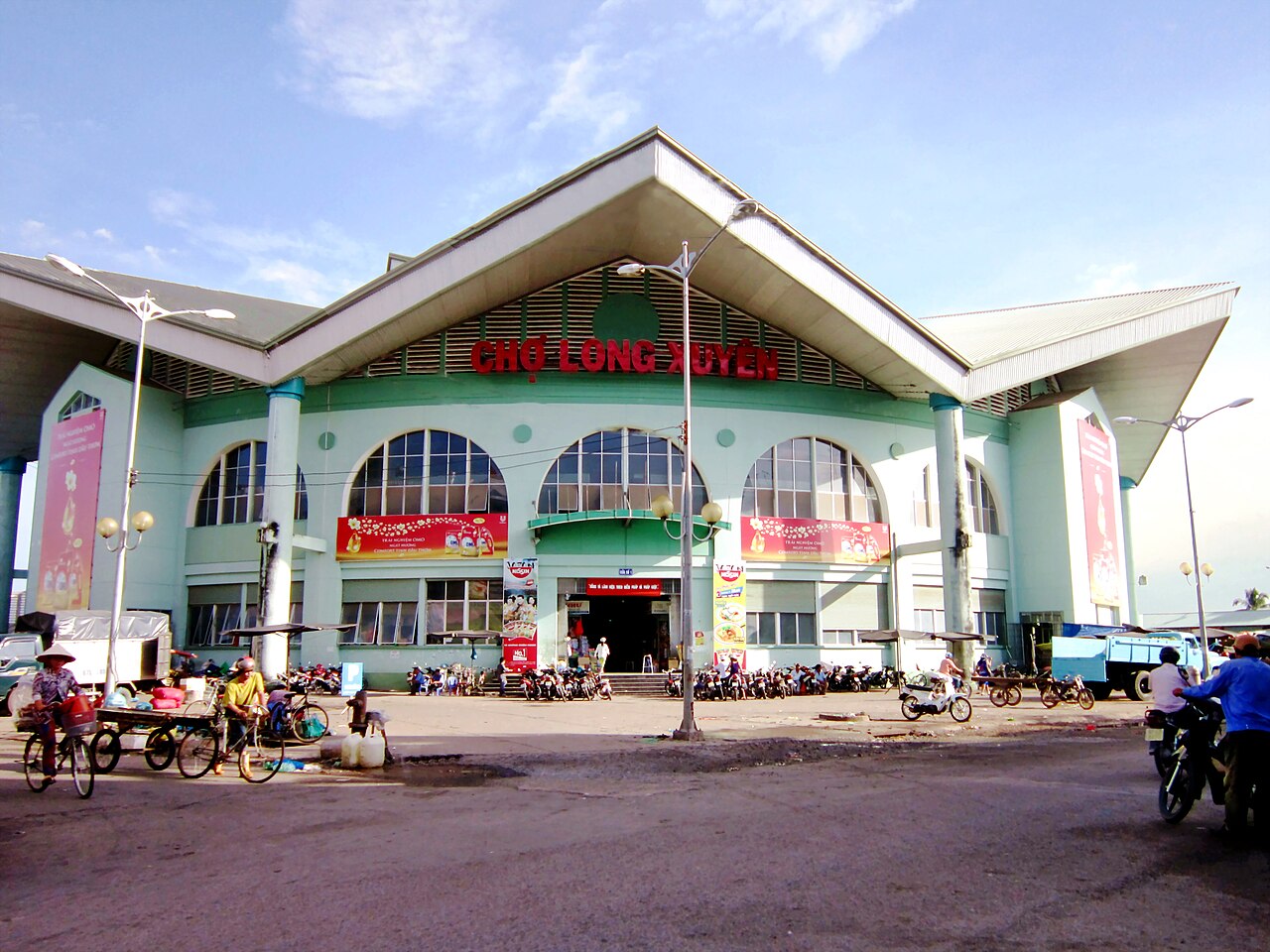
The city is also known for its floating market at Phó Mỹ and for the Long Xuyên Market on Nguyễn Huệ Street, one of the busier wholesale and retail markets in the western delta.
Administrative status after 2025
Long Xuyên was designated a provincial city (thành phố trực thuộc tỉnh) within An Giang province until 30 June 2025. Under Vietnam's administrative reorganisation of 1 July 2025, the country consolidated its 63 provincial-level units into 34 and abolished the district tier entirely, moving to a two-tier province/commune system.
As a result, Long Xuyên no longer exists as a discrete administrative unit. The area it covered is now governed directly under the restructured An Giang province, with communes reporting to the provincial level rather than to an intermediate city or district authority.
The place itself has not changed. The streets, the river, the markets and the population centre remain. What has changed is the layer of government responsible for them. Visitors, residents and businesses should expect administrative references — on signage, official documents and online maps — to update gradually over time.
Getting there and away
Long Xuyên is connected to the national road network via National Route 91, which links it to Cần Thơ to the southeast (approximately 60 km) and to Châu Đốc to the northwest (approximately 55 km). The road to Cần Thơ passes through flat rice-paddy landscape and crosses several river channels by bridge.
Bus services operate from Long Xuyên to Ho Chi Minh City, Cần Thơ, Châu Đốc and several other Mekong Delta cities. The main bus station is on Trần Hưng Đạo Street. Sleeper buses serve the Ho Chi Minh City route overnight.
River transport remains relevant locally. Passenger boats and ferries cross the Hậu River and connect to some smaller settlements, though scheduled long-distance river services have declined significantly compared with previous decades.
The nearest airport with scheduled commercial services is Cần Thơ International Airport. Travellers arriving by air typically continue to Long Xuyên by road.
Seasons and when to visit
Long Xuyên has a tropical monsoon climate with two clearly defined seasons. The dry season runs roughly from November to April, bringing lower humidity, little rainfall and easier road conditions. This is generally considered the more comfortable period to travel in the delta.
The wet season from May to October brings the annual Mekong flood, which peaks between August and October. In flood years the surrounding fields and lower-lying areas inundate, and travel on minor roads can be disrupted. However, the flood season also brings distinctive delta activity: fishing intensifies, floating markets become busier, and the landscape changes markedly.
The city itself rarely floods severely given its riverbank elevation relative to surrounding paddy land, but visitors should verify local conditions if travelling during peak flood months. Prices vary by season, particularly for accommodation and river excursions.
Things to see and do
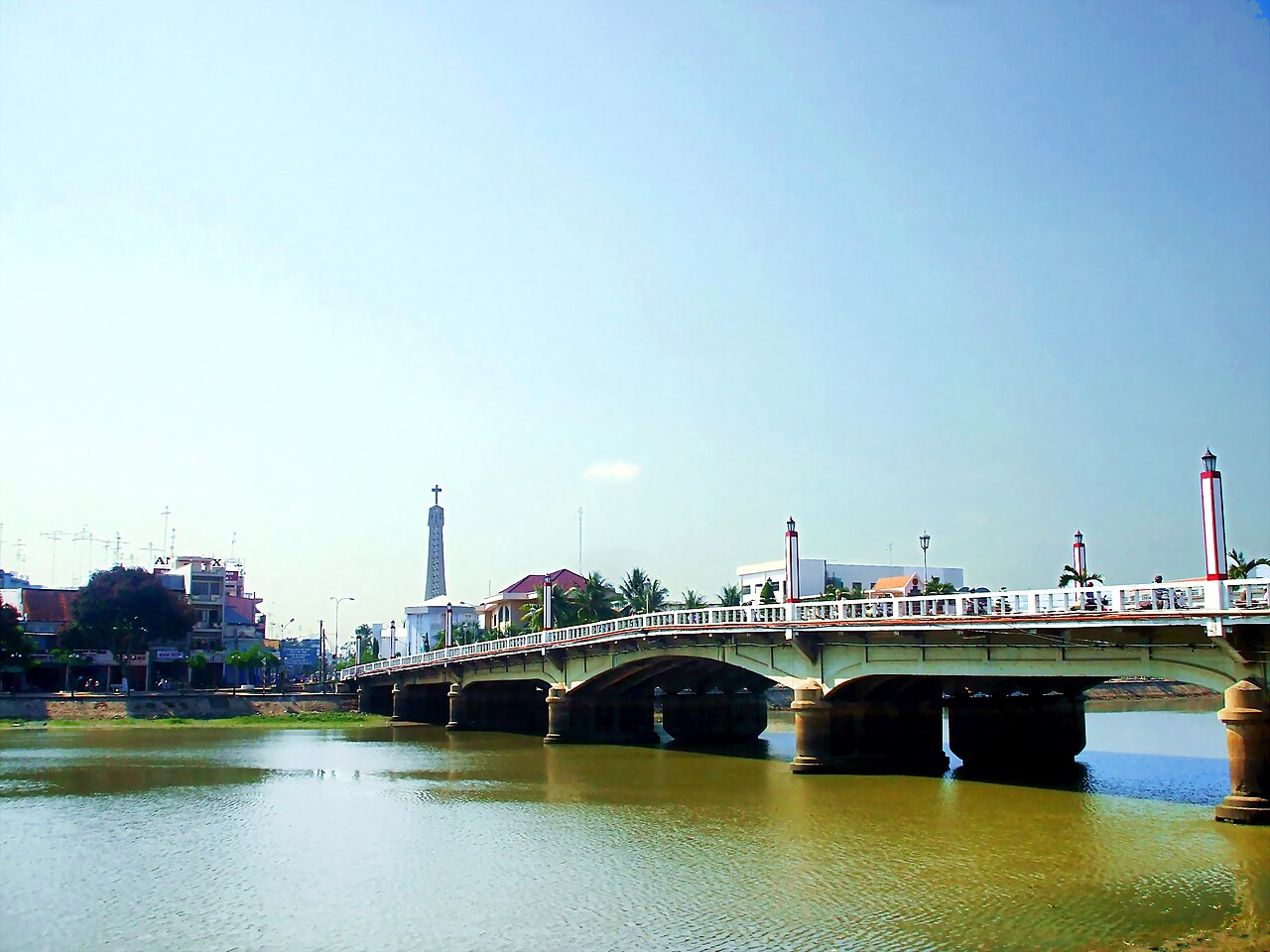
The Long Xuyên Catholic Church on Trần Hưng Đạo Street is among the larger Catholic churches in the delta, built in 1973 with a tower visible from some distance. The city has a notable Catholic community, an unusual demographic in a province dominated by Hòa Hảo Buddhism.
The An Giang Museum (Bảo tàng An Giang) on Thoại Ngọc Hầu Street holds collections on the Óc Eo archaeological culture, which flourished in this region during the first millennium CE, as well as exhibits on the Hòa Hảo movement and local natural history.
The Chợ Long Xuyên market occupies a large building near the riverfront and operates from early morning. Wholesale trade in rice, dried fish, and agricultural produce dominates the lower floors; retail stalls sell clothing, household goods and street food on upper levels and in surrounding lanes.
Day trips from Long Xuyên commonly go to Chợ Mới district for silk weaving villages, and to the Hòa Hảo pilgrimage site in Phú Tân. The Sam Mountain area near Châu Đốc is reachable in under two hours by road.
Where people stay
Accommodation concentrates along or near the riverfront boulevard (Hai Bà Trưng Street) and on the parallel streets running inland. The riverfront strip offers hotels with Hậu River views and is within walking distance of the market and museum. Guesthouses serving Vietnamese domestic travellers and traders are found throughout the city centre at various price points.
There is no distinct tourist quarter. Most visitors staying in Long Xuyên do so because they are passing through the delta corridor, doing business in the region, or using it as a base for day trips to Châu Đốc or Chợ Mới. Accommodation options lean toward mid-range Vietnamese business hotels rather than international-branded properties.
What first-time visitors get wrong
Treating it as a sightseeing destination. Long Xuyên is a functional delta city. Travellers expecting a curated experience comparable to Hội An or a scenic natural setting comparable to Hà Giang will find it unremarkable. Its value is as a legible, unhurried Mekong Delta city where ordinary provincial life is visible without being staged for visitors.
Confusing the province with the city. An Giang is the province; Long Xuyên was its administrative city. Locals and signage often use the names interchangeably in context, which can confuse those navigating transport timetables or addresses.
Underestimating the Hòa Hảo context. The religion is not a curiosity; it is a defining feature of local identity with a serious and sometimes painful history. Public commemoration of Huỳnh Phú Sổ and Hòa Hảo practice is visible throughout the city and surrounding area. The relationship between the Vietnamese state and the movement remains a sensitive subject.
Assuming flood season is problem-free. Road diversions and saturated ground can complicate travel to surrounding communes between August and October. Checking conditions before setting out on minor routes is practical rather than excessive caution.
Where it is
出典
- Long Xuyên (Q33421) — Wikidata (CC0 1.0) アクセス日 30 August 2026
Supports: coordinates, area, population - Long Xuyên — Wikipedia (CC BY-SA 4.0) アクセス日 30 August 2026
Supports: background
Current 最終確認: 31 August 2026. Rules, fares and prices change — check the official source before acting on anything here. Report a mistake.
Picture credits (4)
Cầu Hoàng Diệu, Bùi Thụy Đào Nguyên, Public domain, Wikimedia Commons · Trung tâm Long Xuyên, Bùi Thụy Đào Nguyên, CC BY-SA 3.0, Wikimedia Commons · Chợ Long Xuyên bên sông Hậu, Bùi Thụy Đào Nguyên, CC BY-SA 3.0, Wikimedia Commons · Chợ thành phố Long Xuyên, Bùi Thụy Đào Nguyên, CC BY-SA 3.0, Wikimedia Commons