2025 constitutional amendment and Law on Organisation of Local Government establishing a two-tier local government
Administrative status
Until 30 June 2025, Huế was classified as a provincial city within Thừa Thiên Huế province. Under Vietnam's administrative reorganisation of 1 July 2025, the district tier was abolished and provincial boundaries were redrawn, merging many of the country's 63 former provincial-level units into 34. As a result, Huế no longer exists as a distinct administrative unit in its own right; governance of the area now falls under the reorganised province of Huế. The city itself — its streets, monuments, population and geography — has not changed.
Character and setting
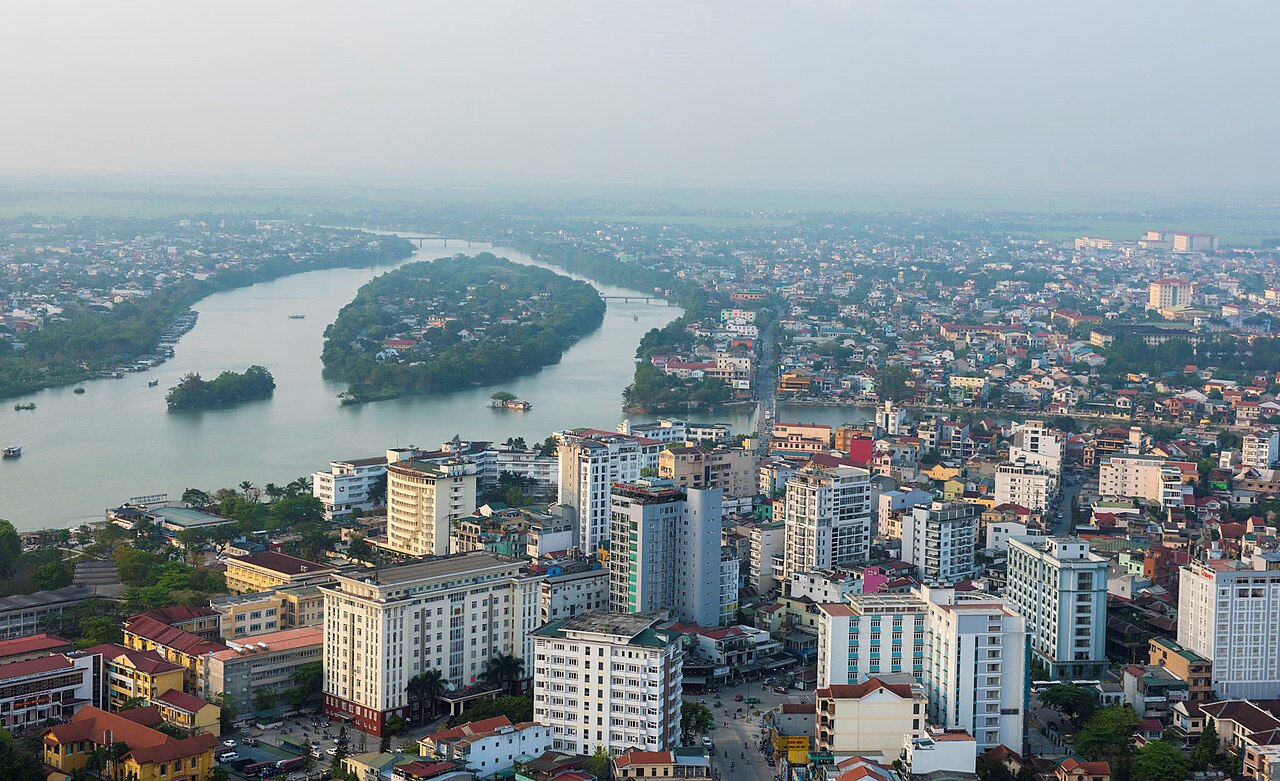
Huế sits on the Hương (Perfume) River in a narrow coastal plain backed by the Trường Sơn mountain range to the west and separated from the coast by a system of lagoons and sand barriers to the east. The city is compact by Vietnamese standards, with the Imperial Citadel — a walled complex modelled partly on Beijing's Forbidden City — anchoring the northern bank of the river, and the more commercial Phố cổ districts occupying the southern bank.
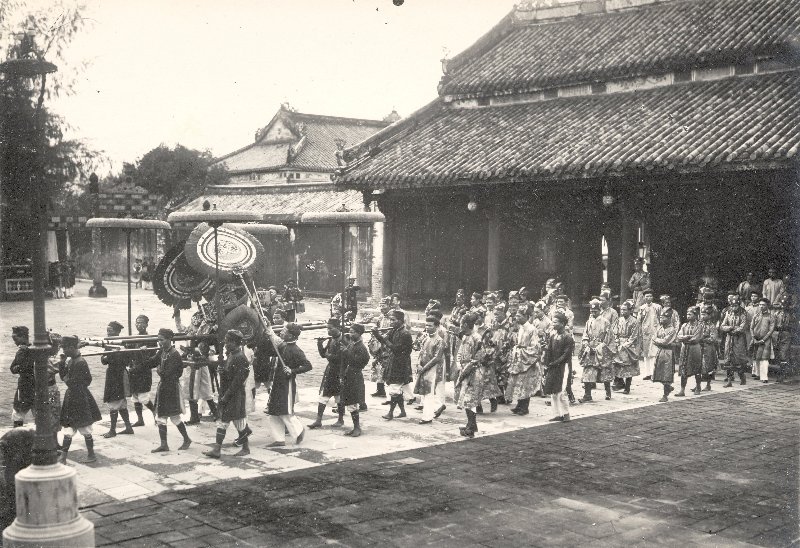
The city is associated with a restrained, court-inflected aesthetic that extends from its architecture and ceremonial music (nhã nhạc, listed by UNESCO in 2003) to its cuisine, which emphasises balance, small portions, and the use of fermented shrimp paste (mắm ruốc). Dishes such as bún bò Huế, bánh khoái and cơm hến are specifically associated with the city and differ markedly from the food found in Hanoi or Ho Chi Minh City.
History and heritage
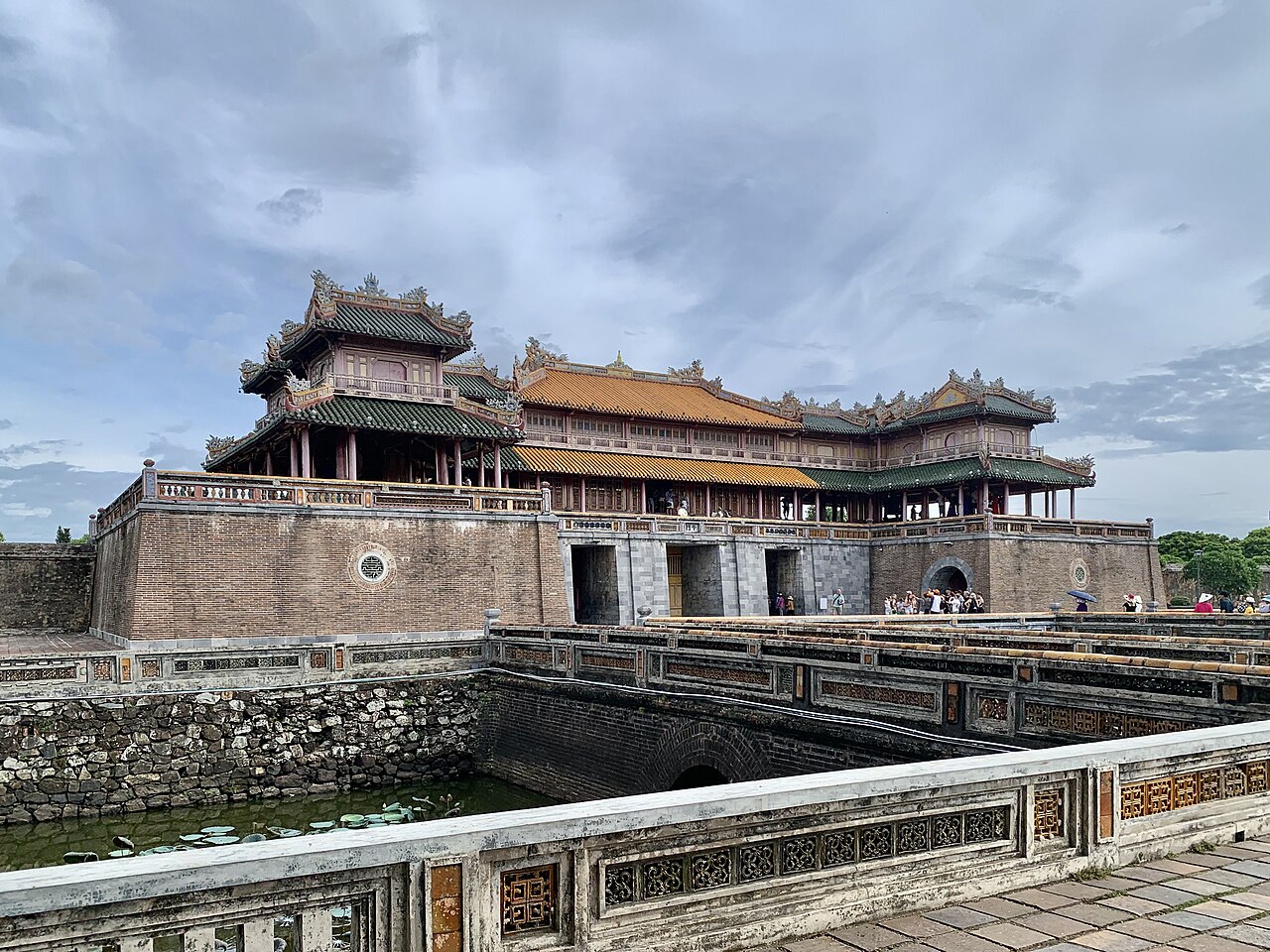
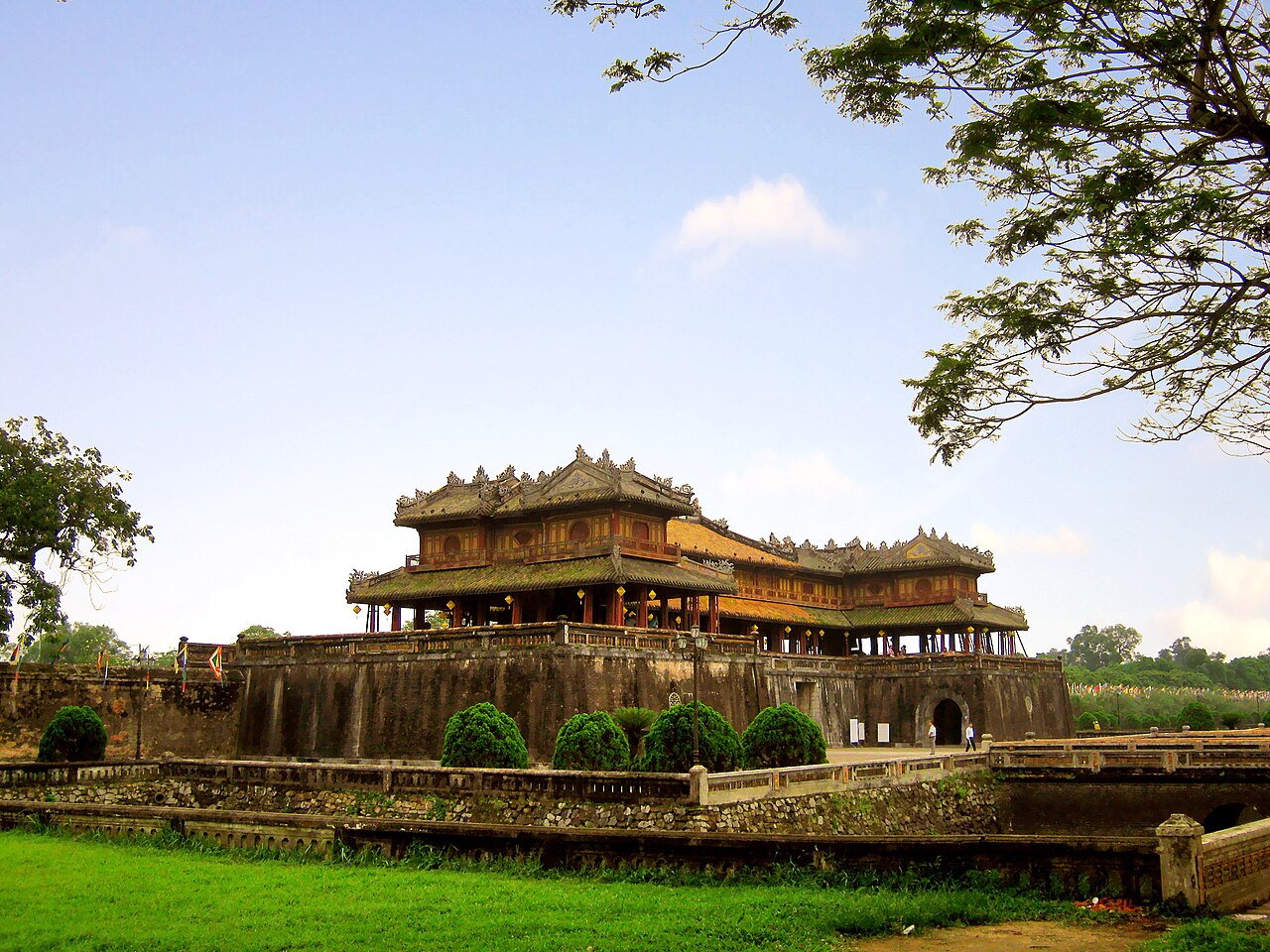
Huế became the Nguyễn lords' capital in the seventeenth century and the seat of the unified Vietnamese empire under Emperor Gia Long in 1802. The Imperial Citadel, begun around 1804, encloses the Purple Forbidden City (Tử Cấm Thành), temples, gardens and pavilions across several square kilometres. Substantial sections were damaged during the 1968 Tết Offensive, and restoration work — overseen in part by UNESCO — has continued since the 1990s.
The surrounding countryside contains the mausolea of seven Nguyễn emperors, each built to reflect the tastes and philosophy of its occupant. Those of Minh Mạng, Tự Đức and Khải Định are the most frequently visited. Thiên Mụ Pagoda, founded in 1601 on a bend of the Perfume River, remains an active place of worship and is one of the oldest pagodas in the city.
The entire complex of Huế monuments was inscribed as a UNESCO World Heritage Site in 1993.
Getting there and away
Phú Bài International Airport lies roughly 15 kilometres south of the city centre and receives domestic flights from Hanoi, Ho Chi Minh City and several other Vietnamese cities, as well as some international routes. The North–South railway passes through Huế station, placing the city on one of the busiest rail corridors in Vietnam; the stretch between Huế and Đà Nẵng, crossing the Hải Vân Pass, is widely noted for its scenery. Express coach services connect Huế to Hanoi, Đà Nẵng, Hội An and Ho Chi Minh City. The Hải Vân Pass road is an alternative for those travelling by private vehicle or motorcycle.
Climate and when to visit
Huế has one of the wettest climates of any Vietnamese city. It sits in a zone where the northeast monsoon, funnelled by the Trường Sơn range, delivers heavy rainfall between October and January; floods are not uncommon during this period. The driest and warmest months run roughly from February to August, though the city can experience intense heat in June and July. Typhoons occasionally affect the region between September and November.
The Huế Festival, a biennial cultural event featuring performances of nhã nhạc, royal ceremonial re-enactments, and contemporary arts, takes place in even-numbered years, typically in April or May, and draws significant visitor numbers. Prices vary by season.
Orientation and staying
Most accommodation concentrates on the southern bank of the Perfume River, particularly along and near Lê Lợi street. The northern bank — inside and immediately around the citadel walls — is quieter and closer to the main heritage sites but has fewer lodging options. A cluster of guesthouses and smaller hotels has developed in the Phạm Ngũ Lão area on the southern bank, catering to budget travellers. The riverside and the streets east of the citadel tend to attract mid-range and upmarket properties.
Walking is practical within the southern bank commercial district; cycling is a common way to reach the citadel and the closer pagodas. The royal tombs to the south and southwest of the city require either a motorcycle, hired vehicle, or organised transport, as they are spread across a wide area of forested hills.
Common misunderstandings
Visitors sometimes expect Huế and Hội An to be similar because both are heritage cities in the same region — they are not. Hội An is a preserved merchant town; Huế is a former imperial capital with a different architectural scale, a distinct culinary vocabulary, and a more sombre historical atmosphere, shaped in part by the damage sustained in 1968.
The Citadel is large and requires more time than most first-time visitors allocate; covering the Citadel and the Purple Forbidden City thoroughly, plus two or three of the royal tombs, typically requires more than a single day. Several of the tombs are spaced kilometres apart and are not practical to combine into one outing on foot.
The administrative reorganisation of 2025 has caused some confusion in travel literature. The area is now part of the province of Huế; references to "Thừa Thiên Huế province" describe the former arrangement that ceased on 30 June 2025.
Where it is
Các nguồn
- Huế (Q36167) — Wikidata (CC0 1.0) đã truy cập 30 August 2026
Supports: coordinates, area, population - Huế — Wikipedia (CC BY-SA 4.0) đã truy cập 30 August 2026
Supports: background
Current Đã xác minh lần cuối: 31 August 2026. Rules, fares and prices change — check the official source before acting on anything here. Report a mistake.
Picture credits (4)
Huế (2024) - Meridian Gate - Ngọ Môn (Hoàng thành Huế) - img 02, Chainwit., CC BY 4.0, Wikimedia Commons · Hoàng thành Huế, Bùi Thụy Đào Nguyên, CC BY-SA 3.0, Wikimedia Commons · Thành phố Huế nhìn từ trên cao (2), Lê Huy Hoàng Hải, CC BY-SA 4.0, Wikimedia Commons · Enthronement of Emperor Bảo Đại 010, Thanh-Ba, Huế, Vietnam, Public domain, Wikimedia Commons