Orientation
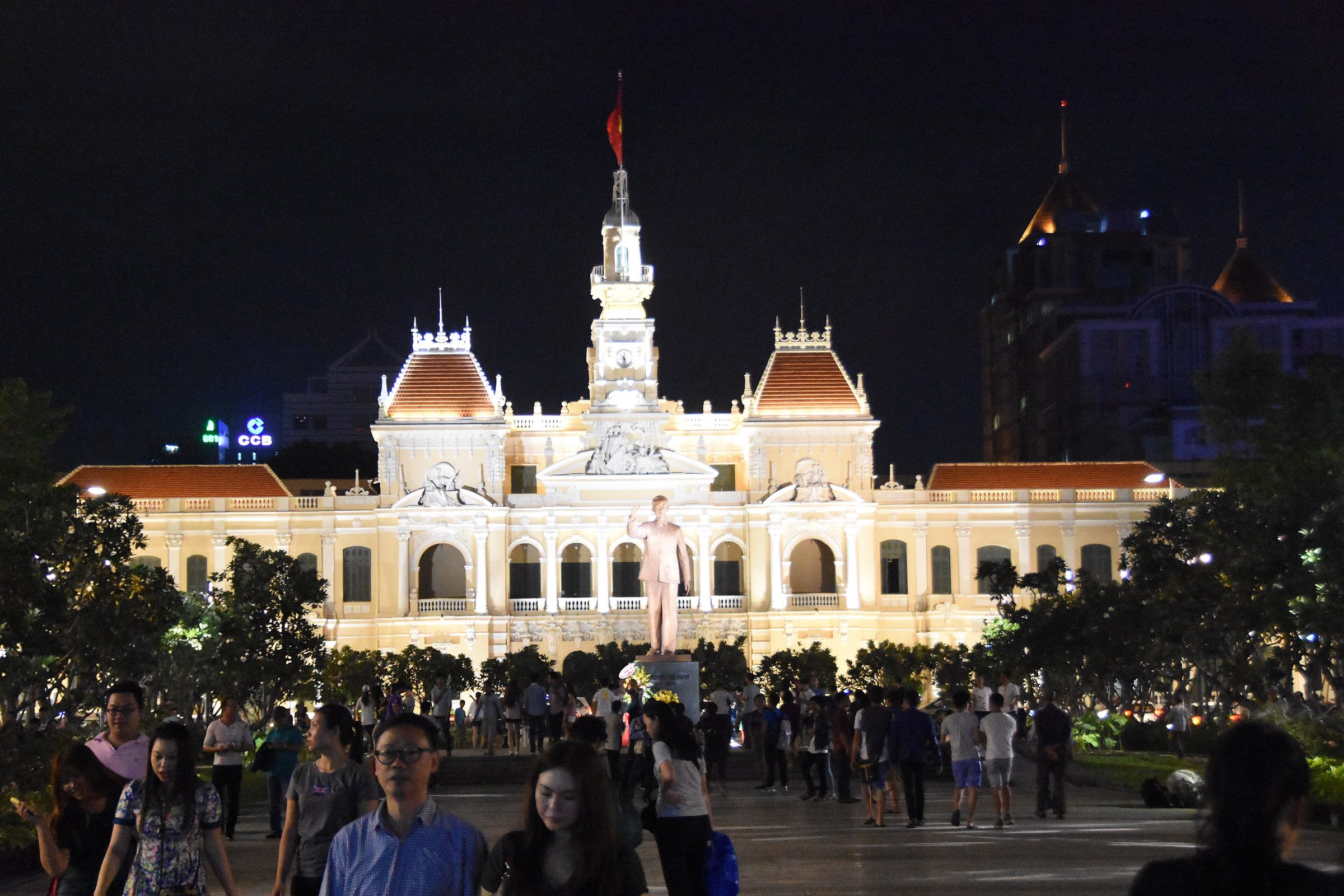
The centre of Ho Chi Minh City — still widely called Sài Gòn by residents — is anchored by the former District 1, a compact riverside grid bounded roughly by the Saigon River to the east and a web of wider boulevards to the west and north. The main sights cluster within about two kilometres of each other: Reunification Palace, Notre-Dame Cathedral, the Central Post Office, the War Remnants Museum and Ben Thanh Market can all be reached on foot from one another, though the heat makes midday walking demanding.
Administratively, Ho Chi Minh City expanded significantly when Vietnam reorganised its provinces in July 2025, and what were formerly separate provinces — including territory that borders Dong Nai — are now part of the greater city unit. The centre itself has not changed physically; the expansion affects the outer administrative boundary. Districts as a tier of government no longer exist, but the old district numbers remain in everyday use as neighbourhood names.
Former District 3 sits immediately north-west of District 1 and has a quieter, more residential character. Thao Dien, on the far bank of a branch of the Saigon River to the north-east, functions as a low-rise expatriate neighbourhood with independent cafés and international restaurants. Each area has a different atmosphere and different accommodation price points.
War Remnants Museum
The War Remnants Museum on Vo Van Tan Street is one of the most visited sites in Vietnam. Its permanent collection documents the American War (the Vietnamese term for the conflict known in the West as the Vietnam War) through photographs, military hardware and accounts of its civilian impact. The outdoor courtyard displays captured American aircraft, tanks and artillery pieces. The upper floors contain photographic exhibitions — including work by international journalists killed during the conflict — alongside displays on the effects of Agent Orange defoliant on subsequent generations.
The framing is explicitly from the Vietnamese state's perspective, which visitors from Western countries sometimes find jarring. That editorial stance is itself historically significant and worth approaching as part of the experience rather than as a problem to be discounted. The Agent Orange gallery in particular contains graphic imagery. The museum is consistently busy; mornings on weekdays tend to be less crowded than weekend afternoons. Prices vary by season and visitor category.
Reunification Palace and the French-Colonial Civic Core
Reunification Palace — Dinh Thong Nhat — stands on a large landscaped plot at the north end of the former District 1. The building is the 1966 replacement for the Norodom Palace, designed by Vietnamese architect Ngô Viết Thụ in a modernist style that incorporates traditional Vietnamese decorative motifs. It became internationally known on 30 April 1975, when a North Vietnamese Army tank (Tank 843, now displayed inside) broke through its gate, marking the end of the war. The interior — government reception rooms, war operations bunkers, a rooftop helipad — has been preserved largely as it was in 1975 and is accessible on a self-guided or audio-guided basis.
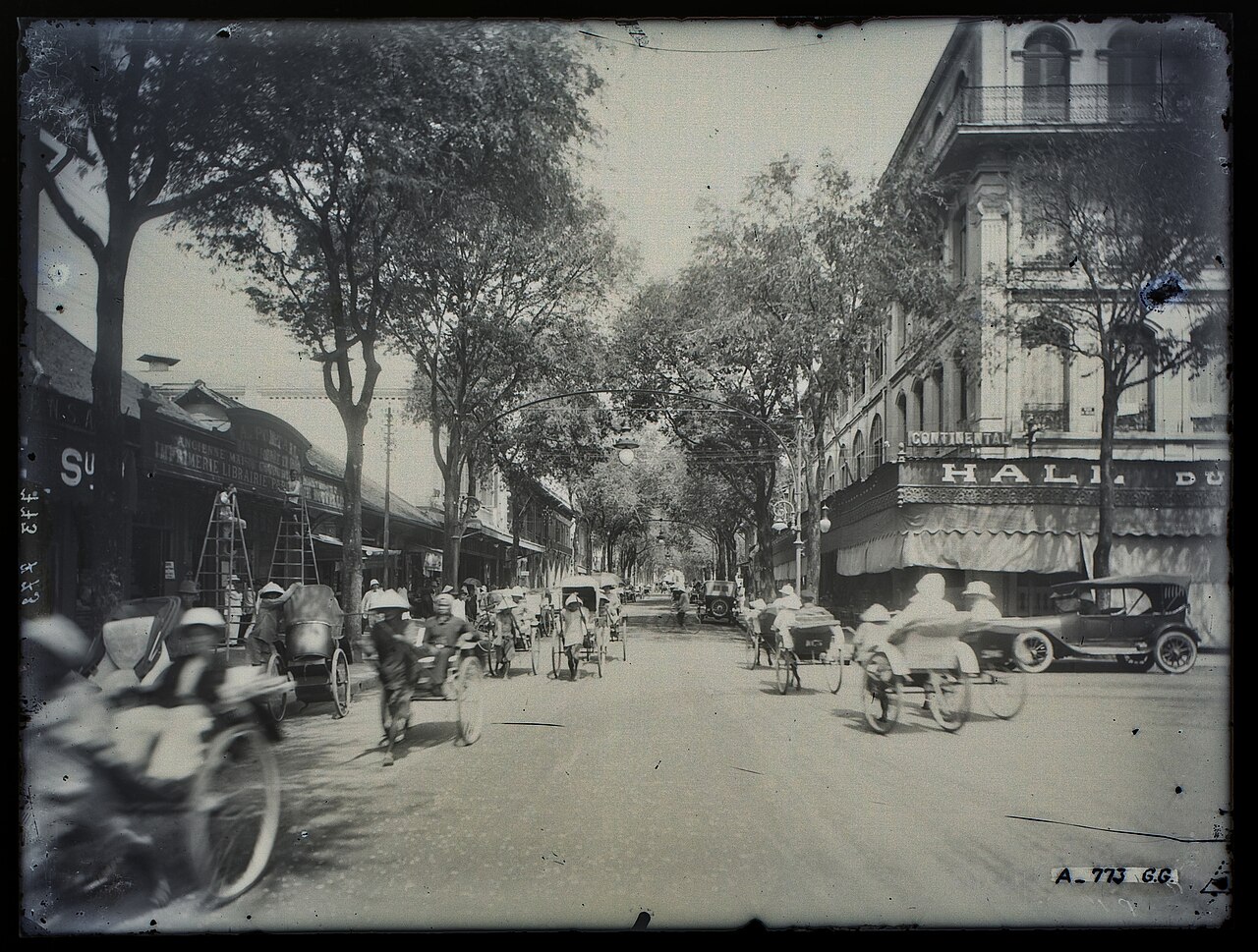
Within easy walking distance stand two prominent French-colonial structures. Notre-Dame Cathedral Basilica of Saigon, completed in 1880 using materials shipped from France including red bricks from Marseille, has been undergoing restoration works; access to the interior has been restricted at various points and the situation may continue to change. The adjacent Saigon Central Post Office, designed in the late nineteenth century and often attributed in part to Gustave Eiffel's firm, remains a working post office and is open to visitors. Its arched interior and large painted maps of historic Cochinchina make it a frequently photographed space.
Ben Thanh Market and Street Food
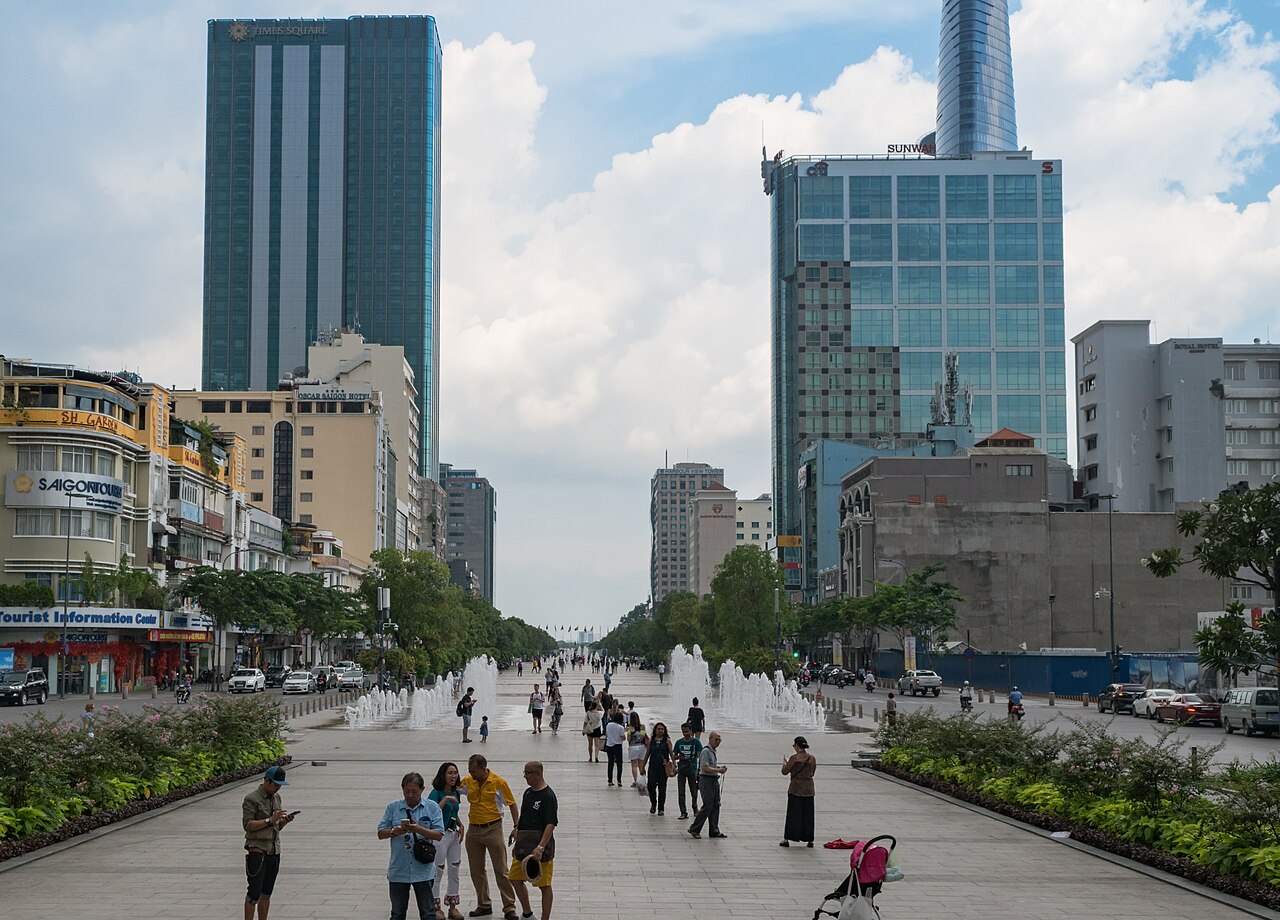
Ben Thanh Market occupies a 1914 covered hall at a major intersection in the former District 1. It sells clothing, handicrafts, dried goods, fresh produce and prepared food. Visitors should be aware that stalls in the tourist-facing sections typically open at prices significantly above what local shoppers pay, and bargaining is expected. The surrounding streets have a night market extension that operates in the evenings on Phan Boi Chau and adjacent lanes.
The broader centre is well supplied with street food at all hours. Bún bò Huế (spicy beef and pork noodle soup from Hue), hủ tiếu (a southern clear-broth noodle soup with pork or seafood), bánh mì (filled baguette sandwiches, a direct legacy of French colonialism) and cơm tấm (broken rice with grilled pork, egg and pickled vegetables) are all common in the area. Cơm tấm is regarded as a particularly Saigonese dish. Bánh mì Huynh Hoa on Le Thi Rieng Street and a number of long-established cơm tấm shops in the former District 3 have reputations built over decades. Prices vary by season and vendor type.
Bui Vien and Nightlife
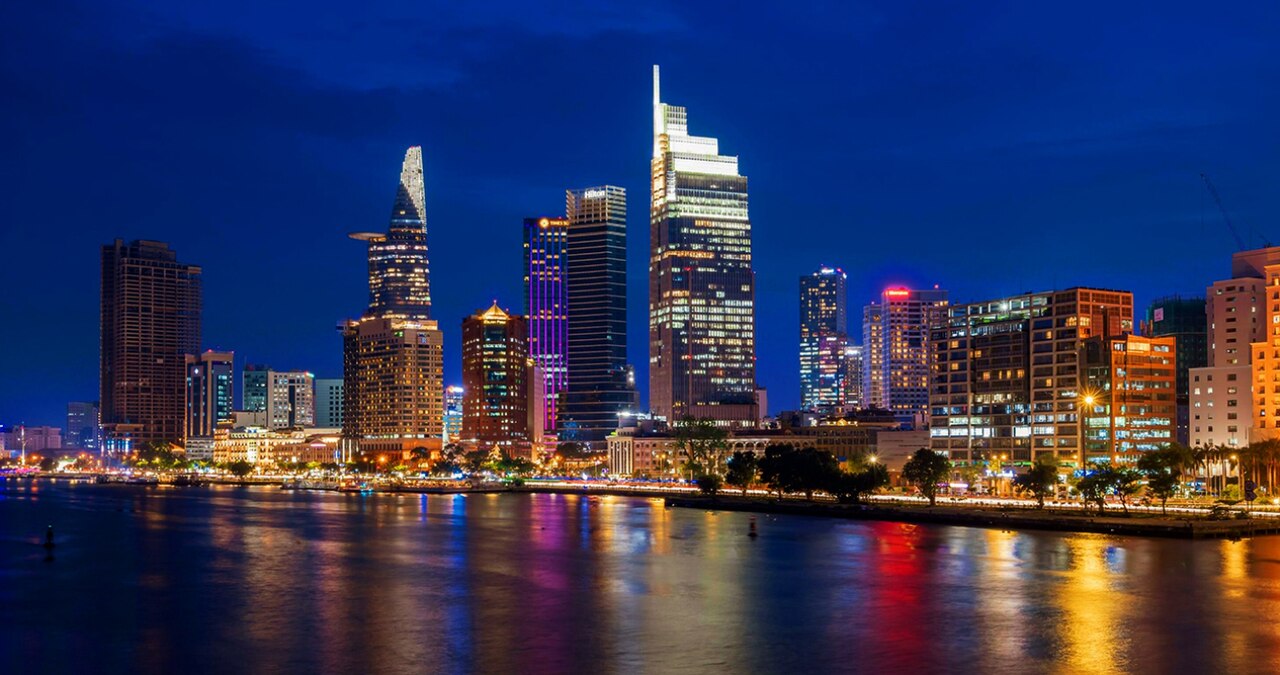
Bui Vien Street, two blocks south-west of Ben Thanh, is the centre of backpacker nightlife in the city. The street and its immediate surrounds are lined with open-fronted bars, clubs and budget guesthouses, and the area is loud and active from late afternoon into the early hours. It draws a mixed crowd of budget travellers, Vietnamese young people and expatriates, though the atmosphere is markedly different from the cocktail bars and rooftop venues that have proliferated in the taller buildings of the wider former District 1.
Visitors should note that the street is occasionally subject to early-closure enforcement by local authorities, and the situation can shift. For practical safety information relevant to this area and the city more broadly, see Safety and common scams.
Getting Around and the Metro
Ho Chi Minh City's first metro line — Metro Line 1, running from Ben Thanh in the city centre to Suoi Tien in the north-east — entered passenger service in late 2024. It passes through several stations relevant to visitors, including stations serving Thao Dien and the broader Thu Duc area. The line operates with modern rolling stock and air-conditioned carriages. Prices vary by journey length.
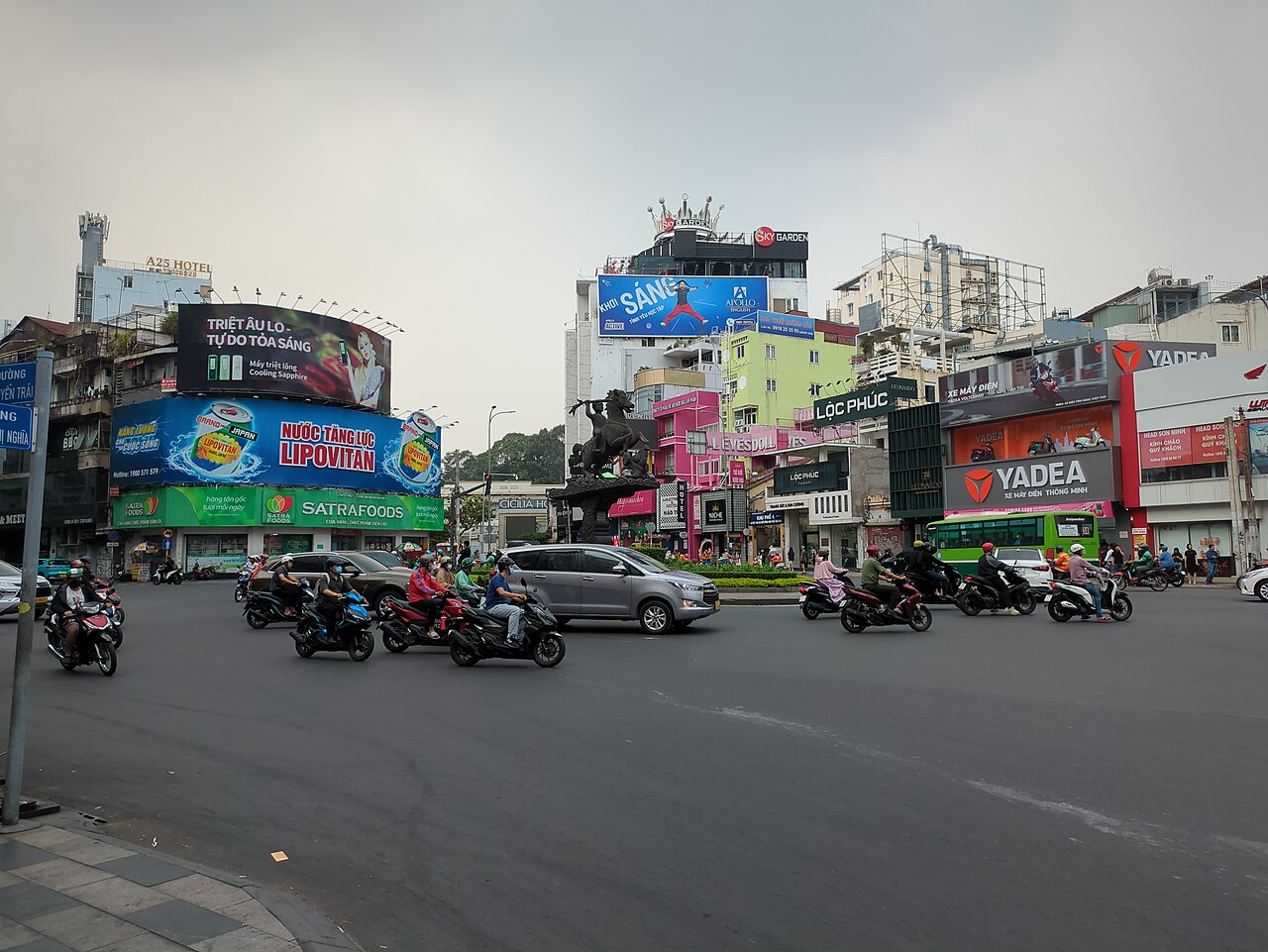
Within the centre, motorbike taxis (xe ôm) and app-based ride-hailing services (Grab and its competitors) are the most practical means of short-distance travel. Standard taxis with meters also operate. Walking is feasible between the main sights in the morning or evening but requires care at junctions, where traffic does not always stop for pedestrians. Bicycles and electric scooters are available for hire from several operators in the former District 1.
For connectivity on arrival, see SIM cards and eSIMs. For cash access, see Money, ATMs and cards. Entry requirements are covered at Vietnam e-visa.
Climate and When to Visit
The centre sits at low elevation — roughly 12 metres above sea level — and has a tropical wet-dry climate with no cool season. Temperatures are high year-round, with peak heat in March and April before the rains arrive. The year divides clearly into two phases: a dry season running from around December to April, when rainfall is minimal and humidity somewhat lower, and a wet season from May through November, when afternoon and evening downpours are frequent and September and October bring the heaviest monthly totals. Flooding in low-lying streets after heavy rain is common.
December through February represents the most comfortable period for walking between outdoor sights, and this coincides with the post-Christmas and Tết holiday periods, which bring increased visitor numbers. The weeks around Tết (Vietnamese Lunar New Year, falling in late January or February depending on the year) see many local businesses close and significant domestic travel. The wet season is when the city is quietest for international visitors, and some travellers prefer it for that reason despite the rain. Full regional climate detail is at When to go: weather by region.
Day trips from the centre reach Cu Chi Tunnels to the north-west, the mangrove coast of Can Gio to the south, and the beaches of Vung Tau by hydrofoil on the river.
महीने के अनुसार जलवायु
दीर्घकालिक औसत, पूर्वानुमान नहीं। संदर्भ अवधि: 2015–2024. स्रोत: ERA5 reanalysis (Copernicus) via the Open-Meteo archive API.
Show the numbers
| महीना | उच्च °C | न्यूनतम °C | वर्षा मिमी | वर्षा दिवस | Humidity % |
|---|---|---|---|---|---|
| January | 31.8 | 23.0 | 29 | 4 | 70 |
| February | 33.2 | 23.3 | 13 | 2 | 65 |
| March | 34.5 | 24.7 | 16 | 4 | 66 |
| April | 34.2 | 25.9 | 77 | 11 | 72 |
| May | 32.9 | 26.2 | 219 | 24 | 80 |
| June | 31.5 | 25.4 | 253 | 26 | 84 |
| July | 30.7 | 25.0 | 295 | 29 | 86 |
| August | 30.9 | 24.9 | 294 | 29 | 85 |
| September | 30.5 | 24.7 | 346 | 29 | 86 |
| October | 30.3 | 24.4 | 307 | 27 | 86 |
| November | 30.7 | 24.1 | 147 | 19 | 83 |
| December | 30.7 | 23.2 | 63 | 10 | 77 |
Practical notes
Where it is
Also known as / see also
आस-पास
संदर्भित
स्रोत
- ERA5 climate normals — Copernicus / Open-Meteo (CC BY 4.0) accessed 30 August 2026
Supports: monthly temperature and rainfall normals, and elevation - Vietnam National Authority of Tourism — VNAT accessed 29 August 2026
Supports: the rules and definitions on this page
Current अंतिम सत्यापन: 31 August 2026. Rules, fares and prices change — check the official source before acting on anything here. Report a mistake.
Picture credits (7)
Peoples' Committee building at the far end of Nguyen Hue walking street (32015783691), shankar s. from Dubai, united arab emirates, CC BY 2.0, Wikimedia Commons · La rue Catinat, Saïgon (PV0019661), Haut commissariat de France pour l'Indochine, Public domain, Wikimedia Commons · Saigon -- Centrale-Éléctrique, Tetart (René), Public domain, Wikimedia Commons · Ho Chi Minh City Skyline at Night, Tran Van Ngoc, CC0, Wikimedia Commons · Ho Chi Minh centre (27767549369), dronepicr, CC BY 2.0, Wikimedia Commons · Le Loi Boulevard and Saigon Centre construction (25761278784), Joe Le Merou from Taipei, Taiwan, CC BY 2.0, Wikimedia Commons · Phù Đổng Roundabout 2, Vano111ru, CC BY-SA 4.0, Wikimedia Commons