2025 constitutional amendment and Law on Organisation of Local Government establishing a two-tier local government
Administrative status
Until 30 June 2025, Hải Dương functioned as a provincial city (thành phố trực thuộc tỉnh), the administrative heart of Hải Dương province. On 1 July 2025, Vietnam abolished the district tier nationwide and restructured its 63 provincial-level units into 34. As part of that reform, the city-level designation was dissolved; the area it covered now falls directly under the province-level authority of Hải Dương, governed through a two-tier province/commune system.
The physical city has not changed. Streets, neighbourhoods, landmarks and local institutions remain in place. Addresses that formerly named Hải Dương city as an administrative layer now reference the province and commune directly.
Character and location
The urban area occupies a flat stretch of the Red River Delta, on the banks of the Thái Bình River. The city grew as a trading post connecting the delta's agricultural hinterland with the ports of Hải Phòng, and that commercial function still defines its character. It is primarily a market and manufacturing town rather than a tourist destination: ceramics, agricultural produce and light industry account for much of its economic activity.
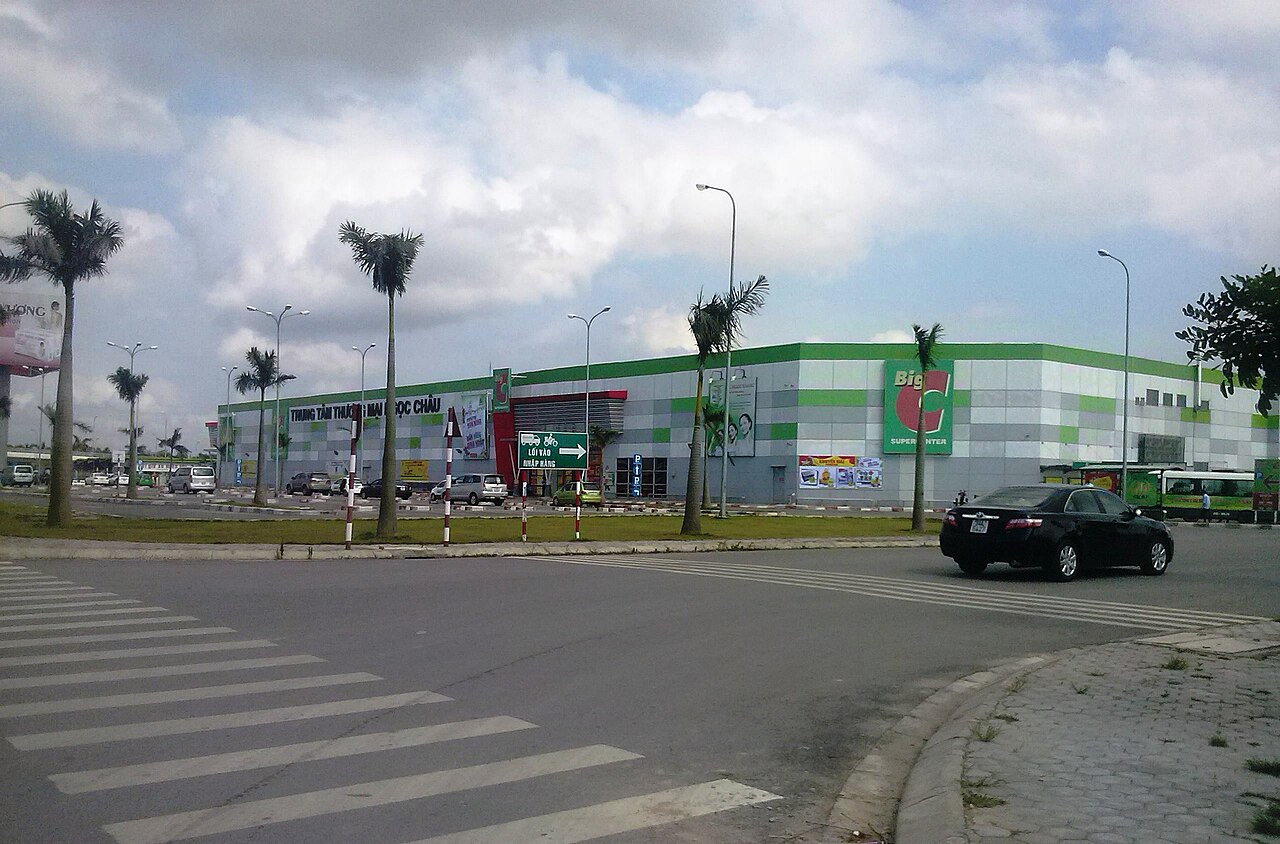
The older quarters around the central market retain low-rise shophouse architecture typical of delta towns, while newer districts on the city's edges are more industrial in character. Hải Dương is known across northern Vietnam for bánh đậu xanh, a dense green-mung-bean confection sold in flat tins and widely given as a gift. Chí Linh goldfish, bred in what is now the northern part of the province, are also associated with the broader Hải Dương identity.
Getting there and away
Hải Dương sits on National Highway 5 and the Hanoi–Hải Phòng railway, placing it on one of the most heavily used transport corridors in northern Vietnam. Both Hanoi and Hải Phòng are reachable in under two hours by train or road under normal conditions.
- Rail: Hải Dương station is a scheduled stop on the Hanoi–Hải Phòng line. Trains run multiple times daily in both directions.
- Road: Coaches and minibuses on the Hanoi–Hải Phòng route stop in or pass through the city frequently. The expressway that runs parallel to Highway 5 has reduced journey times considerably.
- Local transport: Motorbike taxis and ride-hailing apps operate within the urban area. The city is compact enough that most central points are reachable by short ride.
There is no commercial airport serving the city directly; Nội Bài (Hanoi) and Cát Bi (Hải Phòng) are the nearest international airports.
Climate and when to visit
The urban area shares the Red River Delta's subtropical monsoon climate. Summers, roughly May to September, are hot and humid with the bulk of annual rainfall. Typhoons occasionally affect the delta during this period, though Hải Dương's inland position reduces direct coastal exposure. Winters, November to March, are cool and frequently overcast with light drizzle; temperatures can drop noticeably in January and February.
The most comfortable conditions for moving around on foot are generally in October–November and March–April, when temperatures moderate and rainfall is lighter. The weeks around Tết (Lunar New Year, falling in late January or February) see reduced commercial activity as many businesses close, though the city's market character returns quickly once the holiday period ends. Prices vary by season.
What to see and do
Hải Dương is not structured as a tourist destination and lacks the heritage sites or scenic landscapes that draw visitors to other parts of Hải Dương province. Its interest is primarily urban and commercial.
- Central market (Chợ Hải Dương): The main covered market in the city centre trades in produce, dry goods and the region's various confections, including the distinctive bánh đậu xanh sold by multiple competing producers. Brand rivalry among bánh đậu xanh makers is long-standing and openly contested.
- Riverside areas: The Thái Bình River frontage offers open space and is used by residents for morning exercise. Infrastructure along the riverbank has been developed and extended incrementally.
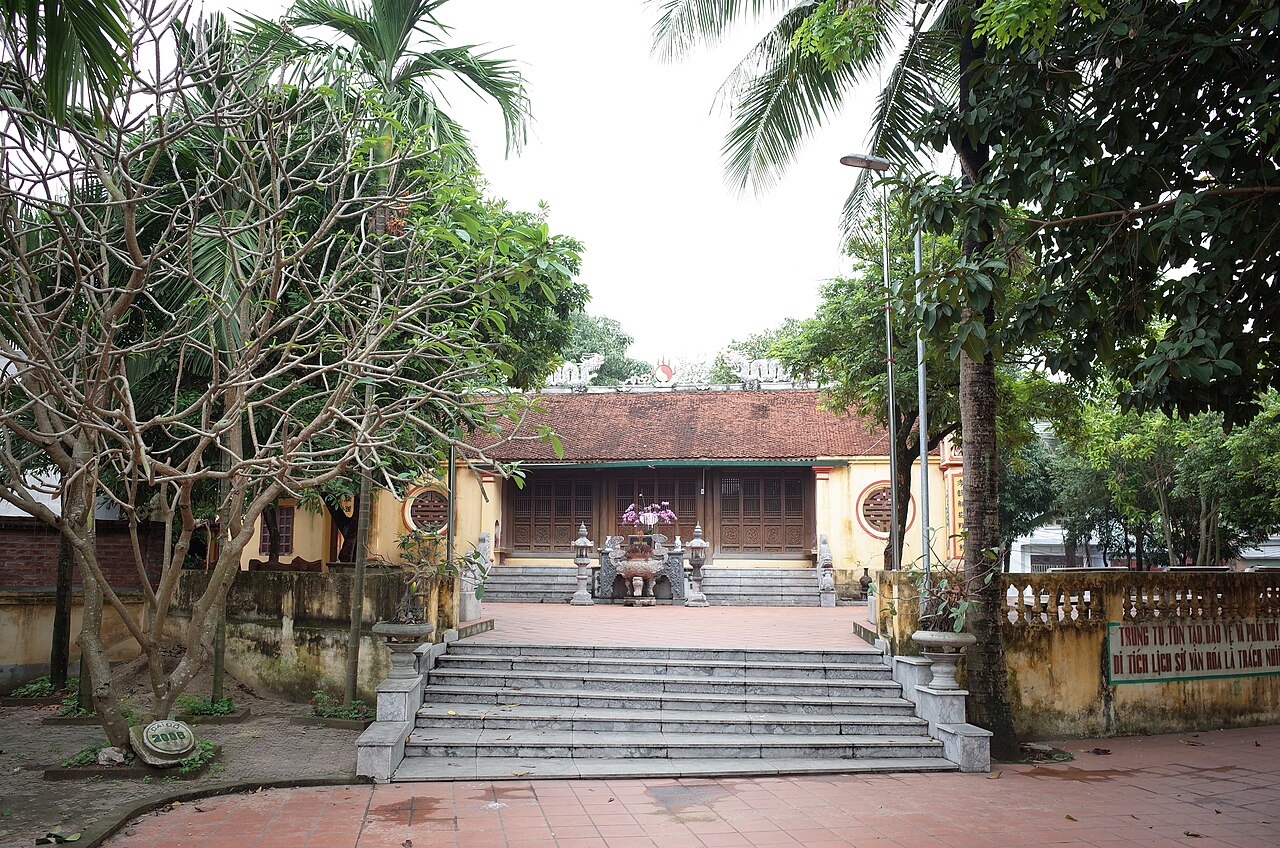
- Pagodas and temples: Several neighbourhood pagodas are active religious sites. They serve local communities rather than tourists and maintain normal schedules of worship.
Visitors using Hải Dương as a base to reach provincial attractions — Côn Sơn-Kiếp Bạc temple complex, An Phụ mountain, or the Đông Triều ceramic sites — find the city's transport links more useful than the city itself.
Staying in the city
Accommodation in the urban area is oriented toward domestic business travellers and the corridor trade between Hanoi and Hải Phòng. Hotels range from small guesthouses in the central market area to mid-range business hotels near the main roads. International-standard properties are limited. Most options of any category are clustered within a short distance of the railway station and the central market, which also keeps them close to transport connections. Prices vary by season and by proximity to major holidays.
There is no distinct backpacker or tourist accommodation zone. Visitors staying specifically to explore the province tend to find the central cluster adequate for a night or two, given the city's small footprint and straightforward layout.
Common misunderstandings
The city versus the province: Before July 2025, "Hải Dương" referred ambiguously to both the city and the province. Since the administrative reform, the province-level entity — Hải Dương — continues under that name, while the former city tier no longer exists formally. Travellers searching for information about either should be aware that older sources may conflate the two, and that some addresses and listings have not yet been updated to reflect the new structure.
Transit versus destination: Many people pass through the urban area on the Hanoi–Hải Phòng route without stopping. Those who do stop sometimes expect a wider range of visitor infrastructure than the city provides. It functions as a provincial market town, not a touring base with organised visitor services.
Bánh đậu xanh quality variation: The confection is widely sold across northern Vietnam under the Hải Dương name, but producers vary considerably. The established family brands based in the city have different recipes and textures, and local opinion on which is preferable is strongly held.
Where it is
Also known as / see also
Các nguồn
- Hải Dương (Q36354) — Wikidata (CC0 1.0) đã truy cập 30 August 2026
Supports: coordinates, area, population - Hải Dương — Wikipedia (CC BY-SA 4.0) đã truy cập 30 August 2026
Supports: background
Current Đã xác minh lần cuối: 31 August 2026. Rules, fares and prices change — check the official source before acting on anything here. Report a mistake.
Picture credits (4)
Nghè Nhội nhìn từ xa, đường Trường Chinh, thành phố Hải Dương, tỉnh Hải Dương, Nguoivietbao, CC BY-SA 4.0, Wikimedia Commons · Nghĩa trang liệt sỹ Hải Dương, trên đường Chương Dương, thành phố Hải Dương, tỉnh Hải Dương, Nguoivietbao, CC BY-SA 4.0, Wikimedia Commons · Nhà thờ Hội thánh Tin Lành tỉnh Hải Dương, trên Đại lộ Hồ Chí Minh, thành phố Hải Dương, tỉnh Hải Dương, Nguoivietbao, CC BY-SA 4.0, Wikimedia Commons · BigCHaiduong, Hoang123hd ( thảo luận ), CC BY 3.0, Wikimedia Commons