
Teaching English in VietnamDạy tiếng Anh
Legal Qualifications
Vietnamese law requires foreign English teachers to hold three things simultaneously: a university degree (any subject), a TEFL/TESOL/CELTA certificate of at least 120 hours, and a criminal background check apostilled by the issuing country. Teachers who are native speakers of English — defined in Vietnamese regulation as citizens of the UK, USA, Australia, Canada, Ireland, New Zealand or South Africa — do not need a separate language proficiency certificate. Non-native speakers must supply one, typically a university-level English qualification or a recognised proficiency test result.
Since 2017 the Ministry of Education and Training has required these documents to be legalised by the Vietnamese embassy in the country of origin before arrival. Documents legalised after arrival are frequently rejected by provincial education departments, causing delays to work permit applications. The rules are enforced unevenly across provinces, but enforcement has tightened progressively since 2020.
Work Permits and Visa Status
A legal teaching position requires a work permit issued by the provincial Department of Labour (now integrated into the two-tier province/commune structure following the July 2025 administrative reorganisation). The employer applies on the teacher's behalf; the teacher cannot apply independently. The work permit is then used to obtain a DN visa or convert status to a temporary residence card, which removes the need for repeated border runs.
Working on a tourist visa (DL) or a business visa (DN issued without a work permit) is technically illegal under Vietnamese labour law. It is common in the language-centre sector and has been common for years, but it exposes the teacher to fines, deportation and a re-entry ban, and exposes the employer to separate penalties. Periodic enforcement crackdowns, particularly in Hanoi and Ho Chi Minh City, have resulted in teachers being removed mid-contract. The risk is real, not theoretical.
Types of Employer
Language centres are the largest single employer category. Chains such as ILA, ACET, Apollo, British Council and Vus operate across multiple provinces; hundreds of smaller independent centres exist in every city. Hours are typically evening and weekend-heavy, reflecting student schedules. Contracts range from short-term (three months) to two years. Document scrutiny and willingness to sponsor work permits varies widely.
Public schools hire foreign teachers through government programmes, often via an intermediary company that holds the contract with the provincial education department. The teacher is technically employed by the intermediary. Hours follow a standard school timetable. Salaries are generally lower than language centres but the schedule is more predictable.
International schools — such as those following the International Baccalaureate, Cambridge or American curricula — pay the highest salaries and typically require prior qualified-teacher status (QTS or equivalent) in addition to CELTA. Schools in Hanoi and Ho Chi Minh City draw the largest pool of applicants. Recruitment usually happens six to twelve months before the academic year begins.
Pay and Hours
Pay is quoted per teaching hour rather than as an annual salary. Language centres and freelance positions pay by the hour; public and international schools usually offer a monthly salary. The gap between the lowest-paying language-centre work and a senior international-school position is substantial — multiple times the hourly rate — and reflects qualification level, school type, city, and whether accommodation is included.
A standard full-time language-centre schedule runs roughly 20 to 25 contact hours per week, with the remainder used for preparation and administration. International school contracts typically specify 25 to 30 hours including non-contact duties. Overtime is common at language centres, particularly around exam periods, and is usually paid at the standard hourly rate unless a contract specifies otherwise. Prices vary by season, by city and by employer; no figures are quoted here as they change frequently.
Recruitment Traps and Common Problems
Several patterns recur in problematic hiring situations:
- Visa-run arrangements presented as normal: employers who describe tourist-visa teaching as standard practice are describing an illegal arrangement, regardless of how long it has been done.
- Document-holding: some employers retain original degree certificates or passports as informal security. Vietnamese law does not permit this, and it leaves teachers without the documents needed to apply elsewhere.
- Unverifiable TEFL certificates: online-only TEFL courses of fewer than 120 hours, or certificates from unaccredited providers, are frequently rejected by education departments and do not satisfy the legal minimum.
- Contract substitution: a contract shown before arrival differs from the one presented on arrival. Teachers should insist on receiving a signed Vietnamese-language contract alongside any English translation, since the Vietnamese text is the legally operative document.
- Unlicensed centres: some language centres operate without a licence from the provincial education department. Teachers at such centres cannot obtain a legitimate work permit regardless of their own qualifications.
Cities and Regional Demand
Demand is highest in Ho Chi Minh City and Hanoi, which together account for the majority of language centres and all of the major international schools. Da Nang has a growing market driven by its expanding expat population and tourism-related English demand. Secondary cities including Can Tho, Bien Hoa and Hai Phong have teaching work but fewer positions at international-school level.
Resort towns such as Hoi An and Nha Trang have small teaching markets; work permits are harder to obtain there because some provincial education departments have limited experience processing foreign-teacher applications. Teachers relocating between provinces after the July 2025 administrative merger should verify whether their existing work permit remains valid in the restructured jurisdiction, as some permits were issued by now-merged entities.
Pictures of Teaching English in Vietnam

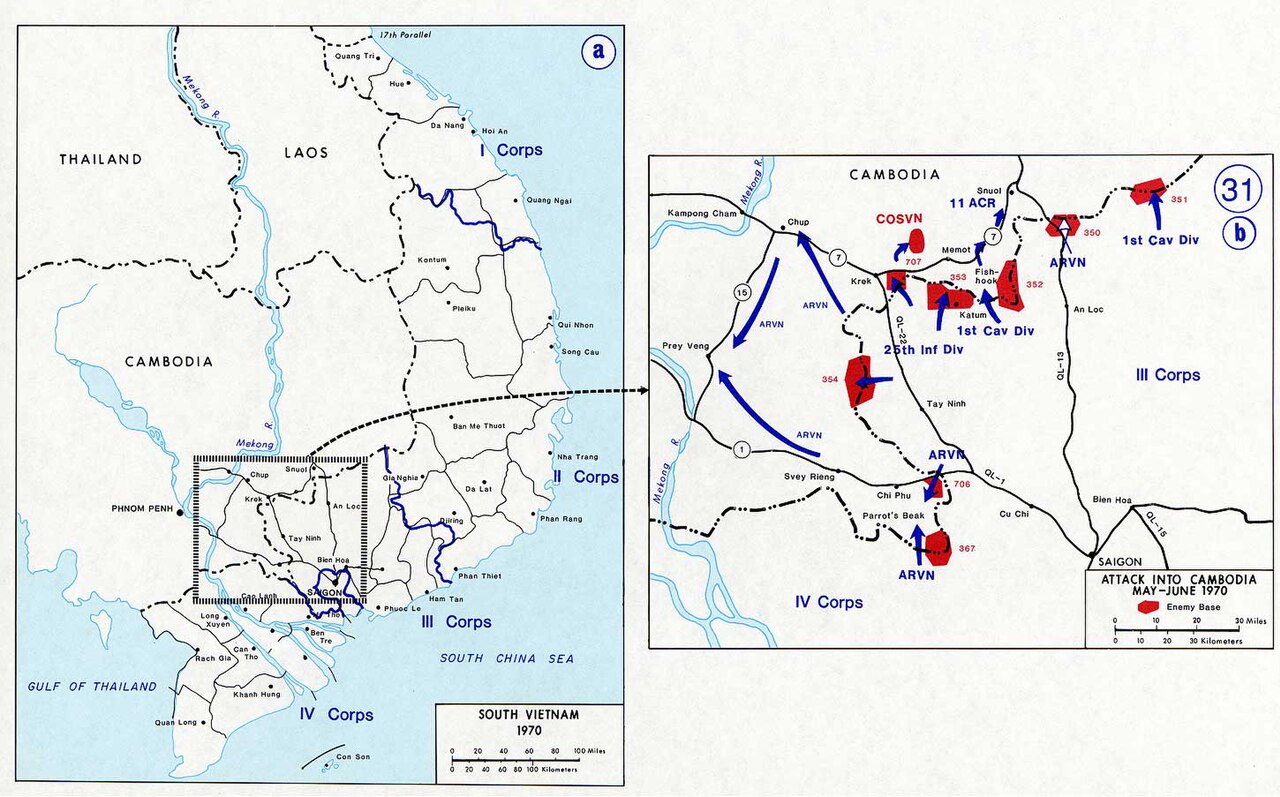
Where it is
Also known as / see also
مُشار إليه من
المصادر
- Vietnam Immigration Department — Ministry of Public Security تم الوصول إليه 29 August 2026
Supports: the rules and definitions on this page - Vietnam country data — World Bank تم الوصول إليه 31 August 2026
Supports: the rules and definitions on this page
This server cannot reach the domain; the link was not confirmed from here.
آخر تحقق: 31 August 2026. Rules, fares and prices change — check the official source before acting on anything here. Report a mistake.
Picture credits
- Justus Izuchukwu Onuh Teaching English at Little People Kindergarten, Vietnam — HeideggaBubba2, CC0, Wikimedia Commons
- South Vietnam 1970 — Unknown, Public domain, Wikimedia Commons