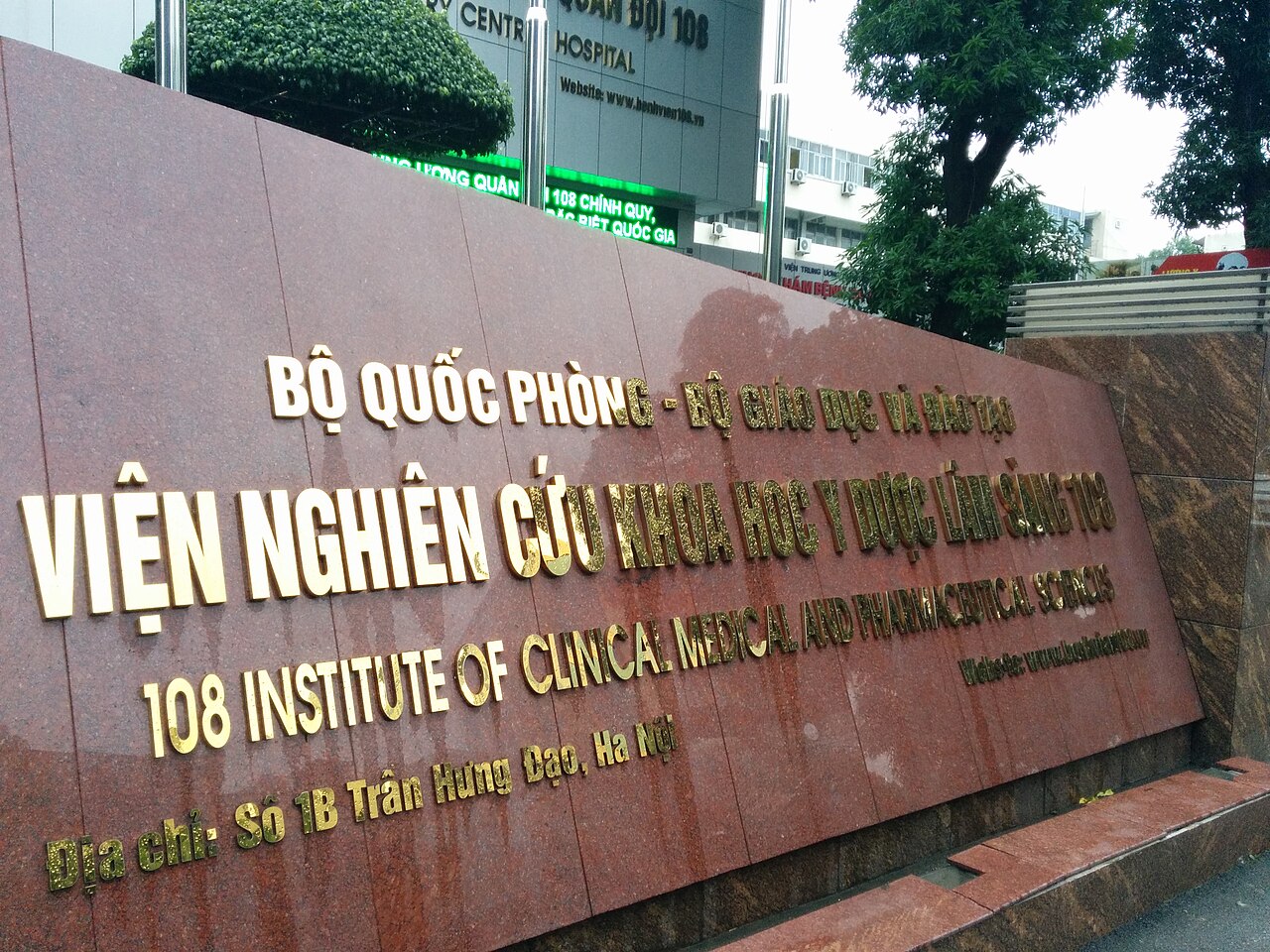
Healthcare in VietnamY tế
The two-tier system: public and private
Vietnam operates a public health system administered through the Ministry of Health, organised into national, provincial and commune levels. Public hospitals carry heavy patient loads, particularly at central institutions such as Bach Mai Hospital and Viet Duc Hospital in Hanoi, and Cho Ray Hospital in Ho Chi Minh City. These facilities have experienced clinical staff and handle complex cases, but waiting times can be long and wards are often crowded.
Alongside the public system, a private hospital sector has expanded steadily since the 1990s. Private facilities generally offer shorter waiting times, English-speaking staff, and equipment that meets international standards. They are significantly more expensive for out-of-pocket patients, though they are the default choice for most expatriates and business travellers.
International hospitals and clinics
Several hospitals in Vietnam are accredited by or modelled on international standards and cater explicitly to foreign patients.
- Hanoi: Vinmec Times City International Hospital, Hong Ngoc Hospital, and the Family Medical Practice network operate alongside older international facilities. The French-founded Hospital Saint Paul retains a mixed public-private character.
- Ho Chi Minh City: FV Hospital (Franco-Vietnamese), Vinmec Central Park, Columbia Asia Saigon and the HCMC Family Medical Practice clinics are among the most used by expatriates.
- Da Nang: Vinmec Da Nang and Family Medical Practice Da Nang serve the city's growing expatriate and tourist population.
Outside these three cities, international-standard care is limited. Travellers in remote areas such as the northwest highlands or the Mekong Delta should factor proximity to a major city into their medical planning.
Costs and health insurance
Public hospital fees are subsidised for Vietnamese citizens enrolled in the national health insurance scheme (bảo hiểm y tế) but uninsured foreign patients pay full rates. Even at public hospitals, those rates are low by Western standards; however, the quality and environment may not meet expectations for serious treatment.
At international private hospitals, consultation fees, diagnostic costs and inpatient charges are substantially higher. A multi-day hospital stay or a surgical procedure can reach costs comparable to neighbouring regional countries. Prices vary by season and by facility.
Most expatriates working in Vietnam hold international private medical insurance (IPMI) covering inpatient and outpatient care at private facilities. Policies that include Vietnam should explicitly name the country and confirm coverage at the hospitals the holder intends to use, as some plans exclude certain providers.
Pharmacies and prescriptions
Pharmacies (nhà thuốc) are plentiful throughout Vietnamese cities and towns. Many operate long hours, and pharmacists commonly dispense antibiotics, antiparasitics and other prescription-only medicines without a written prescription. This reflects widespread local practice rather than formal policy, and it means self-medication is common.
Imported branded medicines are available in cities but may not be stocked in rural areas. Generic equivalents, often manufactured domestically or in India and South Korea, are widely available. The quality of medicines from licensed pharmacies is generally reliable, but counterfeit pharmaceuticals are a known problem in some markets; purchasing from established licensed outlets reduces that risk.
Travellers requiring specific medications should bring an adequate supply and, where the substance could be regulated, a doctor's letter in English and Vietnamese.
Dentistry
Vietnam has a large and active dental sector. International dental clinics in Hanoi, Ho Chi Minh City and Da Nang offer general dentistry, orthodontics, implants and cosmetic work using equipment and materials comparable to those in Europe or Australia. Prices vary by season and by clinic tier, but dental treatment is commonly cited as significantly less expensive than equivalent work in Western countries, which draws some visitors specifically for dental tourism.
Mid-range local dental clinics also operate throughout the country and serve the domestic market. Standards vary; clinics that publish their sterilisation procedures and staff qualifications in English are more commonly used by expatriates with no personal referral.
Medical evacuation
Medical evacuation (medevac) becomes relevant when a condition cannot be adequately treated within Vietnam. This most commonly arises from serious trauma in remote areas, complex cardiac or neurological events, or where a patient or their insurer judges that local capacity is insufficient.
Evacuation is typically to Bangkok (Bumrungrad or Samitivej hospitals are frequently named destinations), Singapore, or Hong Kong, depending on the condition and the insurer's network. Air ambulance services such as CEGA, Healix and regional providers operate in Southeast Asia, but activating them is expensive without insurance.
International health insurance policies vary considerably in how they define and cover evacuation. Expatriates in Vietnam are generally advised to hold a policy that explicitly includes emergency evacuation and repatriation, and to keep the insurer's emergency line accessible. Some employers provide evacuation coverage as a separate benefit through providers such as International SOS or Global Rescue.
Practical considerations for long-stay residents
Expatriates living in Vietnam under long-term visas or work permits are not automatically enrolled in Vietnam's national health insurance scheme, though foreign employees working under Vietnamese labour contracts may be required to contribute alongside their employer. The implications differ by contract type and are subject to regulatory change.
Common health concerns in Vietnam include dengue fever (endemic and seasonal, with peaks during the rainy season), food- and water-borne illness, and, in some highland areas, risks associated with altitude or vector-borne disease. Air quality in Hanoi and Ho Chi Minh City is a recurring concern, with PM2.5 levels frequently elevated in cooler months.
Routine vaccinations recommended by international health authorities for Vietnam include hepatitis A and B, typhoid, Japanese encephalitis (for rural exposure), and rabies (for extended rural stays or animal contact). Tetanus and influenza boosters are standard. Malaria prophylaxis is generally not recommended for cities but may be considered for certain forested border regions; current guidance should be sought from a travel medicine specialist before departure.
Pictures of Healthcare in Vietnam

Where it is
Also known as / see also
संदर्भित
स्रोत
- Healthcare in Vietnam — Wikipedia (CC BY-SA 4.0) accessed 31 August 2026
Supports: background - Y tế — Wikipedia (Vietnamese) (CC BY-SA 4.0) accessed 31 August 2026
Supports: background, Vietnamese edition - Vietnam country data — World Bank accessed 31 August 2026
Supports: the rules and definitions on this page
This server cannot reach the domain; the link was not confirmed from here. - Vietnam country profile — World Health Organization accessed 29 August 2026
Supports: the rules and definitions on this page
अंतिम सत्यापन: 31 August 2026. Rules, fares and prices change — check the official source before acting on anything here. Report a mistake.
Picture credits
- 108 Institute of Clinical Medical and Pharmaceutical Sciences — Amenoc, CC0, Wikimedia Commons
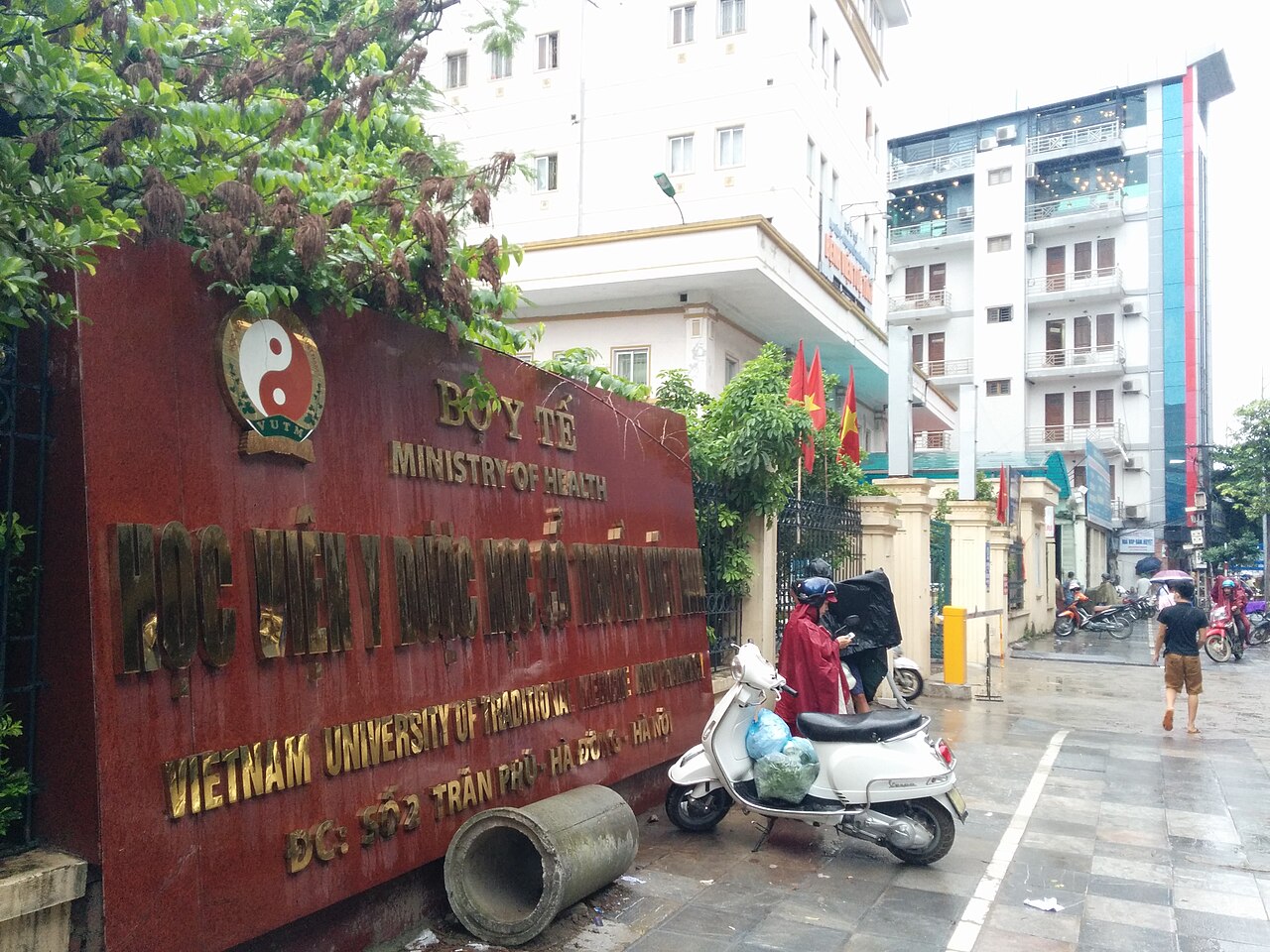
- Vietnam University of Traditional Medecine and Pharmacy - VUTM — Amenoc, CC0, Wikimedia Commons