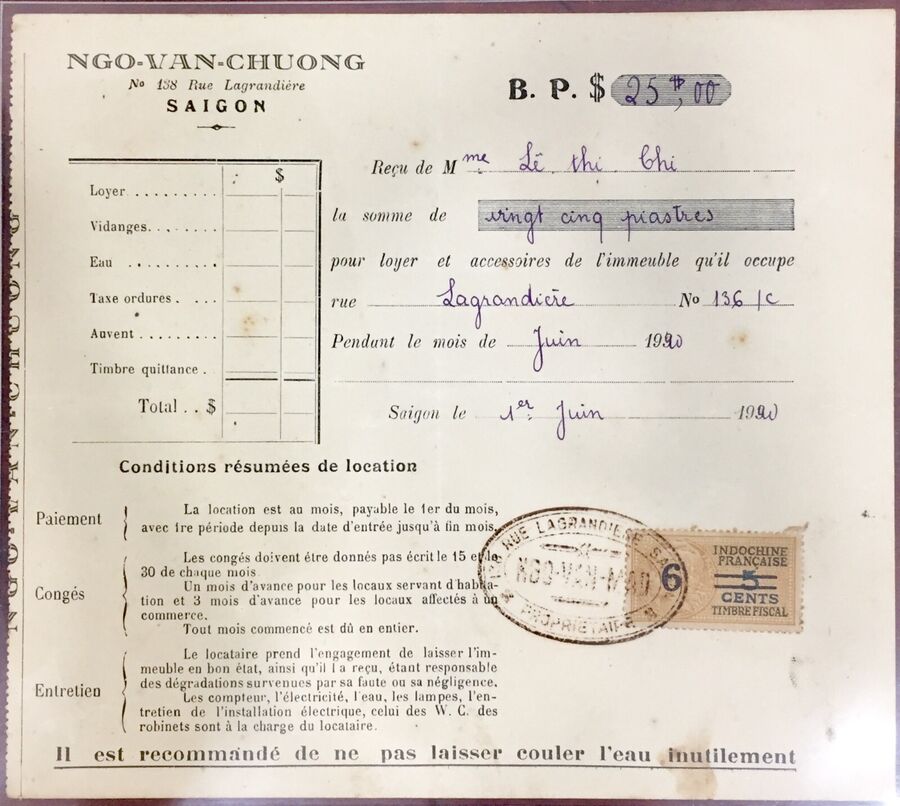
Renting a home in VietnamThuê nhà

Types of rental property
The rental market divides broadly into three categories. Serviced apartments are managed buildings offering furnished units with on-site reception, regular cleaning and bundled utilities; they cater mainly to short-stay expatriates and corporate tenants, and leases can be as short as one month. Local apartments (chung cư) in standard residential blocks are usually unfurnished or partly furnished and are let by private landlords at considerably lower rates; leases of six or twelve months are typical. Houses and villas (nhà phố and biệt thự) range from narrow tube houses in urban streets to detached properties in suburban areas; they attract families and those wanting more space, though maintenance responsibilities are less clearly defined than in managed buildings.
Quality and fit-out vary enormously within each category. In major cities such as Ho Chi Minh City and Hanoi, high-rise developments built after 2010 generally meet international standards for fire safety and lift reliability; older walk-up buildings may not. In smaller cities and towns the serviced sector is limited or absent.
Agents and how they are paid
Most rentals in Vietnam's cities are found through môi giới — agents or brokers who operate informally or through small agencies. Larger platforms aggregate listings with agent contacts attached. The standard commission is one month's rent, paid by the tenant, though in practice some landlords absorb part or all of this cost when the market favours renters. There is no statutory regulation of agents comparable to licensed estate-agent frameworks in some other countries, so the quality of service and the accuracy of listings vary widely.
Landlords in lower-price segments often deal directly with tenants, particularly in provincial cities. In Ho Chi Minh City's District 1 or Hanoi's Tây Hồ area, where expatriate demand is concentrated, agents typically handle viewings, initial negotiation and contract translation. It is common for agents to represent both parties simultaneously; independent legal review of any contract is advisable before signing.
Deposits and contracts
A deposit of one to three months' rent is standard, held by the landlord and returnable at the end of the tenancy if no damage or unpaid bills are outstanding. The conditions for deductions are often loosely worded in contracts; tenants are well advised to photograph every room and all appliances before moving in and to attach that record to the signed contract.
Contracts are normally written in Vietnamese. A bilingual Vietnamese–English version is common in the expatriate market but the Vietnamese text is the legally operative one in any dispute. Key clauses to check include the notice period for early termination by either party, responsibility for major repairs, and whether the landlord may enter the property without notice — a provision that Vietnamese tenants often accept but that some expatriates find unexpected.
Foreign nationals have the legal right to rent residential property. There is no requirement that a Vietnamese co-signatory be named, though some landlords unfamiliar with foreign tenants request one informally.
Police registration (đăng ký tạm trú)
Foreign nationals staying in rented accommodation are legally required to register their temporary residence (tạm trú) with the local commune-level police. In the two-tier administrative system in place from July 2025, registration is handled at the commune (xã/phường) office or its associated police post rather than at a district office, as districts no longer exist as administrative units.
In practice the landlord is jointly responsible for ensuring this registration occurs and many landlords in cities accustomed to foreign tenants will complete the paperwork themselves or accompany the tenant. In less-travelled areas landlords may be unfamiliar with the process. Failure to register does not typically result in immediate enforcement action but can create complications when extending a visa or applying for a temporary residence card (thẻ tạm trú). Hotels handle registration automatically; in private rentals it must be done manually, usually within a few days of moving in.
Utilities and two-tier electricity pricing
Water and electricity in Vietnam are supplied by state utilities at nationally regulated tariff rates. The significant detail for renters is that the household electricity tariff is tiered by consumption: the first band of kilowatt-hours per month is charged at the lowest rate, with each higher band priced progressively more. This system is designed to subsidise low-consumption households.
Many landlords who pay the utility bill and charge tenants separately apply a flat per-unit rate above the lowest tier, or simply add a fixed monthly surcharge. This is widespread and semi-formal rather than strictly lawful, but it is very common. Tenants who negotiate a lease where utilities are included at a fixed sum should clarify how that figure was calculated. Tenants with direct contracts in their own name pay the tiered rate themselves.
Internet service is contracted separately through providers such as Viettel, VNPT and FPT Telecom. Installation lead times and speeds vary by building; fibre connections are available in most urban areas. Air-conditioning running costs are the single largest electricity expense in southern Vietnam, where cooling is needed year-round.
Furniture and fit-out
Serviced apartments are let fully furnished as a matter of course. In the local market, fully furnished (đầy đủ nội thất) typically means beds, wardrobes, a dining table, a television, air-conditioning units and a basic kitchen setup including a gas hob. A washing machine may or may not be included; a tumble dryer is unusual. Basic furnished (nội thất cơ bản) generally means air-conditioning and sometimes a water heater only. Unfurnished units are bare concrete or tiled shells.
Landlords are generally open to negotiation on furniture before signing: requesting that specific items be added, removed or repaired is normal practice. Second-hand furniture markets operate in most cities, and flat-pack furniture retailers including JYSK and locally produced equivalents are available in Hanoi, Ho Chi Minh City and Da Nang. Custom-built wooden furniture from local carpenters is competitively priced relative to imported alternatives.
Practical differences for foreign renters
Foreign nationals may legally rent any residential property; there are no zones formally closed to foreign tenants, unlike the restrictions that apply to buying property. In practice, some landlords in smaller cities prefer local tenants due to uncertainty about registration procedures or language barriers.
Lease lengths preferred by expatriates (one to two years with a break clause) sometimes conflict with landlords who prefer rolling short-term arrangements that allow rent adjustments. Rent is almost universally quoted and paid in Vietnamese đồng for local properties; in the upper expatriate segment, US dollars are sometimes used informally in quotations, though payment in foreign currency is not legally required and the đồng equivalent at time of payment applies.
Banking for rent payments is straightforward: landlord bank transfers are standard, and Vietnam's interbank transfer system (Napas) handles same-day domestic transactions. Setting up a Vietnamese bank account, which requires a passport and a valid visa, simplifies monthly payments considerably. For context on longer-term stays and visa status, see visas and residency.
Where it is
Also known as / see also
संदर्भित
स्रोत
- Cho thuê nhà nghỉ — Wikipedia (Vietnamese) (CC BY-SA 4.0) accessed 31 August 2026
Supports: background, Vietnamese edition - Vietnam country data — World Bank accessed 31 August 2026
Supports: the rules and definitions on this page
This server cannot reach the domain; the link was not confirmed from here.
Current अंतिम सत्यापन: 31 August 2026. Rules, fares and prices change — check the official source before acting on anything here. Report a mistake.
Picture credits (2)
Receipt for receipt of house rent - Saigon (June 1933) Notestamps 01, The Ngo-Van-Chuong Company., Public domain, Wikimedia Commons · THE ORIGINAL DUNDRUM SHOPPING CENTRE BECAME A GHOST MALL FOR A WHILE (NOW REBRANDED AS DUNDRUM VILLAGE CENTRE)-135260, William Murphy, CC BY-SA 2.0, Wikimedia Commons