Cost of living in Da NangChi phí sống ở Đà Nẵng
Da Nang's position among Vietnamese cities
Da Nang is Vietnam's fifth-largest city by population and the dominant urban centre of the central coast. It is substantially smaller than Hanoi or Ho Chi Minh City, which shapes its cost of living in both directions: some goods and services cost less simply because rents and labour overheads are lower, while imported products, certain specialist foods and some professional services can cost more because supply chains are shorter and the market thinner.
The city sits on the Han River estuary, with My Khe Beach running along its eastern edge. This proximity to the sea is a primary reason remote workers and expatriates choose Da Nang over the two larger cities, but it also means that beachside neighbourhoods carry a premium over inland ones. The administrative geography changed on 1 July 2025, when Vietnam moved to a two-tier province/commune system abolishing the district tier; Da Nang itself became a province-level unit in its own right.
Housing
Accommodation in Da Nang ranges from studio apartments in mid-rise blocks to detached villas behind the beach. The broadest divide is between the beachside strip along My Khe and Pham Van Dong, where rents are higher and demand from short-term visitors is constant, and the western neighbourhoods closer to the Han River, where the local rental market is more stable and less exposed to tourism seasonality.
Furnished apartments aimed at foreign residents are widely available. Landlords in Da Nang are generally more accustomed to month-to-month arrangements than in smaller Vietnamese cities, though longer leases still attract better rates. Prices vary by season, with peak demand falling in the dry months from roughly March to August when the city receives the highest visitor numbers.
- Beachside areas: higher rents, proximity to the sea, more tourist-facing amenities nearby.
- An Thuong area: a dense cluster of cafés, co-working spaces and restaurants popular with foreign residents, somewhat inland from the beach.
- Hai Chau and Thanh Khe communes: more local in character, lower rents, good transport links.
Food and daily expenses
Street food and local restaurants in Da Nang are generally comparable in price to equivalent establishments in Hanoi or Ho Chi Minh City. The city has its own distinct food culture: bánh mì here is considered among the best in the country, mì Quảng (a turmeric-tinted noodle dish with pork, shrimp and herbs) is a regional staple, and bún chả cá (fish cake noodle soup) is specific to the central coast tradition.
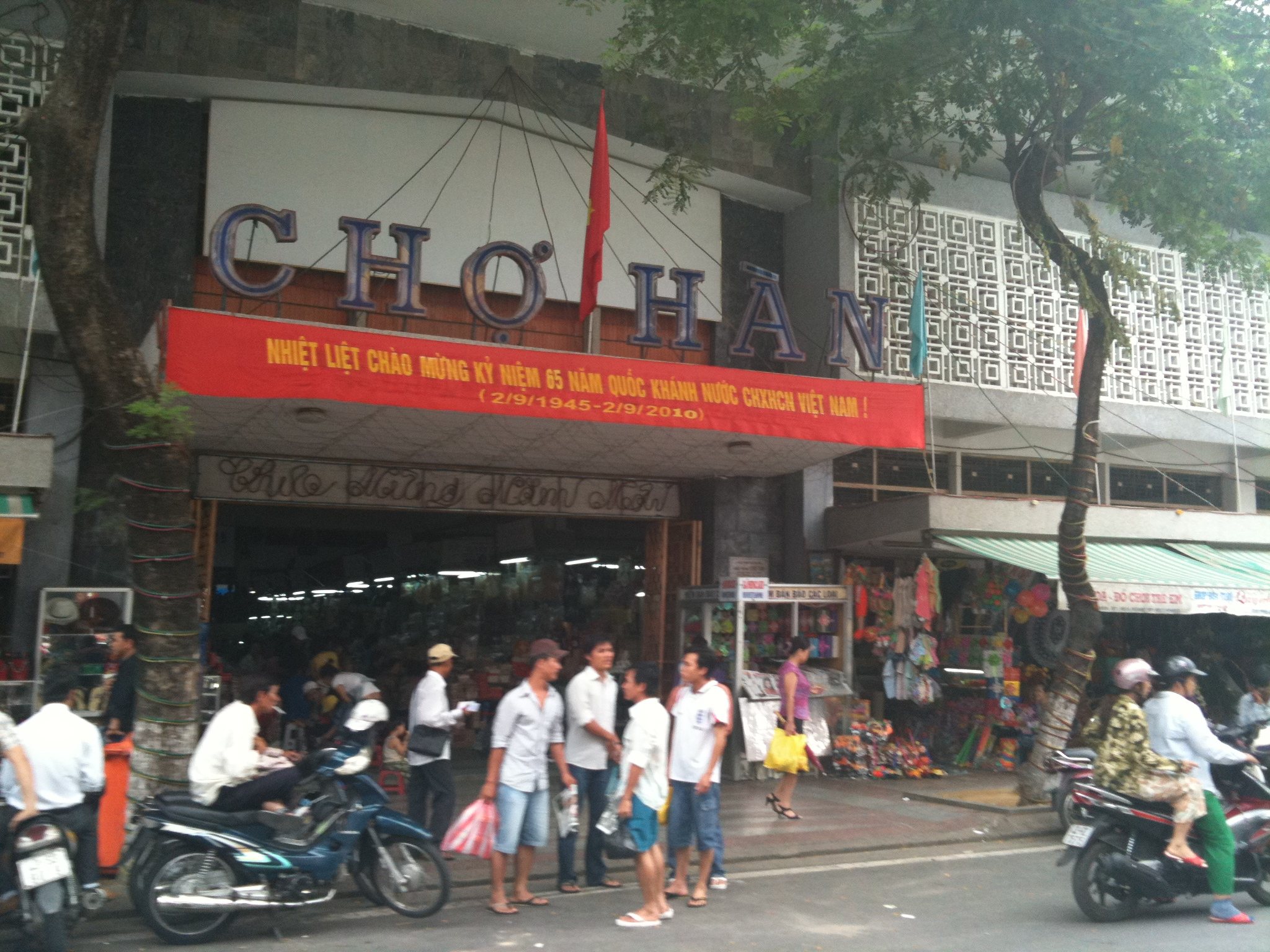
Western-oriented cafés and restaurants are concentrated in the An Thuong area and along the beachfront. The market for imported groceries is smaller than in Hanoi or Ho Chi Minh City, meaning that non-Vietnamese food items may be harder to source and prices vary by season and availability. The central market, Chợ Hàn, and several large supermarket chains serve the daily needs of most residents.
- Local cơm bình dân (set-rice) restaurants are the lowest-cost option for cooked meals.
- Fresh seafood is available year-round but quality and supply are affected by weather, particularly typhoon season from September to December.
- Coffee culture is strong; independent roasters and chain cafés are both well represented.
Transport
Da Nang is compact relative to Hanoi or Ho Chi Minh City. Most areas frequented by foreign residents are within a reasonable motorbike or bicycle ride of one another, and the absence of the scale and traffic complexity of the two larger metros is often cited as a quality-of-life advantage. Ride-hailing apps (Grab and its competitors) operate throughout the city. Prices vary by season and time of day.
Da Nang International Airport handles direct international routes as well as frequent domestic connections to Hanoi, Ho Chi Minh City and other Vietnamese cities. The airport is close to the city centre by Vietnamese standards. Long-distance buses and the North–South railway both serve Da Nang, with the train station centrally located. Motorbike rental is the default choice for most long-term foreign residents; car rental is available but less common among individuals.
Remote work infrastructure
Da Nang has positioned itself deliberately as a destination for remote workers, and the infrastructure reflects this. Co-working spaces are concentrated in the An Thuong area and along the beach corridor. Fibre internet is widely available in apartments; coverage and reliability are generally good in established residential areas, though new developments on the city's periphery may lag. Prices vary by provider and contract length.
The city hosts a relatively organised community of foreign remote workers, with informal networks, regular meetups and online groups that are easy to find on arrival. This differs from Hanoi or Ho Chi Minh City, where the expatriate population is larger but also more diffuse and stratified by industry. In Da Nang, the community skews toward independent freelancers, digital nomads and small-team founders rather than corporate assignees.
A practical trade-off: Da Nang's local job market is small. For those who depend on local employment or in-person professional networks, the city offers fewer opportunities than the two major metros. It functions best as a base for those whose income is location-independent.
Trade-offs against Hanoi and Ho Chi Minh City
The principal advantages Da Nang offers over Vietnam's two largest cities are environmental: the beach is accessible from most parts of the city, air quality is measurably better (Da Nang consistently records lower particulate matter readings than Hanoi in winter or Ho Chi Minh City year-round), and the pace of traffic and urban density is lower.
The trade-offs are real. The range of international cuisine, specialist retail, medical facilities and cultural institutions is narrower. Visa services, embassies, and the full complement of expatriate-oriented businesses are concentrated in Hanoi and Ho Chi Minh City. Travellers with complex visa needs or those requiring specialist healthcare often find themselves making trips to one of the larger cities.
- Air quality: Da Nang's coastal winds provide natural dispersion; Hanoi in particular suffers from poor air quality in the cool-dry season (November to February).
- Scale: fewer restaurants, fewer co-working options and a smaller dating and social pool than either major metro.
- Weather risk: central Vietnam's typhoon exposure (September to December) is higher than either Hanoi or Ho Chi Minh City, occasionally disrupting daily life and travel.
- Overall cost: broadly similar to Ho Chi Minh City for a comparable lifestyle, with beachside premiums offset by lower costs elsewhere.
Seasonal variation
Costs in Da Nang are more seasonally variable than in Hanoi or Ho Chi Minh City because the city's economy is more directly tied to domestic and international tourism. The peak dry season, roughly March to August, brings higher demand for accommodation, fuller restaurants and busier co-working spaces. The wet season, centred on October and November, is quieter; typhoon risk is real and some years bring significant flooding, which can disrupt both daily life and travel connections.
Long-term residents often negotiate annual leases to insulate themselves from seasonal rent fluctuation, particularly in beachside areas where landlords may prefer short-term tourist bookings during peak months. Prices vary by season across nearly all categories, from fresh produce to motorbike rental. This seasonal pattern is more pronounced in Da Nang than in either major metro and should factor into any realistic budget planning.
Where it is
Also known as / see also
Referenciado por
Fontes
- General Statistics Office of Vietnam — GSO truy cập 3 September 2026
Supports: the rules and definitions on this page
This server cannot reach the domain; the link was not confirmed from here. - Vietnam country data — World Bank truy cập 31 August 2026
Supports: the rules and definitions on this page
This server cannot reach the domain; the link was not confirmed from here.
Ageing Última verificação: 31 August 2026. Rules, fares and prices change — check the official source before acting on anything here. Report a mistake.
Picture credits (1)
Cho Han Da Nang, Dragfyre, CC BY-SA 3.0, Wikimedia Commons