Vo Nguyen GiapVõ Nguyên Giáp
Background and early life
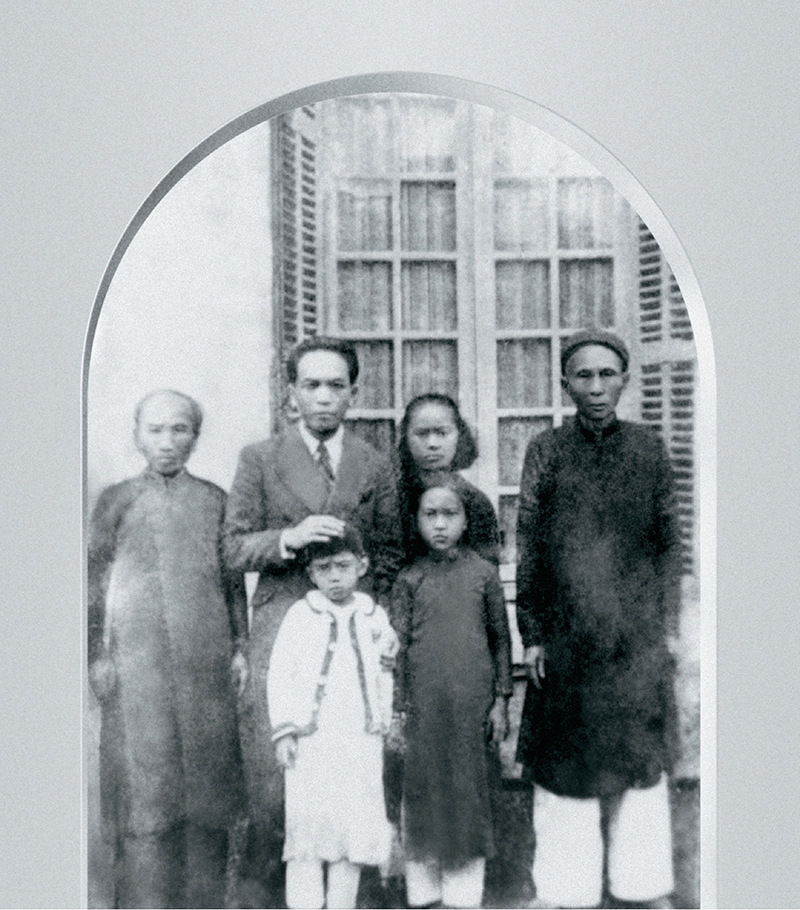
Võ Nguyên Giáp was born on 25 August 1911 in An Xa village, in what is now Quang Binh province. His father was a Confucian scholar, and Giáp absorbed both a reverence for Vietnamese history and an early hostility to French colonial rule. He studied at the Lycée Quốc Học in Huế — the same school that produced Hồ Chí Minh and Ngô Đình Diệm — before going on to read law and history at the University of Hanoi.
He taught history at a private school in Hanoi during the 1930s, a period that shaped his habit of approaching warfare through a long analytical frame. His political activities brought him into contact with the Indochinese Communist Party, and by 1940 he had crossed into southern China to join Hồ Chí Minh. His first wife, Nguyễn Thị Quang Thái, was arrested by the French and died in prison, a fact that contemporaries noted as a source of lasting personal resolve.
Building the Việt Minh army
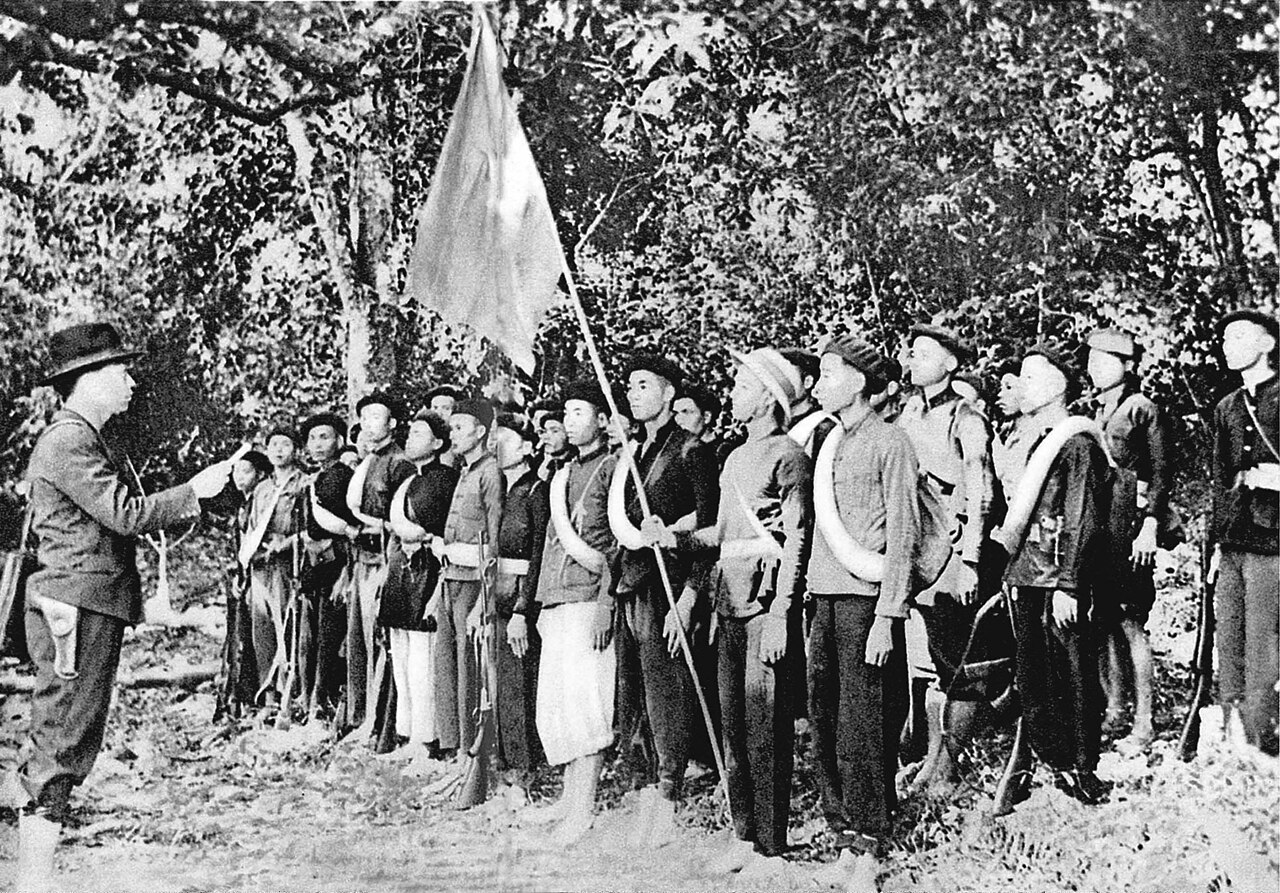
Giáp had no formal military education. He trained himself by reading accounts of Napoleon's campaigns, Sun Tzu's The Art of War, and the writings of Mao Zedong on protracted people's war. In 1944 he organised the first unit of the Vietnam People's Army — then called the Armed Propaganda Brigade — with thirty-four fighters in the mountains of Cao Bằng.
The core of his strategic thinking was the concept of chiến tranh nhân dân, or people's war: the idea that a materially weaker force could exhaust a stronger one by sustaining popular support, controlling the tempo of engagement, and accepting high casualties in exchange for political attrition. He was explicit that battlefield losses were tolerable if the political will of the enemy could be eroded. Critics within Vietnam and abroad have disputed whether this calculation was ever fully in the soldiers' interests, and the question remains debated among historians.
Dien Bien Phu, 1954
The siege of Dien Bien Phu, from March to May 1954, is the engagement most associated with Giáp's name. French forces had established a fortified base in a remote valley in the northwest, intending to draw Việt Minh units into open battle. Giáp reversed the logic: over several months his forces hauled artillery — including heavy guns disassembled and carried by hand — onto the surrounding ridgelines, a logistical effort the French command had considered impossible.
He initially planned a rapid assault, then paused and restructured the operation into a methodical siege after judging the first approach too costly. The garrison surrendered on 7 May 1954 after fifty-five days. The defeat directly precipitated the Geneva Accords, which temporarily divided Vietnam at the seventeenth parallel. Dien Bien Phu is now a town in Dien Bien province where the battlefield sites and a dedicated museum remain accessible to visitors.
The American War
After 1954 Giáp served as Minister of Defence and commander of the People's Army of Vietnam (PAVN) through the escalating conflict with the United States. His role during this period is more complex and contested than the Dien Bien Phu narrative suggests. Decisions were made collectively by the Politburo, and Giáp was not always the dominant voice; he reportedly opposed the timing of the 1968 Tết Offensive, arguing the forces were not ready, though the offensive proceeded.
Tết inflicted severe losses on the National Liberation Front's southern units but produced the political effect Giáp's doctrine predicted: it shifted American public opinion and altered the course of US policy. The 1972 Easter Offensive and the final 1975 campaign were planned under different command structures, with General Văn Tiến Dũng directing the final advance on Saigon. Giáp's precise authority in the later war years has been a subject of ongoing historical reassessment.
Later years and legacy
Giáp served as Deputy Prime Minister into the 1980s but was progressively sidelined within the Communist Party, reportedly due to factional tensions and his advocacy for more cautious economic and political reform. He retained the rank of General of the Army — the highest military grade in Vietnam — and remained a public figure of ceremonial importance even after his political influence faded.
In his later decades he corresponded with foreign historians, gave occasional interviews, and spoke on issues including the environment and education. He died on 4 October 2013 in Hanoi, aged 102. At his request he was buried not at the national cemetery in Hanoi but at Vũng Chùa–Đảo Yến on the coast of Quang Binh province, near his birthplace. The grave has become a site of informal pilgrimage, visited by Vietnamese travellers from across the country.
Historiographical note
Giáp's reputation outside Vietnam was shaped substantially by Western military writers during and after the American War, who emphasised his self-taught genius and willingness to absorb casualties. Inside Vietnam, where he is widely referred to as Đại tướng (the General), the official narrative has at various points downplayed individual commanders in favour of collective Party leadership, complicating straightforward biographical accounts.
Primary source access remains limited. Vietnamese military archives are not fully open to independent researchers, and memoir literature — including Giáp's own several volumes — is shaped by political context. Assessments of his decisions at Tết 1968, his relationship with Lê Duẩn's Politburo faction, and the degree of his influence after 1972 continue to differ between Vietnamese, American, French and other scholarship. Any single account of his career should be read with that in mind.
Where it is
Also known as / see also
出典
- Vietnam National Museum of History — Bảo tàng Lịch sử quốc gia アクセス日 31 August 2026
Supports: the rules and definitions on this page - Võ Nguyên Giáp — Wikipedia (CC BY-SA 4.0) アクセス日 31 August 2026
Supports: background - Võ Nguyên Giáp — Wikipedia (Vietnamese) (CC BY-SA 4.0) アクセス日 31 August 2026
Supports: background, Vietnamese edition
Current 最終確認: 31 August 2026. Rules, fares and prices change — check the official source before acting on anything here. Report a mistake.
Picture credits (4)
Vo Nguyen Giap, Vietminh forces, 1944, Unknown author Unknown author Hoàng Văn Đức ( [2] ), Public domain, Wikimedia Commons · Family of General Võ Nguyên Giáp, Unknown photographer, Public domain, Wikimedia Commons · Vo Nguyen Giap Rd, Hanoi, Vietnam 03, Ltn12345, CC BY-SA 4.0, Wikimedia Commons · Vo Nguyen Giap Rd, Hanoi, Vietnam 04, Ltn12345, CC BY-SA 4.0, Wikimedia Commons