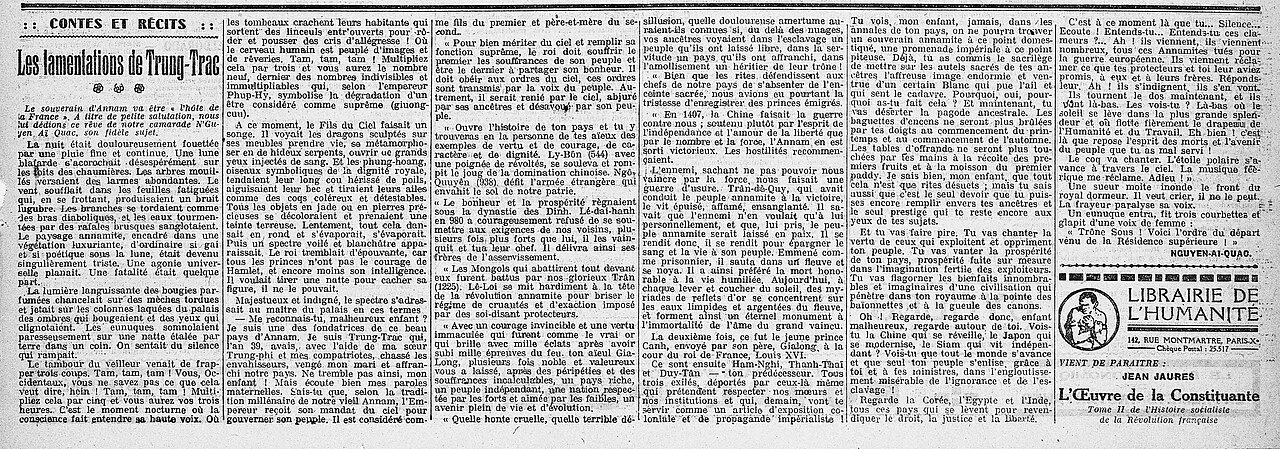
The Trung SistersHai Bà Trưng
Background and the Revolt of AD 40
In the first century AD, the territory now recognised as northern Vietnam formed part of the Han-dynasty commandery of Jiaozhi (Giao Chỉ), administered by Chinese governors. The region had been under Chinese political control since 111 BC, following the Han conquest of the Nanyue kingdom. Local Lạc lords retained influence at the village level, but Han administrators pressed for tighter control, heavier taxation, and the extension of Confucian social norms that conflicted with indigenous customs, including the relatively prominent role women held in Vietic societies.
Trưng Trắc, daughter of a Lạc lord in the Mê Linh area of the Red River plain, and her sister Trưng Nhị launched an uprising in AD 40. Traditional Vietnamese accounts add that Trưng Trắc's husband, Thi Sách, had been executed by the Han prefect Tô Định, making his death a personal as well as political catalyst. The sisters gathered support from other Lạc lords across the commanderies of Jiaozhi and Jiuzhen (Cửu Chân). Han sources note the speed with which some sixty-five strongholds fell, and Tô Định fled the territory.
Three Years of Rule
After the expulsion of the Han administration, Trưng Trắc declared herself ruler — referred to in Vietnamese historiography as Trưng Vương — and established a court at Mê Linh, thought to lie in the area of what is now the Mê Linh district of Hà Nội province. The sisters reportedly abolished the tribute obligations imposed by Han governors, a detail preserved in later Vietnamese chronicles and consistent with the political economy of resistance movements of the period.
The extent and nature of this rule is difficult to reconstruct. No administrative records survive from the period itself. Vietnamese chronicles compiled from the fifteenth century onward describe the sisters as commanding an army that included numerous female generals, some of whom are commemorated individually at temples across the northern delta region. Whether this reflects historical reality or retrospective nationalist elaboration is a question scholars continue to debate. The period of independent rule lasted approximately three years, from AD 40 to 43.
Defeat and Death
In AD 42, the Han emperor Guangwu dispatched the general Ma Yuan (Mã Viện) — already a veteran commander — southward with a substantial force. Ma Yuan's campaign is recorded in the Hou Hanshu (Book of the Later Han), the principal Chinese source for these events. He advanced through difficult terrain along the coastal route and into the Red River delta, defeating the sisters' forces in a series of engagements.
The decisive battle is traditionally placed at Lãng Bạc, the location of which remains geographically uncertain; various Vietnamese and Chinese scholars have proposed different sites within the delta. After their defeat, the sisters retreated toward Cấm Khê. The manner of their death is itself contested: the dominant Vietnamese tradition holds that they drowned themselves in the Hát Giang river rather than surrender, a narrative that frames their end as an act of defiant self-determination. Chinese sources are briefer and less consistent on this point. Ma Yuan subsequently imposed stricter Han administrative structures on the region and is recorded to have melted down Lạc bronze drums as a symbolic act of conquest.
Historiographical Debate
The primary Chinese source, the Hou Hanshu, was compiled by Fan Ye in the fifth century, roughly four centuries after the events it describes. Vietnamese chronicle traditions — principally the Đại Việt Sử Ký Toàn Thư, compiled under the Lê dynasty in the fifteenth century — are yet further removed. Neither tradition is free of political motivation: Han records frame the uprising as a suppressed rebellion; Vietnamese records frame it as proto-nationalist resistance.
Scholars including Keith Weller Taylor, in his foundational study The Birth of Vietnam (1983), have examined the tension between these sources carefully. Taylor and others note that the prominent role attributed to women — both the sisters and their many female commanders — may reflect genuine features of pre-Sinicised Vietic society, where women held property and public roles at odds with contemporaneous Han Confucian norms. Others argue the female-centred tradition was amplified in later periods to serve particular cultural and political purposes. The debate is ongoing and the sources do not permit confident resolution.
Temples and Commemoration
Veneration of the Trung Sisters is geographically widespread across northern Vietnam and extends into Vietnamese diaspora communities. The most prominent dedicated temple, Đền Hai Bà Trưng, stands in the Hai Bà Trưng area of Hà Nội, on the south side of Hồ Tây (West Lake) in the Đồng Nhân area. The current structure dates from later periods and has been restored multiple times; an older foundation on the same site is referenced in pre-modern records. A further significant temple complex is located at Mê Linh, associated with Trưng Trắc's place of origin.
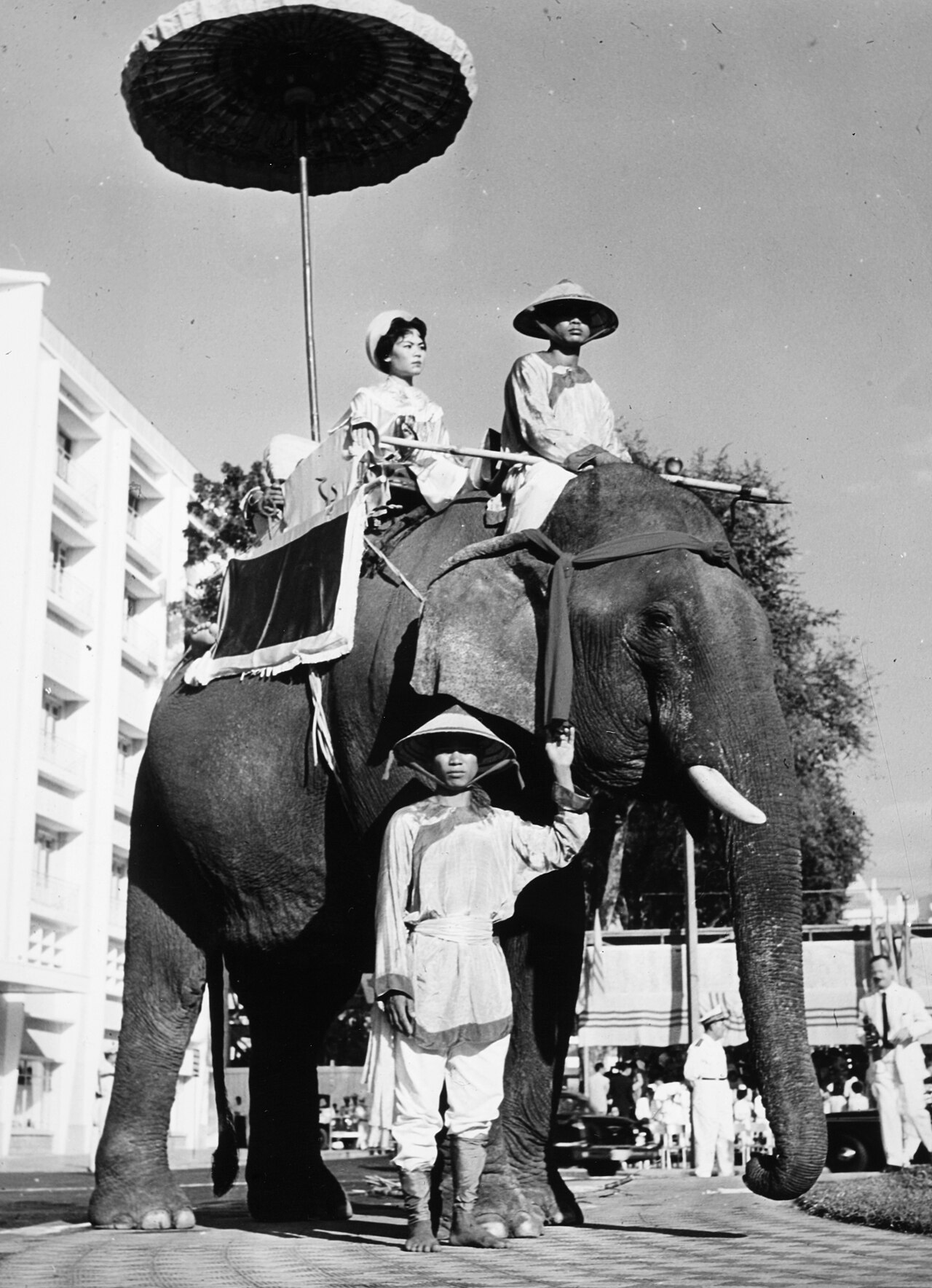
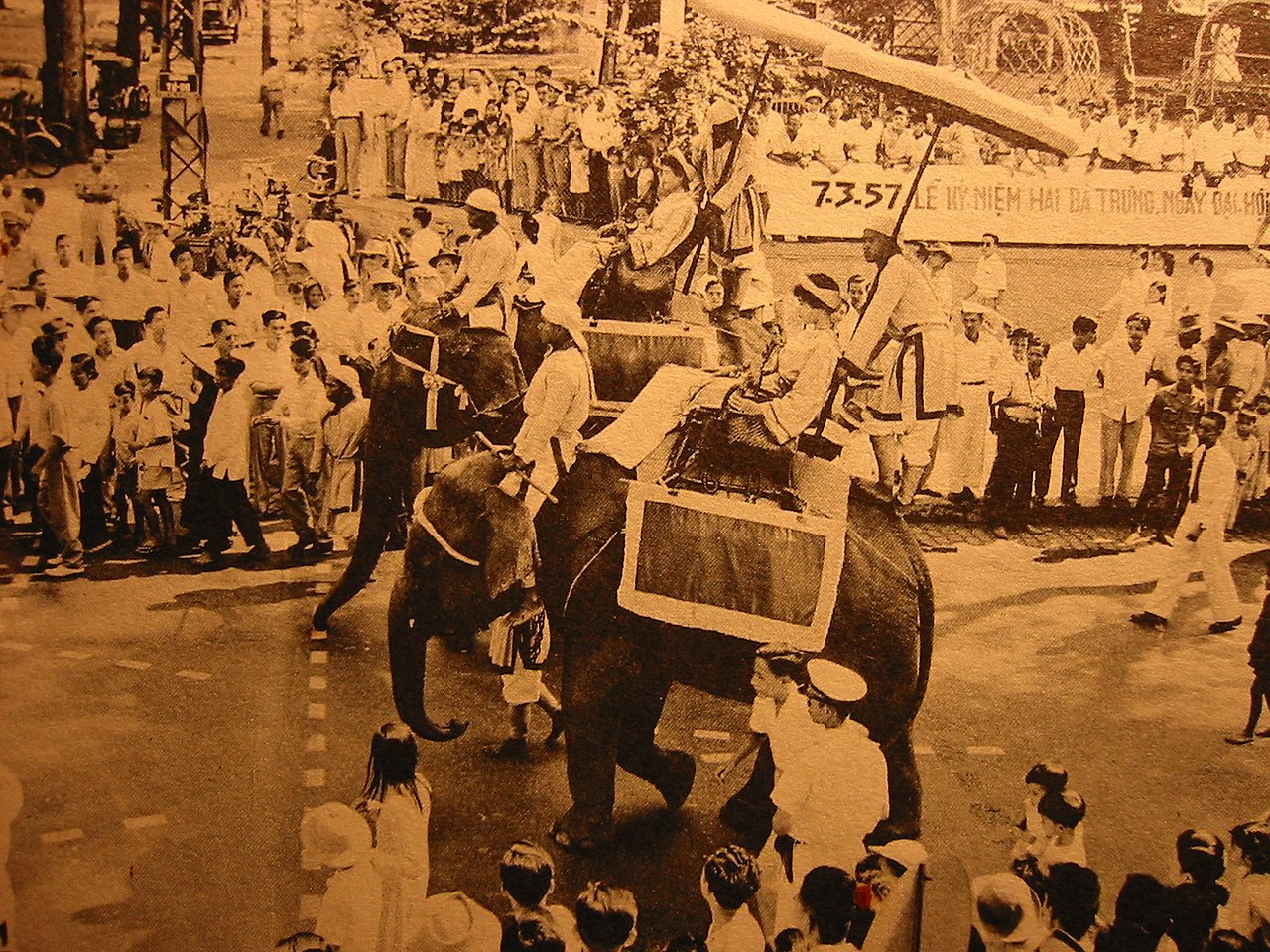
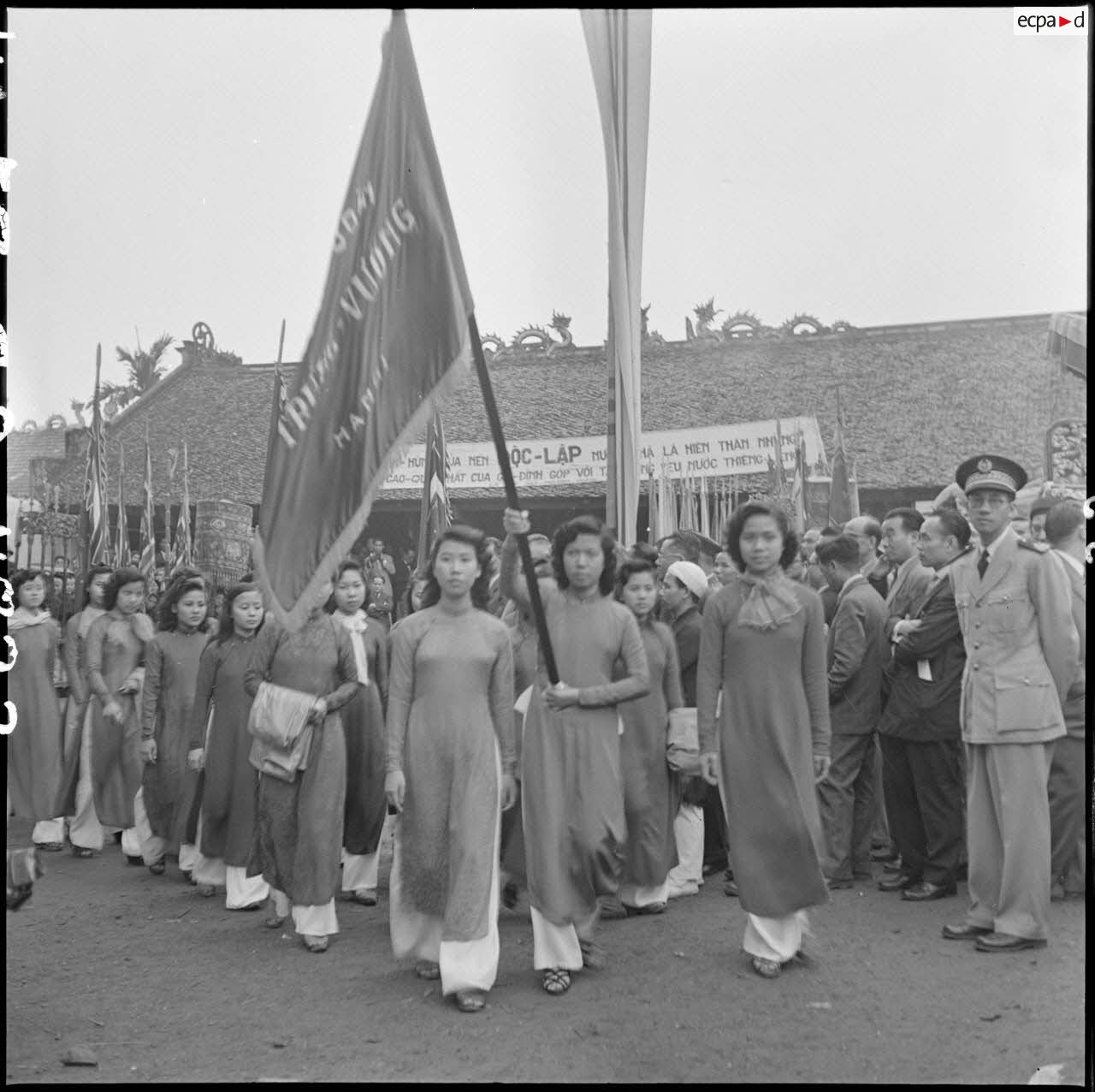
Annual commemorations centre on the sixth day of the second lunar month, traditionally observed as the date of the sisters' deaths. Processions, offerings, and ceremonial boat races have been recorded at various temple sites over centuries, though the scale and form of observances vary by location and have changed across political periods, including during the French colonial era and after 1975.
Smaller shrines honouring individual female generals named in the Trung Sisters' army are distributed across the Red River delta provinces, reflecting how deeply the narrative is embedded in local religious geography.
Streets, Districts and National Symbolism
The sisters' names appear throughout Vietnamese urban geography. Hà Nội contains a district-level area historically named Hai Bà Trưng, and major streets bearing their names exist in Hà Nội, Hồ Chí Minh City, Huế, and most other Vietnamese cities. Schools, cultural centres, and public institutions across the country carry the designation.
Their status as national symbols has been actively promoted by successive Vietnamese states. Both the Democratic Republic of Vietnam and the Socialist Republic of Vietnam incorporated the sisters into official historiography as early examples of Vietnamese resistance to foreign domination, a framing that sits alongside, and sometimes in tension with, scholarly assessments of the limited contemporaneous evidence. Postage stamps, banknotes of earlier currency series, and public sculpture have all featured their likenesses, though representations vary considerably since no contemporary portraits exist.
The sisters occupy an unusual position in that they are simultaneously figures of formal state commemoration and of living folk religion, venerated at temples as divine protectors rather than merely historical personages.
Where it is
Also known as / see also
참조 페이지
출처 목록
- Vietnam National Museum of History — Bảo tàng Lịch sử quốc gia 접근됨 31 August 2026
Supports: the rules and definitions on this page - Hai Bà Trưng — Wikipedia (Vietnamese) (CC BY-SA 4.0) 접근됨 31 August 2026
Supports: background, Vietnamese edition
Current 마지막 확인: 31 August 2026. Rules, fares and prices change — check the official source before acting on anything here. Report a mistake.
Picture credits (4)
Les lamentations de Trung-Trac, Ho Chi Minh, Public domain, Wikimedia Commons · On a sunny day in Saigon, national heroines of Viet Nam are honored with a parade of elephants and floats, SAS Scandinavian Airlines, Public domain, Wikimedia Commons · HaiBaTrung, Press and Information Office, Embassy of the Republic of Vietnam, Public domain, Wikimedia Commons · HA 53-32 R32 La délégation du lycée Trung Vuong est présente pour célébrer l'anniversaire de l'insurrection des soeurs Trung, Dan [ECPAD], Public domain, Wikimedia Commons