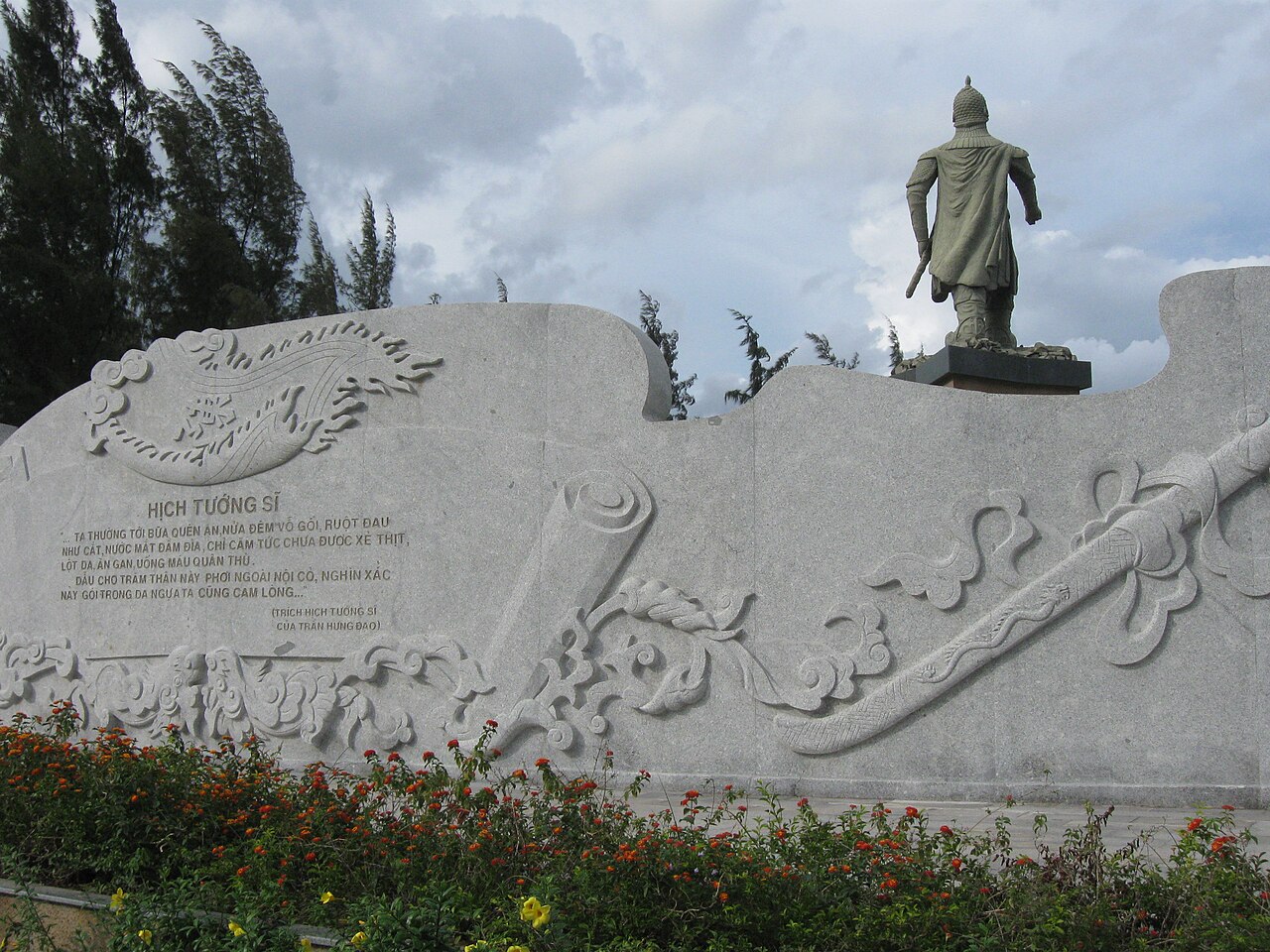
Tran Hung DaoTrần Hưng Đạo
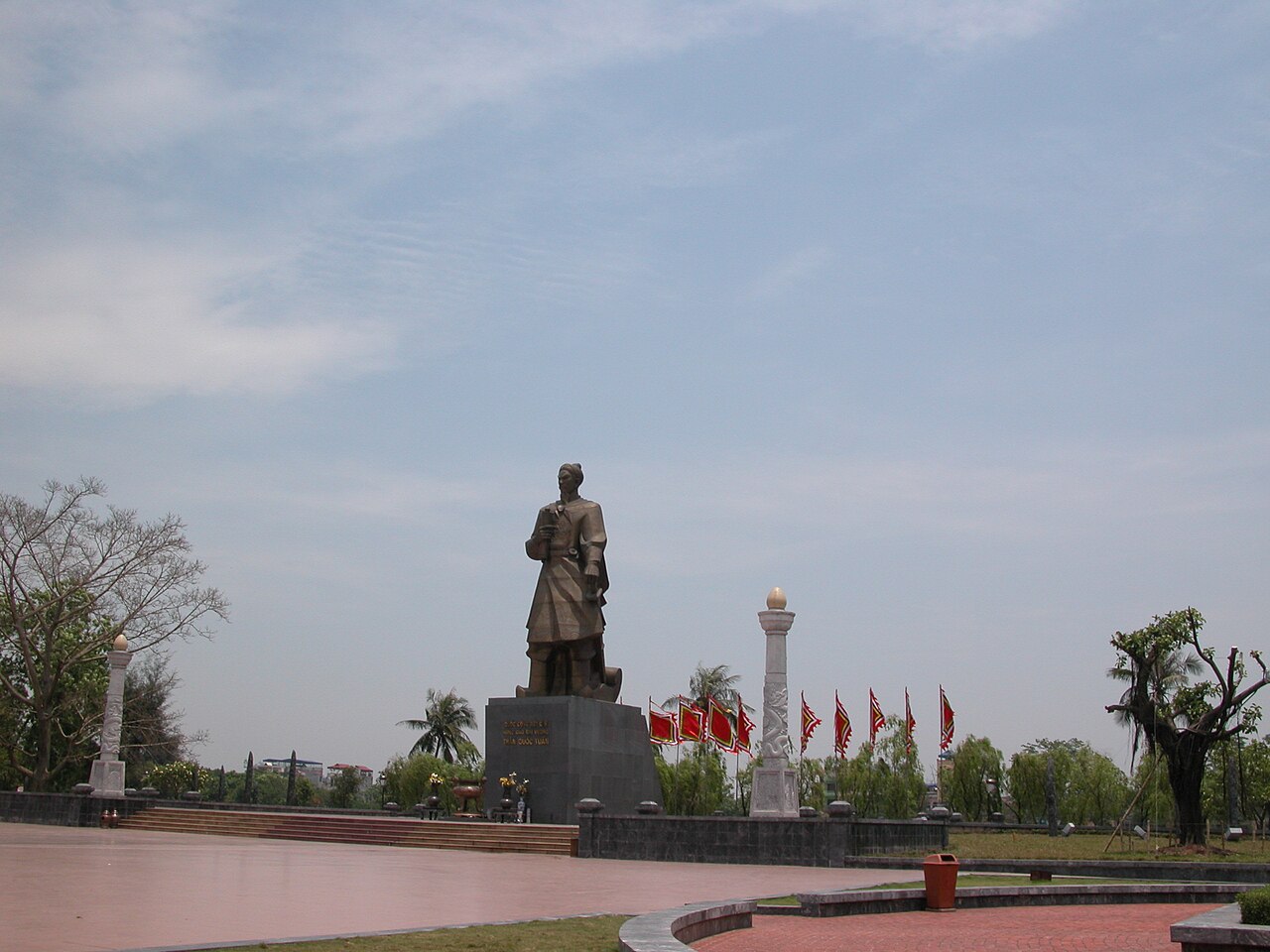
Who Was Tran Hung Dao
Born around 1228 with the personal name Tran Quoc Tuan, Tran Hung Dao was a prince of the Tran dynasty and a nephew of Emperor Tran Thai Tong. The honorific title Hung Dao Vuong — roughly, Prince of the Prosperous Way — was awarded later and became the name by which history remembers him. He came from the ruling house that had replaced the Ly dynasty in 1225 and governed Dai Viet, the northern Vietnamese kingdom centred on the Red River Delta.
His early life coincided with the Mongol Empire's expansion across Asia. By the 1250s the Mongols under Kublai Khan controlled China and were pushing south, making a confrontation with Dai Viet effectively inevitable. Tran Quoc Tuan was appointed commander-in-chief (Quoc Cong Tiet Che) of the Tran military forces and held that position across all three Mongol campaigns.
The Three Mongol Wars
The Mongols invaded Dai Viet in 1258, 1285 and 1287–88. In the first invasion, the Tran court evacuated Thang Long (present-day Hanoi) rather than defend it directly, a deliberate strategy of denying the enemy a decisive battle while the summer heat, disease and overstretched supply lines eroded Mongol strength. The invaders withdrew within months.
The second invasion, in 1285, was far larger — sources place the Mongol force at several hundred thousand, though historians debate the precise figures. Tran Hung Dao again retreated strategically, absorbing pressure while organising counterattacks. The campaign culminated in the battles of Ham Tu and Chuong Duong on the Red River, where Tran forces retook Thang Long. A third force invading from Champa in the south was simultaneously repelled.
The third and final invasion in 1287–88 ended at the Battle of Bach Dang River, the encounter that defined Tran Hung Dao's reputation permanently.
The Bach Dang River Stratagem
The Bach Dang River — which flows into Ha Long Bay in what is now Quang Ninh province — had already been the site of a Vietnamese victory over Chinese forces in 938, when Ngo Quyen used iron-tipped stakes driven into the riverbed to destroy an invading fleet at low tide. Tran Hung Dao replicated and refined the same tactic in 1288.
A large Mongol supply fleet under the commander Omar was lured into the river at high tide, when the stakes were submerged. Vietnamese light vessels feigned retreat to draw the fleet upriver. As the tide fell and the stakes emerged, the fleet became trapped; Vietnamese fire-boats and infantry attacks completed the destruction. Omar was captured. Without supplies, the main Mongol land army under Prince Toghan had no choice but to withdraw northward through difficult terrain, suffering further losses.
The 1288 Bach Dang victory ended Kublai Khan's attempts to subjugate Dai Viet. Tran Hung Dao died in 1300, having never faced another Mongol campaign.
Military Writings
Tran Hung Dao is credited with two significant texts that circulated among Vietnamese military thinkers for centuries. The Binh Thu Yeu Luoc (Essentials of the Military Arts) is a treatise on tactics, troop organisation and command discipline, drawing on both Chinese military theory and the practical experience of the Mongol wars. Its authorship has been debated — some historians argue it was compiled by subordinates — but it is conventionally attributed to him.
More famous is the Hich Tuong Si, usually translated as the Proclamation to Officers or Call to the Military. Written before the 1285 campaign, it is a rhetorical address to his commanders cataloguing the shame of foreign domination and demanding total commitment. The text is studied in Vietnamese schools and is frequently quoted in political and military contexts. A celebrated passage asks officers whether they can bear to see their lord humiliated and their land occupied while they eat and sleep in comfort.
Veneration and Religious Status
After his death in 1300, Tran Hung Dao was canonised in popular belief as Duc Thanh Tran, a protective deity capable of warding off evil spirits and disease. This elevation to saint-like status is unusual in its scale: he is one of very few historical figures in Vietnam to have achieved genuine popular religious veneration rather than mere historical commemoration.
Shrines to Duc Thanh Tran appear throughout Vietnam, from elaborate temple complexes to small domestic altars. His image — typically depicted in royal military robes — is found alongside Buddhist and Taoist icons in many communal worship spaces. Spirit mediums in the len dong tradition of mother goddess worship sometimes channel his presence, though he is not formally part of the Dao Mau pantheon. Prayers directed at him commonly concern protection from illness, evil and bad fortune.
His portrait appeared on earlier Vietnamese banknote series, and streets named after him are found in virtually every Vietnamese city and town.
Kiep Bac Temple
The principal site of Tran Hung Dao veneration is Kiep Bac Temple (Den Kiep Bac), located in Chi Linh, now part of Hai Duong province following the 2025 provincial consolidation. The site sits at the confluence of the Luc Dau River and was Tran Hung Dao's military headquarters during the Mongol campaigns; he died nearby in 1300.
The existing temple complex dates largely from later reconstructions, as the original structures were destroyed and rebuilt multiple times across subsequent centuries. The main sanctuary contains a statue of Tran Hung Dao flanked by his generals and family members, including his daughters, who are also venerated. A separate shrine honours his wife.
The Kiep Bac Festival is held on the 20th day of the eighth lunar month, corresponding to the anniversary of his death in the traditional calendar. It draws large numbers of pilgrims from across northern Vietnam, combining ceremonial processions on the river, offerings and spirit medium rituals. A separate festival at the Bach Dang River site in Quang Ninh province marks the 1288 battle on the eighth day of the third lunar month.
Where it is
Also known as / see also
Referenciado por
Fontes
- Vietnam National Museum of History — Bảo tàng Lịch sử quốc gia truy cập 31 August 2026
Supports: the rules and definitions on this page - Trần Hưng Đạo — Wikipedia (CC BY-SA 4.0) truy cập 31 August 2026
Supports: background - Trần Hưng Đạo — Wikipedia (Vietnamese) (CC BY-SA 4.0) truy cập 31 August 2026
Supports: background, Vietnamese edition
Current Última verificação: 31 August 2026. Rules, fares and prices change — check the official source before acting on anything here. Report a mistake.
Picture credits (4)
Tran Hung Dao - Nha Trang -1, Odessey, CC BY-SA 3.0, Wikimedia Commons · Tran Hung Dao statue, vi:User:Nguyễn Thanh Quang, Public domain, Wikimedia Commons · trungydang, CC BY 3.0, Wikimedia Commons · trungydang, CC BY 3.0, Wikimedia Commons