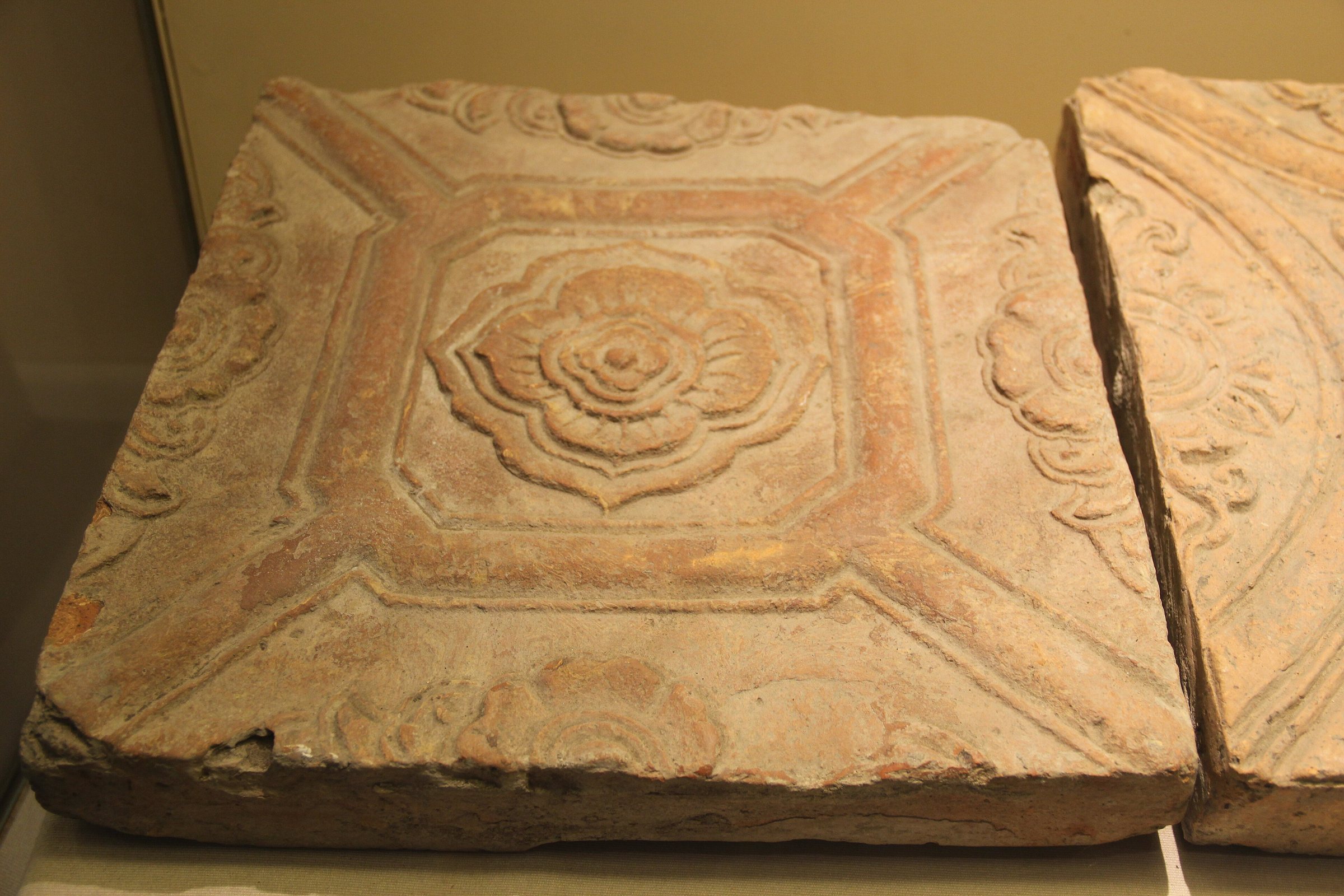
The Tran dynasty and the Mongol warsNhà Trần
The Tran dynasty in outline
The Tran dynasty took power in 1225 when the young queen Ly Chieu Hoang was induced to abdicate in favour of her husband, Tran Canh, ending the Ly dynasty and beginning a new royal line. The Tran ruled from Thang Long — present-day Hanoi — until 1400, when general Ho Quy Ly deposed the last Tran emperor and founded a short-lived successor state.
The dynasty organised the kingdom along Confucian bureaucratic lines while retaining a distinctly Vietnamese court culture. Tran kings frequently abdicated in favour of sons while continuing to govern as "retired emperors", a system that concentrated experience at the top during military crises. The economy rested on Red River Delta rice cultivation, maritime trade through ports near modern Hai Phong, and tributary relationships with highland communities.
The three Mongol invasions
The Mongol empire, having conquered China and established the Yuan dynasty, demanded that Dai Viet — the Tran kingdom — submit as a vassal and allow passage of armies southward. The Tran court refused each time, triggering three separate invasions.
- 1258: A Mongol force under Uriyangkhadai entered from Yunnan, sacked Thang Long, and was driven out within months after the Tran adopted a scorched-earth withdrawal, denying supplies to the invaders.
- 1285: Kublai Khan sent a far larger army under his son Toghan and general Sogetu, coordinating a land assault from the north with a seaborne force from Champa in the south. The Tran court evacuated repeatedly, wore the army down through guerrilla pressure and climate — the lowland heat and disease devastated Mongol troops — and then counter-attacked, killing Sogetu at the Battle of Ham Tu on the Chuong Duong River.
- 1287–88: A third invasion combined land forces with a supply fleet. The destruction of that fleet at the Bach Dang River in 1288 ended Mongol ambitions in Southeast Asia.
Tran Hung Dao and the Battle of Bach Dang
Prince Tran Quoc Tuan, known posthumously as Tran Hung Dao, commanded Dai Viet's forces during the second and third invasions. He is regarded as the principal architect of Mongol defeat and remains one of the most venerated figures in Vietnamese history, with temples dedicated to him across the north.
His tactical masterpiece was the 1288 Battle of Bach Dang, fought on the tidal river of the same name near modern Quang Yen in Quang Ninh province. Tran Hung Dao had iron-tipped wooden stakes driven into the riverbed at positions calculated to be submerged at high tide. The Mongol fleet, commanded by Omar, was lured upriver at high water and then engaged until the tide fell, impaling and immobilising the vessels. Omar was captured; the fleet was destroyed.
The Bach Dang tactic had a precedent: Ngo Quyen had used the same river and a similar stake field to defeat a southern Han fleet in 938. Tran Hung Dao explicitly studied earlier Vietnamese military history. He also wrote the Hich Tuong Si, a proclamation to his officers that is still read as a classic of Vietnamese prose.
Sites connected to the wars
Several places in northern Vietnam preserve physical evidence of the Tran military campaigns.
- Bach Dang River, Quang Ninh province: The battlefield site near Quang Yen contains remains of stake fields and is marked by a national memorial. Archaeological excavations have recovered stake fragments confirming the historical accounts.
- Kiep Bac Temple, Chi Linh, Hai Duong province: Built in honour of Tran Hung Dao at the site of his military headquarters during the campaigns. The temple holds his statue and attracts large numbers of visitors during its annual festival on the twentieth day of the eighth lunar month.
- Tran Temple complex, Nam Dinh province: The Tran royal ancestral temples at Co Trach village, Nam Dinh, mark the family's home region and hold royal tombs and relics from the dynasty.
- Thang Long Imperial Citadel, Hanoi: Excavations at the citadel have uncovered Tran-period layers including ceramics, tiles and structural remains beneath later Le and Nguyen construction.
Truc Lam Buddhism and Yen Tu
The Tran dynasty produced one of the most distinctive developments in Vietnamese religious history: the Truc Lam ("Bamboo Forest") school of Zen Buddhism, founded by the retired emperor Tran Nhan Tong. Nhan Tong had reigned during the second and third Mongol invasions and abdicated in 1293. He subsequently renounced the palace entirely, took monastic vows, and retreated to Yen Tu mountain in what is now Quang Ninh province.
At Yen Tu he established the Truc Lam school, which synthesised Chan Buddhist practice with Vietnamese cultural forms and emphasised that enlightenment could be pursued within everyday life rather than requiring total withdrawal. The school was continued by his disciples Phap Loa and Huyen Quang, who built pagodas and meditation halls across the mountain.
Yen Tu is the highest peak in the Dong Trieu range at roughly 1,068 metres. The ascent passes a series of pagodas, stone stupas containing the ashes of Tran-era monks, and dense forest. The main Dong pagoda at the summit dates in its current form to later restorations but occupies the original Tran foundation. A cable car system now offers an alternative to the full walking ascent. Yen Tu is under consideration for UNESCO World Heritage listing, though that process remains ongoing as of 2025.
Culture, poetry and administration
Beyond warfare, the Tran period was productive in literature and statecraft. The court promoted the use of chu nom, a script adapted from Chinese characters to write the Vietnamese spoken language, alongside classical Chinese. Tran Nhan Tong himself wrote poetry in both scripts. The scholar-official Nguyen Thuyen formalised nom verse forms during this period.
The Tran administrative system codified law, organised a national examination system on the Chinese model for recruiting officials, and maintained a standing army supplemented by regional levies. The dynasty also conducted its own military campaigns southward against the kingdom of Champa, with mixed results; the border region of what is now central Vietnam remained contested throughout the Tran period.
The dynasty's decline in the late fourteenth century involved succession disputes, the growing power of the Ho clan, and renewed Cham pressure from the south. Ho Quy Ly's seizure of power in 1400 ended Tran rule. The subsequent Ming Chinese occupation (1407–1427) and the eventual restoration of Vietnamese independence under Le Loi belong to the following chapter of Vietnamese history.
Also known as / see also
Referenziert von
Quellen
- Vietnam National Museum of History — Bảo tàng Lịch sử quốc gia abgerufen 31 August 2026
Supports: the rules and definitions on this page - Nhà Trần — Wikipedia (Vietnamese) (CC BY-SA 4.0) abgerufen 31 August 2026
Supports: background, Vietnamese edition
Current Zuletzt geprüft: 31 August 2026. Rules, fares and prices change — check the official source before acting on anything here. Report a mistake.
Picture credits (1)
Tran-Ho Dynasty, 14th-15th Century, Brick (9735706919), Gary Todd from Xinzheng, China, CC0, Wikimedia Commons