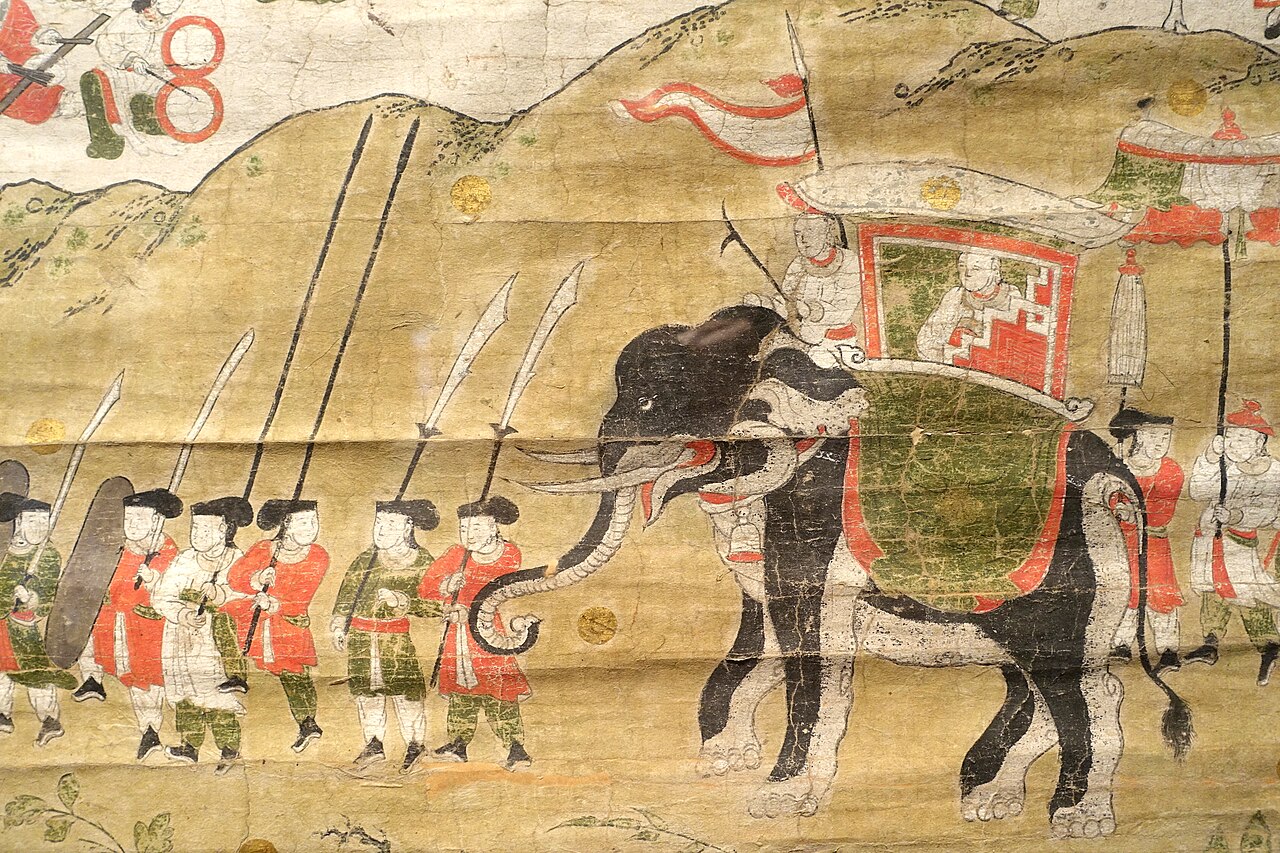
Le Loi and the Le dynastyNhà Lê
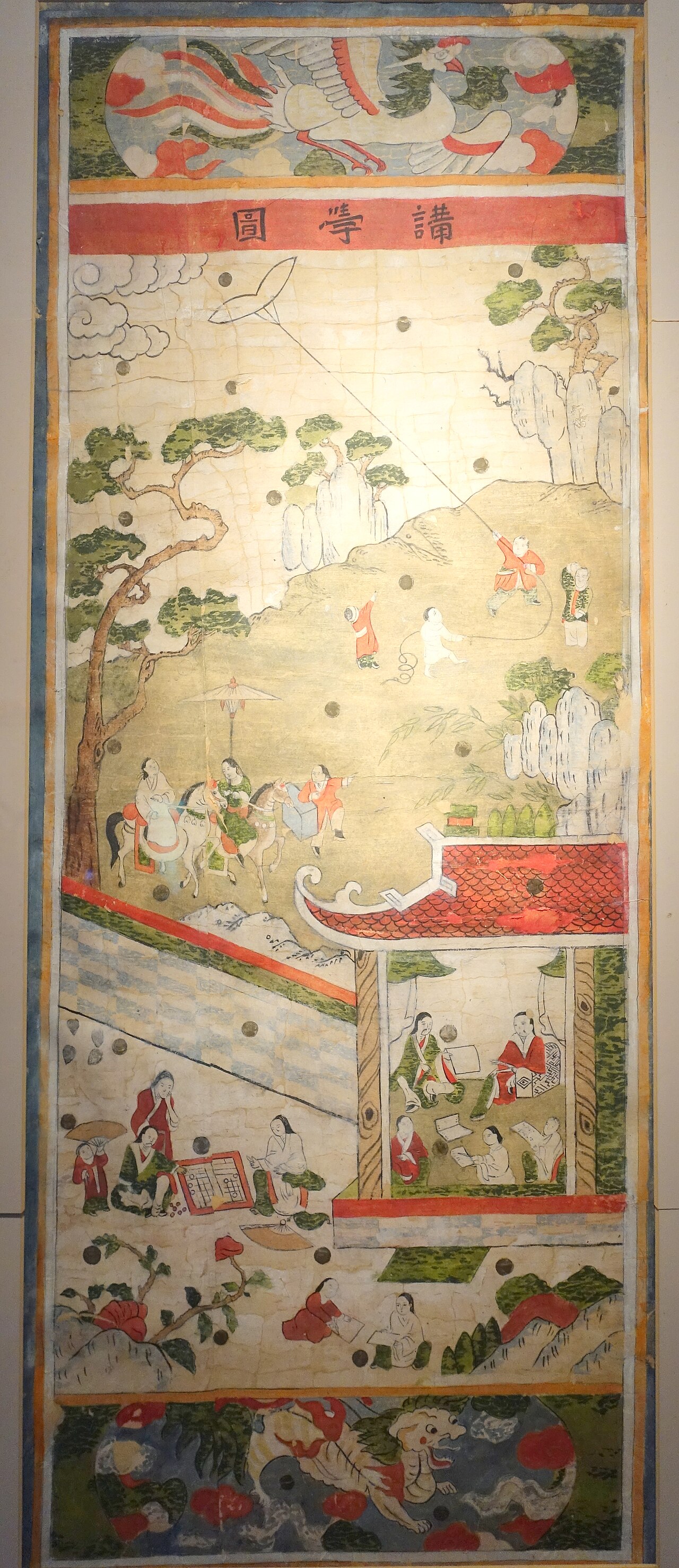
The Lam Son Uprising and the founding of the dynasty
The Le dynasty traces its origin to the Lam Son uprising, a decade-long resistance movement launched in the mountains of Thanh Hoa province in 1418. Its leader, Le Loi, was a landowner rather than a member of the old royal family. The Ming dynasty of China had occupied Dai Viet since 1407, following the collapse of the Tran dynasty, and had imposed heavy taxation, forced labour and cultural assimilation policies that provoked widespread resentment.
Le Loi's forces fought a protracted guerrilla campaign, suffering serious early defeats but gradually consolidating support across the country. The strategist and poet Nguyen Trai served as the movement's principal political mind, drafting proclamations that framed the struggle in terms of Vietnamese cultural distinctiveness rather than dynastic legitimacy alone. By 1427 Ming forces had withdrawn, and in 1428 Le Loi proclaimed himself emperor, establishing the capital at Thang Long — present-day Hanoi — and naming the dynasty Nhà Lê.
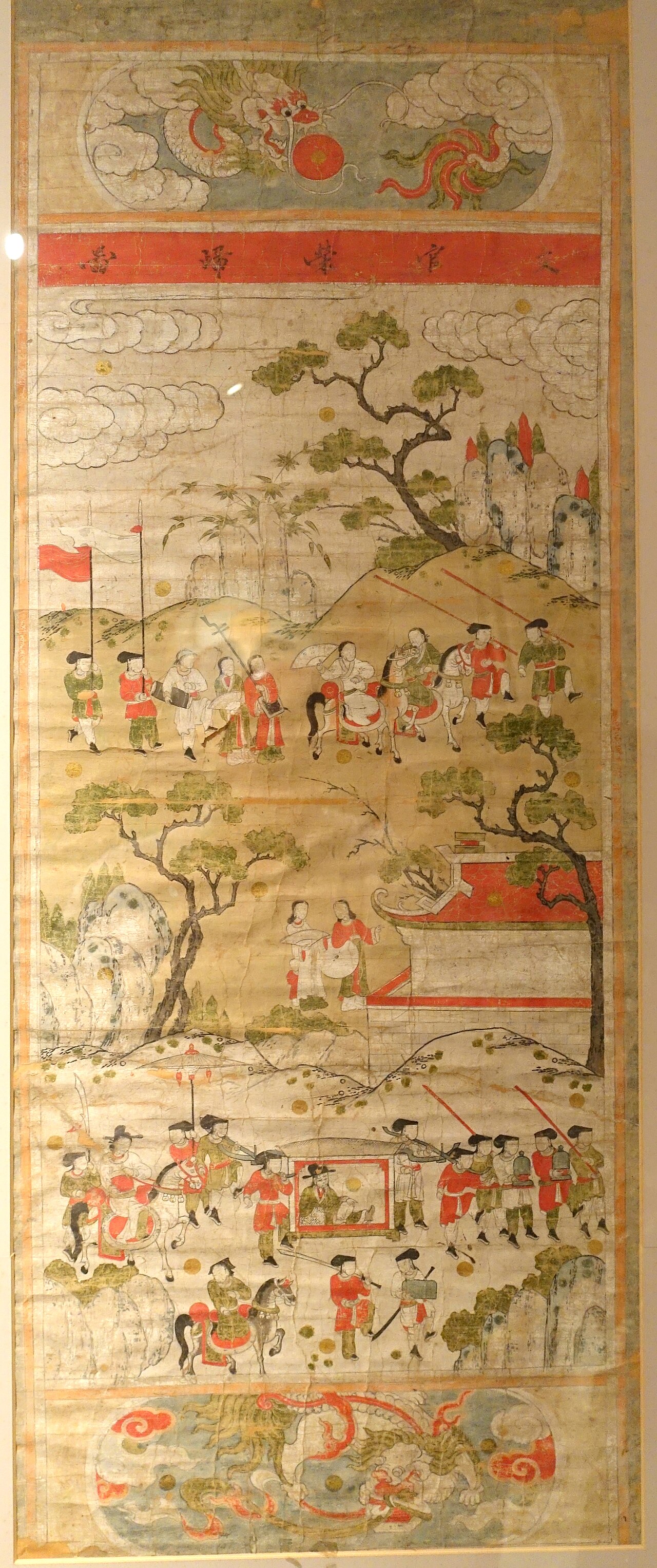
The legend of the restored sword at Hoan Kiem
One of the most enduring stories attached to Le Loi concerns a magical sword said to have been given to him by the Dragon King of the waters, enabling his victories over the Ming. After the war ended, as Le Loi was boating on a lake in Thang Long, a golden turtle is said to have surfaced and reclaimed the sword, returning it to the divine realm now that its earthly purpose was complete.
The lake was thereafter called Hoan Kiem — meaning "restored sword" — a name it retains today as the central lake in Hanoi's historic core. A small islet on the lake, Turtle Tower (Thap Rua), is associated with the legend, and the Ngoc Son Temple on a second islet, connected to the shore by the red The Huc bridge, became a site of veneration. The story functions in Vietnamese cultural memory as an illustration of the idea that power is borrowed from a higher order and must ultimately be surrendered — a theme that recurred in later dynastic thought.
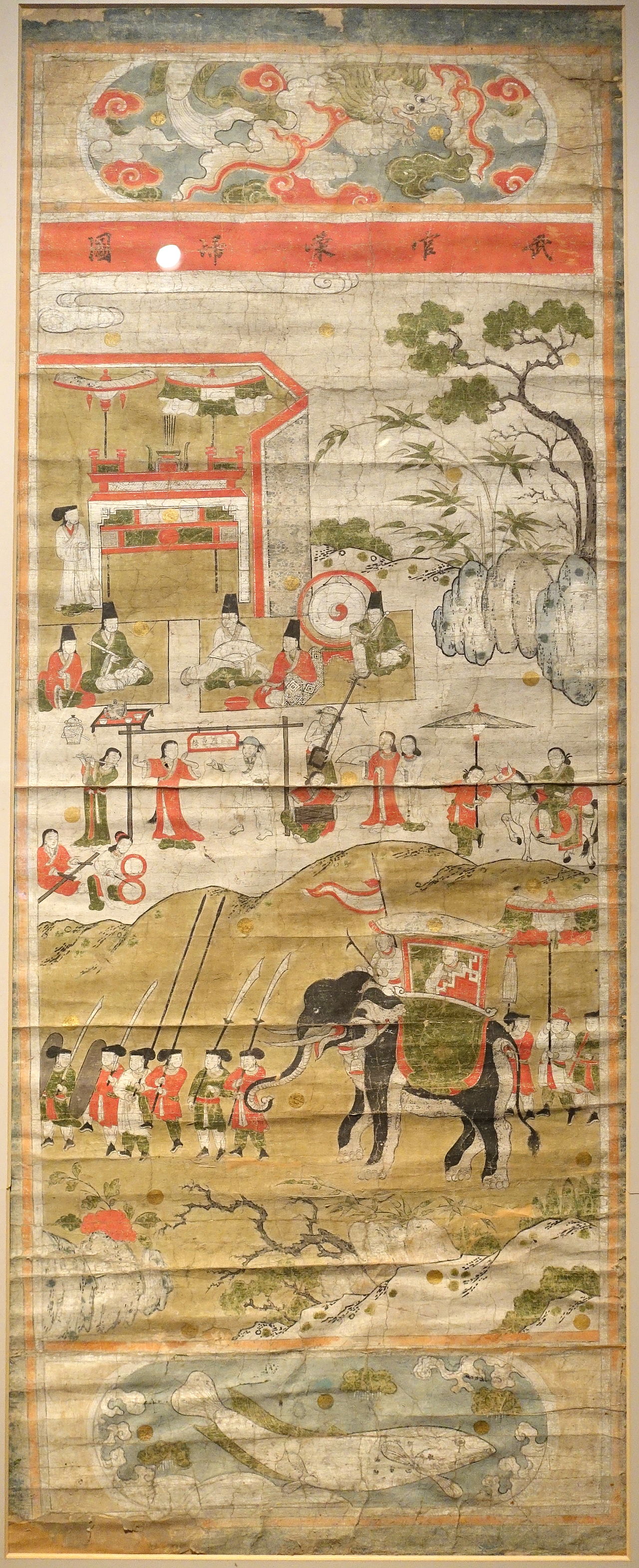
Le Thanh Tong and the Hong Duc legal code
The dynasty reached its administrative and cultural peak under Le Thanh Tong, who reigned from 1460 to 1497. His government reorganised the bureaucracy along Chinese Confucian lines, expanded the imperial examination system to recruit officials on merit rather than birth, and commissioned systematic surveys of land and population.
The most consequential achievement of his reign was the Hong Duc legal code (Quoc Trieu Hinh Luat), promulgated in 1483. The code drew on Chinese Tang and Ming legal precedents but incorporated elements specific to Vietnamese custom, most notably provisions granting women significant property rights — including inheritance rights broadly comparable to those of men — that had no direct equivalent in contemporary Chinese law. The code regulated everything from land tenure and marriage to criminal punishment and official conduct. Legal historians regard it as one of the most sophisticated pre-modern legal texts produced in Southeast Asia, and it remained a reference point for Vietnamese law long after the Le dynasty itself had ended.
Southern expansion and the march to the Mekong
The Le period saw the most sustained phase of Vietnam's southward territorial expansion, a long-term process Vietnamese historians call Nam Tien ("southward advance"). At the time of Le Loi's founding, the southern boundary of Dai Viet lay roughly at present-day Quang Binh province. Over the following two centuries, military campaigns and settler colonisation progressively absorbed the territories of the Cham kingdom of Champa, whose capital at Vijaya (near modern Quy Nhon) fell in 1471 during Le Thanh Tong's reign — a campaign in which he led the army personally.
Champa as a unified polity effectively ceased to exist after 1471, though Cham communities continued in reduced territories further south. Vietnamese settlement followed military conquest, with the state allocating land to soldier-farmers in newly absorbed areas. By the time the Le dynasty fragmented, Vietnamese-controlled territory extended to roughly the latitude of present-day Binh Dinh province, establishing the demographic and agricultural base that later lords would push further toward the Mekong delta.
The division between Trinh and Nguyen lords
From the mid-sixteenth century the Le emperors became increasingly ceremonial figures while real power passed to competing aristocratic houses. A civil war in the 1520s–1530s briefly ousted the dynasty (the Mac dynasty held Thang Long from 1527 to 1592), but Le rulers were restored with the military backing of the Trinh family, who then dominated the north as hereditary lords while keeping a Le emperor on the throne as a legitimising figurehead.
In the south, the Nguyen family — originally Le loyalists who had helped defeat the Mac — established autonomous rule over the expanding southern territories. By the 1620s the Trinh and Nguyen lords had effectively partitioned Vietnam, separated by a fortified boundary near the Gianh River in present-day Quang Binh. A series of wars between 1627 and 1672 produced no decisive result, and the two powers settled into a prolonged cold standoff. The Nguyen lords continued the southward expansion, eventually incorporating the former Khmer-controlled Mekong delta region. This division lasted until the Tay Son rebellion of the 1770s–1780s destroyed both lordships and ended the Le dynasty in 1789, opening the way for the Nguyen dynasty.
Also known as / see also
被以下页面引用
来源
- Vietnam National Museum of History — Bảo tàng Lịch sử quốc gia 访问于 31 August 2026
Supports: the rules and definitions on this page - Nhà Lê sơ — Wikipedia (Vietnamese) (CC BY-SA 4.0) 访问于 31 August 2026
Supports: background, Vietnamese edition
Current 最后核实: 31 August 2026. Rules, fares and prices change — check the official source before acting on anything here. Report a mistake.
Picture credits (4)
Triumphant return of a civil commander, view 2, Doc Loi temple, Nghe An province, late 18th century, Do (poonah) paper - Vietnam National…, Daderot, CC0, Wikimedia Commons · Picture of giving lecture, Doc Loi temple, Nghe An province, late 18th century, Do (poonah) paper - Vietnam National Museum of Fine Arts -…, Daderot, CC0, Wikimedia Commons · Triumphant return of a civil mandarin, Doc Loi temple, Nghe An province, late 18th century, Do (poonah) paper - Vietnam National Museum of…, Daderot, CC0, Wikimedia Commons · Triumphant return of a civil commander, view 1, Doc Loi temple, Nghe An province, late 18th century, Do (poonah) paper - Vietnam National…, Daderot, CC0, Wikimedia Commons