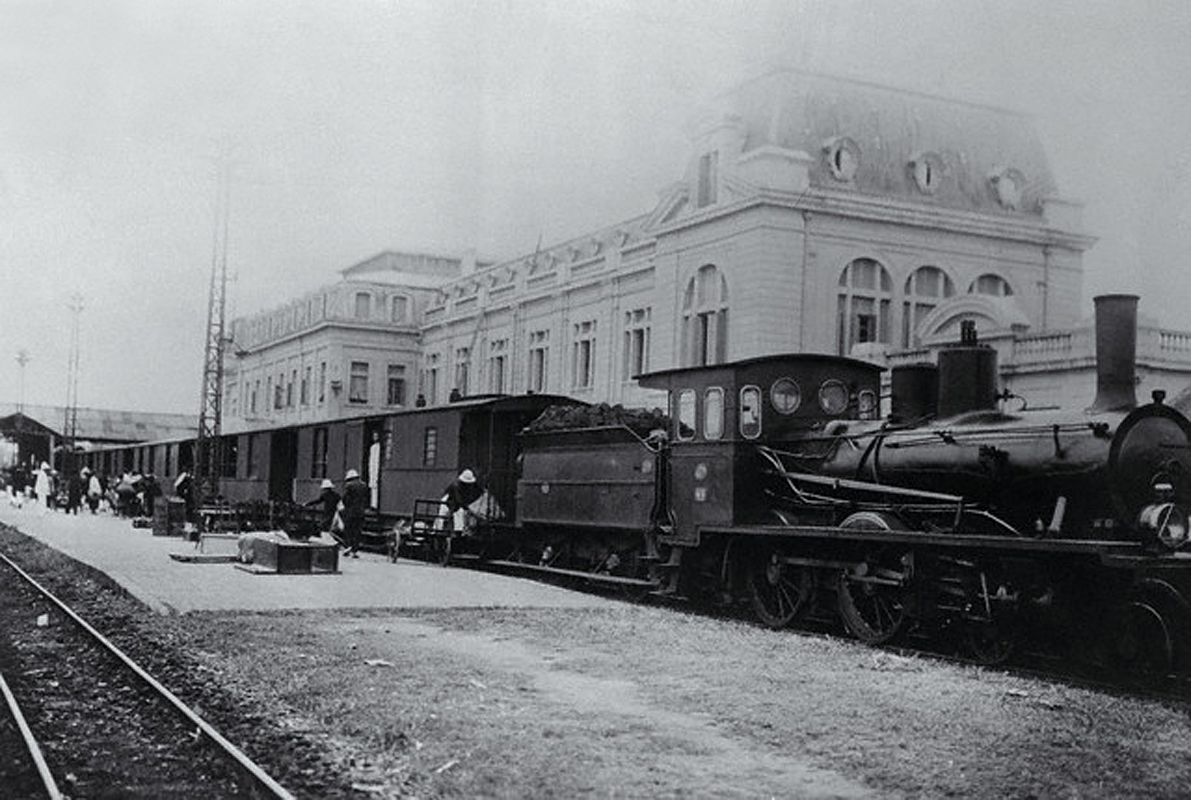
French IndochinaĐông Dương thuộc Pháp
Conquest and structure
France's presence in the region began incrementally. Cochinchina, covering the southern delta, became a direct colony after the Treaty of Saigon in 1862. Campaigns in the north during the early 1880s, culminating in the treaties of 1883 and 1884, imposed protectorates over Annam (the central region) and Tonkin (the north). Cambodia had been a protectorate since 1863; Laos was added in 1893. The Union Indochinoise was formally constituted in 1887 under a Governor-General based in Hanoi.
The administrative structure was deliberately layered. Cochinchina was governed as a full colony with direct French administration. Annam and Tonkin retained nominally Vietnamese rulers under the Nguyen dynasty, though real authority rested with French résidents supérieurs. Local Vietnamese mandarins were retained at lower levels where useful, replaced or bypassed where not. This patchwork of legal and administrative categories was not an accident; it complicated Vietnamese political organisation and kept different regions subject to different legal codes.
The colonial economy
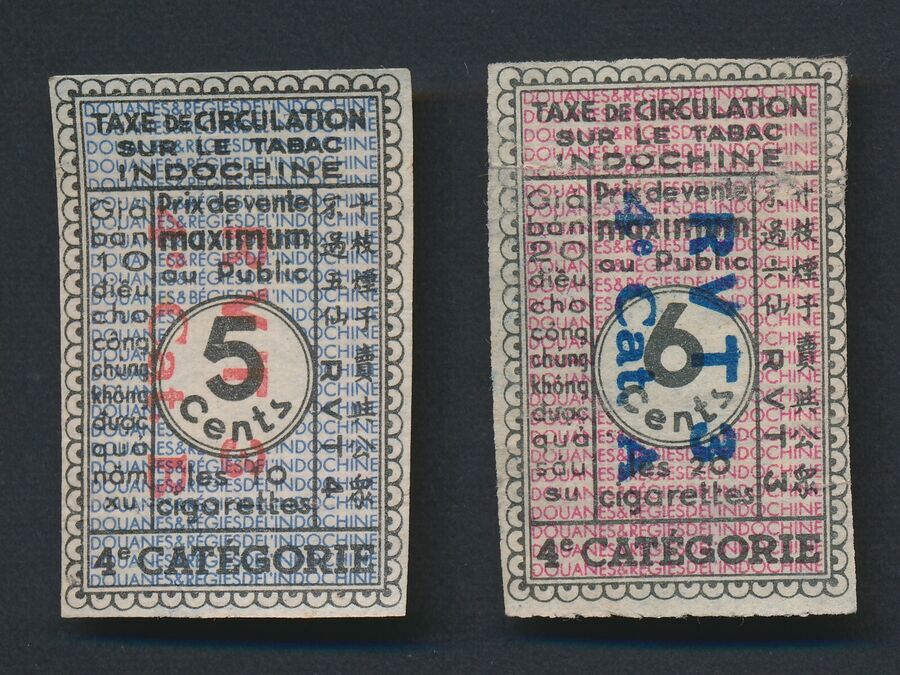
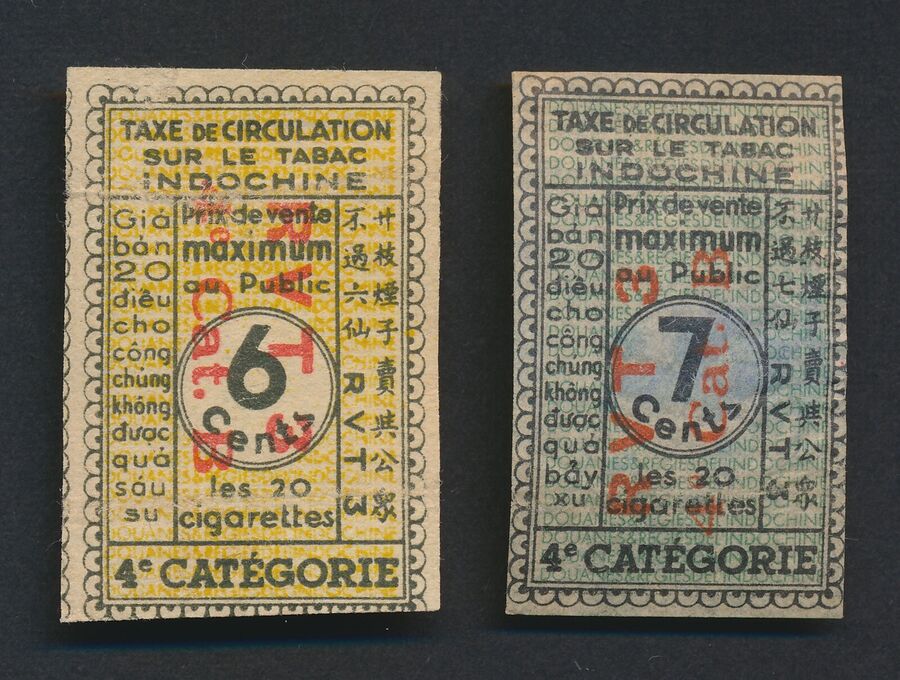
Indochina was expected to pay for itself and then contribute to French metropolitan finances. Three extraction systems dominated.
- Rubber: Large plantations were established across the red-soil highlands of the south and into Cambodia from the early twentieth century. Michelin was among the most prominent concession-holders. Labour was recruited under contracts — coolies de caoutchouc — that amounted in practice to indentured servitude. Death rates on some plantations were recorded at levels that drew criticism even within French administrative circles.
- Coal and mining: The Quang Ninh coalfields around Hon Gai and Cam Pha were developed into one of Asia's significant coal-producing regions, with output shipped primarily to French and regional markets.
- Rice: The Mekong Delta was hydraulically engineered through canal construction to expand paddy cultivation dramatically. Vietnam became one of the world's major rice exporters, yet rural Vietnamese in the delta frequently ate less rice than they grew, with tenant farming arrangements consuming the surplus.
- The opium monopoly: The colonial government operated a state opium monopoly — the Régie de l'opium — which at certain periods accounted for a substantial share of Indochina's total revenue. Opium dens were licensed and taxed; cultivation and retail were state-controlled.
Architecture and urban planning
The colonial administration built extensively, and much of that fabric survives. The intent was simultaneously practical and symbolic: to project French civilisation and to accommodate a transplanted bureaucratic and commercial class.
- Hanoi was remade as the federal capital. The Ba Dinh quarter contains the Governor-General's Palace (now the Presidential Palace), the Hanoi Opera House (completed 1911, modelled loosely on the Paris Opéra-Comique), the former Indochina Bank building, and a grid of wide boulevards planted with flame trees and banyans. Saint Joseph's Cathedral, built over a demolished pagoda, dates to 1886.
- Saigon (Ho Chi Minh City) acquired its own Opera House, the Hôtel de Ville (now the People's Committee Building), Notre-Dame Cathedral and the Central Post Office — the latter's iron interior attributed to a workshop associated with Gustave Eiffel.
- Da Lat was conceived from 1897 onward as a hill-station retreat, its climate considered more suitable for European constitutions. Hundreds of French-style villas, a railway station, a palace and a lycée give it an architectural character distinct from any other Vietnamese city.
- Hai Phong was developed as the principal northern port, with warehouses, a customs house and residential quarters that retain visible colonial streetscapes.
Later French architects experimented with an Indochinese style that grafted Vietnamese and Cham decorative elements onto reinforced-concrete structures. The National Museum of Vietnamese History in Hanoi (1932, architect Ernest Hébrard) is an example.
Resistance and political movements
Opposition to French rule was continuous, though it took varying forms across different periods. Early resistance was led by Confucian scholars and former court officials, including Phan Dinh Phung, whose guerrilla campaign in Ha Tinh lasted until his death in 1895. The Cần Vương (Aid the King) movement of the 1880s framed resistance in loyalist and neo-Confucian terms.
By the early twentieth century new currents emerged. Phan Boi Chau organised the Đông Du (Travel East) movement, sending students to Japan. Phan Chu Trinh argued for reform through French institutions rather than armed revolt. The 1930 Yen Bai mutiny, organised by the Viet Nam Quoc Dan Dang (VNQDD), was suppressed with mass executions and deportations to Con Dao island penal colony.
The Indochinese Communist Party, founded in 1930 under Ho Chi Minh's coordination, organised peasant uprisings in Nghe An and Ha Tinh — the Xo Viet Nghe Tinh movement — which were crushed by aerial bombardment and ground operations. Through the 1930s the party was repeatedly dismantled by the Sûreté, the colonial security police, and rebuilt. Con Dao, Poulo Condore in colonial records, held generations of political prisoners whose accounts document systematic brutality.
The famine of 1945
Between late 1944 and mid-1945 a famine killed between 400,000 and two million people in northern and north-central Vietnam — estimates vary significantly and remain contested among historians. The causes were structural and immediate. Japanese occupation forces from 1940 onward had requisitioned rice stocks for military use and required farmers to grow jute for sacking rather than food. Allied bombing disrupted rail transport, preventing food movement from the south. French colonial authorities, themselves operating under Japanese supervision from March 1945, were either unable or unwilling to organise effective relief, and administrative records suggest awareness of the deteriorating situation well before mass death became visible.
The famine is not incidental to the political history. The Viet Minh organised grain seizures from Japanese and French stores and distributed food in affected areas, which materially shaped popular support ahead of the August Revolution later that year. Vietnamese historiography treats the famine as a foundational atrocity of the colonial period; it is not prominently acknowledged in French colonial retrospective accounts.
The end of French Indochina
Japan's coup de force of 9 March 1945 dismantled French colonial authority almost overnight, imprisoning or killing French officials and soldiers across Indochina. The brief period before Japan's own surrender in August 1945 created the opening the Viet Minh used to declare independence. The August Revolution of 1945 and Ho Chi Minh's declaration on 2 September formally ended the colonial order, though France returned with military force and did not accept the outcome.
The subsequent First Indochina War lasted from 1946 to 1954. It ended with the French military defeat at Dien Bien Phu in May 1954, a siege in which Viet Minh forces under General Vo Nguyen Giap overran a fortified valley base that French commanders had expected to hold. The Geneva Accords of July 1954 temporarily divided Vietnam at the 17th parallel and scheduled elections that were never held. France withdrew; the United States moved to fill the resulting political space.
Legacy and interpretation
The French colonial period is interpreted differently across audiences and contexts. A vein of nostalgia — present in some tourism writing and in French popular memory — centres on architecture, cuisine and a romanticised Indochine aesthetic. Vietnamese historiography, official and scholarly, emphasises exploitation, famine, forced labour, the penal colony system and the suppression of political movements. Neither account is complete on its own.
Materially, the period left roads, railways (most notably the Reunification Express line and the Hanoi–Hai Phong route), ports, urban infrastructure and institutional structures — a legal code, a land-tenure system, a Romanised script (chữ Quốc ngữ, which the French promoted to displace classical Chinese literacy) — that shaped postcolonial Vietnam in ways that cannot be reduced to a simple balance sheet of harm and benefit. The rubber plantation economy left ecological and social patterns in the southern highlands. The opium monopoly contributed to addiction problems the colonial state later claimed to be addressing. The architecture is listed, photographed and contested simultaneously.
Also known as / see also
Citato da
Fonti
- Vietnam National Museum of History — Bảo tàng Lịch sử quốc gia consultato 31 August 2026
Supports: the rules and definitions on this page - French Indochina — Wikipedia (CC BY-SA 4.0) consultato 31 August 2026
Supports: background
Current Ultima verifica: 31 August 2026. Rules, fares and prices change — check the official source before acting on anything here. Report a mistake.
Picture credits (4)
Hanoi, French Indochina ca. 1940, Unknown author, shot before 1945, Public domain, Wikimedia Commons · Tobacco tax stamps - French Indochina (1920's) eddis.h 01, The government-general of French Indo-China., Public domain, Wikimedia Commons · Tobacco tax stamps - French Indochina (1920's) eddis.h 02, The government-general of French Indo-China., Public domain, Wikimedia Commons · Tobacco tax stamps - French Indochina (1920's) eddis.h 07, The government-general of French Indo-China., Public domain, Wikimedia Commons