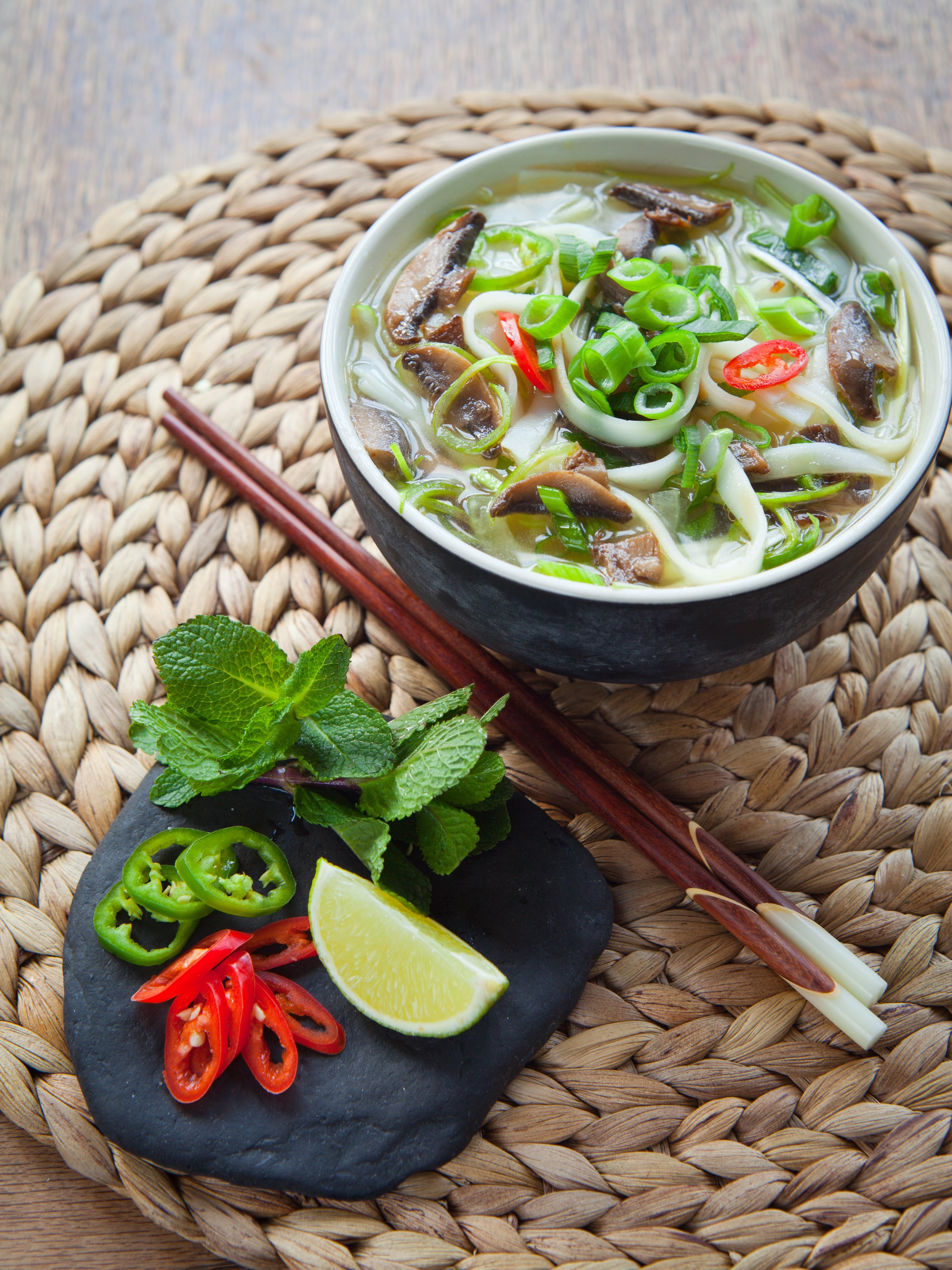
Eating vegetarian and veganĂn chay
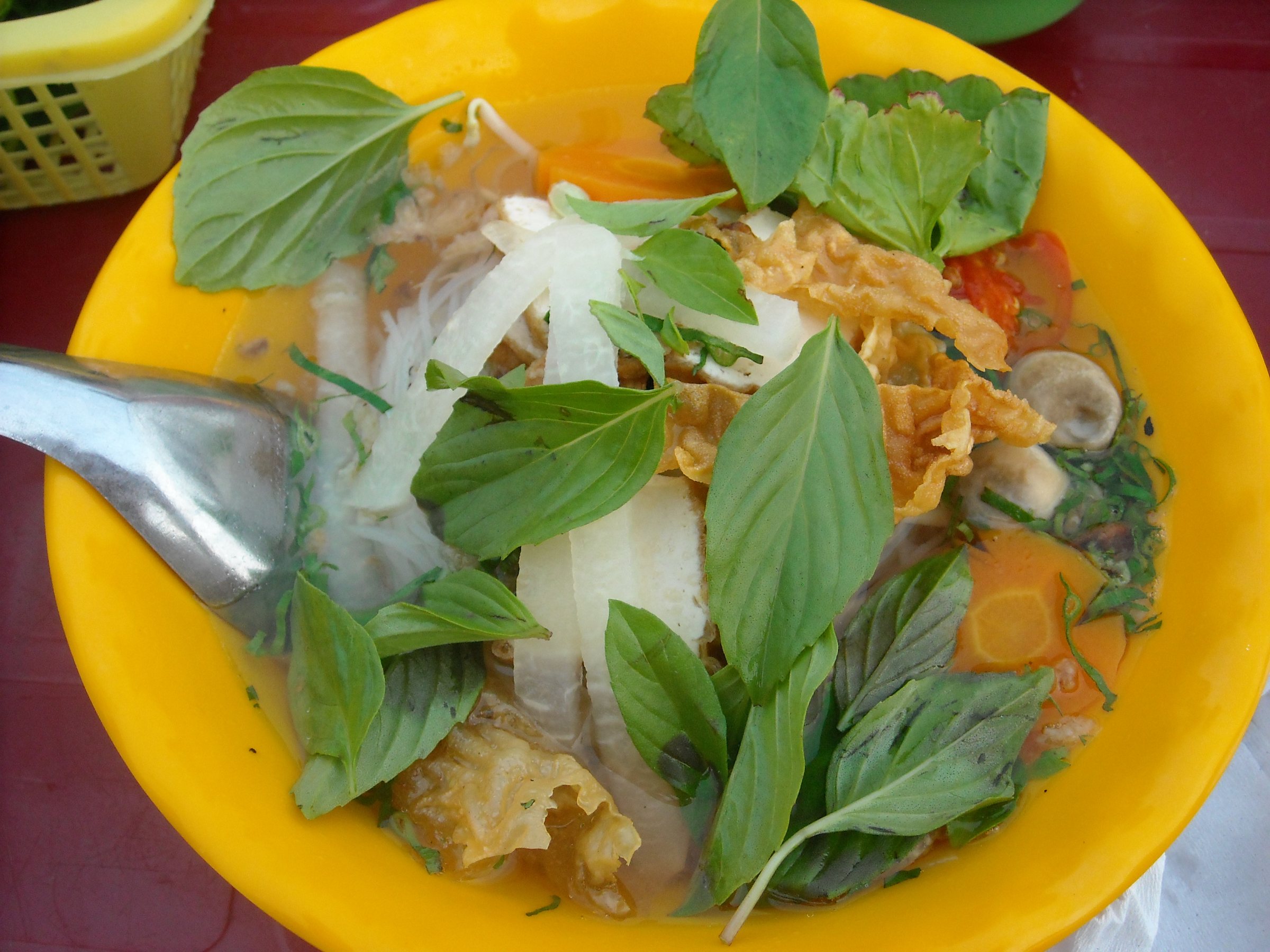
The com chay tradition
Cơm chay — literally 'vegetarian rice' — refers to the Buddhist practice of eating entirely plant-based food, observed by monks, nuns and many lay practitioners throughout Vietnam. The tradition draws on Mahayana Buddhist teaching that abstaining from meat reduces harm and accumulates merit. Dedicated quán chay (vegetarian restaurants) exist in most towns of any size, and range from simple rice-plate canteens to restaurants that produce elaborate mock-meat dishes using tofu, gluten and mushrooms to mimic the appearance and texture of pork, duck and seafood.
The cuisine is not a modern import or a response to Western dietary trends; it has roots in Vietnamese Buddhist communities going back several centuries, with particularly strong traditions in central Vietnam.
Lunar days and the vegetarian calendar
The busiest days at any quán chay are the 1st and 15th of each lunar month — the new moon and full moon. On these days large numbers of Vietnamese Buddhists, including many who eat meat the rest of the month, switch entirely to plant-based food. Some observers also fast on the 8th and 23rd days of the lunar month.
The practical consequence for travellers is significant: on the 1st and 15th, dedicated vegetarian restaurants fill up and sometimes run out of dishes by midday. Mainstream restaurants in areas with strong Buddhist populations may also offer a temporary chay menu on those days. Outside these dates, quán chay continue to operate normally but with fewer customers. Checking a lunar calendar — any Vietnamese phone has one — helps with planning.
The hidden fish sauce and shrimp paste problem
The most consistent difficulty for vegetarians and vegans in Vietnam is not finding vegetable dishes — it is that many dishes presented as vegetables are seasoned with nước mắm (fish sauce) or mắm tôm (fermented shrimp paste). Both are used as foundational flavourings rather than toppings, often added during cooking rather than at the table, and may not be visible in the finished dish.
Common problem areas include:
- Stir-fried greens (rau muống xào tỏi) — frequently finished with fish sauce rather than salt
- Pho and bun bo broth — animal-based and typically fish-sauce seasoned
- Dipping sauces served alongside spring rolls and grilled dishes
- Fermented sauces used in central Vietnamese dishes
Even in non-specialist restaurants where a cook is willing to prepare a vegetable dish, the default seasoning habit may introduce fish sauce unless explicitly requested otherwise. Dedicated quán chay are the most reliable way to avoid this entirely.
Useful phrases
A small number of Vietnamese phrases substantially improve the experience of eating plant-based in Vietnam.
- Tôi ăn chay — I eat vegetarian
- Không thịt, không cá, không hải sản — No meat, no fish, no seafood
- Không nước mắm — No fish sauce
- Không mắm tôm — No shrimp paste
- Có quán chay gần đây không? — Is there a vegetarian restaurant nearby?
For vegans, adding không trứng, không sữa (no eggs, no dairy) covers the most common additional ingredients, though dairy is used far less frequently in Vietnamese cooking than eggs. Showing these phrases on a phone screen is often more effective than attempting pronunciation in a noisy kitchen context.
Cities and regions with strong vegetarian options
Huế is widely regarded as the most accommodating city in Vietnam for vegetarian eating. Its position as the historic centre of Vietnamese Buddhism means the quán chay tradition is especially deep-rooted there, with a high density of dedicated restaurants and a local population familiar with plant-based cooking as an everyday practice rather than a speciality niche. Huế also developed a distinct royal court cuisine with elaborate vegetable preparations that predate modern vegetarian dining.
Ho Chi Minh City has a large number of quán chay concentrated in areas near pagodas and in neighbourhoods with significant Buddhist populations. Hanoi has fewer than Ho Chi Minh City but dedicated restaurants are not difficult to find. Da Nang and Hội An both have functional vegetarian restaurant scenes. Smaller towns in rural areas are more challenging: a quán chay may exist but operate only around lunar festival days.
Finding vegetarian restaurants
The most reliable visual cue is the word CHAY on a sign, often in green lettering. Buddhist iconography — lotus flowers, images of Quan Am (the bodhisattva of compassion) — frequently appears on the façades of dedicated vegetarian establishments. Many quán chay are located near pagodas and temples.
The standard format at a Vietnamese vegetarian canteen is a display counter of pre-cooked dishes from which the customer selects, served over white rice. This cơm tự chọn style makes ingredient assessment straightforward since dishes are visible before ordering. À la carte quán chay also exist, particularly in cities, and often specialise in the mock-meat dishes (đồ chay giả mặn) that replicate meat textures using tofu, wheat gluten and jackfruit.
Where it is
Also known as / see also
Comes from
Được tham chiếu bởi
Các nguồn
- Vietnam National Authority of Tourism — VNAT đã truy cập 29 August 2026
Supports: the rules and definitions on this page - Ăn chay — Wikipedia (Vietnamese) (CC BY-SA 4.0) đã truy cập 31 August 2026
Supports: background, Vietnamese edition
Current Đã xác minh lần cuối: 31 August 2026. Rules, fares and prices change — check the official source before acting on anything here. Report a mistake.
Picture credits (2)
Photo: JoannaTkaczuk / Adobe Stock, asset 213719333 · Vegetarian Pho (5541416031), Sistak, CC BY-SA 2.0, Wikimedia Commons