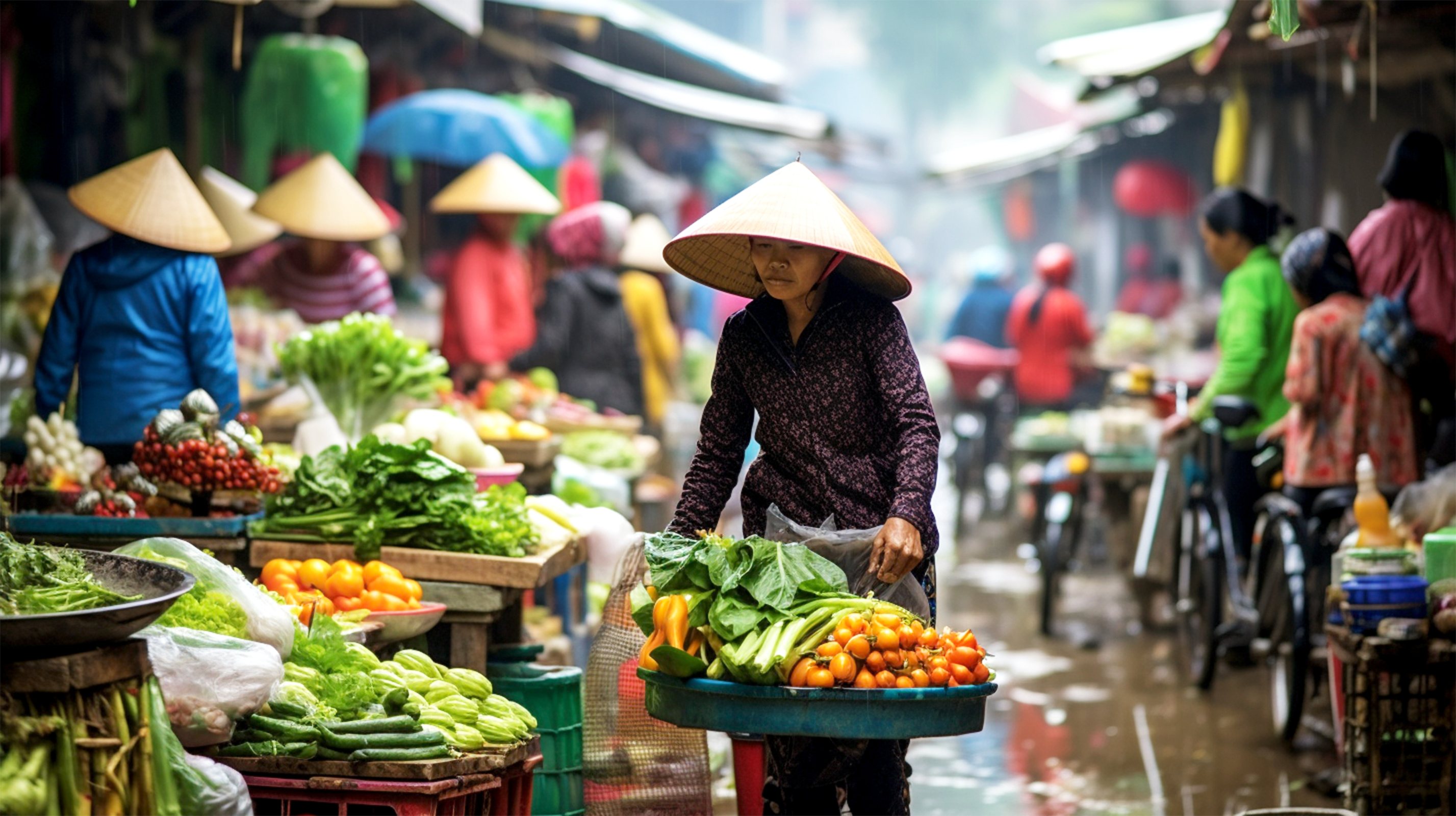
Eating street food safelyĂn uống đường phố
Understanding the actual risk
Stomach upset after eating street food in Vietnam is common enough that many long-term residents treat it as an occasional fact of life rather than a crisis. Serious illness — typhoid, hepatitis A, or severe bacterial infection — is rarer, though not unknown. The risk sits somewhere between the alarm that some travel-health guides suggest and the breezy dismissal sometimes offered by seasoned travellers. It is neither negligible nor a reason to avoid street food entirely.
Most illness traces back to a small number of sources: contaminated water (including ice and washed raw produce), food held at unsafe temperatures for extended periods, and cross-contamination between raw and cooked ingredients. Understanding these three vectors is more useful than any general rule about which stalls to trust.
Reading a stall before you sit down
Turnover is the most reliable indicator of food safety. A stall that empties and refills its pot of bún bò Huế or vat of frying oil several times a day has less opportunity to let food sit in the danger zone than one that serves a trickle of customers across a twelve-hour shift. Watch for a moment before committing.
- The crowd: local workers eating at pace — construction crews, market traders, motorbike taxi drivers — are a reasonable signal. They return daily and have no tolerance for a stall that makes them ill.
- Cooking to order: dishes assembled or fried fresh when you sit down (bánh mì filled in front of you, noodles blanched to order) carry lower risk than pre-cooked items sitting under a lamp.
- Visible cleanliness: look at the cutting board, the cloth used to wipe surfaces, and how waste is handled. A stall with good habits in one area usually has them in others.
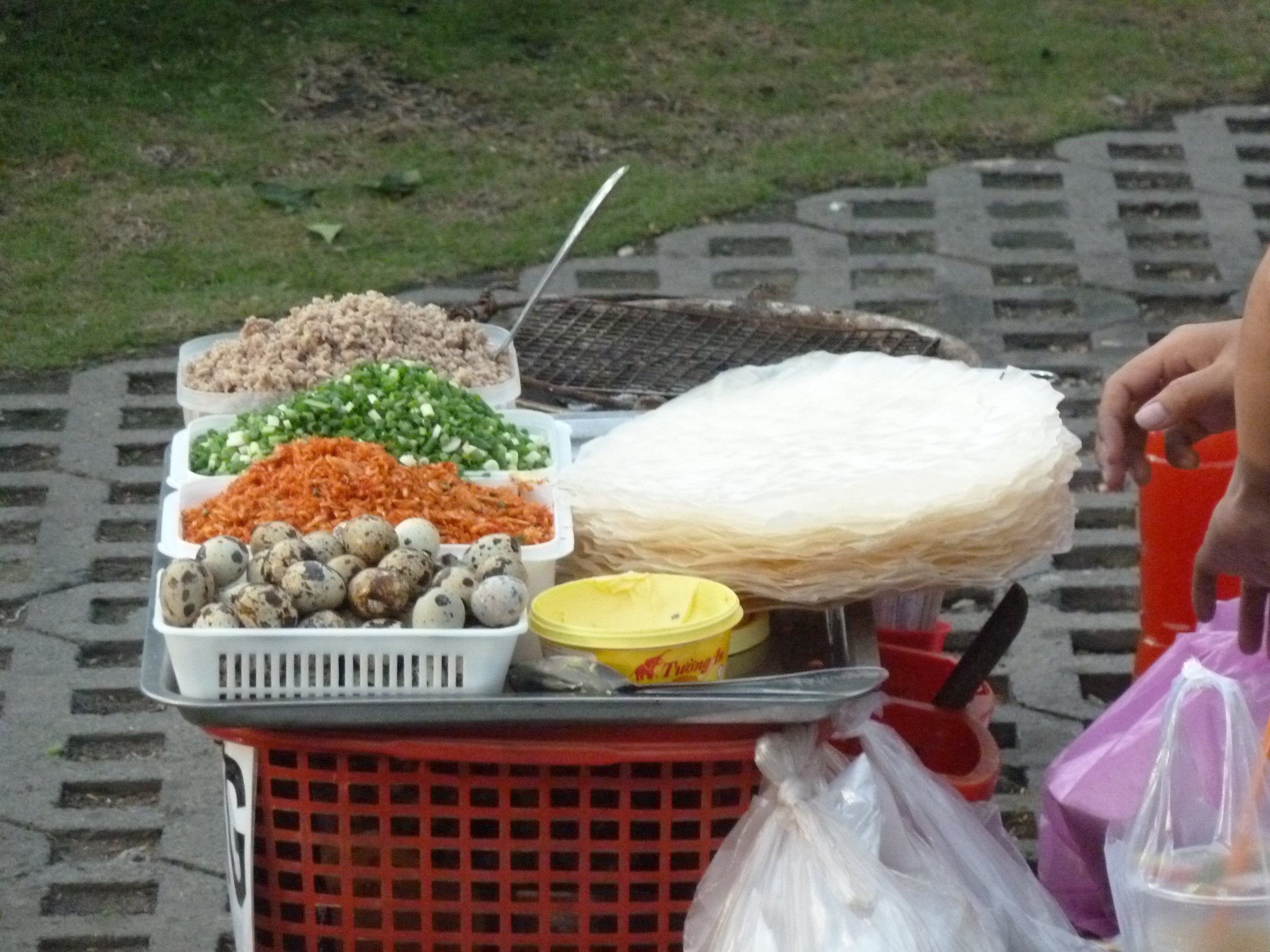
- Single-dish specialists: a cart selling only one thing — bánh tráng nướng, cháo, grilled corn — is often run by someone who has made that item thousands of times, which tends to produce consistent hygiene as well as consistent flavour.
Ice, water and raw produce
Tap water in Vietnam is not safe to drink without treatment, and this directly affects several elements of street food. The key categories to understand:
- Ice in drinks: manufactured tube ice (cylindrical with a hole, often delivered in large bags) is made from purified water and is considered lower risk. Crushed or block ice of uncertain origin is harder to assess. In major cities such as Ho Chi Minh City, manufactured ice supply chains are well established; in more remote areas, the origin is less predictable.
- Raw herbs and salad: rau sống — the plate of fresh herbs, bean sprouts and banana blossom served alongside dishes like bún bò or phở — may have been washed in unfiltered water. Many long-term residents eat them without issue; others consistently decline. Lightly blanching bean sprouts in the hot broth before eating reduces the risk somewhat.
- Sliced fruit: pre-cut fruit displayed on a cart has potentially been washed and sits exposed. Whole fruit peeled in front of you is safer.
The plastic-stool economy: how stalls work
A large proportion of Vietnamese street food is served from semi-permanent setups on pavements or in the margins of market spaces: a cart, a few low tables, and small plastic stools placed directly on the ground. This is the quán vỉa hè — literally the pavement stall — and it operates according to informal conventions worth knowing.
Seating yourself signals readiness to order. There is rarely a menu; the stall sells what it sells, and regulars know this before they arrive. Operating hours follow local rhythms: breakfast stalls (selling xôi, bánh mì, or phở) may open before dawn and close by mid-morning. Lunch spots pack up by early afternoon. Some evening grilling stalls do not begin until the working day ends. A stall that appears closed mid-afternoon may simply be between shifts.
Bowls, chopsticks and spoons are typically rinsed rather than individually washed between covers at busy periods. This is the norm rather than an oversight, and most people accommodate it without difficulty.
Pointing, ordering and communicating without Vietnamese
Vietnamese tonal pronunciation is difficult enough that attempting a dish name without practice can produce confusion rather than clarity. A few practical approaches:
- Point directly: at the pot, the ingredient, the item another diner is eating, or a photograph if one is displayed. This is completely normal behaviour and not considered rude.
- Written Vietnamese on a phone: showing the written name of a dish — which can be found in any general Vietnam food reference — is often more effective than attempting to say it.
- Fingers for quantity: hold up fingers to indicate how many portions are wanted. Stall operators in tourist-frequented areas frequently understand this immediately.
- Dietary restrictions: communicating that something must be avoided (pork, shellfish, chilli) is genuinely difficult without the written phrase. Carrying a card with the relevant phrase in Vietnamese script is more reliable than attempting to explain verbally.
Payment generally happens after eating. The operator will state the amount or show it on a phone calculator. Rounding up informally is common; negotiating at a food stall is not.
Hours and when to go
Street food in Vietnam is not uniformly available across the day. Different meals correspond to different stall types, and arriving at the right time matters both for food quality and for safety (freshly made food is safer than food held for hours).
- Pre-dawn to mid-morning: breakfast foods dominate — phở, bún bò Huế, xôi, bánh mì, cháo. Many specialist breakfast stalls operate for only three to four hours and are sold out before 9 a.m.
- Late morning to early afternoon: rice-based lunch dishes, cơm tấm, braised pork stalls. These are often near office clusters and industrial areas.
- Mid-afternoon: the quietest period. Snack vendors (sugarcane juice, steamed corn, sweet soups) are more common than full-meal stalls.
- Evening: grilled meats, bún thịt nướng, seafood, hotpot, and beer-pairing foods become available. Some stalls run past midnight in city centres.
The tail end of a service — the last hour before a breakfast stall closes, for example — is when food is most likely to have been sitting for a while. Arriving during peak hours, when turnover is highest, is preferable on both quality and safety grounds.
Where it is
Also known as / see also
Comes from
Verwezen door
Bronnen
- Vietnam National Authority of Tourism — VNAT geraadpleegd 29 August 2026
Supports: the rules and definitions on this page - Thức ăn đường phố — Wikipedia (Vietnamese) (CC BY-SA 4.0) geraadpleegd 31 August 2026
Supports: background, Vietnamese edition
Current Laatst geverifieerd: 31 August 2026. Rules, fares and prices change — check the official source before acting on anything here. Report a mistake.
Picture credits (2)
Photo: Melinda Nagy / Adobe Stock, asset 671474716 · Bánh tráng nướng TP. Hồ Chí Minh - street food in Ho Chi Minh City, Vietnam, Light Write, CC BY-SA 2.0, Wikimedia Commons