PhoPhở
What pho is
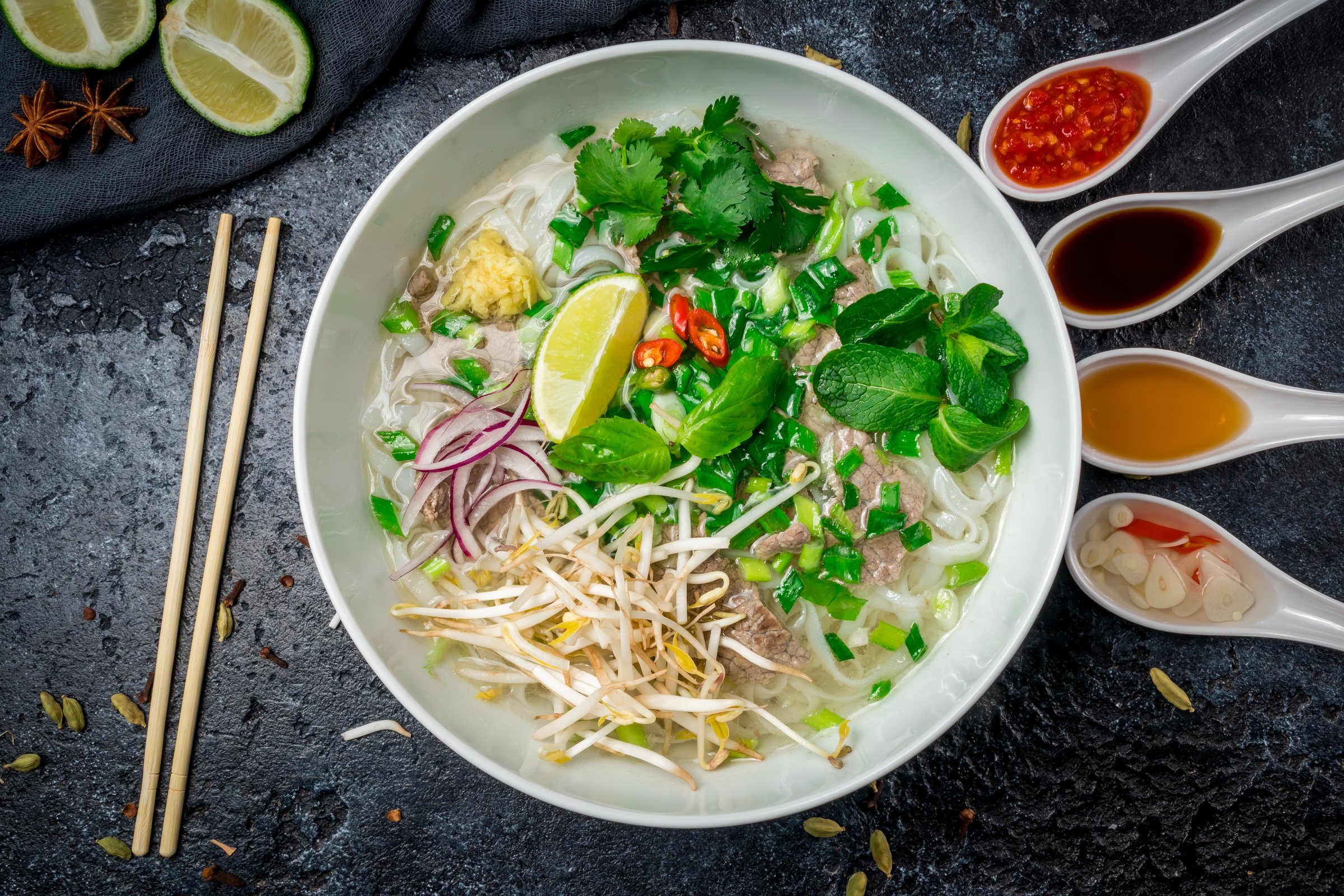
Pho (phở) is a soup of clear or near-clear broth, flat banh pho rice noodles, and either beef (phở bò) or chicken (phở gà). The broth is the defining element: it is built by simmering bones for many hours alongside charred ginger and onion, with whole spices — star anise, cinnamon, cloves, cardamom and coriander seed — added at different stages. Fish sauce and rock sugar balance the seasoning. The result is a broth that is at once savoury, faintly sweet, and fragrant without being heavy. The noodles are added to the bowl fresh or briefly blanched, the meat is laid on top, and hot broth is ladled over to finish cooking thinly sliced raw cuts.
Origins and the dispute over birthplace
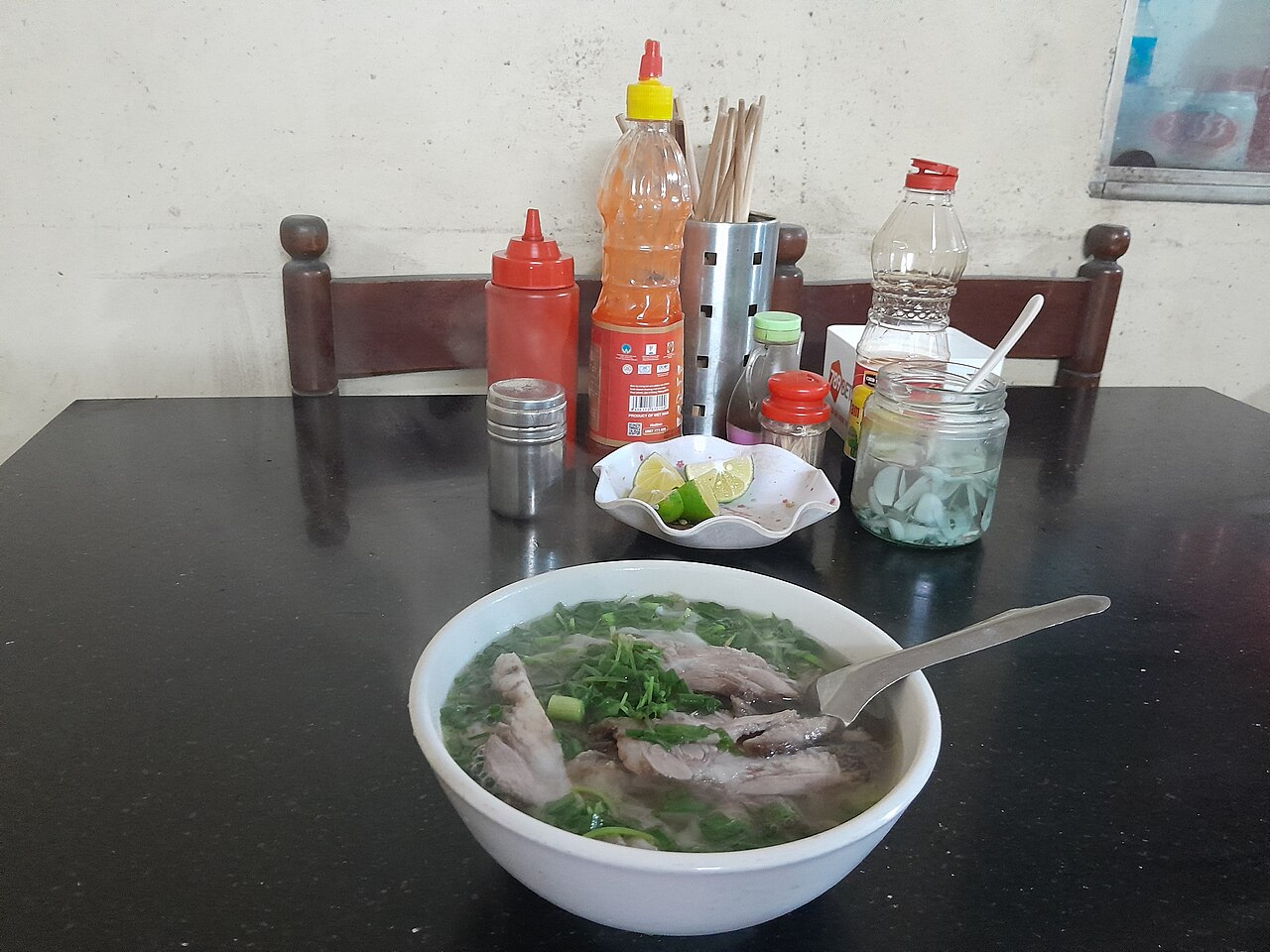
Pho emerged in northern Vietnam in the early twentieth century, most likely in the Red River Delta region around Hanoi and the town of Nam Dinh. Two competing claims persist: Nam Dinh residents argue the dish was born there among workers in its textile mills, while Hanoi claims it as its own street-food tradition. Both cities have credible historical links. What is generally accepted is that pho developed during the French colonial period, probably influenced by the French practice of using beef bones for stock — cattle had not previously been a significant food animal in Vietnamese cooking — and that it spread southward only after the 1954 partition, when northern migrants carried the dish to Saigon and beyond. The southern version that evolved there became distinct enough that the two styles are now treated separately by cooks and eaters alike. As Northern Vietnamese cuisine more broadly demonstrates, the north tends toward restraint and clarity, and pho is no exception.
Northern and southern styles
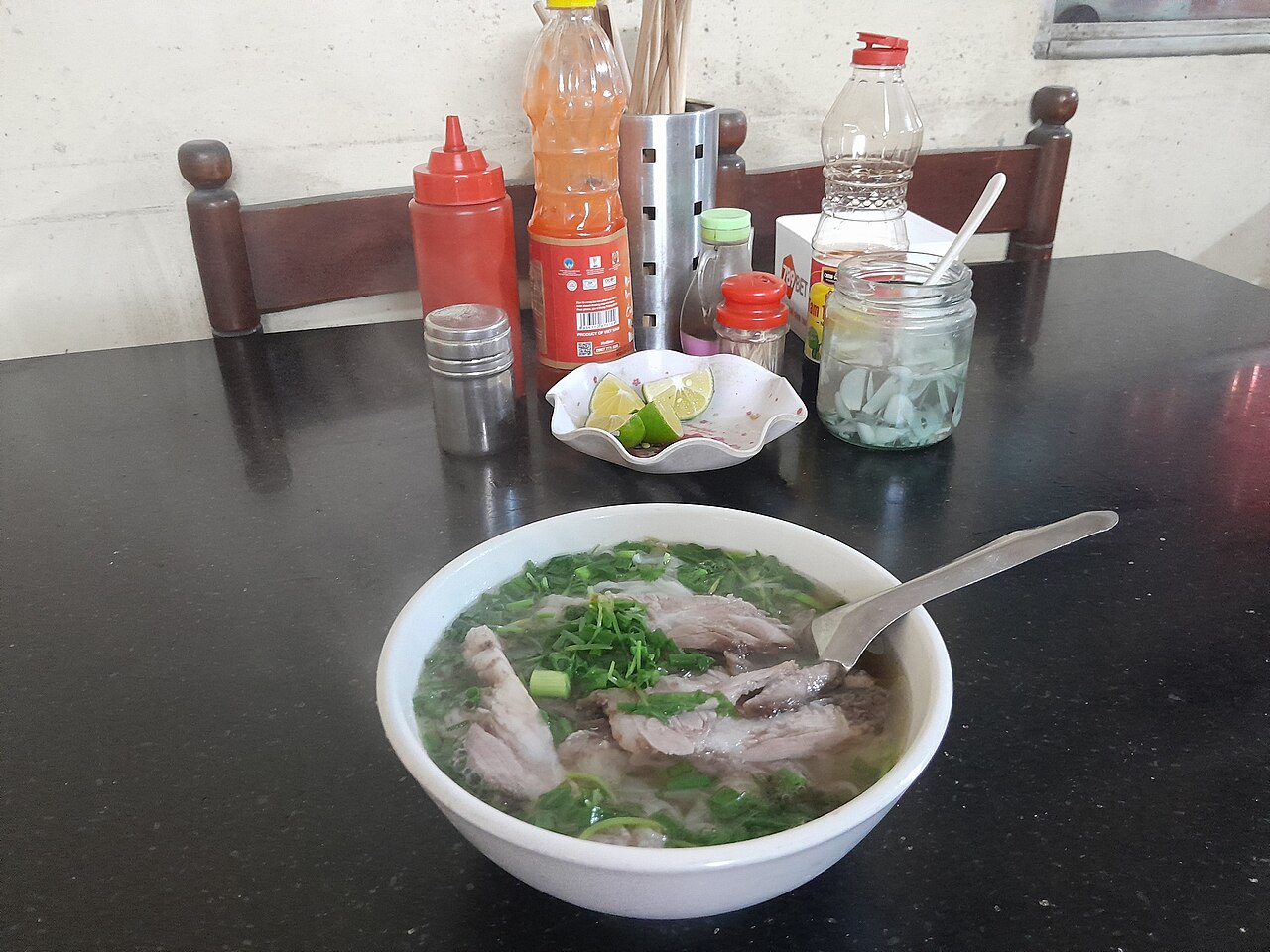
Northern-style pho (phở Bắc), as served in Hanoi, uses a broth that is pale and relatively clear, seasoned with precision and not overshadowed by sweetness. The noodles tend to be wider, and the garnish plate is minimal: a few sprigs of spring onion, perhaps some thinly sliced raw onion and a little coriander. Condiments on the table are typically limited to chilli vinegar or fresh chilli slices and plain fish sauce. Adding hoisin sauce or sriracha to a northern bowl is regarded by many Hanoians as a southern habit and an adulteration.
Southern-style pho (phở Nam), associated with Ho Chi Minh City, uses a sweeter and often darker broth. The garnish plate is abundant: bean sprouts, fresh Thai basil, sawtooth herb (ngò gai), sliced bird's eye chillies, and a wedge of lime arrive alongside the bowl so the eater can adjust flavour and texture. Hoisin sauce and sriracha are standard table condiments, commonly mixed together and used as a dipping sauce for the meat.
Beef cuts: tai, chín, nam, gáu and combinations
Ordering pho bo requires some familiarity with the cuts on offer, as most shops list combinations rather than a single option. The main terms are:
- Tái — raw beef, sliced paper-thin, placed in the bowl and cooked by the hot broth. It should be pink at the centre when eaten; a good bowl is served hot enough to cook the surface while leaving the interior tender.
- Chín — well-cooked brisket or flank, simmered until tender and sliced.
- Nam — flank or lateral flank, often with a slightly chewy texture and a little fat.
- Gáu — fatty brisket or cartilaginous cuts with a gelatinous quality, prized for richness.
- Gân — beef tendon, slow-cooked to a soft, yielding texture.
- Sách — tripe, thinly sliced and blanched.
A bowl ordered as phở tái chín combines raw sliced beef with cooked brisket, which is among the most common combinations. Shops typically display their cut options on boards or menus, and a number of establishments offer a mixed bowl containing all available cuts.
Pho ga: the chicken version
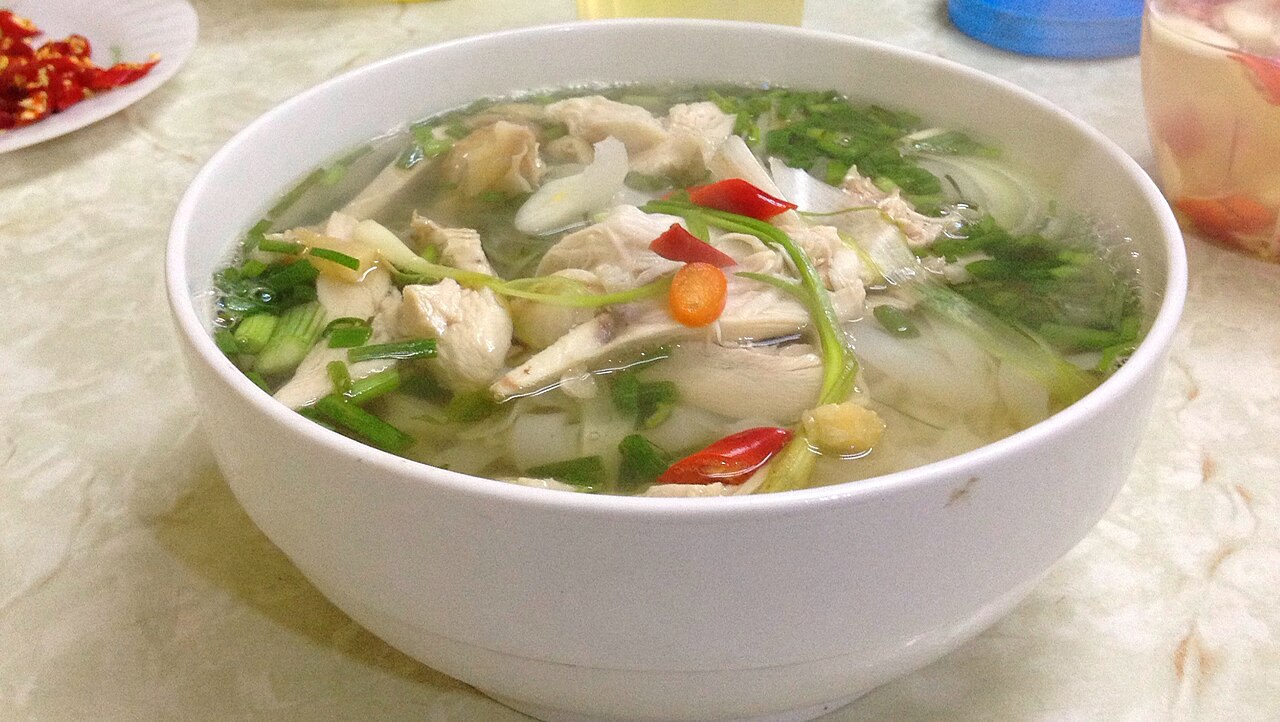
Phở gà uses a broth built from chicken carcasses and feet rather than beef bones, producing a lighter, more delicate soup. Charred ginger is used as in the beef version, but the spice profile is usually subtler. The meat is poached chicken, most commonly breast or thigh, shredded or sliced and placed on top of the noodles. Some shops also offer chicken liver or gizzard as additions. Phở gà is widely considered a good introduction for those unfamiliar with offal or who find the beef version too rich. It is also common in regions and at times of day when beef is less available. The garnish conventions broadly follow the northern or southern style of the shop in question.
Timing, context and how to find a good bowl
Pho is traditionally a breakfast dish, and the best-regarded specialist shops in Hanoi and other northern cities often sell out by mid-morning. Eating pho at lunch or dinner is common and unremarkable, particularly in the south, but the early-morning bowl — usually eaten quickly at a low plastic table on the pavement — remains the culturally embedded form. Many shops open before dawn to serve workers and market traders.
Indicators of a considered bowl include: broth that is clear rather than cloudy or greasy (cloudiness suggests over-boiling or poor skimming); a fragrance of star anise and charred ginger that is present but not overwhelming; noodles that are soft but retain some structure rather than being waterlogged; and tái that arrives still pink rather than grey. A shop with a single focused menu — sometimes only one or two options — is often a stronger sign of specialism than one offering many dishes. Queue length at opening hours is a reasonable practical indicator of local reputation, though not infallible.
Comes from
참조 페이지
출처 목록
- Vietnam National Authority of Tourism — VNAT 접근됨 29 August 2026
Supports: the rules and definitions on this page - Pho — Wikipedia (CC BY-SA 4.0) 접근됨 31 August 2026
Supports: background - Phở — Wikipedia (Vietnamese) (CC BY-SA 4.0) 접근됨 31 August 2026
Supports: background, Vietnamese edition
Current 마지막 확인: 31 August 2026. Rules, fares and prices change — check the official source before acting on anything here. Report a mistake.
Picture credits (5)
Photo: bbivirys / Adobe Stock, asset 198676151 · 3 mushroom curry noodle soup with phở - Pho 2025-11-12, Andy Li, CC0, Wikimedia Commons · Namdinh-style beef pho of Phở Cồ Stall at Trung Kính Hạ Village 23-02-2026 E1, Bohdan Phúc Đan, CC BY-SA 4.0, Wikimedia Commons · Namdinh-style beef pho of Phở Cồ Stall at Trung Kính Hạ Village 23-02-2026 E2, Bohdan Phúc Đan, CC BY-SA 4.0, Wikimedia Commons · Pho ga (noodle soup with chicken), Hanoi (6945821707), David McKelvey from Brisbane, Australia, CC BY 2.0, Wikimedia Commons