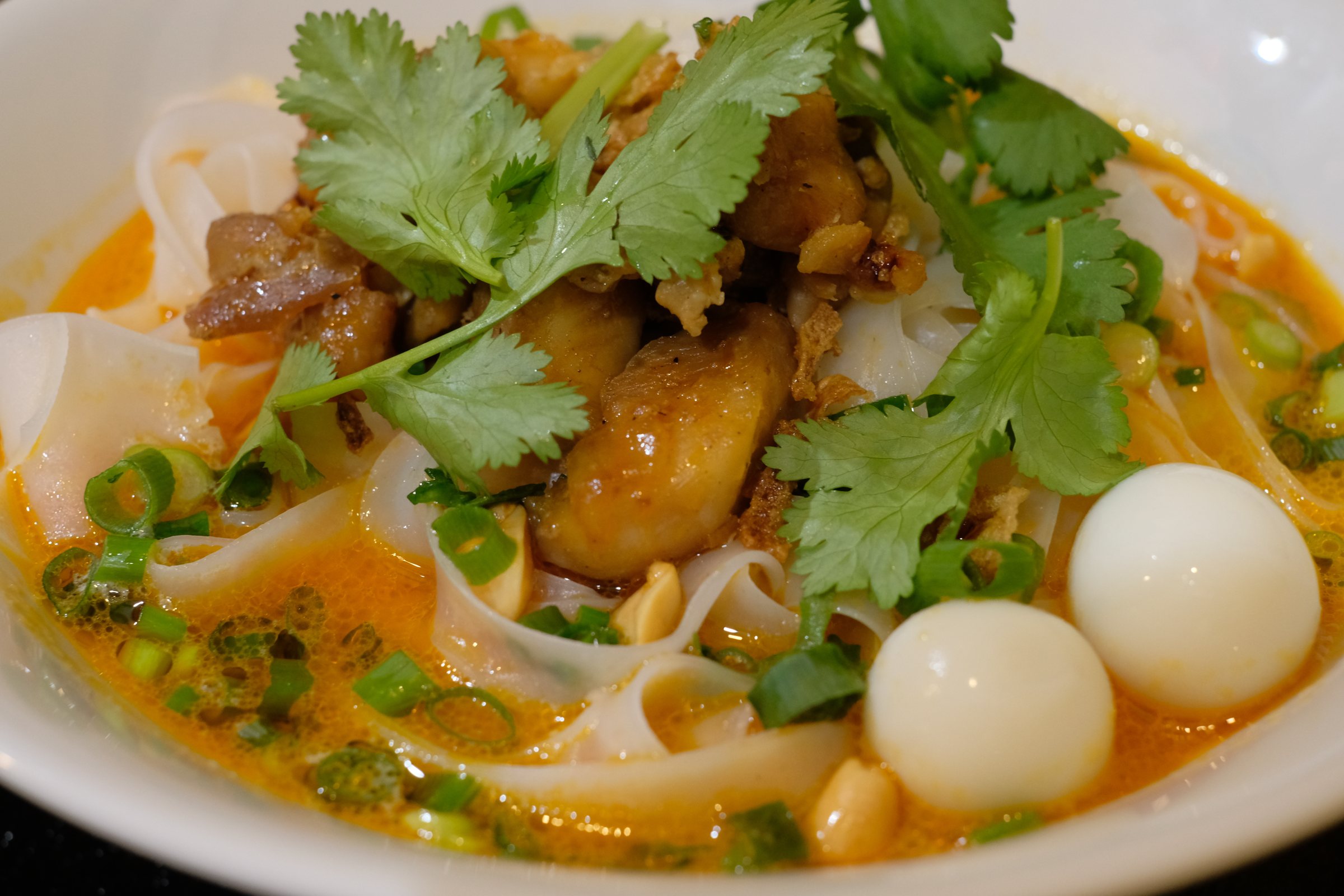
Mi QuangMì Quảng
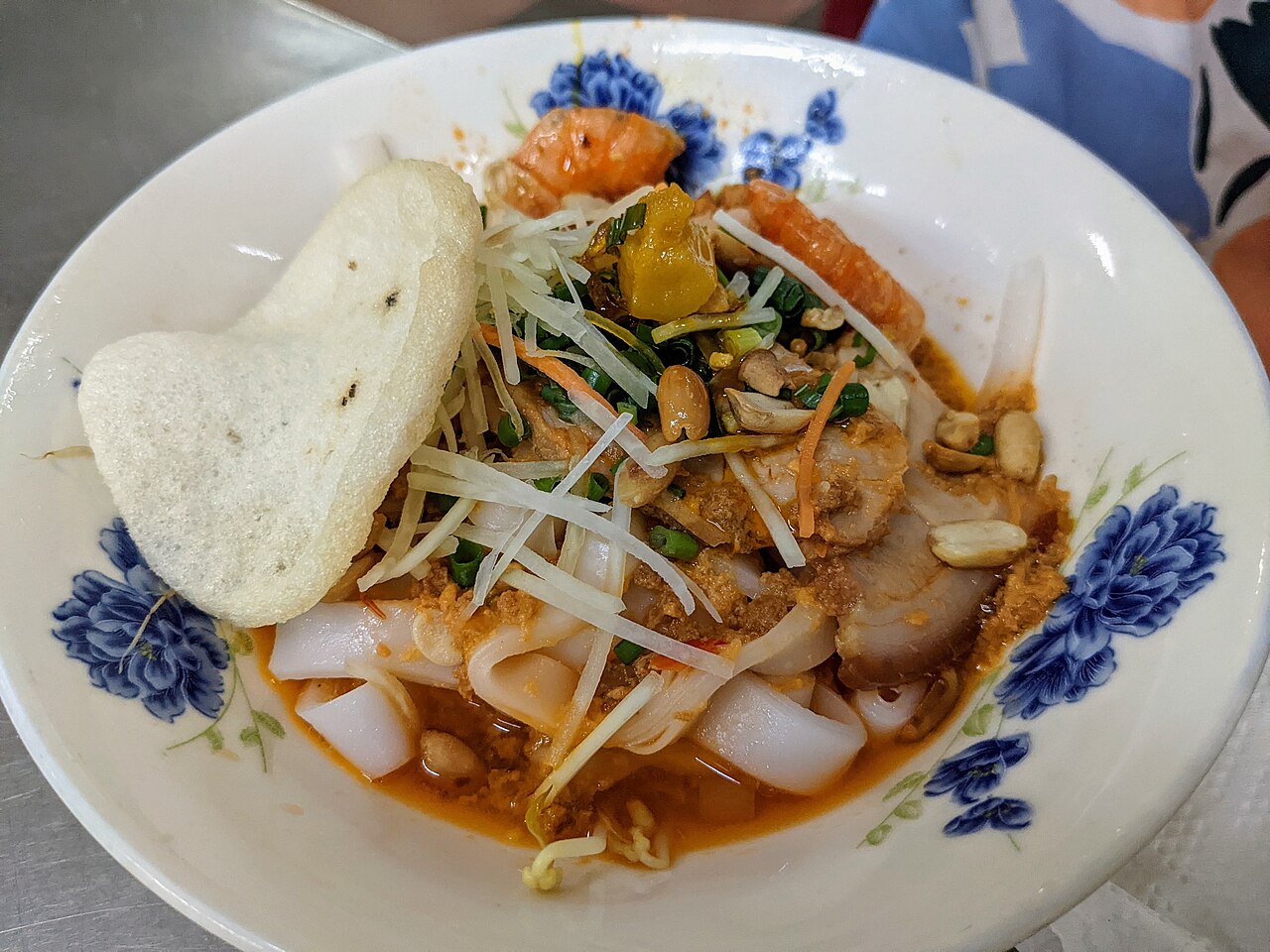
What makes mi quang distinct
Mi quang occupies an unusual position in Vietnamese noodle cookery: it is not a soup. The broth is intentionally sparse — enough to coat and flavour the noodles without pooling in the bowl. This shallow-broth technique concentrates the cooking liquid, which carries a pronounced savoriness from rendered pork fat, shrimp shells and aromatics. The result sits somewhere between a dressed noodle dish and a lightly sauced one, distinct from the full-volume broths of pho or bun bo Hue.
The dish belongs firmly to the culinary tradition of central Vietnam, a region known for its bold seasoning and layered textures. It is associated specifically with Da Nang and the broader Quang Nam area, and is considered a pillar of central Vietnamese cuisine.
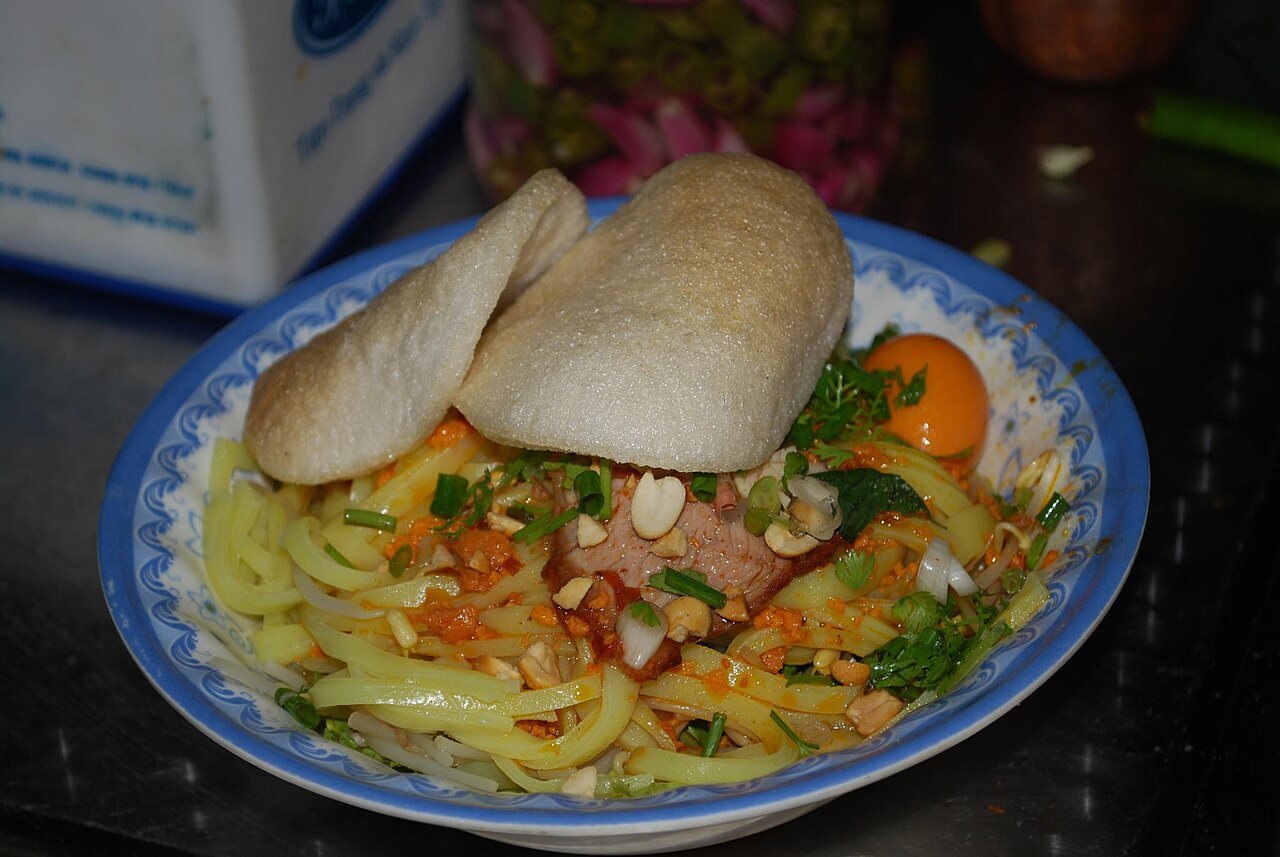
The noodles
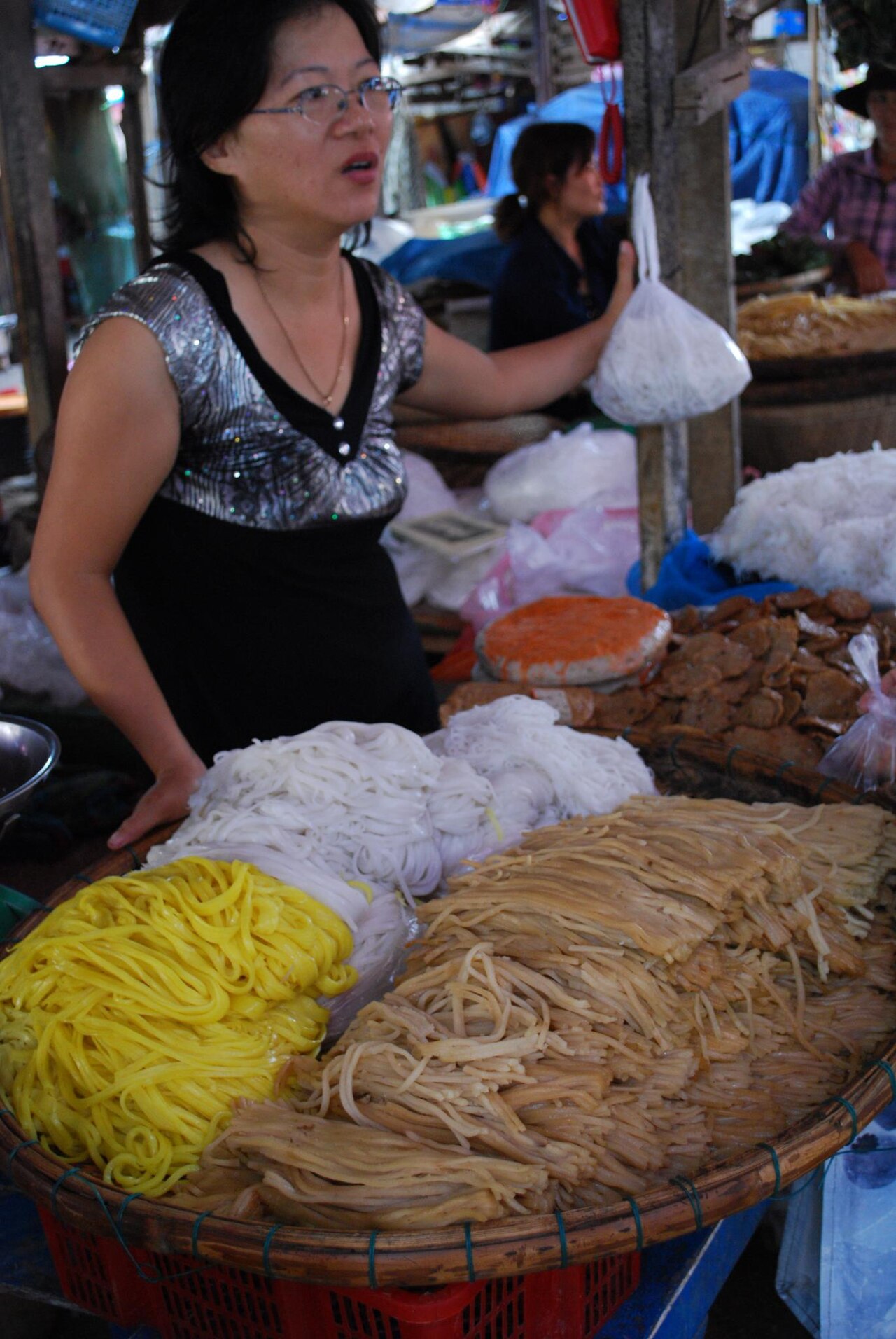
The noodles are wide, flat rice noodles coloured and flavoured with turmeric. Fresh-cut versions are preferred and give the dish its characteristic yellow-ochre appearance. The width — typically two to three centimetres — means the shallow broth clings to each strand rather than draining away, which is central to the dish's texture and balance. Dried substitutes exist but are considered a compromise by cooks from the region.
Turmeric contributes a mild earthiness and a vivid colour rather than a sharp flavour. In this application it functions as much as a colourant as a spice, marking mi quang visually apart from other Vietnamese noodle preparations.
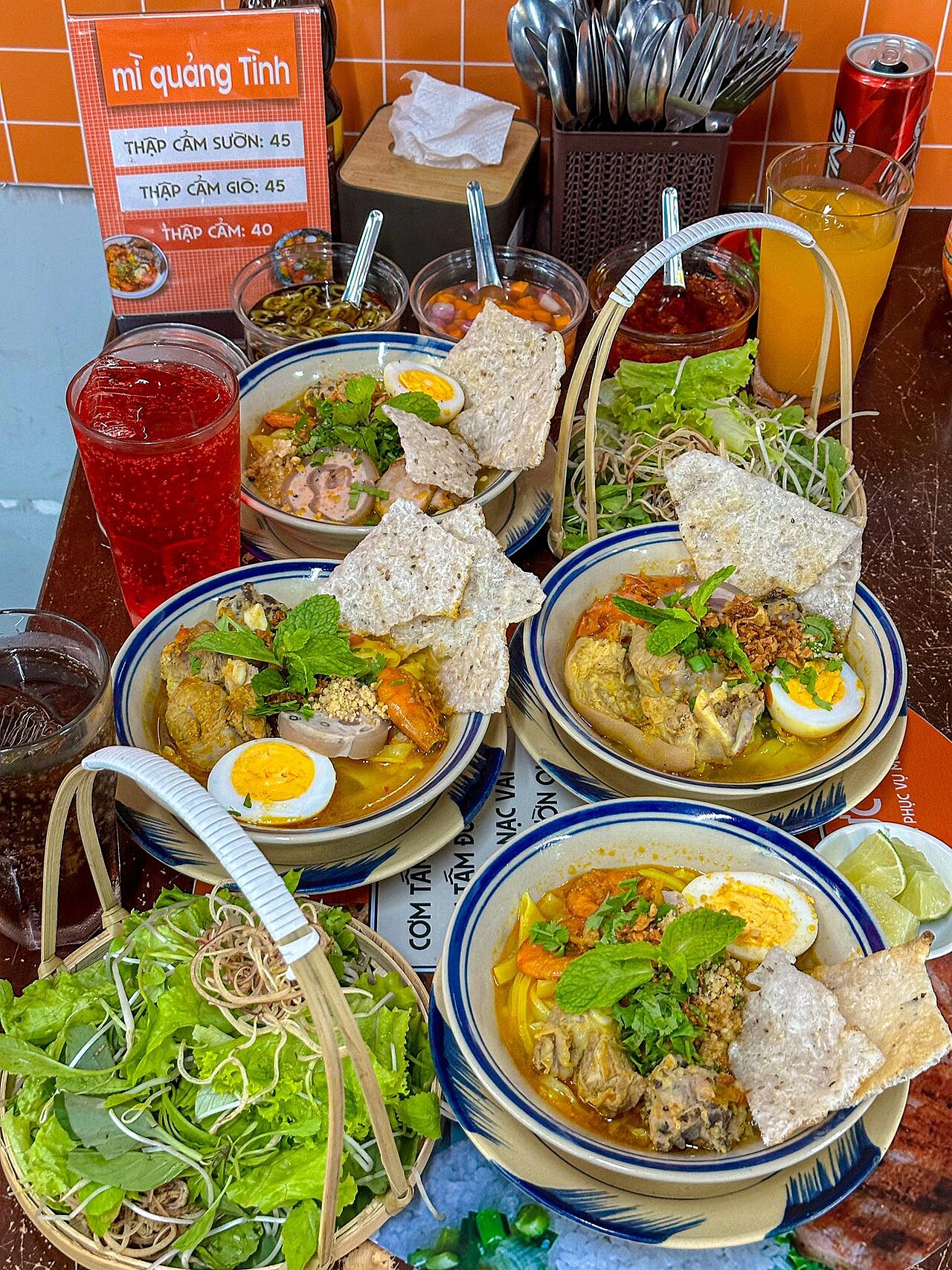
Toppings and garnishes
Toppings vary by household and by stall, but several appear consistently. Shrimp cooked briefly in the seasoned broth are standard. Sliced pork — braised or stir-fried — is common alongside the shrimp, and chicken versions, known as mi quang ga, substitute poached or fried chicken thigh meat. Halved quail eggs appear in many preparations, adding a soft richness.
Fresh herb garnishes typically include banana blossom shredded finely, torn Vietnamese coriander (rau ram), mint, and shredded cabbage or lettuce. These are placed generously on top and folded in by the diner before eating. A wedge of fresh chilli and a lime wedge accompany the bowl.
The rice cracker
A sesame-studded rice cracker (banh da) is served alongside or broken over the bowl. In Quang Nam and Da Nang the cracker is typically toasted to a deep colour — darker than crackers used in other Vietnamese dishes — and carries a nutty, slightly smoky flavour. Breaking it over the noodles introduces a contrasting crunch that softens as it absorbs the broth. This textural element is considered essential to an authentic serving and is one of the details most frequently cited when locals describe what distinguishes a well-made mi quang from an approximation.
Regional context and variations
Mi quang originated in Quang Nam province, and Da Nang — the major city historically tied to that region — remains one of the primary places to encounter it. Within central Vietnam, versions differ noticeably: some stalls use a pork-and-shrimp combination as the default; others specialise in frog (mi quang ech) or fish. A purely vegetarian version (mi quang chay) is available at Buddhist establishments and on the first and fifteenth days of the lunar calendar, when many Vietnamese observe a plant-based diet.
Outside central Vietnam the dish appears in restaurants across the country but is frequently adjusted to suit local palates, often with a deeper, more soup-like broth that departs from the original shallow-broth principle. Cooks from Quang Nam tend to regard these adaptations as a separate category. The dish is part of the broader central Vietnamese cuisine tradition, which encompasses other regionally specific preparations such as cao lau and banh mi in their earliest forms.
Comes from
被以下页面引用
来源
- Vietnam National Authority of Tourism — VNAT 访问于 29 August 2026
Supports: the rules and definitions on this page - Mì Quảng — Wikipedia (CC BY-SA 4.0) 访问于 31 August 2026
Supports: background - Mì Quảng — Wikipedia (Vietnamese) (CC BY-SA 4.0) 访问于 31 August 2026
Supports: background, Vietnamese edition
Current 最后核实: 31 August 2026. Rules, fares and prices change — check the official source before acting on anything here. Report a mistake.
Picture credits (5)
Photo: 百合 須藤 / Adobe Stock, asset 1908111559 · Mi Quang 1A Danang, Jpatokal, CC BY-SA 4.0, Wikimedia Commons · Mi Quang - Quan Hat Mi Quang, Cao Lau VND2000, Alpha, CC BY-SA 2.0, Wikimedia Commons · Mi-quang-da-nang, Thindaocong, CC BY-SA 4.0, Wikimedia Commons · Cao Lau, Mi Quang, Pho noodle stall, Alpha, CC BY-SA 2.0, Wikimedia Commons