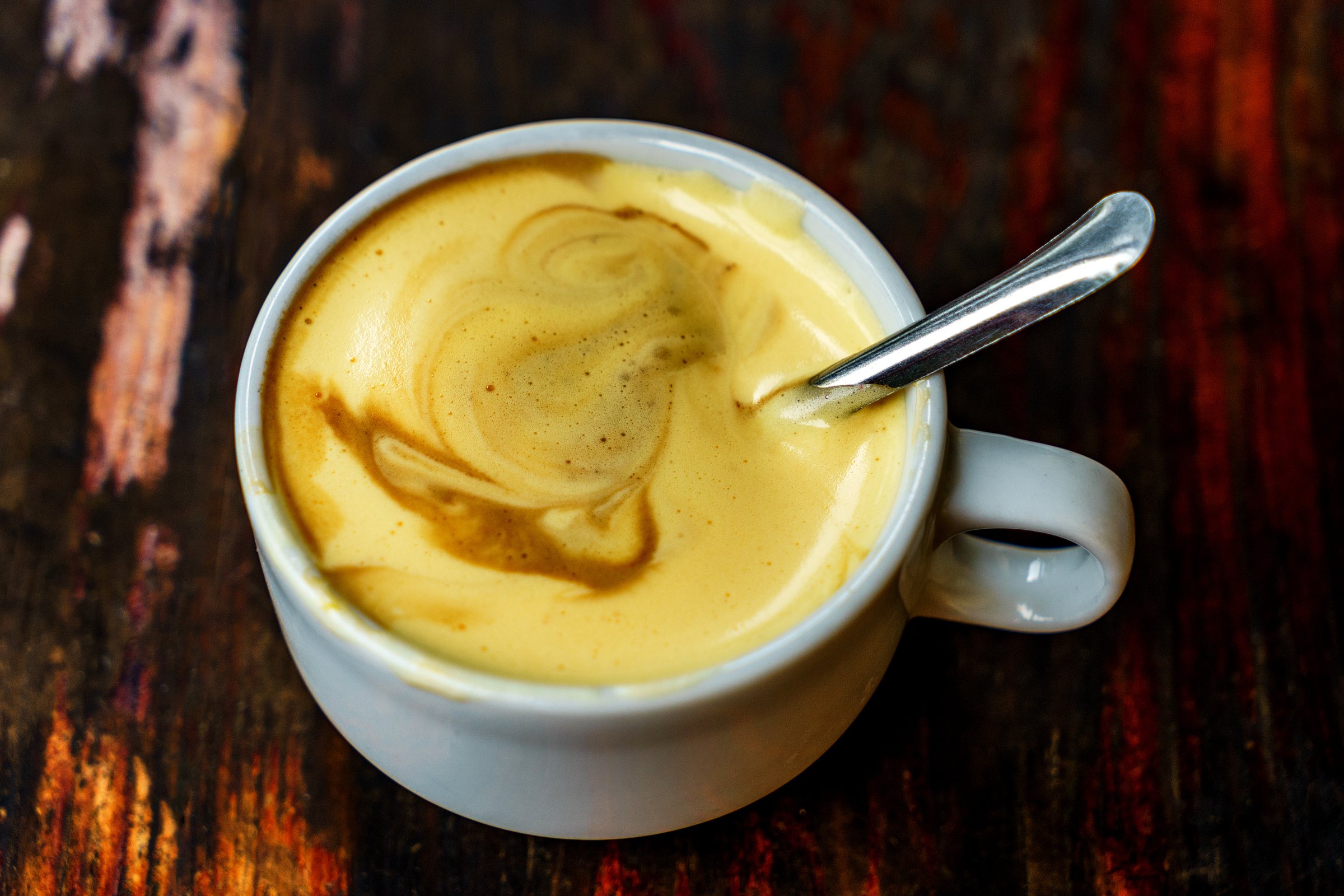
Egg coffeeCà phê trứng
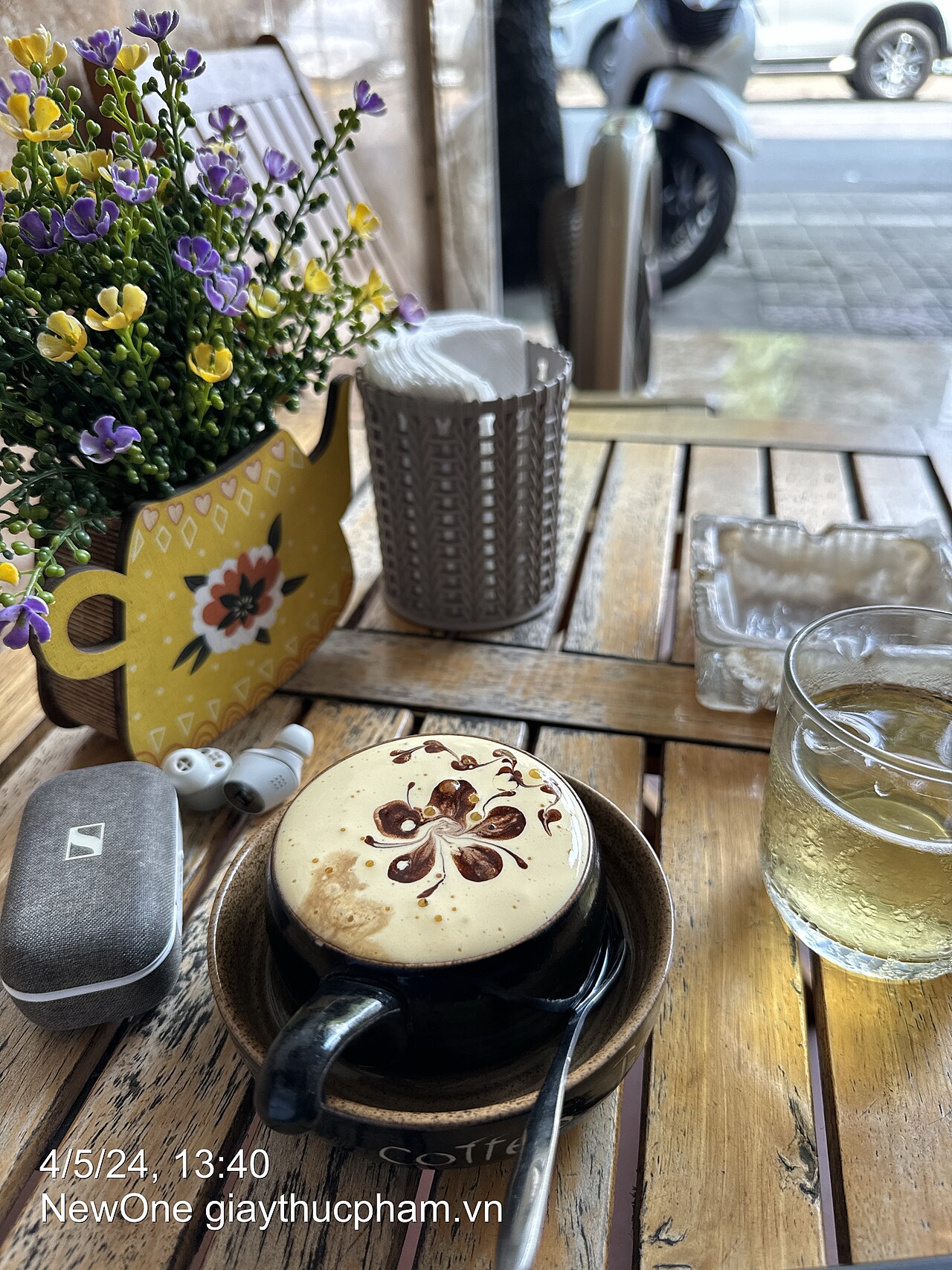
What egg coffee is
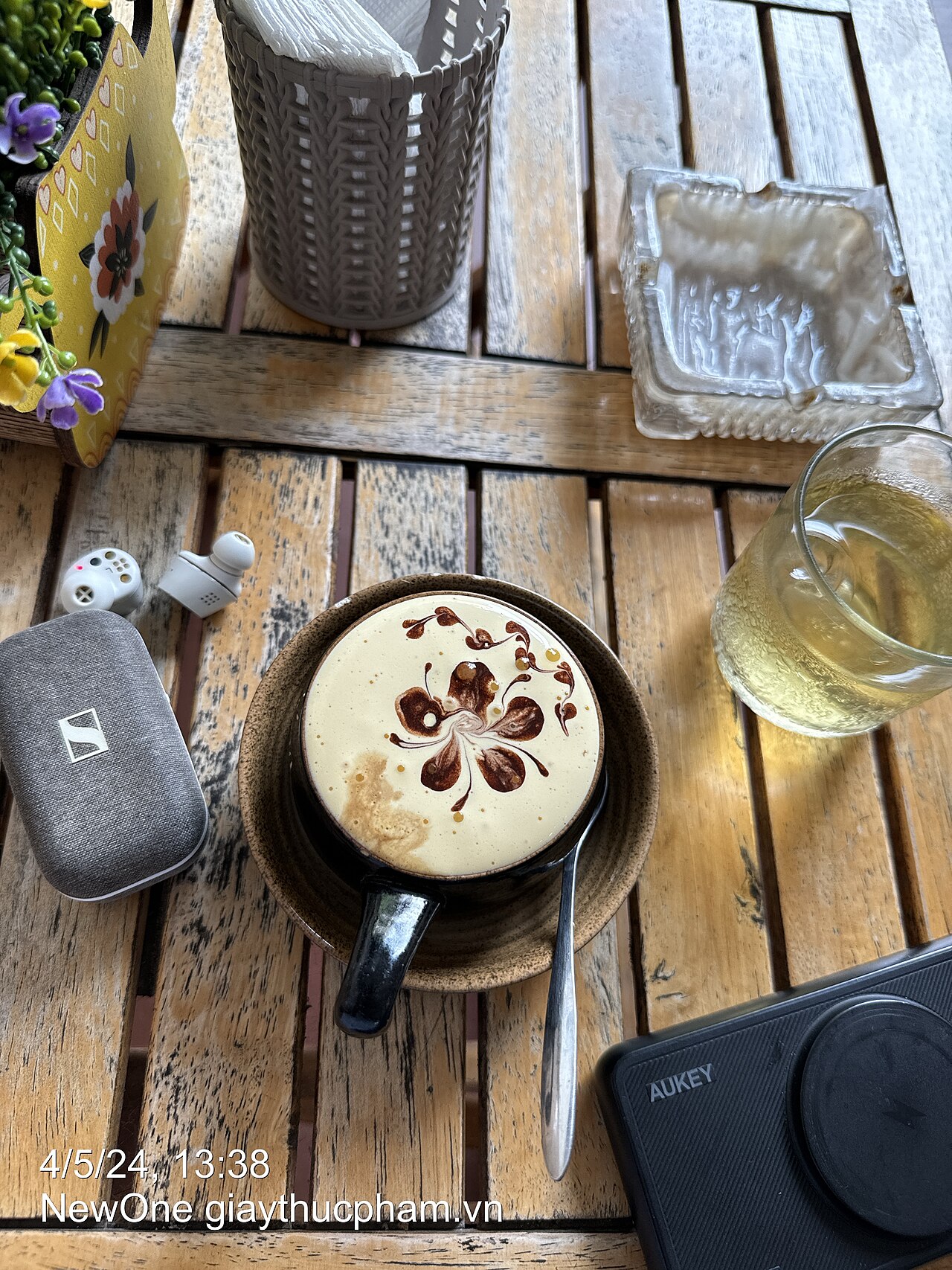
Cà phê trứng is made by beating egg yolks with condensed milk — and sometimes a small amount of the brewed coffee itself — until the mixture becomes pale, voluminous and mousse-like. This foam is spooned or poured over a shot of robusta coffee brewed through a Vietnamese phin filter. The result sits in two distinct layers: dark, bitter coffee below and a rich, sweet, slightly sulphurous custard above. Drinkers may stir the two together or work through them separately. The drink is served in a small glass or ceramic cup, often rested in a dish of hot water to keep the coffee warm beneath the cold foam.
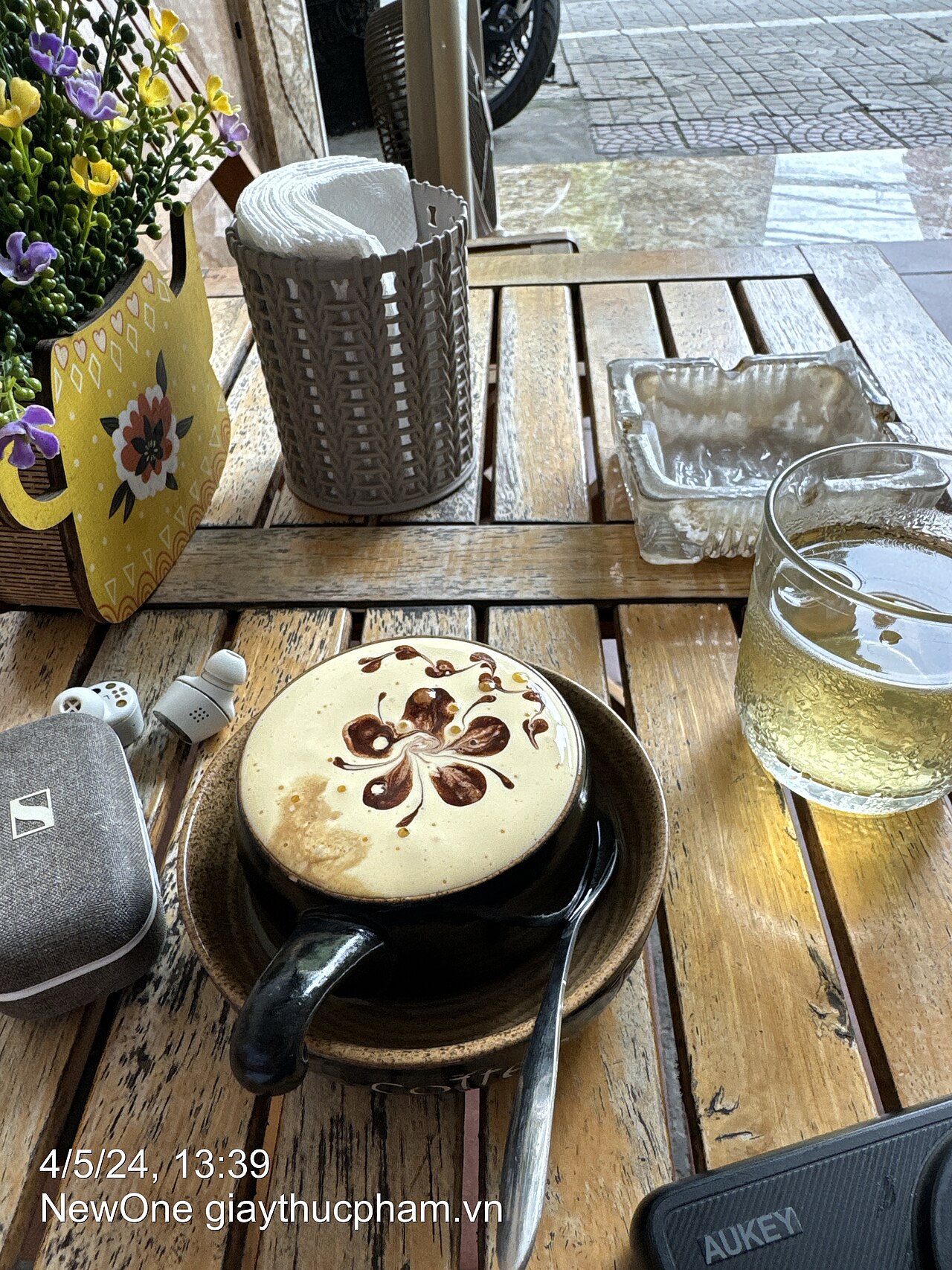
Origin and history
The drink is attributed to Nguyễn Văn Giang, a bartender at the Sofitel Legend Metropole hotel in Hanoi during the late 1940s. At a time when fresh milk was scarce — partly due to the disruption of the First Indochina War — Giang experimented with egg yolk as a substitute for the dairy then used in coffee drinks popular with French colonists. After leaving the Metropole, he opened Café Giảng on Yên Phụ Street, which his family continues to operate. The café is widely regarded as the original home of the drink, though the recipe has since spread across the city and beyond.
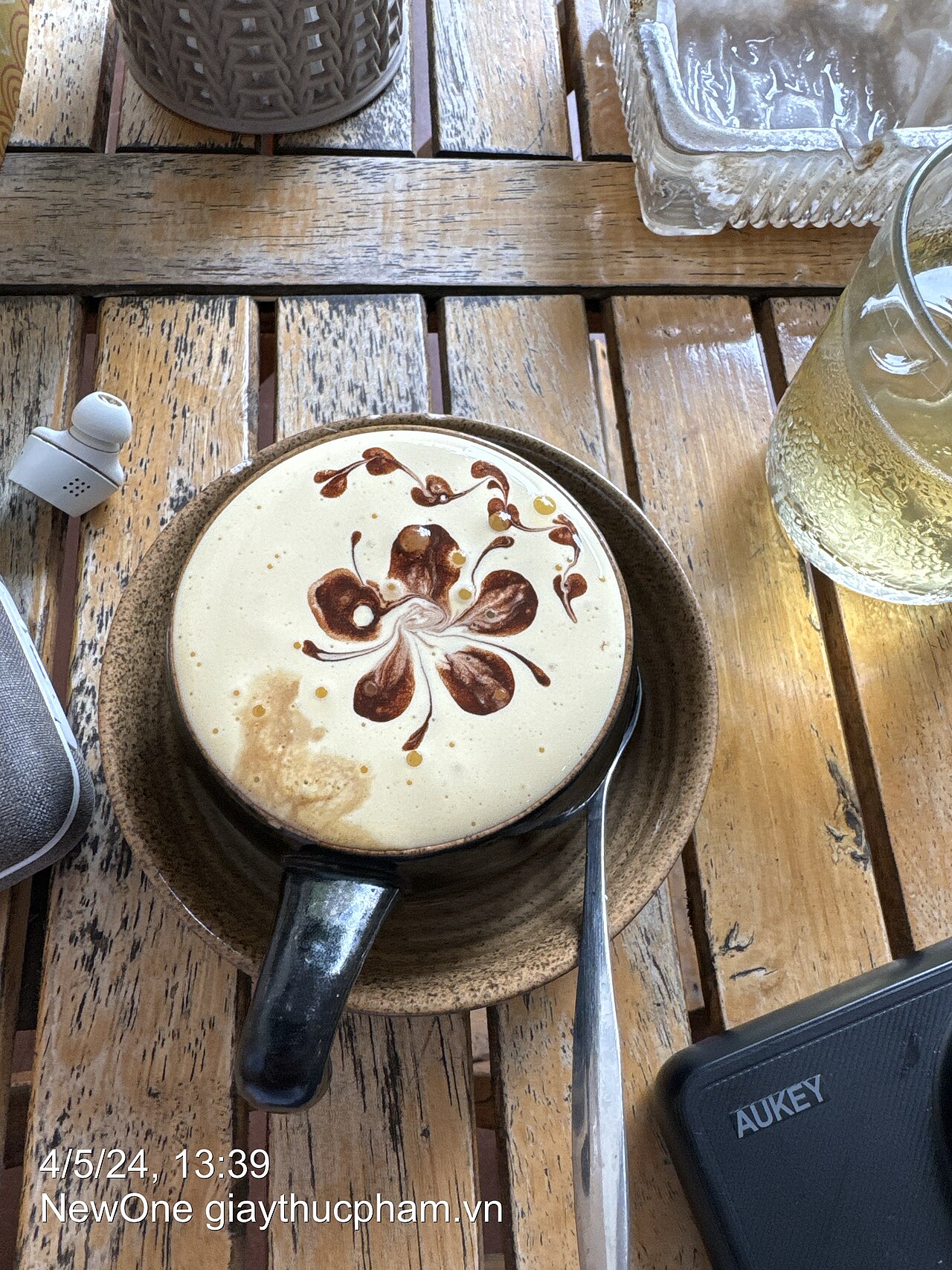
Where it is drunk
Egg coffee remains most closely associated with Hanoi, where a cluster of small, often multi-generational cafés serve it as a speciality rather than a sideline. Café Giảng retains a strong following; Café Đinh, on a narrow lane off Đinh Tiên Hoàng near Hoàn Kiếm Lake, is another long-established address. Both venues are compact and furnished simply, with low stools and a deliberate absence of the modern café aesthetic found elsewhere in the city. The drink has travelled to Ho Chi Minh City and other urban centres, where it appears in cafés targeting younger customers, though Hanoi is still considered its home.
Variations
Several variants exist alongside the standard hot version. A cold preparation — cà phê trứng đá — places the egg foam over iced coffee; the contrast between cold coffee and room-temperature foam changes the texture and flavour balance considerably. Egg cocoa (ca cao trứng) replaces the coffee base with hot chocolate, producing a drink with no caffeine and a sweeter, more confectionery character that appeals to those who do not drink coffee. Some cafés offer egg tea (trà trứng), in which black or lotus tea replaces the coffee. A minority of recipes incorporate additional flavourings such as vanilla or cheese powder into the foam, though purists regard these as departures from the original.
Preparation and technique
The quality of the foam depends heavily on the ratio of egg yolk to condensed milk and the duration of whisking. Traditional preparation uses a hand whisk or a small electric beater; the yolk-and-milk mixture is beaten until it reaches a ribbon stage — pale, thick and falling in slow, continuous folds. Robusta coffee, grown widely in Vietnam's Central Highlands, is the conventional base because its bitterness and body hold up against the sweetness of the foam. Arabica blends produce a milder, more acidic base and are used in some modern adaptations. The phin filter, a small stainless-steel or aluminium dripper, brews the coffee slowly by gravity, producing a concentrated shot.
Practical notes
The drink is not standardised across venues; sweetness, foam thickness and coffee strength vary from café to café. Prices vary by season and by venue. Raw egg yolk is a core ingredient, which is a consideration for those with dietary restrictions or concerns about food safety. Most cafés serving the drink operate from morning through to the early evening. In older Hanoi establishments, seating is limited and the atmosphere is unhurried; queues are common at peak weekend hours, particularly at well-known addresses near the Old Quarter and Hoàn Kiếm Lake.
Where it is
Also known as / see also
Comes from
Referenciado por
Fontes
- Vietnam National Authority of Tourism — VNAT truy cập 29 August 2026
Supports: the rules and definitions on this page - Egg coffee — Wikipedia (CC BY-SA 4.0) truy cập 31 August 2026
Supports: background - Cà phê trứng — Wikipedia (Vietnamese) (CC BY-SA 4.0) truy cập 31 August 2026
Supports: background, Vietnamese edition
Current Última verificação: 31 August 2026. Rules, fares and prices change — check the official source before acting on anything here. Report a mistake.
Picture credits (5)
Photo: Hien Phung / Adobe Stock, asset 337572500 · NewOne - egg coffee 33 Tan Ap 002, Newone, CC BY 4.0, Wikimedia Commons · NewOne - egg coffee 33 Tan Ap 003, Newone, CC BY 4.0, Wikimedia Commons · NewOne - egg coffee 33 Tan Ap 004, Newone, CC BY 4.0, Wikimedia Commons · NewOne - egg coffee 33 Tan Ap 005, Newone, CC BY 4.0, Wikimedia Commons