Com tamCơm tấm
What broken rice is
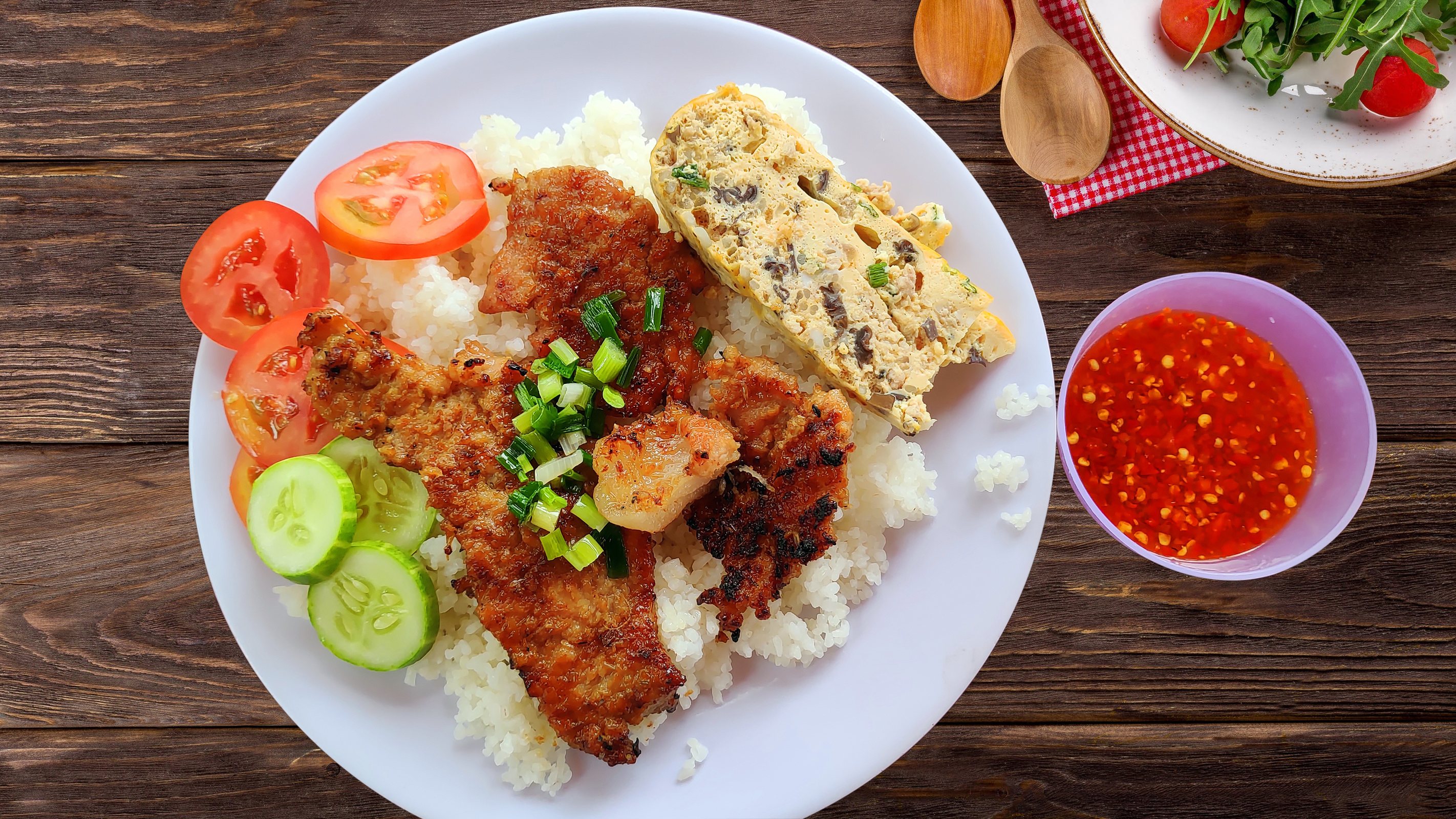
Cơm tấm means literally broken rice. During milling, some grains fracture into fragments shorter than a standard grain. For much of the twentieth century these pieces were considered low-grade and sold cheaply to poor households in the Mekong Delta and in Ho Chi Minh City. Over time the texture — slightly denser and more absorbent than whole-grain rice — came to be valued in its own right, and cơm tấm evolved from a poverty staple into one of the city's most recognised dishes. The broken grains hold sauce differently from whole rice, which shapes how the dish is seasoned and served.
The standard plate
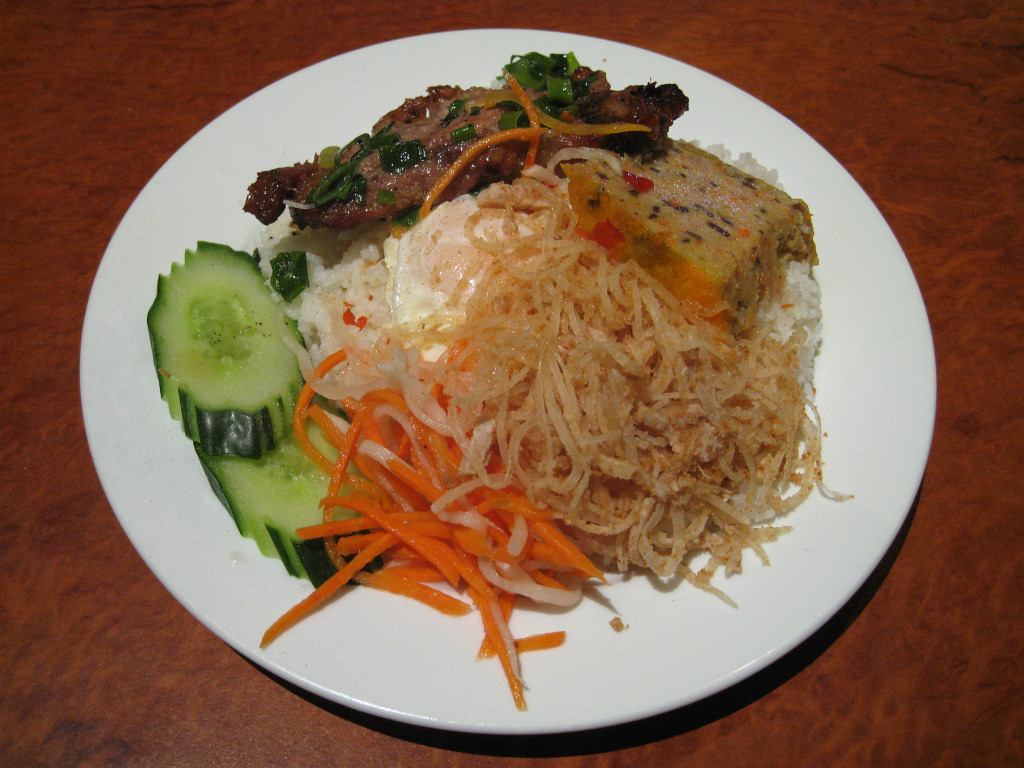
A full cơm tấm plate is typically composed of three main elements alongside the rice:
- Sườn nướng — a thin, marinated pork chop grilled over charcoal or a gas flame. The marinade commonly includes lemongrass, garlic, fish sauce and a small amount of sugar, producing a caramelised exterior.
- Bì — shredded pork skin mixed with roasted rice powder, giving a dry, slightly chewy texture that contrasts with the grilled meat.
- Chả trứng — a steamed or baked meatloaf of minced pork and egg, sometimes set in a banana leaf, with a firm, custard-like interior.
Stalls and restaurants vary the combination; some serve only sườn, others add fried eggs, prawns or braised pork. A small bowl of clear pork broth often accompanies the plate.

The fish sauce dressing
The dish is unified by a seasoned fish sauce (nước mắm pha) poured directly over the rice or served alongside. This dressing is diluted with water and balanced with sugar and lime or vinegar, then finished with sliced fresh chilli and minced garlic. The ratio of sweet to sour to salty varies by cook and by region within the south, and is one of the details that regular customers use to distinguish one stall from another. Pickled shredded daikon and carrot (đồ chua) sit on the side to cut through the richness of the grilled meat.
An all-day Saigon staple
Unlike many dishes associated with a single mealtime, cơm tấm is eaten throughout the day in Ho Chi Minh City. Breakfast, lunch and late-night sittings are all common. The city has a higher concentration of cơm tấm vendors than anywhere else in Vietnam, and the dish is closely identified with Saigon's food culture even as it appears across southern Vietnamese cuisine more broadly. Certain streets and alleyways, particularly in districts that were working-class neighbourhoods in earlier decades, are known for clusters of competing stalls.
Sit-down restaurants versus street stalls
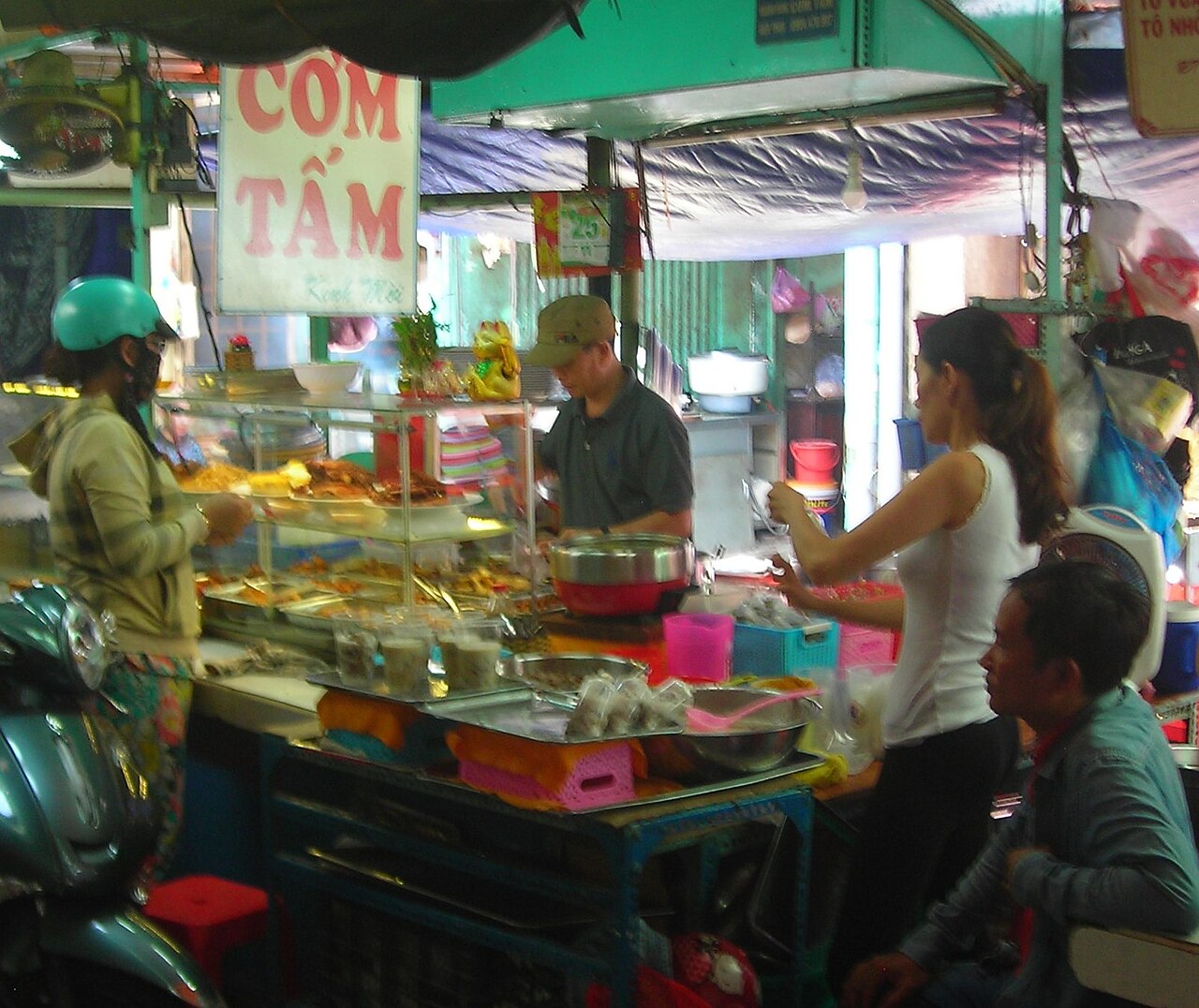
Cơm tấm is served in two broadly different formats. Street stalls, often operating from a cart or a narrow shopfront with plastic stools on the pavement, typically grill meat to order over open flame and serve quickly. The informal setting is the older and more typical context for the dish. Sit-down restaurants, ranging from family-run shops to larger air-conditioned premises, tend to offer longer menus with more topping combinations, table service and printed prices. Both formats are common throughout Ho Chi Minh City. Quality and character differ significantly between individual vendors regardless of format, and regulars often return to the same stall for years based on a specific cook's marinade or grilling technique.
Comes from
Referenciado por
Fontes
- Vietnam National Authority of Tourism — VNAT truy cập 29 August 2026
Supports: the rules and definitions on this page - Cơm tấm — Wikipedia (CC BY-SA 4.0) truy cập 31 August 2026
Supports: background - Cơm tấm — Wikipedia (Vietnamese) (CC BY-SA 4.0) truy cập 31 August 2026
Supports: background, Vietnamese edition
Current Última verificação: 31 August 2026. Rules, fares and prices change — check the official source before acting on anything here. Report a mistake.
Picture credits (5)
Photo: Ho Su A Bi / Adobe Stock, asset 314513899 · Étale de cơm tấm au marché, Vietcuongdao, CC BY-SA 4.0, Wikimedia Commons · Com-Tam-2008, Kham Tran, CC BY-SA 3.0, Wikimedia Commons · Nhật nguyệt, CC BY-SA 3.0, Wikimedia Commons · Tam Coc, Nth Vietnam (49994898476), Rod Waddington from Kergunyah, Australia, CC BY-SA 2.0, Wikimedia Commons